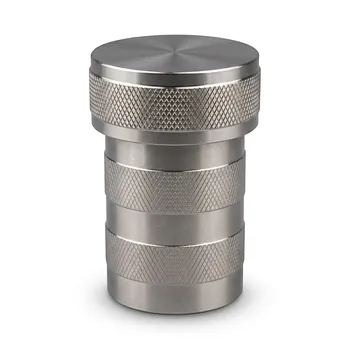
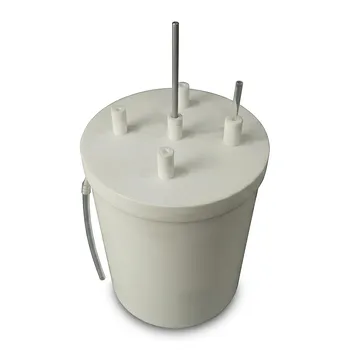
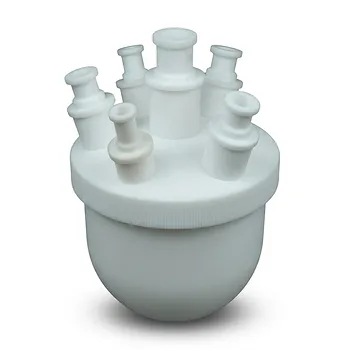
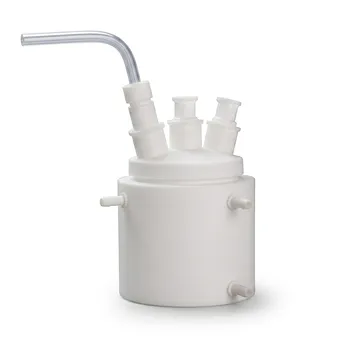
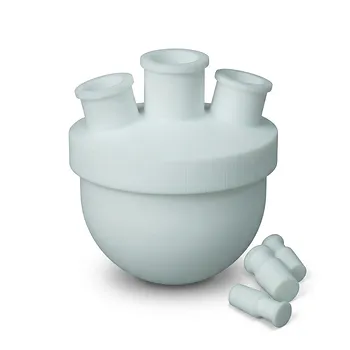
In the hydrothermal synthesis of magnesium-aluminum hydrotalcite, a high-pressure reactor functions as a sealed vessel that creates the extreme thermal and barometric conditions necessary for chemical transformation. These reactors enable the dissolution and recrystallization of precursor materials that are otherwise insoluble under ambient conditions. By maintaining temperatures between 100°C and 1000°C and pressures from 1 MPa to 1 GPa, the reactor accelerates the reaction process and ensures the formation of crystals with high crystallinity and minimal growth defects.
Core Takeaway: The high-pressure reactor acts as a critical "pressure cooker" that forces insoluble precursors into solution, allowing them to self-assemble into highly ordered, stable crystalline structures that cannot be achieved at atmospheric pressure.
Creating the Necessary Physical Environment
Sustaining Superheated Solvents
A primary function of the reactor is to allow the aqueous solvent to reach temperatures well above its normal boiling point. Because the vessel is sealed, the solvent remains in a liquid state, creating a superheated environment that significantly increases the energy available for the reaction.
Generating Autogenous Pressure
As the temperature rises within the confined space, the reactor generates autogenous pressure. This internal pressure is essential for driving the synthesis of Layered Double Hydroxides (LDHs), as it facilitates the coordination reaction between metal ions and organic or inorganic components.
Facilitating Material Transformation
Enhancing Precursor Solubility
Many precursors used in the synthesis of magnesium-aluminum hydrotalcite are poorly soluble in water at room temperature. The high-pressure environment drastically enhances the solubility of these iron or aluminum sources, enabling a more complete and uniform chemical reaction.
Promoting Controlled Recrystallization
The reactor provides the controlled environment required for dissolution-precipitation reactions. This allows the solutes to undergo controlled nucleation, leading to the growth of crystals with proper orientation and specific geometric morphologies.
Optimizing Crystal Quality
By maintaining stable high-pressure conditions, the reactor minimizes growth defects in the crystal lattice. This results in magnesium-aluminum hydrotalcite with high crystallinity and allows the operator to have finer control over the final crystal grain size.
Understanding the Trade-offs
Equipment Complexity and Safety
While high-pressure reactors enable superior material properties, they require rigorous safety protocols. The extreme internal pressures (up to 1 GPa) necessitate specialized materials like high-grade stainless steel or Hastelloy to prevent catastrophic vessel failure.
Scalability and Batch Processing
Hydrothermal synthesis in these reactors is typically a batch process, which can limit high-volume production. Scaling from a laboratory "digestion bomb" to an industrial-sized reactor involves significant engineering challenges regarding heat distribution and pressure maintenance.
Energy and Time Requirements
Maintaining these extreme conditions for extended periods requires high energy consumption. Although the high-pressure environment accelerates the chemical reaction rate compared to ambient methods, the total "cool-down" and "heat-up" cycles can lengthen the overall production timeline.
How to Apply This to Your Project
Recommendations for Material Synthesis
- If your primary focus is high crystallinity: Utilize the maximum safe temperature within the reactor to promote slower, more perfect crystal growth and minimize lattice defects.
- If your primary focus is morphological uniformity: Ensure the reactor is properly sealed to maintain consistent autogenous pressure, which is vital for achieving uniform grain sizes across the batch.
- If your primary focus is processing insoluble precursors: Increase the solvent-to-precursor ratio and leverage the high-pressure environment to ensure a full transition into the liquid phase before recrystallization.
The high-pressure reactor is the indispensable engine of hydrothermal synthesis, transforming inert precursors into high-performance, crystalline magnesium-aluminum hydrotalcite.
Summary Table:
| Key Function | Physical Mechanism | Impact on Synthesis |
|---|---|---|
| Solvent Superheating | Temperatures 100°C - 1000°C | Increases energy for chemical transformation |
| Pressure Generation | Autogenous pressure (1 MPa - 1 GPa) | Facilitates coordination and self-assembly |
| Enhanced Solubility | High-pressure dissolution | Enables reaction of otherwise insoluble precursors |
| Recrystallization | Controlled nucleation | Ensures high crystallinity and uniform morphology |
Elevate Your Synthesis Precision with KINTEK
Achieving the perfect crystalline structure for magnesium-aluminum hydrotalcite requires equipment that can withstand extreme thermal and barometric stress. KINTEK specializes in high-performance fluoropolymer laboratory supplies, offering an exhaustive range of PTFE and PFA-lined hydrothermal synthesis liners, microwave digestion vessels, and custom-machined reaction apparatus designed for high-purity trace analysis and chemical resistance.
From everyday labware—including beakers, crucibles, and high-purity reagent bottles—to complex fluid transfer components and bespoke CNC-fabricated reactor parts, we provide everything needed for advanced material research. Whether you require standard consumables like stirring bars and O-rings or a fully custom laboratory setup, our exclusive focus on high-performance materials ensures maximum durability and zero contamination.
Ready to optimize your hydrothermal processes? Contact KINTEK today for expert consultation and high-volume custom solutions tailored to your research goals!
References
- 佳瑶 谢. Research Progress on the Preparation and Application of Magnesium Aluminum Hydrotalc. DOI: 10.12677/ms.2025.154082
This article is also based on technical information from Kintek Knowledge Base .
Related Products
- High Temperature Corrosion Resistant Hydrothermal Synthesis Reactor with TFM Inner Liner and Straight Cylinder Design
- PTFE Lined High Pressure Digestion Vessel 50ml High Temperature Hydrothermal Synthesis Tank
- High Pressure Custom TFM Reactor Stainless Steel Outer Vessel PTFE Inner Cup for Corrosive Synthesis
- Custom TFM Reaction Vessel with Stainless Steel Jacket and PTFE Inner Cup for High Corrosion Resistance
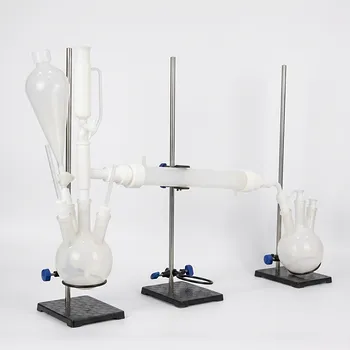
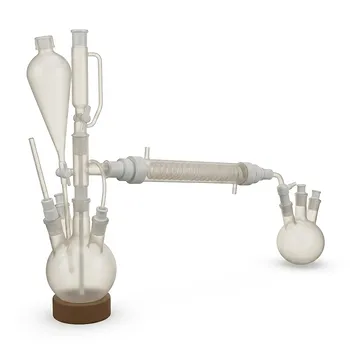
- High Purity PFA Constant Pressure Condensation Reaction System Acid Resistant High Temperature Customizable Teflon Labware
People Also Ask
- What is the role of a corrosion-resistant reactor in the synthesis of lignin-based carbon dots? Ensure Maximum Purity
- What are the technical advantages of using hydrothermal synthesis reactors for advanced electronic & optical nanomaterials?
- How does a hydrothermal synthesis reactor facilitate the production of crystalline materials with tailored morphologies? Precision Crystal Growth
- Why is the sealing reliability of a hydrothermal synthesis reactor critical for 24-hour cycles? Ensure Nano-Precision
- What role do hydrothermal synthesis reactors play in CQD preparation? Achieve High-Purity Nanomaterial Synthesis