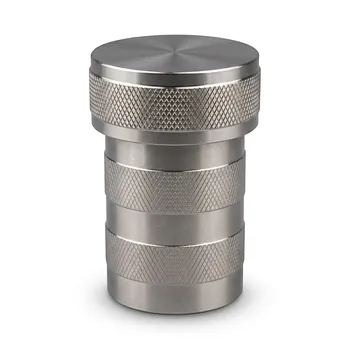
The high-pressure hydrothermal reactor serves as the essential physical crucible for KIT-5 synthesis by providing a sealed, high-energy environment. At a target temperature of 150°C, the reactor allows the precursor solution to reach states that exceed its atmospheric boiling point. This specific thermodynamic window is required for the silica source (TEOS) to undergo ordered self-assembly around template agents, forming the signature Fm3m symmetry 3D cubic cage structure.
Core Takeaway: The hydrothermal reactor enables synthesis conditions far beyond atmospheric limits, facilitating the deep hydrolysis and ordered self-assembly required to create the complex, stable 3D cubic architecture of KIT-5.
Creating the Physical Basis for Self-Assembly
Exceeding Atmospheric Boiling Points
In an open system, aqueous solutions are limited by their boiling point at 1 atm. The high-pressure reactor creates a sealed environment where autogenous pressure maintains the solution in a liquid state at 150°C, providing the thermal energy necessary for complex chemical reorganization.
Facilitating Precursor Solubility and Hydrolysis
High-pressure conditions accelerate the dissolution of precursors and the deep hydrolysis of the silica source. This environment ensures that the silica species are sufficiently mobile and reactive to interact effectively with the template molecules.
Driving the Template-Silica Interaction
The 150°C environment is the physical catalyst for the ordered self-assembly of TEOS around the structure-directing template. This interaction is the fundamental step that transforms a disordered solution into a highly organized mesoporous framework.
Engineering the Fm3m Symmetry
Defining Pore Size and Structural Regularity
The specific temperature and pressure levels within the reactor directly determine the pore size distribution and the regularity of the resulting material. Without the precise control offered by a hydrothermal autoclave, the resulting silica would lack the uniform, periodic arrangement of cages.
Enhancing Hydrothermal Stability
Synthesis under high pressure and temperature facilitates polycondensation of the silica framework, leading to a more robust structure. This process enhances the hydrothermal stability of the KIT-5, ensuring that the mesoporous channels do not collapse during subsequent processing or application.
Shortening Synthesis Time
By operating at elevated temperatures, the reactor significantly accelerates reaction kinetics. What might take days at lower temperatures can be achieved in a fraction of the time, while simultaneously improving the crystallinity and integrity of the mesoporous structure.
Understanding the Trade-offs and Constraints
Safety and Operational Risk
Operating high-pressure autoclaves requires strict adherence to safety protocols, as the autogenous pressure generated at 150°C can be significant. Failure to monitor temperature or overfilling the vessel can lead to structural failure of the reactor.
Sensitivity to Temperature Fluctuations
The formation of the Fm3m symmetry is highly sensitive to thermal gradients. Even minor fluctuations in the reactor's internal temperature can lead to structural defects or the formation of secondary, unwanted phases in the silica framework.
Scaling Limitations
Hydrothermal synthesis is often a batch process, which can make industrial scaling difficult. Maintaining uniform heat transfer and pressure across larger volumes requires specialized, expensive equipment compared to ambient pressure synthesis methods.
How to Apply This to Your Project
Recommendations for Synthesis Success
- If your primary focus is structural precision: Ensure the reactor's temperature control is calibrated to maintain exactly 150°C to secure the desired Fm3m symmetry.
- If your primary focus is material durability: Utilize the high-pressure environment to maximize the polycondensation of the silica walls, which will yield a more hydrothermally stable product.
- If your primary focus is rapid prototyping: Leverage the increased reaction kinetics of the hydrothermal process to shorten the aging period of the precursor solution.
The high-pressure reactor is not merely a container, but a precision tool that dictates the fundamental architecture and stability of the KIT-5 mesoporous silica.
Summary Table:
| Reactor Function | Impact on KIT-5 Synthesis | Key Structural Benefit |
|---|---|---|
| High-Temp (150°C) | Facilitates TEOS self-assembly around templates | Formation of Fm3m 3D cubic cage structure |
| Autogenous Pressure | Keeps aqueous solutions liquid above boiling point | Accelerates precursor solubility and hydrolysis |
| Sealed Environment | Maintains thermodynamic stability and heat uniformity | Ensures uniform pore size distribution |
| Enhanced Kinetics | Drives rapid polycondensation of silica walls | Increases hydrothermal stability and durability |
Elevate Your Synthesis Precision with KINTEK
Achieving the perfect Fm3m symmetry in KIT-5 requires equipment that can withstand rigorous hydrothermal conditions without compromising purity. At KINTEK, we specialize in high-performance fluoropolymer solutions designed for the most demanding laboratory environments.
From hydrothermal synthesis liners and microwave digestion vessels to high-purity trace analysis instruments, our product range covers everything from everyday basics (beakers, crucibles, reagent bottles) to advanced fluid transfer components (tubing, valves, and fittings). Whether you need high-volume orders of standard consumables like stirring bars and O-rings or bespoke laboratory setups and custom CNC-machined parts, KINTEK provides end-to-end fabrication in PTFE and PFA.
Ensure your research benefits from absolute material integrity and superior chemical resistance. Contact us today to discuss your custom labware needs and see how our expertise can streamline your next breakthrough.
References
- Abdul Qudoos, Zeinab Abbas Jawad. Development of KIT-5 and amine-functionalized KIT-5 for CO<sub>2</sub> adsorption. DOI: 10.1088/1742-6596/3003/1/012046
This article is also based on technical information from Kintek Knowledge Base .
Related Products
- High Temperature Corrosion Resistant Hydrothermal Synthesis Reactor with TFM Inner Liner and Straight Cylinder Design
- PTFE Lined High Pressure Digestion Vessel 50ml High Temperature Hydrothermal Synthesis Tank
- PTFE Distillation Condensation Apparatus High Temperature Hydrofluoric Acid Resistant Fluorination Reaction Flask
People Also Ask
- What is the role of a corrosion-resistant reactor in the synthesis of lignin-based carbon dots? Ensure Maximum Purity
- What are the technical advantages of using hydrothermal synthesis reactors for advanced electronic & optical nanomaterials?
- How does a hydrothermal synthesis reactor facilitate the production of crystalline materials with tailored morphologies? Precision Crystal Growth
- Why is the sealing reliability of a hydrothermal synthesis reactor critical for 24-hour cycles? Ensure Nano-Precision
- What role do hydrothermal synthesis reactors play in CQD preparation? Achieve High-Purity Nanomaterial Synthesis