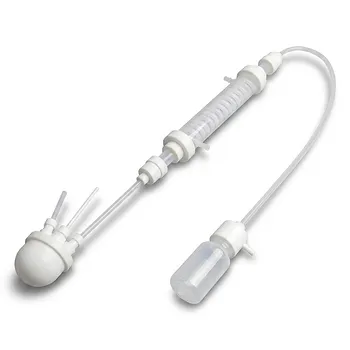
The selection of a Mercury/Mercuric Oxide (Hg/HgO) reference electrode is critical for electrochemical accuracy in alkaline environments. When testing NiS/CoS supercapacitor materials in electrolytes like 1.0 M KOH, this electrode provides the necessary chemical stability and potential reproducibility that standard alternatives lack. By matching the internal chemistry to the alkaline test environment, it ensures that measured redox potentials and kinetic data remain precise and free from significant drift.
Core Takeaway: The Hg/HgO reference electrode is the definitive choice for alkaline systems because it minimizes liquid junction potential and eliminates the potential drift common in other electrodes, providing a reliable baseline for characterizing the high-performance kinetics of supercapacitor materials.
Achieving Chemical and Potential Stability
Superior Performance in Strong Bases
In electrolytes such as 1.0 M KOH, the Hg/HgO electrode exhibits exceptional chemical stability. This allows for highly reproducible measurements over extended testing periods, which is vital for long-term cycling studies.
Eliminating Potential Drift
Unlike the Saturated Calomel Electrode (SCE), which is prone to potential drift when exposed to strong alkaline conditions, Hg/HgO maintains a steady baseline. This stability ensures that the Linear Sweep Voltammetry (LSV) data used to evaluate NiS/CoS materials is accurate and trustworthy.
Preserving Electrode Integrity
The internal components of the Hg/HgO electrode are specifically designed to resist degradation in high-pH environments. This durability prevents the reference potential from shifting mid-experiment, protecting the integrity of your data.
Minimizing Measurement Interference
Reducing Liquid Junction Potential
The internal filling solution of an Hg/HgO electrode is typically chemically similar to the alkaline test electrolyte. This similarity significantly minimizes the liquid junction potential, a common source of error that occurs at the interface of different solutions.
Impact on Kinetic Analysis
For NiS/CoS heterostructures, precision is required to distinguish between diffusion-controlled behavior and surface redox kinetics. A minimized junction potential provides the clear baseline necessary to accurately calculate these specific electrochemical signatures.
Reliable Overpotential Measurement
When evaluating the efficiency of supercapacitor electrodes, measuring the overpotential accurately is paramount. The Hg/HgO electrode provides the precise reference point needed to determine exactly how much energy is lost during the charge-discharge process.
Understanding the Trade-offs
Environmental and Safety Regulations
Mercury is a toxic heavy metal, meaning these electrodes require strict handling and disposal protocols. Users must be diligent in following laboratory safety standards to prevent environmental contamination.
Maintenance and Storage Requirements
Hg/HgO electrodes require specific storage conditions, typically in a solution identical to their internal filling, to prevent the frit from clogging. Neglecting maintenance can lead to increased resistance and sluggish electrode response.
Temperature Sensitivity
Like most reference electrodes, the potential of Hg/HgO is temperature-dependent. For the highest level of precision, experiments should be conducted in a temperature-controlled environment to avoid thermal fluctuations in the reference baseline.
How to Apply This to Your Research
Selecting the right reference electrode depends on the specific goals of your electrochemical characterization.
- If your primary focus is Kinetic Modeling: Use the Hg/HgO electrode to ensure that the redox peaks of your NiS/CoS material are accurately positioned, allowing for precise calculation of diffusion coefficients.
- If your primary focus is Comparative Material Screening: Prioritize the Hg/HgO electrode to maintain a consistent and reproducible baseline across multiple samples, ensuring that performance differences are due to the material and not reference drift.
- If your primary focus is Long-Term Stability Testing: Regularly verify the Hg/HgO potential against a master electrode to ensure that the reference has not degraded during multi-day cycling experiments.
By prioritizing chemical compatibility between your reference electrode and your alkaline electrolyte, you ensure that your supercapacitor data reflects the true capabilities of your material.
Summary Table:
| Feature | Advantage in Alkaline Systems |
|---|---|
| Chemical Stability | Exceptional resistance to degradation in high-pH (e.g., 1.0 M KOH) environments. |
| Potential Drift | Eliminates baseline shifts common in SCE electrodes for more reliable LSV data. |
| Junction Potential | Minimized due to chemical similarity between internal filling and test electrolytes. |
| Kinetic Accuracy | Provides a clear baseline to distinguish between diffusion and surface redox kinetics. |
| Data Integrity | Essential for measuring precise overpotentials in NiS/CoS heterostructures. |
Enhance Your Research with KINTEK’s High-Performance Lab Solutions
Precision in electrochemical testing starts with the right equipment. At KINTEK, we provide a comprehensive range of laboratory supplies specifically designed for high-performance applications. Whether you are conducting kinetic modeling on NiS/CoS materials or long-term stability tests, we offer everything from high-purity PTFE and PFA labware (beakers, tubes, and bottles) to advanced electrochemical cells, electrode accessories, and custom reaction apparatus.
Our specialized focus on fluoropolymer materials and end-to-end custom CNC fabrication means we can deliver anything from standard consumables like stirring bars and gaskets to complex, bespoke laboratory setups tailored to your exact specifications.
Ready to optimize your alkaline testing environment? Contact our experts today to find the perfect solution!
References
- Vidhya Selvanathan, Tiong Sieh Kiong. Chemical Bath Deposition of Pollen Grain‐Like NiS/CoS Heterostructure for Supercapattery With High Areal Capacity. DOI: 10.1155/er/8895957
This article is also based on technical information from Kintek Knowledge Base .
Related Products
- Square PTFE Electrochemical Cell for Silicon Wafer Processing and Hydrofluoric Acid Resistance in Semiconductor and New Energy Research
- Corrosion Resistant Hydrogen Fluoride Reflux Apparatus PTFE Flask Condenser Separatory Funnel Collection Bottle High Temperature Laboratory System
People Also Ask
- What makes PTFE an ideal construction material for custom electrochemical cells and electronic analytical instrumentation housings? Discover superior chemical resistance and electrical insulation
- How do custom PTFE electrochemical cells improve the accuracy of stability testing for alkaline catalysts compared to glass cells?
- How does the hydrophobicity of PTFE benefit electrochemical measurements? Enhance Stability and Precision in Your Lab
- Why must seawater electrolysis test cells have high corrosion resistance? Protect catalyst stability & data accuracy.
- What materials are typically used for the construction of electrochemical test cell containers and why? Guide to PTFE