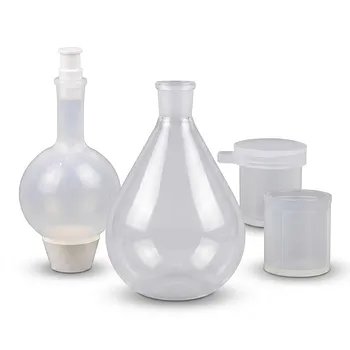
Fully fluorinated polymers such as PTFE and PFA are distinguished by a fluorine-saturated molecular structure that provides much greater chemical inertness than partially fluorinated polymers. Their strong C–F bonding, low surface energy, and absence of reactive C–H segments make them highly resistant to solvent attack, swelling, dissolution, and leaching across broad chemical and temperature ranges. Partially fluorinated polymers such as PVDF, ETFE, and PCTFE retain hydrogen or other non-fluorinated groups, which generally narrows their chemical compatibility and lowers their thermal stability.
The key distinction is structural: fully fluorinated polymers largely prevent solvents and reagents from interacting with the polymer matrix, while partially fluorinated polymers offer more potential sites for chemical interaction, absorption, swelling, or degradation.
Why Fluorine Saturation Improves Chemical Resistance
Strong C–F bonding limits chemical attack
PTFE and PFA contain carbon frameworks shielded by fluorine atoms. The resulting abundance of strong C–F bonds makes the polymer backbone difficult for acids, bases, oxidizers, and organic reagents to disrupt.
Partially fluorinated materials retain other bonds, especially C–H bonds. These bonds are generally more chemically accessible and can reduce resistance to particular solvents, oxidizing environments, and elevated temperatures.
The polymer structure is highly nonpolar
Fully fluorinated polymers have very low surface energy and weak attractive interactions with most other substances. This gives PTFE and PFA their characteristic hydrophobic, oleophobic, and non-stick behavior.
Because many solvents do not interact favorably with the polymer, they typically have difficulty penetrating, solvating, or plasticizing the material.
Fluorine shields the carbon backbone
The fluorine atoms surrounding the carbon backbone act as a protective barrier. This shielding reduces the ability of reactive molecules to reach and attack the underlying carbon structure.
In partially fluorinated polymers, the shielding is incomplete. The exposed or less-fluorinated portions can permit greater interaction with solvents and reagents.
How the Difference Appears in Solvent Interaction
PTFE and PFA are generally insoluble
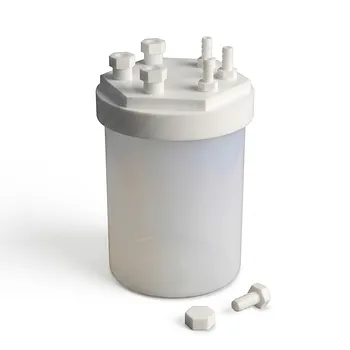
At normal laboratory operating conditions, PTFE and PFA do not readily dissolve in common organic solvents, strong acids, or strong bases. They are therefore used for tubing, digestion vessels, containers, fittings, and high-purity fluid-handling components.
Their resistance is not merely a matter of surface durability. The bulk polymer itself is difficult for solvents to penetrate and separate into a solution.
Swelling and plasticization are minimized
A solvent can damage a polymer without dissolving it. It may enter the polymer, increase chain mobility, cause swelling, or reduce mechanical strength.
PTFE and PFA generally show very low solvent absorption and limited swelling compared with partially fluorinated alternatives. This helps preserve dimensional accuracy and prevents changes in flow paths, seals, and vessel geometry.
Partially fluorinated polymers have narrower compatibility windows
Materials such as PVDF, ETFE, PCTFE, and ECTFE can provide excellent chemical resistance in many applications. However, their retained hydrogen, chlorine, or other non-perfluorinated structural elements make them more susceptible to selected solvents and conditions.
Depending on the grade and exposure, hot polar solvents, chlorinated solvents, organic amines, strong oxidizing acids, or boiling sulfonic acids may cause swelling, softening, cracking, or chemical attack.
Why This Matters in Laboratory Equipment
Lower risk of contamination and leaching
For trace analysis, even small amounts of extractables can compromise results. PTFE and PFA are preferred because their low reactivity and low solvent interaction reduce the likelihood of unwanted leaching into samples.
This is especially important for high-purity fluid transfer, digestion, sample storage, and analytical preparation.
Dimensional stability supports reliable fluid handling
Solvent-induced swelling can alter tubing internal diameter, fitting dimensions, seal compression, or vessel volume. Fully fluorinated materials are better suited to applications where chemical exposure must not change component geometry.
Thermal and chemical resistance work together
PTFE and PFA retain useful performance across broad temperature ranges while resisting chemical attack. This combination is valuable in elevated-temperature digestion, aggressive reagent handling, and repeated thermal cycling.
Partially fluorinated polymers often provide lower-cost or mechanically stronger alternatives, but their maximum temperature and chemical compatibility must be evaluated more carefully.
The Practical Difference Between PTFE and PFA
PTFE prioritizes chemical inertness and low friction
PTFE is exceptionally resistant to chemical attack and has very low friction. It is widely used when chemical compatibility, non-stick behavior, and purity are more important than melt-processability.
A limitation is that conventional PTFE is difficult to melt-process, so components are commonly formed by specialized methods or machined from stock shapes.
PFA adds melt-processability and transparency
PFA is also fully fluorinated, but its perfluoroalkoxy structure allows it to be melt-processed more readily than PTFE. It can therefore be used for transparent tubing, molded vessels, and complex fluid-handling components.
PFA maintains the central advantages of a perfluoropolymer: very high chemical resistance, low extractables, and strong temperature performance.
Understanding the Trade-offs
Chemical resistance is not literally unlimited
“Near-universal chemical resistance” is a useful laboratory description, not an absolute guarantee. Extreme conditions involving very high temperatures, molten alkali metals, elemental fluorine, or certain highly reactive fluorinating systems can attack fluoropolymers.
Compatibility must still be checked against the specific chemical, concentration, temperature, exposure time, and mechanical stress.
Partially fluorinated polymers may be mechanically advantageous
The same non-fluorinated structural features that reduce chemical resistance can improve hardness, stiffness, creep resistance, barrier performance, or ease of processing.
For example, PCTFE may be selected for low gas permeability, while ETFE or ECTFE may be chosen when toughness or rigidity is more important than maximum chemical inertness.
Chemical compatibility does not guarantee mechanical suitability
A polymer may resist a reagent chemically but still fail through creep, stress cracking, abrasion, permeation, or deformation. Material selection must therefore consider pressure, load, sealing force, permeability, and temperature—not chemical resistance alone.
Making the Right Choice for Your Goal
The appropriate choice depends on whether chemical inertness or a specialized mechanical property is the dominant requirement.
- If your primary focus is maximum chemical resistance and sample purity: Choose PTFE or PFA, particularly for aggressive reagents, trace analysis, digestion vessels, and high-purity fluid transfer.
- If your primary focus is solvent handling at moderate severity with greater stiffness or mechanical strength: Consider a partially fluorinated polymer, but verify compatibility with the exact solvent and temperature.
- If your primary focus is melt processing or transparent molded components: PFA is generally more practical than conventional PTFE while retaining perfluoropolymer-level chemical resistance.
- If your primary focus is gas-barrier performance or rigidity: Evaluate materials such as PCTFE or ECTFE, accepting that their chemical and thermal limits are narrower than those of PTFE and PFA.
For laboratory applications where solvent interaction, leaching, and chemical attack must be minimized simultaneously, fully fluorinated PTFE and PFA provide the most robust material platform.
Summary Table:
| Property | Fully Fluorinated (PTFE, PFA) | Partially Fluorinated (PVDF, ETFE, PCTFE) |
|---|---|---|
| Chemical Structure | Carbon fully shielded by fluorine; strong C–F bonds | Contains C–H or other non-fluorinated groups |
| Chemical Resistance | Excellent; resists most acids, bases, solvents | Good but narrower; susceptible to selected solvents |
| Solvent Interaction | Minimal swelling, absorption, or dissolution | Higher potential for swelling, plasticization, or cracking |
| Thermal Stability | High; usable across broad temperature range | Lower; must check temperature limits |
| Leaching/Contamination | Very low extractables; ideal for trace analysis | Higher risk of extractables in some conditions |
| Dimensional Stability | Excellent; minimal swelling preserves tolerances | May change dimensions due to swelling |
| Processability | PTFE: hard to melt-process; PFA: melt-processable | Generally easier to process (melt, mold) |
| Mechanical Strength | Lower stiffness/creep resistance | Better hardness, stiffness, toughness |
| Typical Applications | High-purity labware, tubing, digestion vessels | Where mechanical strength or barrier needed |
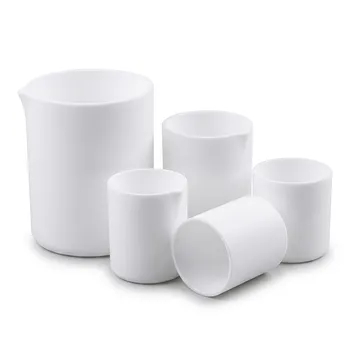
Ensure your lab achieves the highest chemical resistance and purity with our premium PTFE and PFA labware. Whether you need standard beakers, customized digestion vessels, or high-purity fluid handling components, our end-to-end CNC machining capabilities deliver precision and reliability. Contact us today to discuss your requirements and get a tailored solution—contact us!
Related Products
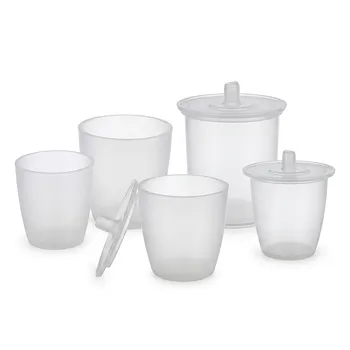
- High Purity PFA Crucible and Corrosion Resistant PTFE Beaker for Trace Analysis and Custom Laboratory Applications
- PTFE PFA Vacuum Filtration System Corrosion Resistant Customizable Shatterproof Laboratory Device
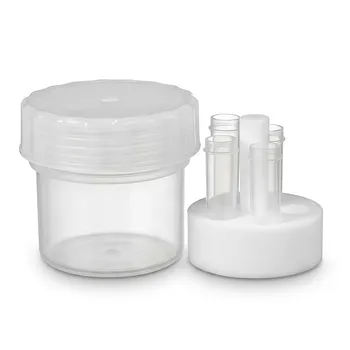
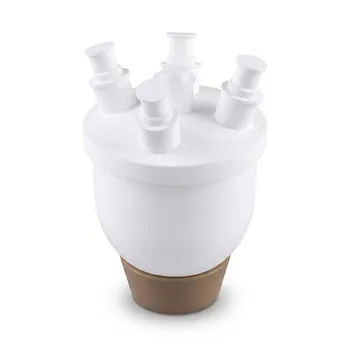
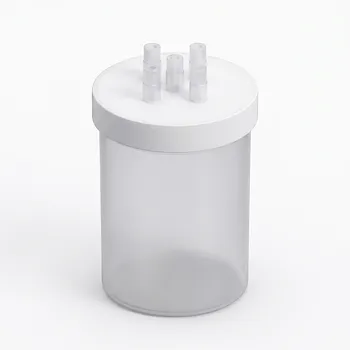
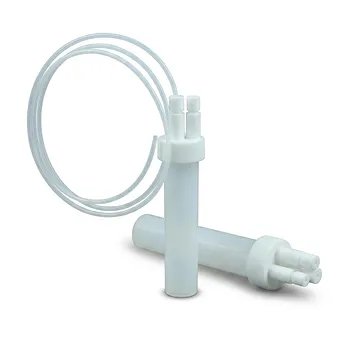
- Corrosion Resistant PTFE Support with PFA Transparent Reaction Tank and High Purity PFA Sampling Tube for Trace Analysis
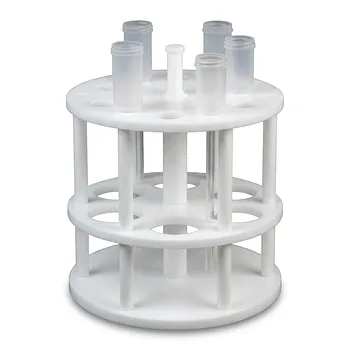
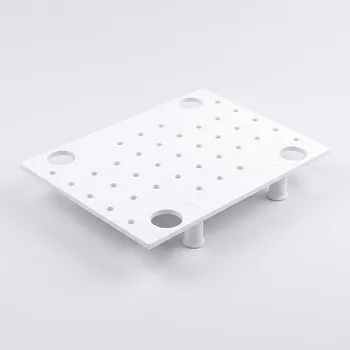
- Custom PFA Microcolumn Racks and PTFE Machined Low Background Corrosion Resistant Laboratory Fixtures
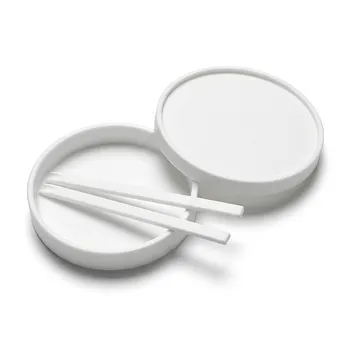
- Custom Polytetrafluoroethylene PTFE Petri Dishes 60mm Corrosion Resistant Low Background Labware
People Also Ask
- Why are high-purity vessels critical for BiFeO3 synthesis? Ensuring Phase Purity
- Why is the use of high-purity PFA or PTFE labware critical during TiO2 nanoparticle purification? Protect Sample Purity
- Why is high-purity PFA labware necessary for Znx@LS-2 zeolite ICP-OES analysis? Ensure Trace-Level Precision
- Why is high-purity PFA trace analysis labware used for MXene? Ensure Superior Material Integrity in Research
- Why is high-purity PFA trace analysis labware used for sample processing when preparing Mo2CTx@MoS2? Ensure Material Purity