Advanced fluoropolymers are suitable for microelectronics because they combine very low dielectric loss with moisture-resistant surfaces, high thermal stability, and strong mechanical integrity. Polynaphthalene-containing fluoropolymers (PFN) can reach a dielectric constant near 2.33 with dielectric loss below 1.2 × 10⁻³ at 30 MHz. Crosslinked perfluorocyclobutane (PFCB) aryl ether networks provide similarly low permittivity, with reported Dk values below 2.45, while also offering high glass-transition temperatures, hydrophobicity, smooth surfaces, and high modulus.
The key advantage is not any single property. It is the combination of low-k electrical behavior, low moisture uptake, clean and smooth interfaces, thermal endurance, and mechanical strength in one material system.
Why Low Dielectric Properties Matter
Low dielectric constant reduces signal delay
A dielectric constant as low as 2.33 for PFN or below 2.45 for PFCB networks reduces the capacitance associated with interconnects and insulating layers. Lower capacitance generally supports shorter signal propagation delay and lower dynamic power consumption.
This is particularly important as interconnect dimensions shrink and operating frequencies increase. Conventional insulating materials may meet basic electrical requirements but provide less margin for high-density, high-speed designs.
Low dielectric loss preserves high-frequency signals
PFN has a reported dielectric loss below 1.2 × 10⁻³ at 30 MHz, while crosslinked PFCB systems show dissipation factors around 2.1 × 10⁻³ between 1 and 30 MHz. These low values limit energy dissipated as heat within the dielectric.
Low loss also reduces signal attenuation and dielectric absorption. The result is better signal integrity and less contribution to cross-talk in high-frequency interconnects, sensors, and instrument wiring.
Fluorination supports electrical insulation
The highly fluorinated structure contributes to stable insulating behavior and low polarizability. Related fluoropolymers such as FEP demonstrate dielectric constants near 2.0 to 2.1 across a broad frequency range and very low dissipation factors.
These characteristics are useful where electrical isolation must remain reliable in the presence of chemicals, heat, or wide frequency variation. They can benefit sensor housings, electrochemical cells, analytical instruments, and semiconductor packaging structures.
Why Surface Properties Matter
Hydrophobicity limits moisture-related failure
PFN surfaces have reported water contact angles around 101°, while PFCB networks reach approximately 105°. These values indicate strongly water-repellent surfaces.
Low surface wettability helps limit moisture adsorption and penetration. That matters because absorbed water can increase dielectric loss, alter the effective dielectric constant, promote corrosion, and degrade adhesion at material interfaces.
Smooth surfaces support precision fabrication
PFCB networks can exhibit surface roughness below 5.79 nm, and PFN is also reported to have low surface roughness. Smooth films and molded surfaces reduce defect sites and improve contact uniformity.
In microelectronics, this can support more consistent lithography, metallization, bonding, and thin-film deposition. In microfluidic or laboratory components, smoothness also improves cleanability and reduces locations where particles or residues can accumulate.
Low surface energy can improve chemical resistance
Fluorinated surfaces are generally resistant to wetting by many chemicals and have low surface energy. This contributes to the non-stick and cleanable behavior valued in fluid-handling and analytical components.
However, the same low surface energy that resists contamination can make bonding and coating difficult. Interface preparation therefore remains important when a fluoropolymer must adhere strongly to metals, silicon, or other polymers.
Why Mechanical Properties Matter
High modulus preserves dimensional accuracy
PFN has a reported Young’s modulus as high as 17.13 GPa, while a crosslinked PFCB system has been reported at approximately 10.06 GPa. These are high values for low-k polymeric materials.
A high modulus helps resist deformation during wafer processing, thermal cycling, clamping, and assembly. It also helps maintain the geometry of thin films, dielectric layers, microfluidic channels, and precision-machined components.
Adhesion protects interfaces
Strong adhesion to silicon is essential because delamination can expose conductors, create voids, and produce moisture pathways. The primary reference reports strong adhesion to silicon, with a stated value of 13.46 GPa.
That figure should be interpreted carefully because adhesion results depend strongly on the test method and may not be directly comparable to a bulk modulus or tensile strength. The practical requirement is a durable interface that survives thermal, chemical, and mechanical cycling without cracking or peeling.
Crosslinking improves network stability
PFCB aryl ether networks form a crosslinked structure during processing. This network architecture helps limit chain motion and supports high modulus, dimensional stability, and resistance to solvent attack.
The crosslinked structure also helps the material retain its shape at elevated temperatures, which is valuable in semiconductor process environments and high-purity laboratory hardware.
Why Thermal and Chemical Stability Matter
High-temperature stability expands the process window
Crosslinked PFCB materials can have a glass-transition temperature above 350 °C and a 5% weight-loss temperature of approximately 472 °C in nitrogen. These values indicate substantial resistance to softening and thermal decomposition.
Such stability is relevant to high-temperature curing, semiconductor processing, thermal cycling, and components exposed to elevated operating temperatures. It also reduces the risk that the dielectric or structural material will release degradation products during use.
Chemical inertness protects purity
Fluoropolymers such as PTFE and PFA are highly resistant to aggressive acids, bases, and solvents. Their chemical inertness helps prevent corrosion and limits the release of ionic or molecular contaminants into ultrapure fluids.
That property is especially important for semiconductor wet processing, reagent transfer, reaction vessels, and laboratory apparatus. PFN and PFCB networks are attractive when this chemical resistance must be combined with better mechanical precision and low-k performance.
Cleanability supports contamination control
Hydrophobic, smooth, chemically resistant surfaces are easier to rinse and clean. This reduces the likelihood that process residues, particles, or reagent contaminants will remain on component surfaces.
For microfluidic and analytical systems, cleanability can be as important as dielectric performance because surface contamination can change flow behavior, sensor response, or sample composition.
Understanding the Trade-offs
Low surface energy complicates bonding
A hydrophobic fluoropolymer surface does not automatically provide strong adhesion to every substrate. Surface activation, primer chemistry, plasma treatment, or carefully engineered copolymer interfaces may be required.
The bonding process must be selected without compromising the polymer’s dielectric properties, chemical resistance, or surface cleanliness.
Crosslinking can reduce process flexibility
Crosslinked PFCB networks offer strong thermal and mechanical stability, but they are generally less readily reprocessed than thermoplastics. Once the network is formed, reshaping or dissolving the material may be difficult.
Manufacturing therefore requires control of film formation, patterning, cure conditions, and dimensional shrinkage before or during crosslinking.
Low-k performance is not the only design criterion
A low dielectric constant does not by itself guarantee reliable device performance. Moisture uptake, film thickness, frequency, temperature, filler content, porosity, interface quality, and measurement method can all affect the effective electrical behavior.
Material selection should therefore use application-specific data rather than comparing isolated Dk values.
Mechanical strength must be balanced with process requirements
A high modulus improves dimensional stability, but a very rigid network may be less tolerant of differential thermal expansion or mechanical stress. The polymer, substrate, metal layers, and encapsulants must be evaluated as a complete stack.
Reliability testing should include thermal cycling, humidity exposure, chemical contact, adhesion testing, and electrical aging where appropriate.
Making the Right Choice for Your Goal
The most suitable material depends on which failure modes matter most in the final device or component.
- If your primary focus is high-speed signal integrity: Prioritize PFN or PFCB formulations with very low dielectric constant and dissipation factor, then validate performance at the actual operating frequency and temperature.
- If your primary focus is moisture resistance: Select a fluorinated, hydrophobic surface with low water uptake and verify that interfaces remain sealed after humidity and thermal cycling.
- If your primary focus is dimensional stability: Favor crosslinked PFCB or high-modulus PFN systems with documented glass-transition and decomposition temperatures.
- If your primary focus is semiconductor chemical purity: Use a chemically resistant fluoropolymer formulation and qualify ionic contamination, extractables, particle generation, and compatibility with the process chemicals.
- If your primary focus is reliable integration with silicon: Evaluate adhesion using a defined, application-relevant test method and include thermal cycling, surface preparation, and interface aging in qualification.
- If your primary focus is microfluidic or analytical components: Combine low roughness, hydrophobicity, chemical inertness, and cleanability with the required electrical insulation and mechanical stiffness.
Advanced PFN and PFCB fluoropolymers are valuable because they address electrical, environmental, surface, and mechanical reliability requirements simultaneously rather than optimizing only one property.
Summary Table:
| Property | PFN | PFCB |
|---|---|---|
| Dielectric Constant | 2.33 | <2.45 |
| Dielectric Loss | <1.2×10⁻³ (30 MHz) | ≈2.1×10⁻³ (1-30 MHz) |
| Water Contact Angle | 101° | 105° |
| Young's Modulus | 17.13 GPa | 10.06 GPa |
| Glass Transition Temp | - | >350°C |
Ready to enhance your microelectronic devices with high-performance fluoropolymers? KINTEK provides top-quality PFN and PFCB materials, along with expert support for your custom needs. Our PTFE and PFA lab supplies are designed for the highest purity and precision. Contact us today to discuss your application and discover how we can help you achieve superior performance.
Related Products
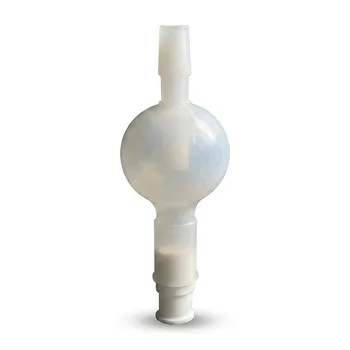
- High Purity PFA Chromatography Column with Collection Bottle Corrosion Resistant Fluoropolymer Filtration System for Trace Analysis
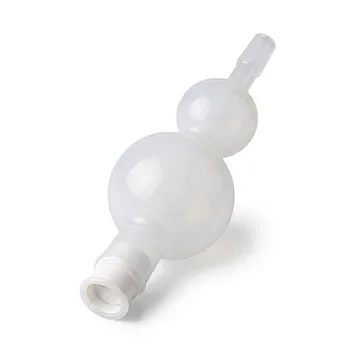
- High Purity PFA Chromatography Columns and Collection Bottles Corrosion Resistant Fluoropolymer Filtration Systems for Trace Analysis
- High Purity PFA Chromatography Column Double Layer Constant Pressure Filter Column with Sieve Plate Acid Resistant Fluoropolymer Filtration System
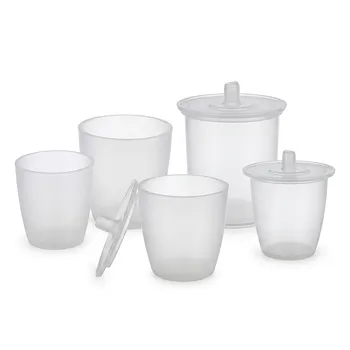
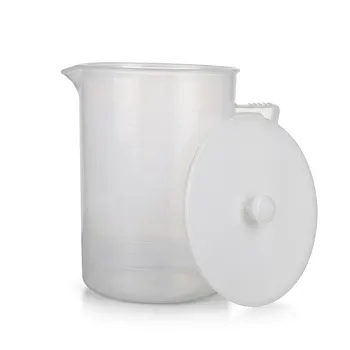
- High Purity PFA Crucible and Corrosion Resistant PTFE Beaker for Trace Analysis and Custom Laboratory Applications
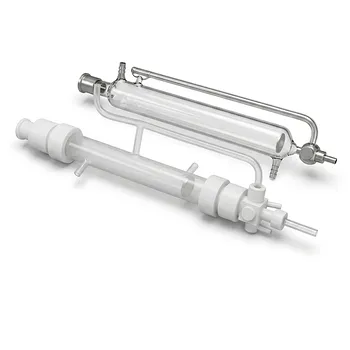
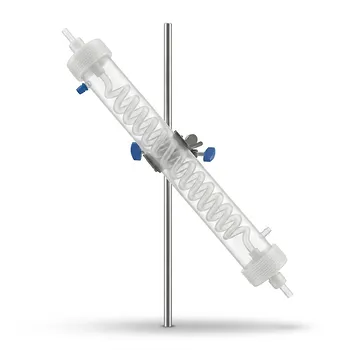
- Custom PFA Serpentine Straight Condenser HF Resistant Reaction Device Laboratory Cooling Column
People Also Ask
- What are the primary functional and temperature differences between PFA and FEP when selecting melt-processible fluoropolymers for custom laboratory apparatus?
- Why is the chemical stability of polymer endgroups critical when selecting melt-processible fluoropolymers like PFA for high-purity laboratory apparatus? Choose Stable Endgroups for Reliable Performance
- What are the characteristics of PFA material? A Guide to Its High-Performance Balance
- Why is Perfluoroalkoxy alkane (PFA) preferred over glass or stainless steel in pharmaceutical process development? Pure Yield
- Why is PFA superior for cleaning and preventing cross-contamination? The Gold Standard for Ultra-Trace Lab Hygiene