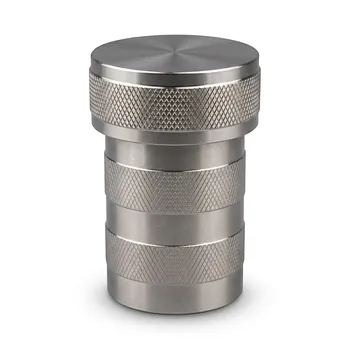
Hydrothermal synthesis autoclaves provide a sealed, high-temperature, and high-pressure environment essential for precursor formation. This specialized setting enables the controlled hydrolysis of urea, releasing the hydroxide and carbonate ions required for the precipitation of metal ions. These conditions use thermodynamic pressure to drive the self-assembly of metal hydroxycarbonates into stable, high-surface-area structures like nanoflowers.
Core Takeaway: The autoclave creates a high-energy, pressurized "micro-reactor" that forces chemical reactions and physical self-assembly that are impossible at standard atmospheric conditions, resulting in highly crystalline and morphologically precise precursors.
The Physical Foundation of the Hydrothermal Environment
Sealed High-Temperature Systems
The autoclave operates as a closed system, allowing the internal temperature to rise well above the boiling point of the solvent. This thermal energy provides the necessary activation energy for the chemical precursors to react.
The Role of Thermodynamic Pressure
High internal pressure is generated as the liquid expansion is restricted within the sealed vessel. This thermodynamic pressure is critical for driving the dissolution-recrystallization process, ensuring the precursor achieves high crystallinity.
Solvent Behavior Under Pressure
Under these conditions, the solvent's properties change, increasing the solubility of reagents that are otherwise difficult to dissolve. This allows for a more homogenous reaction medium, which is vital for the uniform growth of the $Zn_{1/3}Co_{2/3}(OH)(CO_3)_{1/2} \cdot nH_2O$ crystals.
Chemical Transformation and Ion Management
Controlled Urea Hydrolysis
The high-temperature environment facilitates the slow, controlled hydrolysis of urea. This process gradually releases hydroxide ($OH^-$) and carbonate ($CO_3^{2-}$) ions into the solution at a steady rate.
Precipitation of Metal Hydroxycarbonates
As these ions are released, they react with zinc and cobalt cations to form the metal hydroxycarbonate precursor. The stable environment ensures that the stoichiometry of the $Zn_{1/3}Co_{2/3}$ ratio is maintained throughout the precipitation.
Driving Morphological Self-Assembly
The combination of heat and pressure does more than just trigger a reaction; it acts as a template-free driver for self-assembly. This forces the primary particles to organize into complex nanoflower structures, which provide the high specific surface area required for advanced applications.
Understanding the Trade-offs and Pitfalls
Sensitivity to Temperature Fluctuations
Small variations in temperature can drastically alter the reaction kinetics and the final morphology. If the temperature is too low, the urea may not hydrolyze completely; if too high, the particles may aggregate and lose their "nanoflower" structure.
Risk of Over-Pressurization
Operating a sealed vessel at high temperatures carries inherent safety risks. Failure to strictly monitor the filling degree of the autoclave can lead to excessive pressure, potentially resulting in equipment failure or inconsistent crystal phases.
Reaction Time Diminishing Returns
While longer dwell times can improve crystallinity, excessive time in the autoclave can lead to Oswald ripening. This process causes smaller particles to dissolve and reform onto larger ones, potentially reducing the total surface area and catalytic efficiency.
How to Apply This to Your Project
Recommendations for Experimental Design
To achieve the best results when preparing metal hydroxycarbonate precursors, consider your primary objective:
- If your primary focus is High Specific Surface Area: Maintain a moderate temperature (e.g., $120^\circ C - 150^\circ C$) and shorter reaction times to prevent the over-growth of nanoflower petals.
- If your primary focus is High Phase Purity: Prioritize longer hydrothermal dwell times to ensure the complete dissolution-recrystallization of any amorphous intermediates into the desired crystalline phase.
- If your primary focus is Structural Stability: Ensure the autoclave filling degree is optimized (typically 60-80%) to maintain the steady thermodynamic pressure required for robust self-assembly.
By precisely controlling the hydrothermal environment, you can tailor the precursor's architecture to meet specific technical requirements.
Summary Table:
| Condition | Mechanism | Impact on Precursor |
|---|---|---|
| High Temperature | Accelerates urea hydrolysis | Controlled release of $OH^-$ and $CO_3^{2-}$ ions |
| High Pressure | Increases reagent solubility | Drives dissolution-recrystallization for high crystallinity |
| Sealed System | Prevents solvent evaporation | Maintains precise stoichiometry and thermal stability |
| Thermodynamic Energy | Forces physical self-assembly | Creates high-surface-area nanoflower morphologies |
Elevate Your Synthesis Precision with KINTEK
Achieve unmatched results in your material research with KINTEK’s high-performance fluoropolymer solutions. From everyday PFA beakers, PTFE stirring bars, and reagent bottles to advanced hydrothermal synthesis liners, microwave digestion vessels, and custom-engineered reaction apparatus, we manufacture virtually every laboratory essential required for high-purity trace analysis and chemical synthesis.
Our end-to-end custom CNC fabrication allows us to deliver everything from high-volume standard consumables (tubing, fittings, valves) to bespoke, complex machined parts tailored to your specific experimental needs. Backed by an absolute focus on high-performance fluoropolymers, KINTEK ensures your laboratory equipment can withstand the most demanding thermal and chemical environments.
Ready to optimize your laboratory workflow? Contact us today to discuss your project requirements!
References
- Deyang Zhang, Ying Guo. Formation of surfaces oxide vacancies in porous ZnCo2O4 nanoflowers for enhanced energy storage performance. DOI: 10.1186/s11671-025-04347-y
This article is also based on technical information from Kintek Knowledge Base .
Related Products
- High Temperature Corrosion Resistant Hydrothermal Synthesis Reactor with TFM Inner Liner and Straight Cylinder Design
- PTFE Lined High Pressure Digestion Vessel 50ml High Temperature Hydrothermal Synthesis Tank
- Custom TFM Reaction Vessel with Stainless Steel Jacket and PTFE Inner Cup for High Corrosion Resistance
People Also Ask
- What is the role of a corrosion-resistant reactor in the synthesis of lignin-based carbon dots? Ensure Maximum Purity
- What are the technical advantages of using hydrothermal synthesis reactors for advanced electronic & optical nanomaterials?
- How does a hydrothermal synthesis reactor facilitate the production of crystalline materials with tailored morphologies? Precision Crystal Growth
- Why is the sealing reliability of a hydrothermal synthesis reactor critical for 24-hour cycles? Ensure Nano-Precision
- What role do hydrothermal synthesis reactors play in CQD preparation? Achieve High-Purity Nanomaterial Synthesis