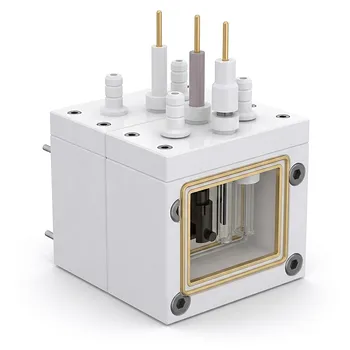
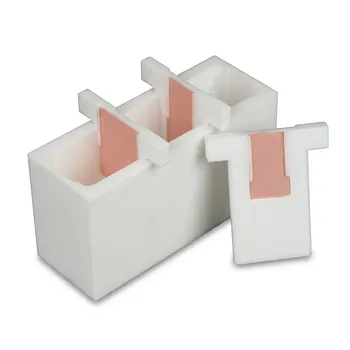
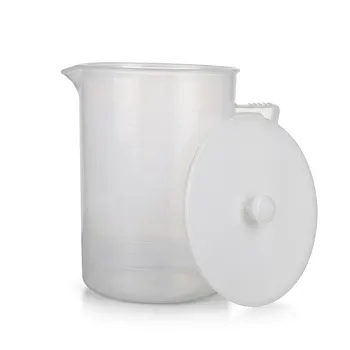
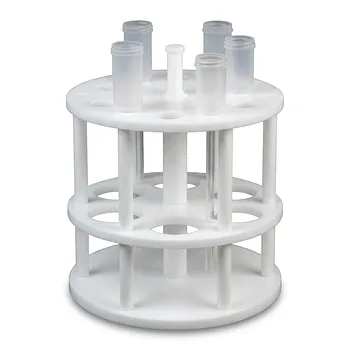
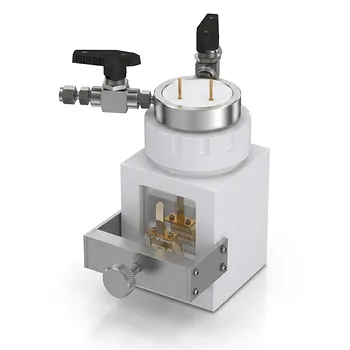
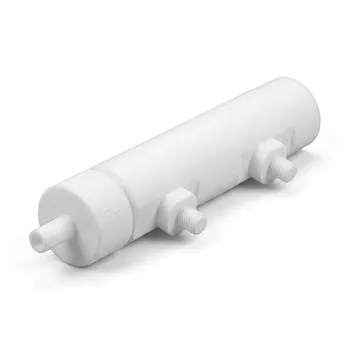
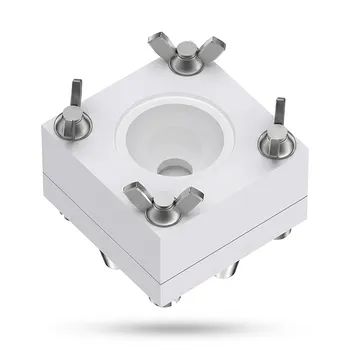
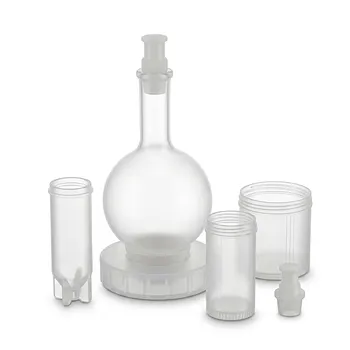
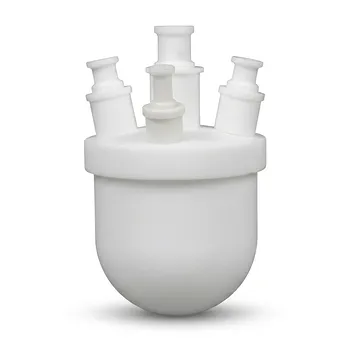
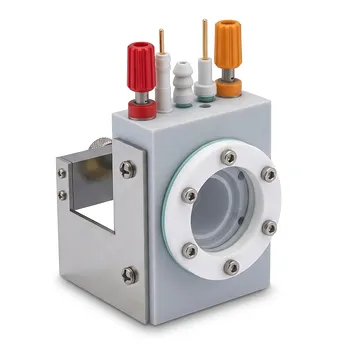
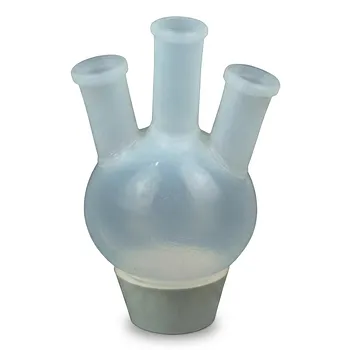
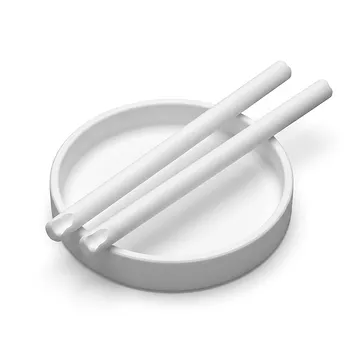
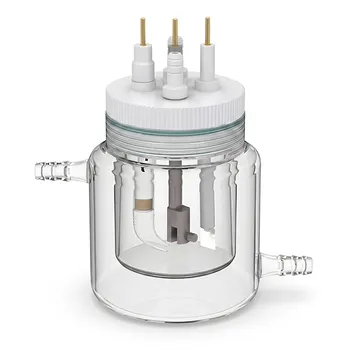
Fluoropolymer labware is non-stick and electrically insulating for related molecular reasons: its surfaces expose fluorine-rich groups that interact weakly with liquids, while its carbon-fluorine framework is difficult to polarize in an electric field. In PTFE and PFA, this produces very low surface free energy, strong water and oil repellency, and minimal sample adhesion. The same low polarizability, combined with fluorine-induced free volume and low moisture uptake, helps produce a low dielectric constant and low dielectric loss.
Core takeaway: Fluoropolymers repel contaminants because fluorine-rich surfaces minimize intermolecular attraction, and they exhibit low dielectric response because their electrons and molecular groups are not easily displaced by an applied electric field.
Why Fluoropolymer Surfaces Resist Adhesion
Low surface free energy reduces wetting
Adhesion requires a liquid or solid to form favorable interactions with a surface. Fluoropolymer surfaces have exceptionally low surface free energy, so forming that interface provides relatively little energetic benefit.
As a result, many liquids form beads rather than spreading across PTFE or PFA. Poor spreading reduces the contact area available for adhesion and makes rinsing more effective.
Fluorine creates a weakly interactive outer surface
Fluorinated polymer chains preferentially orient fluorine-rich groups toward the material-air or material-liquid interface. In perfluoropolymers, the outer surface is therefore dominated by highly fluorinated groups such as C-F and CF₂ units.
These groups shield the carbon backbone and present a chemically inert, low-energy interface to the sample. The surface does not readily offer hydrogen-bonding sites, ionic sites, or other strongly attractive chemical functionalities.
Dispersion forces are comparatively weak
All molecular surfaces experience van der Waals attractions, including fluoropolymers. However, fluorine has low atomic polarizability: its electron cloud is tightly held and is relatively difficult to distort.
That limits the induced-dipole interactions between the fluoropolymer surface and many sample molecules. The interactions are not absent, but they are often too weak to produce substantial retention on a smooth, uncontaminated surface.
Fluorinated chains are chemically and physically resistant
The C-F bond is strong, and the fluorinated backbone is resistant to many chemical reagents. This matters because surface degradation can create polar groups, roughness, or defects that increase adhesion.
A chemically stable surface preserves its low-energy character during contact with aggressive reagents, supporting consistent non-stick behavior in vessels, tubing, valves, and cell bodies.
Why Fluoropolymers Have a Low Dielectric Constant
Dielectric response depends on polarization
A material's dielectric constant describes how strongly it becomes polarized when exposed to an electric field. Polarization can arise from electronic displacement, atomic or ionic motion, and orientation of permanent molecular dipoles.
Fluoropolymers generally have a relatively small total response because their electrons are tightly bound, their fluorine atoms are weakly polarizable, and their molecular structure limits mobile charge.
C-F bonds have low polarizability
The C-F bond is polar because fluorine attracts electron density strongly. Polarity alone, however, does not determine the dielectric constant.
The relevant factor is how much the bond's charge distribution can change under an applied field. Because the electrons are tightly localized, the C-F framework contributes relatively little induced polarization, particularly compared with more easily deformable hydrocarbon or aromatic structures.
Fluorinated groups increase free volume
Groups such as CF₃ and other bulky fluorinated substituents can disrupt close polymer-chain packing. This increases the polymer's fractional free volume, meaning that a greater portion of the material consists of molecular-scale unoccupied space.
Free volume lowers the density of polarizable matter per unit volume. It can therefore reduce the dielectric constant, although the magnitude depends on the polymer's exact structure, crystallinity, density, and processing history.
Molecular symmetry can reduce net dipole effects
Fluorinated groups may contain strongly polar C-F bonds, but their arrangement within the repeat unit affects the net molecular dipole. Symmetric or regularly arranged groups can partially cancel one another's permanent dipoles.
This reduces dipole-orientation contributions to the dielectric response. The result is a material that can contain polar bonds while still exhibiting a relatively low bulk dielectric constant.
Low moisture uptake stabilizes electrical behavior
Water is much more polar than a fluoropolymer and has a high dielectric constant. If a polymer absorbs moisture, the absorbed water can increase the effective dielectric constant and dielectric loss.
Fluoropolymer hydrophobicity and low moisture absorption limit this effect. In precision electrochemical cells and sensor housings, that helps reduce humidity-dependent changes in impedance, capacitance, and signal integrity.
Why These Properties Matter in Electrochemical Components
Electrical isolation between electrodes
Fluoropolymer cell bodies, spacers, probe holders, and insulating fittings can separate electrodes while resisting leakage currents. Their high electrical resistivity and dielectric strength help maintain the intended current path through the electrolyte.
The exact dielectric strength is application- and geometry-dependent, especially for machined parts, thin films, voids, edges, and defects. Published values should therefore be treated as material-test data rather than guaranteed values for every component.
Reduced parasitic capacitance
Insulating components near electrodes and signal conductors can contribute parasitic capacitance. A lower dielectric constant generally reduces this unwanted capacitive coupling for a given geometry.
That can improve the fidelity of fast electrochemical measurements and high-frequency instrumentation, where stray capacitance can distort transients, phase measurements, or sensor signals.
Lower dielectric loss
Dielectric loss represents energy dissipated as the electric field changes. Low-loss fluoropolymers reduce field-dependent dissipation and help preserve signal amplitude and phase.
This is particularly useful in sensor housings, high-frequency analytical equipment, precision fixtures, and electrochemical systems that measure small changes in current, voltage, or impedance.
Chemical cleanliness supports measurement quality
The non-stick surface reduces retention of analytes, precipitates, and reaction products. Lower retention helps minimize memory effects and cross-contamination between samples.
In trace analysis, this chemical behavior can be as important as the electrical insulation. A component that electrically isolates an electrode but retains the previous analyte can still compromise the measurement.
Understanding the Trade-offs
Low dielectric constant does not mean zero electrical interaction
A fluoropolymer still polarizes to some extent, and its dielectric properties vary with frequency, temperature, crystallinity, filler content, and manufacturing method. Values reported for PTFE, PFA, and other fluoropolymers should not be treated as interchangeable.
The commonly cited value near 2.1 is associated with highly fluorinated materials such as PTFE under particular test conditions. Other fluorinated polymers may show values closer to the upper-2 to low-3 range, while different sources may report substantially different values because they use different materials or measurement methods.
Non-stick does not mean contamination-proof
Fluoropolymer surfaces can retain material through mechanical entrapment, scratches, machining marks, deposits, or electrostatic effects. Strongly adsorbing species and particles can also remain despite weak chemical attraction.
Cleaning performance therefore depends on surface finish, geometry, cleaning chemistry, temperature, and the physical state of the residue.
Surface damage can change behavior
Abrasion, radiation, thermal exposure, chemical attack, or contamination can alter the surface composition and roughness. A damaged surface may wet differently and may retain more sample than an undamaged one.
For critical work, inspect surfaces and validate recovery or carryover experimentally rather than relying only on the polymer's nominal grade.
Electrical performance is geometry-dependent
Dielectric strength and parasitic capacitance depend on thickness, electrode spacing, sharp edges, voids, joints, and assembly tolerances. A material with excellent bulk properties can still permit leakage or breakdown if the component design concentrates electric fields.
Electrochemical designs should evaluate the assembled cell, including electrolyte paths and interfaces, rather than testing the polymer in isolation.
Making the Right Choice for Your Goal
Select the material and component design according to the dominant failure mode in the application.
- If your primary focus is minimizing sample retention: Use a chemically stable, smooth fluoropolymer surface and validate rinsing, recovery, and carryover for the actual analytes.
- If your primary focus is low electrical interference: Choose a fluoropolymer with verified dielectric and loss data at the operating frequency, then control spacing, geometry, moisture, and assembly quality.
- If your primary focus is electrochemical measurement stability: Combine fluoropolymer insulation with careful electrode isolation, low-leakage connections, and testing of the complete cell under operating conditions.
- If your primary focus is high-temperature or aggressive-chemical service: Verify the specific grade's chemical, thermal, mechanical, and dimensional limits rather than assuming all fluoropolymers perform identically.
Understanding both surface interactions and bulk polarization allows fluoropolymer components to be selected for measurable performance rather than reputation alone.
Summary Table:
| Property | Mechanism | Practical Benefit |
|---|---|---|
| Non-stick behavior | Fluorine-rich surface with low surface free energy; weak dispersion forces | Reduced sample adhesion, easy cleaning, low cross-contamination |
| Low dielectric constant | Tightly bound electrons, low polarizability, increased free volume | Reduced parasitic capacitance, improved signal fidelity |
| Low dielectric loss | Minimal energy dissipation under electric field | Stable performance in high-frequency applications |
| Chemical & moisture resistance | Strong C-F bonds, hydrophobicity | Stable electrical behavior, resistance to aggressive reagents |
Unlock the full potential of your electrochemical and lab applications with KINTEK's high-performance fluoropolymer products.
Our PTFE and PFA labware, electrochemical cells, and custom-machined components deliver the non-stick and low-dielectric performance you need. Whether you're a researcher seeking trace-level accuracy or a distributor looking for reliable supply, our expertise and capabilities ensure you get superior products and support.
Contact us today to discuss your requirements and discover how we can enhance your measurement quality and operational efficiency.
Related Products
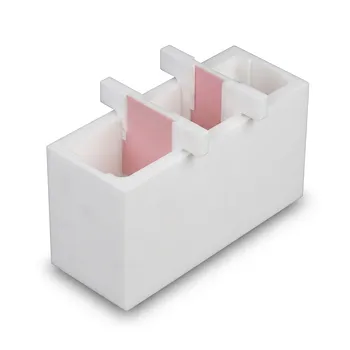
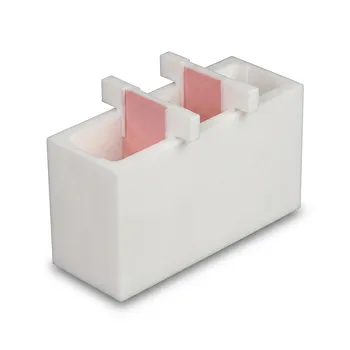
- Corrosion Resistant PTFE Electrochemical Cell for New Energy Research Inert Insulating Customizable Lab Reaction Vessel
- Square PTFE Electrochemical Cell for Silicon Wafer Processing and Hydrofluoric Acid Resistance in Semiconductor and New Energy Research
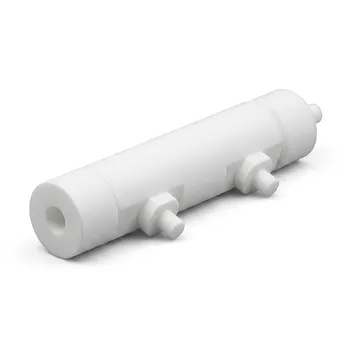
- Custom PTFE Electrolytic Cell Corrosion Resistant Low Background Reaction Vessel with Inlet Outlet Ports
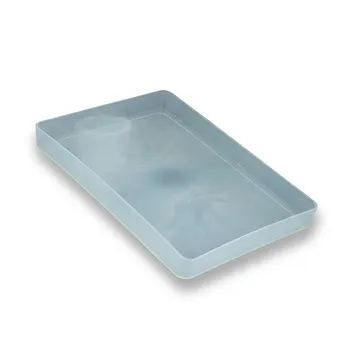
- Customizable PFA Square Tray Corrosion Resistant High Temperature Large Petri Dish Electrolytic Cell
- All PTFE Exchangeable Membrane Electrochemical Cell Dual Chamber Three Electrode Photoelectrochemical Cell for Laboratory Trace Analysis
People Also Ask
- How do custom PTFE electrochemical cells improve the accuracy of stability testing for alkaline catalysts compared to glass cells?
- How does the hydrophobicity of PTFE benefit electrochemical measurements? Enhance Stability and Precision in Your Lab
- What makes PTFE an ideal construction material for custom electrochemical cells and electronic analytical instrumentation housings? Discover superior chemical resistance and electrical insulation
- Why must seawater electrolysis test cells have high corrosion resistance? Protect catalyst stability & data accuracy.
- What are the key steps for structural integrity in molded PTFE lab reaction vessels? Master fine powder processing.