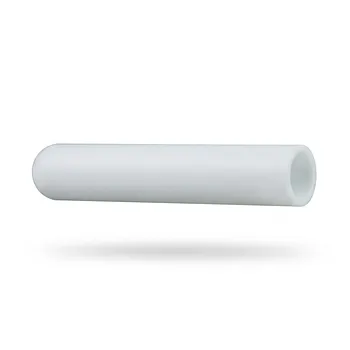
PTFE capillary tubing is defined by its precision inner diameters, typically ranging from 0.1 mm to 5 mm, and its high-purity polytetrafluoroethylene (PTFE) resin composition. These small-diameter extruded tubes utilize a specialized molecular structure of repeating carbon-fluorine units to provide extreme chemical inertness, high thermal stability, and an exceptionally low coefficient of friction.
Core Takeaway: PTFE capillary tubing provides a chemically non-reactive and thermally stable solution for transporting sensitive fluids in tight spaces. Its performance relies on a balance of precision dimensions and the inherent molecular strength of fluoropolymer resin.
Standard Physical Dimensions and Tolerances
Inner and Outer Diameter Ranges
The most critical dimension for capillary tubing is the inner diameter (ID), which generally ranges from 0.1 mm to 5.0 mm. The outer diameter (OD) is scaled accordingly to achieve specific wall thicknesses required for various fluidic applications.
Wall Thickness Classifications
Wall thickness is not universal and is often categorized into specific classes such as light-wall, thin-wall, standard-wall, and heavy-wall. These classifications, often guided by standards like ASTM D3295, allow engineers to select the appropriate balance between flexibility and burst pressure.
Concentricity and Surface Finish
High-quality capillaries maintain a concentricity of greater than 95%, ensuring uniform wall thickness and preventing structural weak spots. The internal surface finish is exceptionally smooth, typically with a roughness (Ra) of less than 0.2 µm, which minimizes boundary-layer drag during fluid transport.
Material Composition and Molecular Structure
The Fluoropolymer Backbone
PTFE is a linear fluoropolymer consisting of repeating –(CF₂–CF₂)ₙ– units. This carbon backbone is entirely shielded by fluorine atoms, which creates a protective barrier against chemical attack.
Bond Energy and Stability
The performance of the material is derived from the strong carbon-fluorine bonds, which possess a high bond energy of approximately 485 kJ/mol. This molecular strength ensures the tubing remains stable in environments that would degrade glass or stainless steel.
Physical Property Constants
PTFE resin has a density of 2.2 g/cm³ and a refractive index of 1.38. It exhibits a water absorption rate of only 0.01% over 24 hours, making it nearly impervious to moisture-induced degradation.
Functional Performance Characteristics
Thermal and Chemical Resistance
PTFE capillaries operate across a vast temperature range, from –200 °C to +260 °C. They are highly resistant to almost all industrial chemicals and solvents due to their extreme chemical inertness.
Surface Energy and Friction
The material is inherently hydrophobic and oleophobic, meaning it repels both water and oils. It also boasts one of the lowest coefficients of friction for a solid material, typically between 0.05 and 0.10.
Electrical Insulation
PTFE is an excellent dielectric performer and electrical insulator. It is highly resistant to tracking currents and maintains its integrity in sensitive electronic or analytical environments.
Understanding the Trade-offs
Mechanical Creep and Cold Flow
One of the primary limitations of PTFE is its tendency to exhibit creep or "cold flow" under sustained mechanical load. This means the tubing may permanently deform over time if subjected to constant pressure or stress.
Pressure Limitations
PTFE has a lower burst pressure rating compared to metallic tubing or stiffer polymers like PEEK. This generally limits its use to low- to moderate-pressure applications where chemical resistance is prioritized over structural rigidity.
Environmental Sensitivities
While PTFE has excellent UV resistance, it has poor radiation resistance. Exposure to high-energy radiation can lead to chain scission, causing the material to become brittle and lose its mechanical properties.
How to Apply This to Your Project
Selecting the Right Tubing Specifications
When integrating PTFE capillary tubing into a system, your choice should be dictated by the specific demands of your fluid environment and mechanical constraints.
- If your primary focus is Chemical Purity: Select high-purity virgin PTFE resin to ensure zero contamination of sensitive reagents or samples.
- If your primary focus is High-Flow Precision: Prioritize tubing with high concentricity (>95%) and a low surface roughness (Ra < 0.2 µm) to minimize turbulence.
- If your primary focus is Mechanical Longevity: Choose heavy-wall classifications and avoid tight bend radii to mitigate the effects of creep and cold flow.
By balancing these dimensional precision factors with the inherent chemical strengths of the PTFE polymer, you can ensure reliable fluid transport in the most demanding analytical and industrial environments.
Summary Table:
| Feature | Specification/Detail |
|---|---|
| Inner Diameter (ID) | 0.1 mm to 5.0 mm |
| Material Composition | High-purity PTFE resin (–CF₂–CF₂–) |
| Operating Temperature | –200 °C to +260 °C |
| Surface Roughness (Ra) | < 0.2 µm (Internal) |
| Concentricity | > 95% |
| Friction Coefficient | 0.05 to 0.10 |
| Density | 2.2 g/cm³ |
Elevate Your Lab’s Precision with KINTEK Fluoropolymers
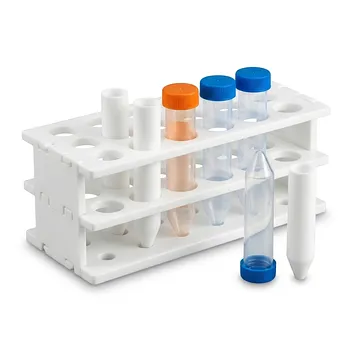
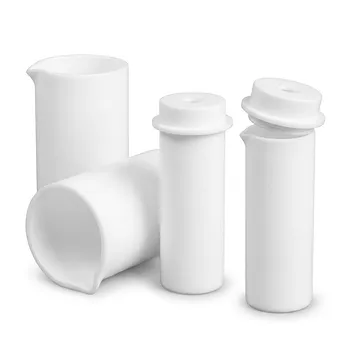
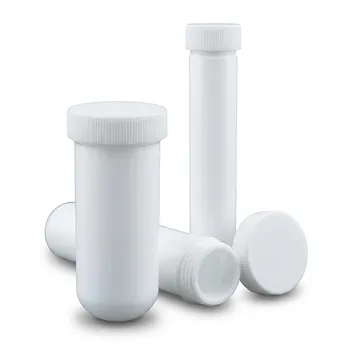
Ensure absolute chemical purity and thermal stability in your most demanding applications. From everyday basic labware like PTFE beakers, reagent bottles, and centrifuge tubes to high-purity trace analysis instruments and comprehensive fluid transfer components (tubing, fittings, and valves), KINTEK manufactures virtually every laboratory supply imaginable from high-performance PTFE and PFA.
Our expertise extends to advanced reaction apparatus, including standard or custom electrochemical cells, battery testing fixtures, and microwave digestion vessels. Backed by end-to-end custom CNC fabrication, we deliver everything from high-volume consumables to complex, non-standard machined parts tailored to your research needs.
Ready to optimize your fluidic systems? Contact us today to discuss your custom requirements and experience the KINTEK difference.
Related Products
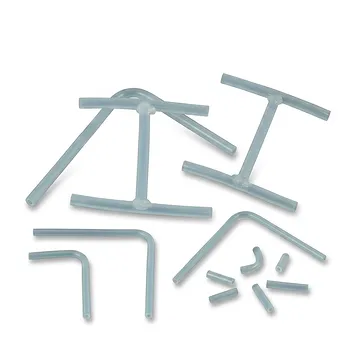
- High Performance PFA Coiled Spring Tubing and Custom PTFE Fabrication Services with Welded Fittings and Precision Bent Components
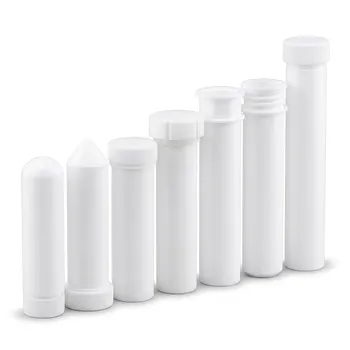
- Custom High Purity PTFE Digestion Tubes and Centrifuge Tubes for Trace Metal Analysis
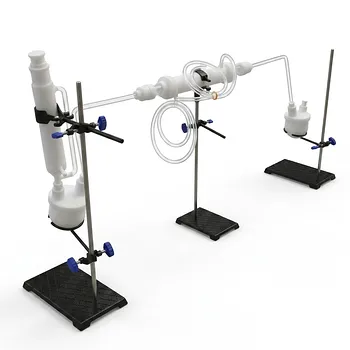
- Custom PTFE Condenser Tube Hydrofluoric Acid Resistant Reflux Device Constant Pressure Separatory Funnel
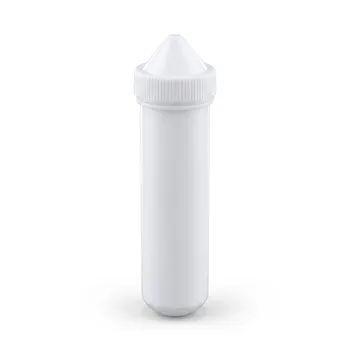
- High Purity PTFE Digestion Tubes and Custom Centrifuge Tubes 100ml for Trace Analysis and Chemical Digestion
- Custom PTFE Condenser Tube Reflux Reaction Condensation Purification Device Semiconductor Chemical Lab Equipment
People Also Ask
- What are the technical advantages of high-precision PFA tubing in MXene production? Maximize Purity and Yield.
- What technical advantages do PFA tubing and fittings offer? Master Precision Fluid Transfer and Flow Chemistry
- What are the technical advantages of high-quality PFA tubing? Achieve Ultimate Purity and Precision in Fluid Handling
- What are the key benefits of PTFE in custom fabrication? Unlock Performance in Extreme Conditions
- What fabrication services are available for PTFE? Shearing, Stamping, Laser Cutting, Molding & Machining