In carbon dioxide ($CO_2$) reduction experiments, the dual-chamber H-type cell and Anion Exchange Membrane (AEM) serve as critical isolation tools. They physically separate the cathode and anode processes to prevent the re-oxidation of valuable reduction products and the interference of oxygen. This configuration is essential for obtaining accurate data on catalyst performance and ensuring the purity of collected chemical species.
The H-type cell and AEM work in tandem to provide a controlled electrochemical environment by isolating reaction products from destructive cross-reactions. This separation is the foundation for calculating precise Faradaic efficiency and ensuring the integrity of the chemical analysis.
The Role of the H-Type Electrolytic Cell
Physical Isolation of Redox Sites
The H-type cell is designed with two distinct compartments to house the cathode and anode separately. This physical distance ensures that the reduction reaction (at the cathode) and the oxidation reaction (at the anode) do not interfere with one another.
Enabling Multi-Phase Product Collection
By isolating the chambers, researchers can independently collect and analyze gas-phase products (like ethylene or carbon monoxide) and liquid-phase products (like formate or alcohols). This setup is vital for screening new catalytic materials and studying complex reaction mechanisms.
Maintaining a Stable Testing Environment
The dual-chamber design allows for a stable, $CO_2$-saturated environment in the catholyte. This stability is necessary for obtaining reliable linear sweep voltammetry (LSV) curves and consistent performance data over time.
The Function of the Anion Exchange Membrane (AEM)
Maintaining Charge Balance
The AEM acts as a selective gatekeeper between the two chambers. It allows specific anions, such as bicarbonate ($HCO_3^-$), to pass through the membrane to balance the electrical charge while keeping the bulk electrolytes separate.
Preventing Re-oxidation of Products
Without a membrane, reduction products generated at the cathode—such as methane, ethylene, or formate—would migrate to the anode. Once there, they would be re-oxidized, leading to significant errors in measurement and loss of product.
Blocking Oxygen Interference
Oxygen ($O_2$) is a primary byproduct of the water oxidation reaction at the anode. The AEM prevents this oxygen from diffusing to the cathode, where it would otherwise interfere with the $CO_2$ reduction reaction and lower the overall efficiency of the cell.
Understanding the Trade-offs
Increased Ohmic Resistance
The presence of a membrane and the physical distance in an H-type cell increases internal resistance (ohmic loss). This can result in higher required voltages compared to a single-compartment or flow-cell design, potentially masking the true energy efficiency of the catalyst.
Membrane Fouling and Crossover
While AEMs are effective, they are not perfect barriers. Over long durations, liquid products can still slowly permeate the membrane, and ions can accumulate within the membrane structure, leading to a gradual decline in performance or "fouling."
Mass Transport Limitations
H-type cells are often limited by the solubility of $CO_2$ in the liquid electrolyte. Because the gas must dissolve before reaching the catalyst, these cells may not accurately reflect how a catalyst will perform in high-current-density industrial flow cells.
How to Apply This to Your Project
When setting up your $CO_2$ reduction experiments, your choice of configuration should align with your specific research objectives.
- If your primary focus is Faradaic Efficiency (FE) accuracy: Use the H-type cell with a high-quality AEM to ensure no products are lost to re-oxidation at the anode.
- If your primary focus is liquid product recovery: Ensure the AEM is specifically rated for low permeability of small organic molecules like formate or ethanol.
- If your primary focus is screening catalyst activity: Utilize the H-type cell to establish a stable baseline before moving to more complex flow-cell architectures.
By mastering the separation of electrochemical environments, you ensure that your data reflects the true capabilities of your catalytic materials.
Summary Table:
| Component | Primary Function | Key Benefit |
|---|---|---|
| H-Type Cell | Physical separation of cathode/anode | Prevents cross-contamination; enables independent product collection. |
| AEM Membrane | Selective anion transport ($HCO_3^-$) | Maintains charge balance while blocking $O_2$ interference and product loss. |
| Dual-Chamber Setup | Controlled electrochemical environment | Essential for calculating precise Faradaic Efficiency (FE). |
| Product Isolation | Separate gas/liquid collection | Simplifies screening of catalysts and complex reaction mechanisms. |
Elevate Your Electrochemical Research with KINTEK
Precision in $CO_2$ reduction requires high-purity environments and robust hardware. At KINTEK, we specialize in high-performance fluoropolymer solutions designed to withstand the most demanding laboratory conditions. From high-purity trace analysis instruments and custom-machined H-type electrolytic cells to advanced PTFE/PFA labware (beakers, digestion tubes, and fittings), we provide the tools you need for accurate, repeatable results.
Why choose KINTEK?
- Comprehensive Range: We offer everything from basic consumables (O-rings, stir bars, and tubing) to complex standard and custom electrochemical cells.
- Custom CNC Fabrication: Our end-to-end machining capabilities deliver bespoke laboratory setups and non-standard parts tailored to your specific research needs.
- Material Expertise: Absolute focus on high-performance PTFE and PFA for maximum chemical resistance and zero contamination.
Ready to optimize your lab setup? Contact our technical experts today to discuss your custom project or high-volume requirements!
References
- Yuki Tsuda, Nobuhiko Takeichi. Microwave-assisted hydrothermal synthesis of amino acid-loaded Cu<sub>2</sub>O hybrid particles for CO<sub>2</sub> reduction electrocatalysis. DOI: 10.1039/d5ra02252e
This article is also based on technical information from Kintek Knowledge Base .
Related Products
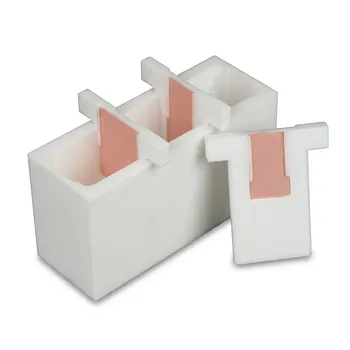
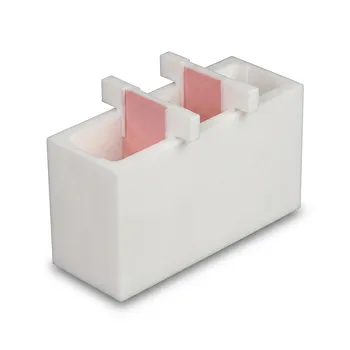
- White PTFE Electrolytic Cell with Movable Slider and Insulated Lid for Fluorine Corrosion Resistance
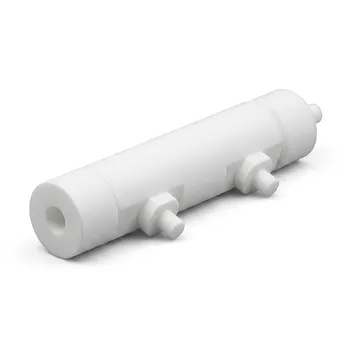
- Custom PTFE Electrolytic Cell Corrosion Resistant Low Background Reaction Vessel with Inlet Outlet Ports
- Flame Retardant Electrophoresis Cell Corrosion Resistant PTFE Evaporating Dish Customizable White Hydrolysis Cell
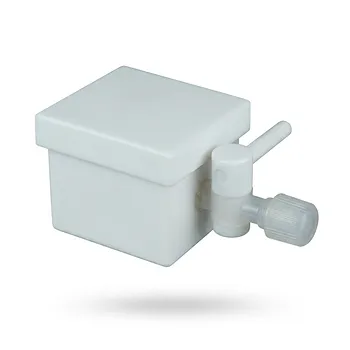
- Square PTFE Electrochemical Cell for Silicon Wafer Processing and Hydrofluoric Acid Resistance in Semiconductor and New Energy Research
- High Purity Custom PTFE Reaction Cell Electrolytic Tank for Semiconductor and Polysilicon Industrial Applications
People Also Ask
- What makes PTFE an ideal construction material for custom electrochemical cells and electronic analytical instrumentation housings? Discover superior chemical resistance and electrical insulation
- How do custom PTFE electrochemical cells improve the accuracy of stability testing for alkaline catalysts compared to glass cells?
- How does the hydrophobicity of PTFE benefit electrochemical measurements? Enhance Stability and Precision in Your Lab
- How are electrolytic cells utilized in the Hall-Héroult process? Optimizing Purity and Energy Efficiency
- What are the primary components required for the construction of a standard electrolytic cell? Essential Hardware Guide