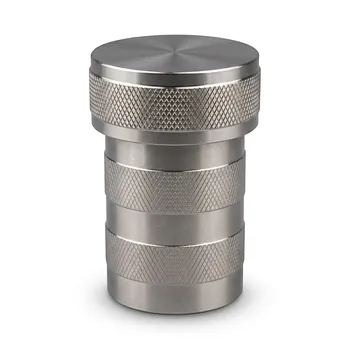
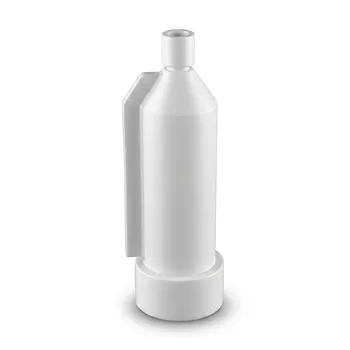
To maintain pressure stability in hydrothermal reactors, heating and cooling rates must be strictly kept below 5 °C per minute. This specific thermal limit minimizes structural stress on the liner and ensures that the seal within the stainless steel autoclave remains intact. Adhering to this protocol prevents the differential expansion that often leads to pressure leaks or liner deformation.
Controlled thermal gradients are the foundation of reactor safety and longevity. By limiting temperature changes to 5 °C per minute, you preserve the mechanical integrity of the liner and ensure a reliable, leak-proof environment for high-pressure synthesis.
The Mechanics of Thermal Gradient Control
Maintaining the 5 °C per Minute Threshold
The primary rule for hydrothermal safety is a heating and cooling rate of less than 5 °C per minute. This pace allows the internal liner and the external stainless steel shell to expand and contract at a manageable rate.
Rapid fluctuations create internal mechanical stress, which can warp the liner or cause it to pull away from the sealing surfaces. Slowing the process ensures the assembly moves as a unified system, maintaining a constant seal.
Preserving the Pressure Seal
The integrity of the stainless steel autoclave seal is directly dependent on the behavior of the internal lining. If the liner undergoes rapid thermal shock, it may lose its ability to exert even pressure against the gasket or cap.
Maintaining a controlled gradient ensures the lining remains seated properly within the metal housing. This prevents the escape of volatile precursors and maintains the precise internal pressure required for successful hydrothermal reactions.
Material Fatigue and Structural Integrity
The Impact of Repeated Thermal Cycling
Frequent use of hydrothermal reactors leads to thermal cycling fatigue, particularly in polytetrafluoroethylene (PTFE) liners. Over time, the repeated expansion and contraction can cause the material to lose its original shape.
This fatigue often manifests as thinning of the liner walls or a loss of elasticity. If the 5 °C per minute rule is ignored, this degradation is significantly accelerated, leading to premature failure of the vessel.
Detecting Porosity and Degradation
As liners age, they may become porous or develop micro-cracks that are not immediately visible to the naked eye. Regular inspection is required to identify signs of thermal degradation or chemical wear.
A liner that has become porous can trap chemical residues, leading to cross-contamination in subsequent experiments. Once a liner shows signs of discoloration or surface texture changes, it should be replaced to ensure experimental purity and safety.
Understanding the Trade-offs and Limitations
PTFE Vulnerability in Aggressive Environments
While PTFE is a standard lining material, it has clear limitations when exposed to aggressive alkaline or fluoride-bearing solutions. These chemicals can interact with the liner under high heat, accelerating the breakdown of the polymer chain.
In these specific scenarios, the standard heating protocol may not be enough to prevent container corrosion. Users must weigh the convenience of PTFE against the risk of sample contamination and structural failure.
The Necessity of Alternative Materials
If your synthesis requires extreme temperatures or highly corrosive reagents, a noble metal liner may be necessary. These materials offer superior resistance to chemical attack and can handle higher thermal loads than standard polymers.
However, metal liners are significantly more expensive and require different handling procedures. The transition to these materials is a trade-off between operational cost and chemical robustness.
How to Apply These Protocols to Your Project
Recommendations for Reactor Management
- If your primary focus is reactor longevity: Always program your furnace or heating mantle to ramp at 3-4 °C per minute to stay safely below the maximum threshold.
- If your primary focus is working with aggressive chemicals: Transition from PTFE to noble metal liners to prevent chemical erosion and sample contamination.
- If your primary focus is experimental reproducibility: Implement a mandatory inspection log to track the number of thermal cycles each liner has undergone.
Consistent adherence to controlled thermal ramps is the most effective way to guarantee the safety and success of your hydrothermal synthesis.
Summary Table:
| Parameter | Recommended Protocol | Key Benefit |
|---|---|---|
| Heating/Cooling Rate | < 5 °C per minute | Prevents structural stress and leaks |
| Optimal Ramp Speed | 3-4 °C per minute | Maximizes liner longevity and safety |
| Liner Material | PTFE / Noble Metals | Ensures chemical compatibility |
| Maintenance Action | Regular Inspection Log | Identifies fatigue and prevents contamination |
Elevate Your Synthesis with KINTEK’s High-Performance Fluoropolymers
Precise thermal control deserves superior hardware. KINTEK specializes in high-performance PTFE and PFA laboratory supplies designed to withstand the rigors of high-pressure synthesis. From standard hydrothermal synthesis liners and microwave digestion vessels to high-purity trace analysis instruments, we ensure your equipment maintains absolute integrity under stress.
Why partner with KINTEK?
- Comprehensive Range: We manufacture everything from basic labware (beakers, crucibles, reagent bottles) and fluid transfer components (tubing, valves) to advanced electrochemical cells and battery testing fixtures.
- Precision Engineering: Our end-to-end custom CNC fabrication allows us to deliver complex, non-standard machined parts and bespoke laboratory setups tailored to your specific research needs.
- Material Expertise: We maintain an exclusive focus on high-performance fluoropolymers, providing you with durable, low-fatigue consumables like O-rings, gaskets, and specialized stirring bars.
Don't let equipment failure compromise your results. Whether you need high-volume standard consumables or a custom-engineered reaction vessel, KINTEK delivers the quality and reliability your lab demands.
Contact KINTEK Today for a Custom Solution
Related Products
- High Temperature Corrosion Resistant Hydrothermal Synthesis Reactor with TFM Inner Liner and Straight Cylinder Design
- PTFE Lined High Pressure Digestion Vessel 50ml High Temperature Hydrothermal Synthesis Tank
- High Pressure Custom TFM Reactor Stainless Steel Outer Vessel PTFE Inner Cup for Corrosive Synthesis
- Custom TFM Reaction Vessel with Stainless Steel Jacket and PTFE Inner Cup for High Corrosion Resistance
- High Purity PTFE Corrosion Resistant Reaction Vessel with Luer Fittings and Caps for Trace Analysis
People Also Ask
- What is the role of a corrosion-resistant reactor in the synthesis of lignin-based carbon dots? Ensure Maximum Purity
- What are the technical advantages of using hydrothermal synthesis reactors for advanced electronic & optical nanomaterials?
- How does a hydrothermal synthesis reactor facilitate the production of crystalline materials with tailored morphologies? Precision Crystal Growth
- Why is the sealing reliability of a hydrothermal synthesis reactor critical for 24-hour cycles? Ensure Nano-Precision
- What role do hydrothermal synthesis reactors play in CQD preparation? Achieve High-Purity Nanomaterial Synthesis