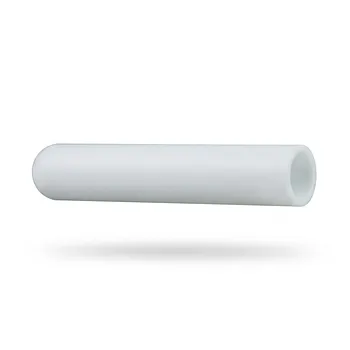
PTFE capillary tubing is defined by its exceptional chemical resistance, high thermal stability, and ultra-low friction surfaces. These tubes are fabricated from Polytetrafluoroethylene (PTFE) resin, featuring a linear fluoropolymer structure with a carbon backbone fully shielded by fluorine atoms. This molecular shield results in a material that is almost entirely chemically inert, hydrophobic, and capable of maintaining its structural integrity across an extreme temperature range from -200°C to +260°C.
Core Takeaway: PTFE capillary tubing serves as a high-performance conduit for precision fluid handling, offering a unique combination of extreme chemical "blankness" and a non-stick surface that prevents contamination and material buildup in critical applications.
The Molecular Foundation of PTFE Performance
The Power of the Carbon-Fluorine Bond
The core of PTFE's performance lies in its repeating –(CF₂–CF₂)ₙ– units. The carbon-fluorine bonds are among the strongest in organic chemistry, with a bond energy of approximately 485 kJ/mol. This high energy makes the backbone nearly impossible to break down through chemical or thermal means under standard operating conditions.
Total Molecular Shielding
In a PTFE molecule, the fluorine atoms are large enough to form a protective sheath around the carbon chain. This shielding prevents reactive chemicals from reaching the vulnerable carbon backbone. This is why the material remains inert when exposed to the most aggressive acids, bases, and organic solvents.
Primary Material Properties
Unrivaled Thermal Stability
PTFE capillary tubing maintains its mechanical properties over an incredibly wide operating window. It remains flexible and does not become brittle in cryogenic conditions (-200°C) and does not melt or degrade at high temperatures up to +260°C (+500°F).
Surface Energy and Low Friction
The material exhibits one of the lowest coefficients of friction of any solid (0.05–0.10). This "self-lubricating" property, combined with high hydrophobicity (water contact angles of 100–110°), ensures that fluids flow with minimal resistance and that residues do not adhere to the tube walls.
Dielectric Strength and Purity
PTFE is an excellent electrical insulator with high dielectric strength. Because it is manufactured from high-purity resins without the need for plasticizers or additives, it is often preferred in applications where fluid purity is paramount, such as in analytical chemistry or medical devices.
Structural Characteristics of Capillary Tubing
Precision Dimensions
As the name implies, capillary tubing is characterized by its small-diameter structure. Inner diameters typically range from 0.1 mm to 2.0 mm, allowing for the precise movement of minute fluid volumes.
Thin-Walled Extrusion
Despite their small size, these tubes are extruded with high dimensional stability. They feature thin walls that offer a balance between flexibility for routing and enough structural integrity to resist collapsing under moderate vacuum or pressure.
Flexural Strength and Durability
PTFE possesses high flexural strength, meaning it can withstand repeated bending without cracking. This durability is critical in automated systems where the tubing may be subject to constant motion or vibration.
Understanding the Trade-offs
Mechanical Softness and Creep
While PTFE is tough, it is a relatively soft fluoropolymer. Under continuous high pressure or mechanical load, it can experience "creep" or cold flow, where the material slowly deforms over time.
Difficulty in Bonding
The same non-stick properties that make PTFE valuable also make it notoriously difficult to bond. Standard adhesives will not stick to the surface; achieving a secure bond usually requires specialized chemical etching or mechanical flaring of the tube ends.
How to Apply This to Your Project
Making the Right Choice for Your Goal
To determine if PTFE capillary tubing is the correct solution for your specific application, consider the following priorities:
- If your primary focus is Chemical Purity: Utilize PTFE to ensure that the tubing does not leach contaminants into your samples or degrade when exposed to aggressive solvents.
- If your primary focus is High-Temperature Fluid Transfer: Leverage the +260°C rating of PTFE to handle fluids that would melt or weaken standard polymers like PE or PVC.
- If your primary focus is Precision Microfluidics: Take advantage of the 0.1 mm ID capabilities and low friction to ensure consistent flow rates and minimal sample retention.
- If your primary focus is Electrical Insulation: Rely on the high dielectric strength of PTFE to protect sensitive electronic components in fluidic systems.
By understanding the unique molecular shielding of PTFE, you can confidently deploy this material in the most demanding technical environments.
Summary Table:
| Feature | Property / Characteristic | Key Benefit |
|---|---|---|
| Temperature Range | -200°C to +260°C | Maintains integrity in cryogenics and high heat |
| Chemical Resistance | Near-total inertness | Prevents contamination and material degradation |
| Coefficient of Friction | 0.05–0.10 | Ensures smooth fluid flow and minimal residue |
| Inner Diameter (ID) | 0.1 mm to 2.0 mm | Ideal for precision microfluidics and sampling |
| Surface Energy | Ultra-low (Hydrophobic) | Prevents adhesion and simplifies cleaning |
| Dielectric Strength | High Insulator | Excellent for sensitive electrical environments |
Elevate Your Lab Precision with KINTEK Fluoropolymer Solutions
Need high-performance PTFE or PFA components for your most demanding applications? KINTEK specializes in manufacturing an exhaustive range of laboratory supplies, from everyday basic labware (beakers, measuring cylinders, crucibles) and high-purity trace analysis instruments to comprehensive fluid transfer components (tubing, fittings, valves).
Our expertise extends to sample prep and filtration tools (filters, pipettes, tweezers) and advanced reaction apparatus like standard or custom electrochemical cells, battery testing fixtures, and microwave digestion vessels. Backed by end-to-end custom CNC fabrication, we deliver everything from complex non-standard machined parts to high-volume orders with an absolute focus on high-performance materials.
Ready to optimize your fluid handling or bespoke laboratory setup? Contact KINTEK today to receive expert guidance and a tailored quote for your specific project requirements.
Related Products
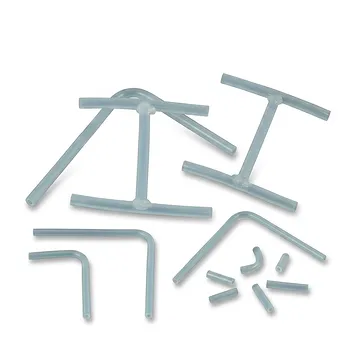
- High Performance PFA Coiled Spring Tubing and Custom PTFE Fabrication Services with Welded Fittings and Precision Bent Components
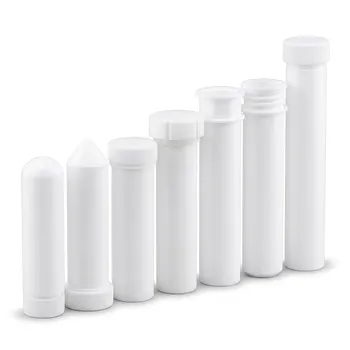
- Custom High Purity PTFE Digestion Tubes and Centrifuge Tubes for Trace Metal Analysis
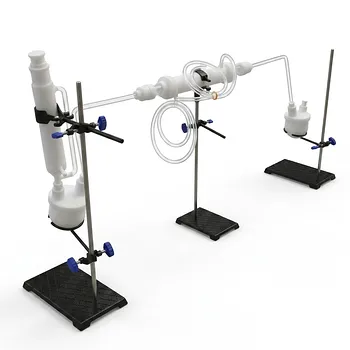
- Custom PTFE Condenser Tube Hydrofluoric Acid Resistant Reflux Device Constant Pressure Separatory Funnel
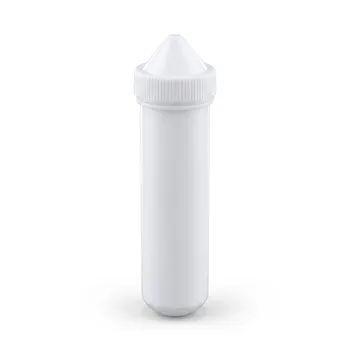
- High Purity PTFE Digestion Tubes and Custom Centrifuge Tubes 100ml for Trace Analysis and Chemical Digestion
- Custom PTFE Condenser Tube Reflux Reaction Condensation Purification Device Semiconductor Chemical Lab Equipment
People Also Ask
- What are the technical advantages of high-precision PFA tubing in MXene production? Maximize Purity and Yield.
- What technical advantages do PFA tubing and fittings offer? Master Precision Fluid Transfer and Flow Chemistry
- What are the technical advantages of high-quality PFA tubing? Achieve Ultimate Purity and Precision in Fluid Handling
- What are the key benefits of PTFE in custom fabrication? Unlock Performance in Extreme Conditions
- What fabrication services are available for PTFE? Shearing, Stamping, Laser Cutting, Molding & Machining