PTFE and PFA provide broadly equivalent high-temperature service in laboratory environments, but they differ fundamentally in how they are fabricated. Both typically support maximum continuous use temperatures of approximately 260°C and offer exceptional chemical resistance. PTFE has a higher melting point, around 327°C, but its extremely high melt viscosity prevents conventional melt processing; PFA melts at approximately 305°C and can be extruded, injection-molded, and otherwise formed using conventional thermoplastic methods.
The primary distinction is processability, not continuous-use temperature: PTFE is the better choice for robust stock shapes and custom-machined apparatus, while PFA is usually preferable for complex, seamless, translucent, or melt-sealed laboratory components.
Thermal Performance in Laboratory Service
Continuous operating temperature
Both materials are suitable for demanding thermal and chemical environments because their maximum continuous service temperature is generally about 260°C.
This makes either polymer appropriate for contact with strong acids, bases, organic solvents, and elevated-temperature laboratory processes, provided the specific design also accounts for pressure, mechanical loading, and exposure time.
Melting behavior
PTFE has a higher physical melting point, approximately 327°C, compared with roughly 305°C for PFA. That difference does not mean PTFE is automatically better for normal laboratory heating, because both materials have similar practical continuous-use limits.
The relevant distinction is how each polymer behaves near and above its melting point. PTFE forms a stiff, non-flowing gel with exceptionally high melt viscosity, whereas PFA becomes sufficiently fluid for conventional thermoplastic processing.
High-temperature mechanical stability
PFA retains useful mechanical modulus and structural integrity at temperatures above 200°C, supporting molded and extruded components used in heated fluid-handling systems.
PTFE also provides excellent high-temperature stability, but its fabrication route is usually selected around solid-form processing rather than melt shaping. For PTFE apparatus, the design must therefore accommodate the capabilities and limitations of compression molding, sintering, paste extrusion, or machining.
Why PTFE Is Difficult to Process
Extremely high melt viscosity
PTFE can exhibit melt viscosity on the order of 10^10 to 10^12 poise at 380°C. The polymer does not flow readily like a conventional thermoplastic, even when heated above its melting point.
As a result, standard injection molding and ordinary extrusion are generally unsuitable for producing complex PTFE laboratory components.
Specialized fabrication methods
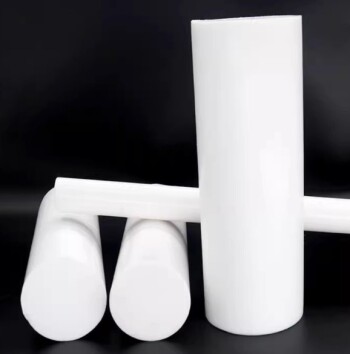
PTFE is commonly formed from powder through compression molding and sintering, or produced as stock shapes for subsequent machining.
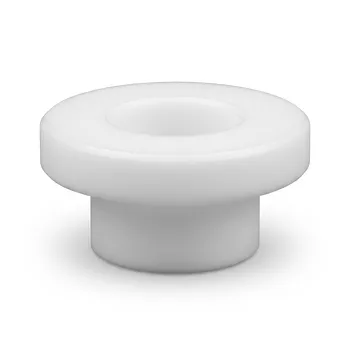
Precision CNC machining is especially useful when a laboratory requires non-standard dimensions, tight tolerances, threaded features, channels, or custom internal geometries.
Strength of the PTFE approach
Solid PTFE is well suited to heavy-duty labware, custom reaction apparatus, electrochemical cells, microwave digestion components, and other machined bodies.
Its extensive chemical resistance and low-friction surface make it valuable where durability and inert contact surfaces matter more than optical clarity or high-volume molded production.
Why PFA Is Easier to Manufacture
Copolymer structure
PFA is a copolymer based on tetrafluoroethylene and perfluoroalkyl vinyl ether comonomers. These side groups disrupt the highly regular PTFE structure enough to reduce melt viscosity.
The result is a perfluorinated polymer that retains much of PTFE's chemical and thermal performance while becoming sufficiently flowable for conventional processing.
Conventional molding and extrusion
PFA can be melt-extruded, injection-molded, and molded into intricate geometries. This enables manufacturers to produce features that would be expensive, difficult, or impractical to create by machining solid PTFE.
PFA can also support smooth, seamless, and melt-sealed designs useful in high-purity fluid systems.
Benefits for laboratory apparatus
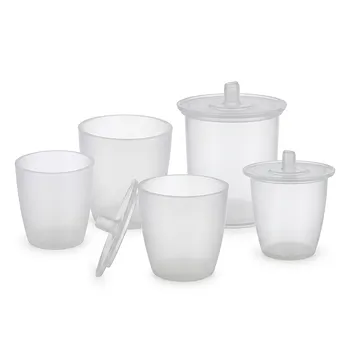
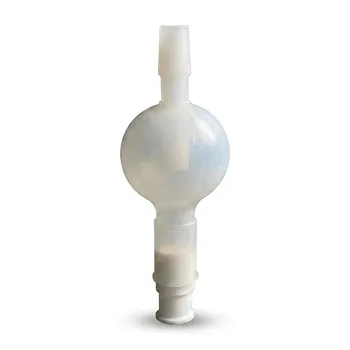
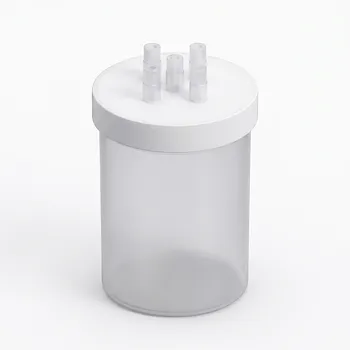
PFA is particularly effective for transparent or translucent tubing, molded bottles, fittings, valves, and sealed digestion vessels.
Its processing advantage is important in trace-analysis and high-purity applications, where smooth internal surfaces, low micro-porosity, minimal contamination risk, and reduced dead volume may be priorities.
How the Differences Affect Material Selection
Choose PTFE for custom-machined strength and flexibility
PTFE is a strong candidate when the apparatus is one-off, highly customized, or built from thick solid sections.
Machining allows engineers to modify dimensions, add specialized interfaces, and produce robust components without developing complex molding tools.
Choose PFA for complex fluid-handling geometries
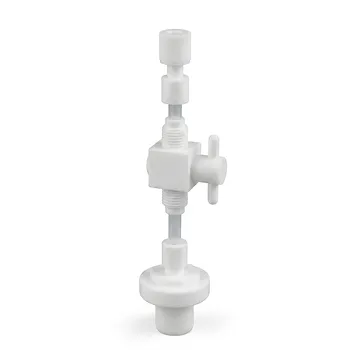
PFA is generally preferable when the design includes intricate channels, molded fittings, valves, tubing connections, or seamless vessels.
Its melt processability can reduce manufacturing complexity and produce more consistent geometries across repeated parts.
Consider visibility and cleanliness
PFA is often selected when translucency or visual inspection is useful, such as observing fluid movement, fill level, bubbles, or contamination.
Its ability to form smooth, low-porosity components also supports high-purity applications, although cleanliness ultimately depends on material grade, processing, handling, and system design.
Understanding the Trade-offs
PFA does not eliminate thermal design constraints
Although PFA can be used continuously to approximately 260°C, that limit should not be treated as a universal design temperature for every load condition.
Pressure, wall thickness, mechanical stress, thermal cycling, and chemical exposure can reduce the practical operating range of a finished component.
PTFE's higher melting point does not guarantee better apparatus performance
PTFE's melting point is higher than PFA's, but both materials have comparable maximum continuous service temperatures.
For most laboratory apparatus, the choice should therefore be based on the complete design requirement rather than melting point alone.
Machining PTFE can increase cost and variability
Custom CNC machining provides design freedom, but it may require more material, labor, and quality control than molding or extrusion.
Dimensional tolerances, surface finish, deformation during machining, and production repeatability should be evaluated when selecting PTFE for multiple components.
Melt processing introduces its own considerations
PFA's processability is a major advantage, but molded or extruded parts still require suitable tooling, process control, and attention to welds, seals, shrinkage, and thermal history.
The material is easier to shape than PTFE, but the finished apparatus must still be validated for the intended temperature, pressure, chemical exposure, and purity requirements.
Making the Right Choice for Your Goal
The best selection depends on whether the dominant requirement is fabrication flexibility, component complexity, mechanical robustness, or high-purity fluid handling.
- If your primary focus is custom geometry or heavy-duty apparatus: Choose PTFE when compression-molded stock shapes and precision CNC machining provide the required strength, dimensions, and chemical resistance.
- If your primary focus is complex molded or extruded components: Choose PFA for intricate tubing, fittings, valves, bottles, and vessels that benefit from conventional melt processing.
- If your primary focus is high-temperature operation: Treat both materials as broadly comparable for continuous service up to approximately 260°C, then verify the actual temperature, load, pressure, and chemical conditions.
- If your primary focus is high-purity fluid handling or visual inspection: Favor PFA when translucency, smooth seamless surfaces, low micro-porosity, or melt-sealed geometries are important.
PTFE is primarily a high-performance solid material to form and machine, while PFA offers a comparable thermal envelope with far greater manufacturing flexibility.
Summary Table:
| Property | PTFE | PFA |
|---|---|---|
| Max Continuous Use Temp | ~260°C | ~260°C |
| Melting Point | ~327°C | ~305°C |
| Melt Viscosity | Extremely high (10^10–10^12 poise) | Low enough for conventional processing |
| Processability | Difficult; requires compression molding, sintering, or machining | Excellent; can be extruded, injection-molded, sealed |
| Typical Applications | Custom-machined labware, electrochemical cells, heavy-duty apparatus | Tubing, fittings, valves, molded bottles, high-purity components |
| Key Advantage | Robust, custom-machined parts | Translucent, seamless, complex geometries |
Upgrade Your Lab with KINTEK's PTFE and PFA Solutions
At KINTEK, we specialize in high-performance fluoropolymers, offering an extensive range of labware and custom-machined components crafted from PTFE and PFA. Whether you need heavy-duty custom apparatus or intricate molded parts for high-purity applications, our expertise ensures optimal material selection and manufacturing precision.
- Custom CNC Machining: Get precise, non-standard PTFE parts tailored to your exact specifications.
- Molded PFA Components: Benefit from seamless, translucent, and complex geometries for demanding fluid handling.
- Extensive Product Range: From beakers and digestion vessels to valves and tubing, we have you covered.
Contact us today to discuss your requirements and discover how KINTEK can enhance your laboratory's performance and reliability. Contact Us
Related Products
- High Purity PFA Crucible and Corrosion Resistant PTFE Beaker for Trace Analysis and Custom Laboratory Applications
- PTFE PFA Vacuum Filtration System Corrosion Resistant Customizable Shatterproof Laboratory Device
- High Purity PFA PTFE Flare Stop Valves Customizable 2-Way 3-Way Reducing Fluoropolymer Fluid Control Solutions
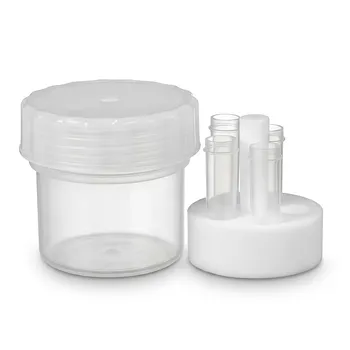
- Corrosion Resistant PTFE Support with PFA Transparent Reaction Tank and High Purity PFA Sampling Tube for Trace Analysis
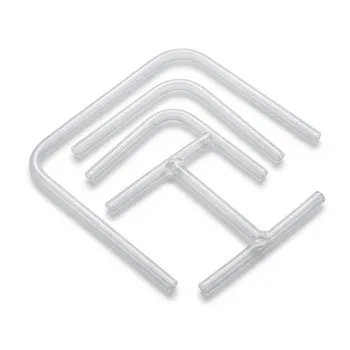
- High Purity PFA Coiled Tubing Custom PTFE Machining PFA Welding and Precision Bending Solutions
People Also Ask
- Why are high-purity vessels critical for BiFeO3 synthesis? Ensuring Phase Purity
- Why is the use of high-purity PFA or PTFE labware critical during TiO2 nanoparticle purification? Protect Sample Purity
- Why is high-purity PFA trace analysis labware used for MXene? Ensure Superior Material Integrity in Research
- Why is high-purity PFA trace analysis labware recommended for trace element detection? Achieve Gold Standard PPT Accuracy
- Why is high-purity PFA labware necessary for Znx@LS-2 zeolite ICP-OES analysis? Ensure Trace-Level Precision