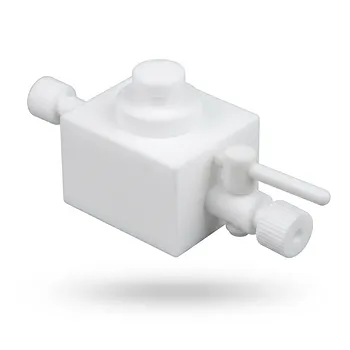
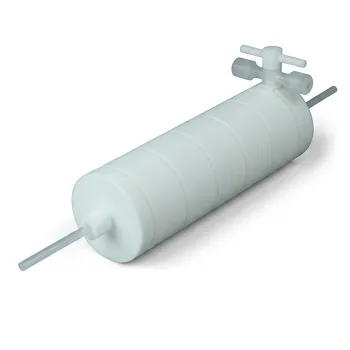
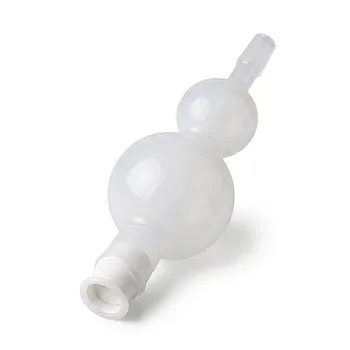
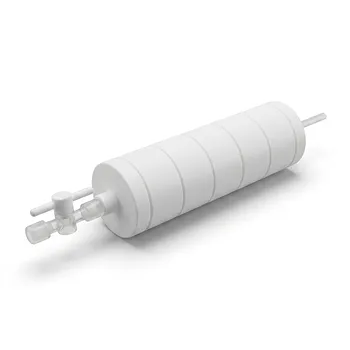
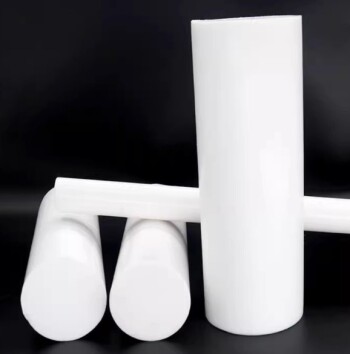
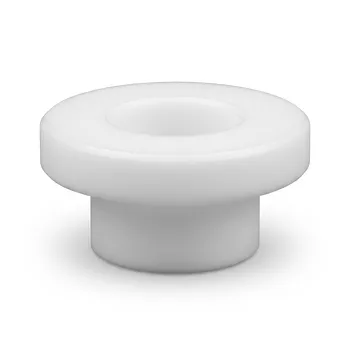
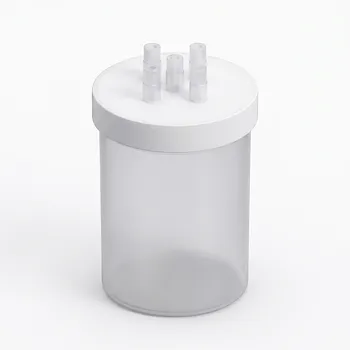
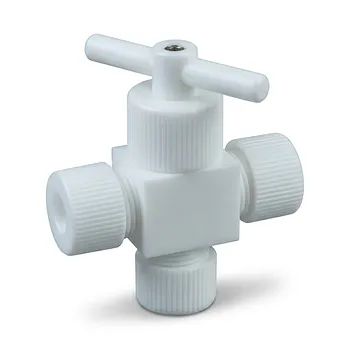
The key distinction is processability: PFA can be conventionally melt-processed, while PTFE generally cannot. Both provide exceptional chemical resistance, dielectric performance, hydrophobicity, and continuous-use temperatures around 260°C, but they lead to different manufacturing strategies. PFA is usually favored for molded or extruded tubing, fittings, valves, and seamless vessels; PTFE is typically selected as a stock shape for compression molding, sintering, or precision CNC machining.
Choose PFA when the component requires complex molded geometry, extrusion, transparency, or welded fluid paths. Choose PTFE when machining flexibility, low friction, non-wetting behavior, and robust solid construction are the higher priorities.
Why Processing Method Drives Material Selection
PTFE Cannot Be Conventionally Melt-Molded
PTFE has an exceptionally high melt viscosity, reported in the range of approximately 1 to 10 GPa·s or 10^10 to 10^12 poise near its processing temperature. Although it has a melting point around 327°C, it does not flow readily enough for standard injection molding or conventional extrusion.
Manufacturers therefore process PTFE through methods such as powder compaction, compression molding, sintering, paste extrusion, and machining. For custom laboratory equipment, precision CNC machining from PTFE stock shapes is often the most practical route.
PFA Is Melt-Processible
PFA is a copolymer of tetrafluoroethylene and perfluoroalkyl vinyl ether. The comonomer disrupts PTFE's molecular regularity and lowers its melt viscosity enough to permit injection molding, extrusion, thermal forming, and welding.
PFA melts at approximately 305°C, below PTFE's melting point, and can be formed into intricate geometries using conventional fluoropolymer processing equipment. This makes it particularly useful when the component would be difficult, costly, or impossible to machine from solid PTFE.
Raw Material Behavior Also Differs
PFA can be dried into solid material and mechanically ground into powders suitable for melt-processing. High-molecular-weight PTFE tends to fibrillate under mechanical shear, so it cannot simply be ground in the same way.
Specialized treatments, including electron-beam irradiation for certain micropowder applications, may be used to reduce PTFE molecular weight. This difference is another consequence of the polymers' processing behavior rather than a primary chemical-performance distinction.
How the Difference Affects Laboratory Components
PFA Supports Complex Fluid Paths
PFA is well suited to tubing, molded fittings, valves, manifolds, bottles, and other fluid-transfer components. Extrusion and molding allow manufacturers to produce smooth internal passages, integrated features, thin walls, and low-dead-volume geometries.
PFA can also be thermally welded or sealed in ways that support leak-tight assemblies. These capabilities are valuable in trace-analysis systems, aggressive chemical handling, and high-purity fluid delivery.
PTFE Favors Machined and Heavy-Duty Parts
PTFE is commonly selected for reaction vessels, microwave digestion components, custom electrochemical cell bodies, seals, liners, and specialized laboratory fixtures. A machinist can produce precise custom features directly from sheet, rod, tube, or molded stock.
This approach is especially effective for one-off equipment, large solid sections, threaded interfaces, and components that need PTFE's low-friction and non-wetting surface behavior.
PFA Enables Transparent or Translucent Designs
PFA is often available in transparent or translucent forms, allowing visual inspection of fluid level, bubbles, deposits, or reaction progress. Molded PFA vessels can also incorporate seamless or integrated features that are impractical to create through machining.
PTFE is generally opaque and is more often chosen when visual monitoring is not required or when the design is primarily a machined solid body.
Comparing Core Performance
Chemical Resistance Is Broadly Comparable
Both materials are perfluorinated fluoropolymers with near-universal resistance to many acids, bases, solvents, and aggressive reagents. This makes both suitable for demanding laboratory fluid handling and high-purity chemical environments.
The exact compatibility still depends on temperature, concentration, exposure duration, mechanical stress, and the specific chemical mixture. Material selection should therefore use application-specific compatibility data rather than the general claim that either polymer is universally inert.
Thermal Service Is Similar, but Melting Behavior Is Not
Both PTFE and PFA can support continuous service temperatures up to approximately 260°C, depending on grade, load, geometry, and operating conditions. This makes either material appropriate for many high-temperature laboratory processes.
Their melting points should not be confused with their recommended service temperatures. PTFE melts at roughly 327°C, while PFA melts at roughly 305°C, but neither should be operated continuously near its melting point.
PTFE Offers Strong Low-Friction and Non-Wetting Behavior
PTFE has extremely low surface tension, approximately 23 mN/m, and strong intrinsic hydrophobicity, with reported water contact angles around 98° to 112°. These properties support low friction, reduced wetting, and easier release of many materials.
That combination is useful for sliding seals, liners, non-stick surfaces, and laboratory components where fluid retention or adhesion must be minimized.
PFA Offers Processing-Related Mechanical Advantages
PFA retains PTFE-like chemical and thermal resistance while generally offering greater melt-processability and mechanical toughness. It is often preferred where the part must survive molded features, thermal cycling, or complex thin-walled geometry.
PFA formulations may also provide improved resistance to cracking and stronger post-molding structural integrity. These benefits should be confirmed for the selected grade and design because fillers, wall thickness, temperature, pressure, and fabrication quality can materially change performance.
Choosing Between Machining and Molding
Select PTFE for Customization and Low-Volume Work
PTFE is attractive when the design is highly specialized, quantities are small, or dimensions may evolve during development. CNC machining can produce custom holes, channels, threads, seats, and interfaces without creating dedicated molding tools.
The trade-off is that machining can generate more waste, take longer for complex forms, and impose limits on internal geometries and seamless fluid paths.
Select PFA for Repeatable Complex Geometry
PFA is usually more efficient when producing repeated parts with intricate geometry, integrated ports, thin walls, or long continuous tubing. Molding and extrusion can provide consistent dimensions and smooth fluid-contact surfaces at production volumes.
The trade-off is the need for suitable tooling and tighter control of melt-processing conditions. The initial cost and design effort may be higher than machining a simple PTFE part.
Consider Assembly and Sealing Requirements
PFA's ability to be thermally welded or molded into integrated forms can reduce joints and potential leak paths. This matters in high-purity systems where dead volume, contamination, and leakage are critical concerns.
PTFE remains effective for machined mating parts, threaded components, gaskets, and replaceable liners. However, assemblies may require more separate pieces or mechanical sealing features.
Understanding the Trade-offs
PFA Is Not Automatically Better for Every Fluid System
PFA's processability makes it more versatile for complex components, but it does not eliminate the need to evaluate temperature, pressure, permeation, creep, and dimensional stability. A molded PFA component can still fail if its geometry creates excessive stress or if the operating conditions exceed the selected grade's limits.
For simple, thick, custom parts, PTFE machining may remain the more economical and technically appropriate solution.
PTFE Machining Has Geometric and Dimensional Limits
PTFE can be machined accurately, but its softness, thermal expansion, and deformation under load require careful tooling and dimensional control. Long thin sections, deep internal features, and unsupported walls can be challenging.
Machined PTFE parts may also contain more joints or interfaces than a molded PFA component designed as a single piece. Those interfaces can increase dead volume or introduce additional sealing requirements.
Neither Material Should Be Chosen on Chemical Resistance Alone
Chemical resistance is necessary but not sufficient for laboratory equipment. The selection must also account for pressure, temperature cycling, permeability, creep, friction, transparency, surface finish, cleanability, and fabrication method.
A chemically compatible polymer can still be unsuitable if it deforms, leaks, contaminates a trace-analysis process, or cannot be manufactured to the required tolerance.
Manufacturing Cleanliness Is Part of Performance
High-purity applications require control over resin grade, additives, tooling, machining fluids, cleaning, packaging, and joining processes. A material with excellent intrinsic purity can be compromised by fabrication or assembly practices.
For trace analysis and sensitive fluid handling, specify the required purity level and validate the finished component, not only the base polymer.
Making the Right Choice for Your Goal
The best selection follows the component's geometry, production method, and operating conditions together.
- If your primary focus is complex fluid handling geometry: Choose PFA for molded or extruded tubing, fittings, valves, manifolds, and low-dead-volume paths.
- If your primary focus is one-off or low-volume custom equipment: Choose PTFE stock shapes for precision CNC machining and rapid design iteration.
- If your primary focus is visual inspection: Favor transparent or translucent PFA for vessels, tubing, and fluid-transfer components.
- If your primary focus is low friction and non-wetting behavior: Favor PTFE where sliding, release, or reduced fluid adhesion is central to the design.
- If your primary focus is integrated, leak-tight assemblies: Evaluate PFA molding and thermal welding to reduce joints and potential leak paths.
- If your primary focus is thick, robust reaction or electrochemical hardware: Evaluate machined PTFE for solid vessels, liners, cell bodies, and heavy-duty laboratory components.
The right choice is determined less by which fluoropolymer is more chemically resistant and more by whether the component should be molded and welded as PFA or formed and machined as PTFE.
Summary Table:
| Property | PTFE | PFA |
|---|---|---|
| Processing Method | Compression molding, sintering, CNC machining | Injection molding, extrusion, thermal welding |
| Melt Viscosity | Very high (10^10-10^12 poise) | Lower, melt-processable |
| Melting Point | ~327°C | ~305°C |
| Continuous Service Temp | ~260°C | ~260°C |
| Transparency | Opaque | Transparent/translucent |
| Low Friction & Non-Wetting | Excellent (contact angle ~98-112°) | Good |
| Complex Geometry | Limited by machining | Excellent via molding/extrusion |
| Common Applications | Reaction vessels, custom machined parts, liners | Tubing, fittings, valves, molded vessels |
Choose the Right Fluoropolymer for Your Application
Whether you need precision-machined PTFE components for custom electrochemical cells or melt-processed PFA tubing and fittings for high-purity fluid handling, KINTEK has the expertise and capabilities. As specialists in high-performance fluoropolymers, we offer a full range of PTFE and PFA products, backed by end-to-end CNC machining and custom fabrication services. From one-off parts to high-volume orders, our laboratory supplies are designed to meet your exact specifications. Contact us today to discuss your requirements and benefit from our tailored solutions.
Related Products
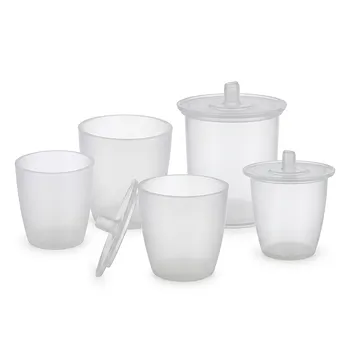
- High Purity PFA Crucible and Corrosion Resistant PTFE Beaker for Trace Analysis and Custom Laboratory Applications
- PTFE PFA Vacuum Filtration System Corrosion Resistant Customizable Shatterproof Laboratory Device
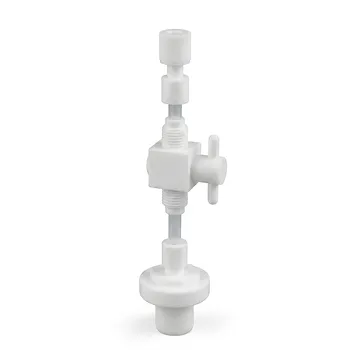
- High Purity PFA PTFE Flare Stop Valves Customizable 2-Way 3-Way Reducing Fluoropolymer Fluid Control Solutions
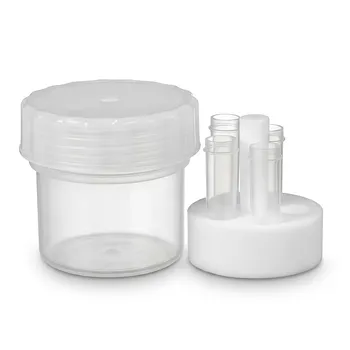
- Corrosion Resistant PTFE Support with PFA Transparent Reaction Tank and High Purity PFA Sampling Tube for Trace Analysis
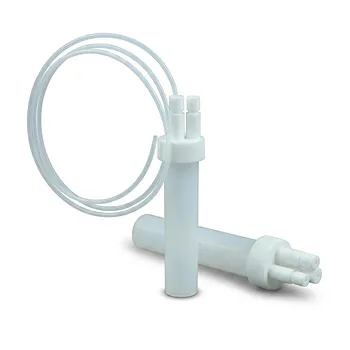
- High Purity PFA Coiled Tubing Custom PTFE Machining PFA Welding and Precision Bending Solutions
People Also Ask
- Why are high-purity vessels critical for BiFeO3 synthesis? Ensuring Phase Purity
- Why is the use of high-purity PFA or PTFE labware critical during TiO2 nanoparticle purification? Protect Sample Purity
- Why is high-purity PFA trace analysis labware used for MXene? Ensure Superior Material Integrity in Research
- Why is high-purity PFA labware necessary for Znx@LS-2 zeolite ICP-OES analysis? Ensure Trace-Level Precision
- Why is high-purity PFA trace analysis labware recommended for trace element detection? Achieve Gold Standard PPT Accuracy