Aqueous PTFE dispersions require controlled temperature, low-shear handling, and protection from contamination. Store them in a controlled environment, ideally between 5°C and 19°C, while preventing both freezing and excessive heat. During transfer, mixing, and application, use the lowest practical shear to avoid particle agglomeration, fibrillation, and premature coagulation. These controls preserve the uniform dispersion needed for consistent, defect-free coatings on laboratory equipment and containers.
The essential rule is simple: keep the dispersion cool but unfrozen, move it gently, and avoid unapproved additions. Temperature excursions and excessive mechanical force can permanently damage the dispersion and compromise coating quality.
Control the Storage Temperature
Maintain a Cool, Stable Environment
Aqueous PTFE dispersions should generally be stored between 5°C and 20°C, with a preferred upper limit near 19°C. Stable temperatures are more important than short-term fluctuations because excessive heat can accelerate particle aggregation and reduce dispersion stability.
Prevent Freezing
Freezing must be strictly avoided. Ice formation can cause irreversible coagulation of the submicron PTFE particles, leaving the material unsuitable for coating even after it returns to room temperature.
Storage areas should therefore be protected from freezing conditions, including during seasonal transport, overnight storage, and temporary staging near loading areas.
Observe the Shelf Life
The typical maximum shelf life is approximately one year, provided the dispersion remains within its specified storage conditions. Material that has exceeded its shelf life should be evaluated before use rather than assumed to be acceptable.
Minimize Mechanical Shear
Use Gentle Transfer Methods
Pumping, recirculation, and transfer operations should use equipment and settings that generate the lowest practical shear. Vigorous pumping, high-speed mixing, and narrow or restrictive flow paths can destabilize the colloidal suspension.
The objective is to move the liquid without forcing the PTFE particles into contact strongly enough to agglomerate or fibrillate.
Avoid Vigorous Agitation
The dispersion may require occasional movement to limit settling, but agitation should be gentle and controlled. High-speed mixers, aggressive shaking, and prolonged mechanical treatment can create the same instability that storage controls are intended to prevent.
Handle Drums Periodically
Stored drums can typically be rolled or gently agitated about once per month to help maintain a uniform suspension. This should be a slow, controlled operation rather than vigorous shaking or high-energy mixing.
Protect Dispersion Quality
Keep Containers Closed
Containers should remain closed when not being used to limit contamination, evaporation, and unintended changes in composition. Use clean transfer equipment and avoid introducing residues from previous materials.
Do Not Add Unapproved Chemicals
Unauthorized additives, incompatible cleaners, solvents, or formulation ingredients can trigger particle aggregation. Any adjustment should follow the dispersion supplier’s approved formulation and processing instructions.
Check Material Before Use
A visual inspection can identify obvious spoilage. Numerous white lumps or visible coagulum suggest that the dispersion has been damaged, while a smooth, uniform suspension is consistent with acceptable dispersion quality.
For higher-assurance applications, inspect a sample with a microscope capable of detecting coagulated particles. This is particularly important when the coating will protect equipment used for corrosive chemicals or high-purity analysis.
Match Handling to Coating Requirements
Preserve Solids and Viscosity Control
Aqueous PTFE dispersions are commonly supplied at approximately 55% to 60% polymer solids, although commercial products can vary more broadly. Solids content and viscosity affect wetting, coating thickness, film formation, and the likelihood of defects.
The selected product should therefore be handled according to its technical data sheet rather than treated as interchangeable with every other PTFE dispersion.
Avoid Excessive Single-Coat Thickness
The dispersion’s critical cracking thickness determines how thick a single applied layer can be before mud-cracking becomes likely. Applying a film beyond that limit can produce defects even when storage and handling have been correct.
Where a thicker protective barrier is required, the coating process should use a product and multilayer application schedule appropriate to the specified thickness.
Preserve Uniform Application
A stable dispersion supports consistent coverage and a continuous protective film after curing. Instability can produce agglomerates, uneven thickness, surface defects, and reduced chemical resistance.
Low-shear handling is therefore not merely a storage preference; it directly affects the performance of the finished laboratory coating.
Understanding the Trade-offs
Balance Settling Control Against Shear Damage
Some settling may occur during storage, creating a need for periodic drum movement. However, excessive agitation can damage the dispersion more severely than mild settling.
The correct balance is infrequent, gentle rolling or agitation, followed by enough time for entrained air or disturbances to dissipate before application.
Balance Cooling Against Freezing Risk
Lower temperatures improve stability only within a safe range. The dispersion should be kept cool, but never exposed to freezing conditions or uncontrolled cold storage.
Temperature monitoring is warranted where warehouses, transport vehicles, or laboratory storage rooms can fall outside the specified range.
Do Not Rely on Appearance Alone
A uniform appearance is useful but does not prove that every particle-size, viscosity, or formulation property remains within specification. For critical coatings, acceptance should also consider age, storage history, supplier specifications, and appropriate quality testing.
Avoid Assuming All PTFE Dispersions Behave Identically
Commercial dispersions differ in solids content, particle size, surfactant system, viscosity, and pH. The general requirements remain applicable, but the supplier’s handling limits take precedence when they are more restrictive.
How to Apply This to Your Project
Use the following controls as the baseline for laboratory coating operations:
- If your primary focus is storage stability: Keep the dispersion between approximately 5°C and 19°C, prevent freezing, track its shelf life, and gently roll or agitate the container about monthly.
- If your primary focus is coating consistency: Minimize shear during pumping, transfer, mixing, and application, and verify that the dispersion remains uniform before use.
- If your primary focus is quality assurance: Inspect for white coagulum or lumps and confirm solids content, viscosity, and other relevant properties against the supplier’s specification.
- If your primary focus is maximum protective performance: Select a dispersion and coating schedule that match the required film thickness, critical cracking thickness, chemical resistance, and substrate.
By keeping the material cool but unfrozen and handling it gently, you preserve the dispersion stability required for reliable PTFE protection of laboratory equipment and containers.
Summary Table:
| Requirement | Key Details |
|---|---|
| Storage Temperature | 5°C–19°C; avoid freezing and excessive heat |
| Shelf Life | ~1 year under proper conditions |
| Freezing Prevention | Absolutely avoid; irreversible coagulation |
| Handling | Low-shear pumping/transfer; gentle agitation |
| Contamination Control | Keep containers closed; no unapproved additives |
| Quality Check | Visual inspection for lumps/coagulum; microscope if needed |
Ensure your lab coatings perform flawlessly with KINTEK's high-quality PTFE/PFA labware and custom solutions. Our expertise in fluoropolymer processing helps you achieve reliable results. Contact us today to discuss your needs and discover how we can support your work — visit our contact form at #ContactForm.
Related Products
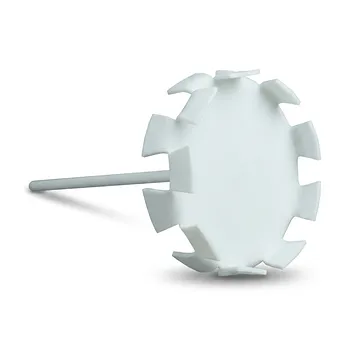
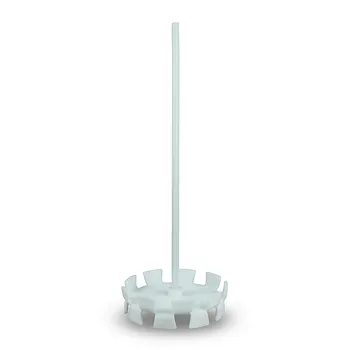
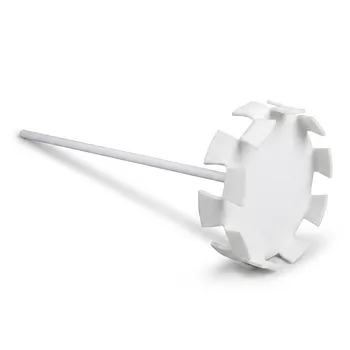
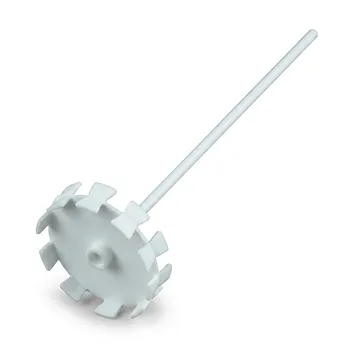
- High Purity Corrosion Resistant PTFE Dispersion Disk and Inert Stirring Paddle for Food Pharmaceutical and Cosmetic Mixing
- High Purity PTFE Dispersion Disk for Food and Cosmetic Processing Non Stick Corrosion Resistant Large Stirring Paddle Customizable Fluoropolymer Impeller
- Corrosion Resistant PTFE Dispersing Disc and High Temperature Propeller Stirring Paddle for Laboratory Chemical Mixing
- PTFE Dispersion Disk Food Cosmetic Grade Non Stick Corrosion Resistant Large Stirring Paddle Customizable Impeller
- Corrosion Resistant PTFE Stirring Paddle and Customizable Toothed Dispersion Disk for Chemical Pharmaceutical Mixing
People Also Ask
- What is Dispersion PTFE used for? Creating Thin, High-Performance Coatings and Films
- How many variations of PTFE disks are available and what parameters do they differ in? Choose the Right Material for Your Application
- What key properties are measured under ASTM D4441 to classify and evaluate PTFE dispersions?
- What is PTFE dispersion, and how is it used? A Guide to Non-Stick Coatings & Chemical Resistance
- What is the dispersion method of producing PTFE and what are its products? Ideal for Thin Coatings and Films