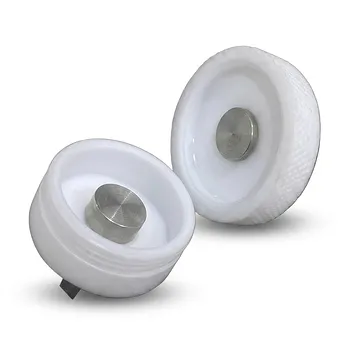
In asymmetric supercapacitor assembly, the coin cell case and filter paper separator function as the structural and electrochemical backbone of the cell. The case provides the mechanical compression necessary to ensure low internal resistance, while the separator prevents electrical shorts while facilitating ion movement. Together, these components transform discrete active materials into a functional, measurable energy storage device.
The coin cell case and separator are essential for maintaining the physical and electrical integrity of a supercapacitor. Their primary role is to optimize charge transport by enforcing tight physical contact while preventing internal failure through reliable physical insulation.
The Structural Necessity of the Coin Cell Case
Ensuring Mechanical Compression and Electrical Contact
The primary function of the coin cell case is to provide mechanical compression, which keeps the positive electrode (such as sodium cobalt phosphate) and negative electrode in tight contact with the current collectors. This pressure is vital for reducing internal resistance, ensuring that electrons flow efficiently during charge and discharge cycles. Without this constant force, the physical gaps between components would lead to poor conductivity and degraded performance.
Environmental Sealing and Standardization
Standardized cases, such as the 2032 type, create a sealed environment that prevents electrolyte leakage and protects the internal chemistry from external contamination. This precision design allows for a standardized testing environment, which is critical for accurately measuring specific capacitance and energy density. The use of internal springs and spacers further ensures that the mechanical pressure remains constant throughout the lifespan of the cell.
The Electrochemical Role of the Filter Paper Separator
Physical Insulation Against Short Circuits
The filter paper acts as a dielectric barrier that physically separates the positive and negative electrodes to prevent an internal electrical short circuit. By providing this insulation, it ensures that electrons are forced to travel through the external circuit rather than passing directly between the electrodes. This separation is fundamental to the supercapacitor's ability to store and hold a charge.
Electrolyte Retention and Ionic Transport
Despite acting as a physical barrier, the separator is highly porous, allowing it to absorb and retain the electrolyte. This porosity facilitates the free transport of ions between the electrodes, which is the core mechanism of energy storage in asymmetric cells. High-quality filter paper ensures that the internal resistance remains low by maintaining a steady "ion bridge" across the cell.
Understanding the Trade-offs and Pitfalls
Compression Levels and Internal Resistance
While high compression is necessary for low resistance, over-compression can lead to the deformation of the electrodes or the separator. If the separator is crushed too tightly, its porosity may decrease, hindering the movement of ions and ultimately lowering the cell's power density. Achieving the correct balance is critical for maintaining a high cycle life.
Separator Thickness and Ion Path
A thicker separator provides better insulation and safety against shorts, but it also increases the distance ions must travel. This extra distance can lead to higher Equivalent Series Resistance (ESR), which reduces the efficiency of the supercapacitor. Engineers must choose materials that are thin enough for high performance but robust enough to prevent mechanical failure.
How to Apply This to Your Project
Selecting Components Based on Performance Goals
When assembling an asymmetric supercapacitor full cell, your choice of materials should align with your specific testing or application requirements.
- If your primary focus is minimizing internal resistance: Ensure the coin cell case is paired with high-tension springs to maximize the mechanical contact between your electrodes and current collectors.
- If your primary focus is high-rate capability: Utilize a highly porous, thin filter paper separator to allow for the fastest possible ion transport between the positive and negative electrodes.
- If your primary focus is accurate life-cycle testing: Use standardized 2032 type cases to maintain a consistent environment, ensuring that your data on rGO/MoS2/PANI or other nanocomposites is reproducible and reliable.
By mastering the balance between mechanical pressure and ionic permeability, you can maximize the electrochemical potential of your supercapacitor design.
Summary Table:
| Component | Primary Function | Electrochemical Impact | Key Considerations |
|---|---|---|---|
| Coin Cell Case | Mechanical Compression | Lowers internal resistance (ESR) | Proper pressure balance to avoid deformation |
| Separator | Physical Insulation | Prevents internal short circuits | High porosity for fast ionic transport |
| Electrolyte | Ion Carrier | Facilitates charge/discharge | Proper retention within separator pores |
| Sealing Gasket | Environmental Protection | Prevents leakage and contamination | Maintains a standardized testing environment |
Elevate Your Energy Storage Research with KINTEK
Precision is the backbone of successful electrochemical research. At KINTEK, we specialize in providing high-performance laboratory supplies that ensure your supercapacitor and battery assemblies deliver reproducible, high-quality data.
From everyday essentials like beakers, filters, and high-purity trace analysis instruments to specialized coin cell components and battery testing fixtures, our products are designed for the most demanding lab environments. We offer a comprehensive range of labware, including:
- Fluid Transfer: Tubing, fittings, and valves.
- Sample Prep: Separatory funnels, pipettes, and filtration tools.
- Advanced Apparatus: Custom electrochemical cells, hydrothermal synthesis liners, and microwave digestion vessels.
Our exclusive focus on high-performance fluoropolymer materials (PTFE and PFA), backed by end-to-end custom CNC fabrication, means we can deliver everything from high-volume consumables to complex, non-standard machined parts tailored to your unique specifications.
Ready to optimize your lab setup? Contact KINTEK today to discover how our bespoke solutions and premium materials can drive your next breakthrough!
References
- Oladepo Fasakin, Ncholu Manyala. Electrochemical investigation of flower-like sodium cobalt phosphate-based materials and activated carbon derived from cocoa pod husks as potential electrode for asymmetric supercapacitor. DOI: 10.4314/ijs.v27i1.16
This article is also based on technical information from Kintek Knowledge Base .
Related Products
People Also Ask
- What is the thermal operating range for PTFE battery clamps in electrochemical research? Stability from -200°C to +260°C
- What are the primary functions and material compositions of PTFE battery clamps? Ensure Precision & Chemical Resistance
- How do coin cell testing fixtures evaluate ZIF-derived LCO cycling stability? Ensure Battery Research Precision
- What are the electrical insulation and signal integrity advantages of using PTFE battery clamps? Ensure Data Accuracy
- How does the chemical inertness of PTFE benefit laboratory-scale battery testing? Ensure high-purity research results.