Compensating for the inherent physical limitations of PTFE requires a multi-faceted design approach focusing on active energization and precise geometric allowances. To address limited elasticity and "cold flow" (creep), designers primarily utilize internal spring or elastomeric energizers to maintain constant contact pressure. Thermal expansion is managed through specialized gland geometries and the incorporation of reinforcing fillers like glass, carbon, or bronze to improve dimensional stability.
Core Takeaway: Because PTFE lacks the "memory" of traditional elastomers and expands significantly when heated, successful seal design must shift from relying on material resilience to utilizing mechanical energizers and expanded gland clearances to maintain a functional seal.
Mechanical Compensation for Low Elasticity
The Role of Spring Energizers
Unlike rubber, PTFE does not naturally return to its original shape after deformation. Spring energizers (such as cantilever or helical springs) are embedded within the seal jacket to provide the continuous radial force necessary for a tight seal.
This mechanical "memory" is especially critical in cryogenic conditions, where PTFE hardens and loses what little flexibility it possesses. The spring compensates for this hardening by forcing the seal lips against the mating surface.
Utilizing Elastomeric Backing
In less extreme environments, an elastomeric O-ring can be placed behind a PTFE glide ring to act as the energizer. This configuration combines the low friction and chemical resistance of PTFE with the high resilience of an elastomer.
This "tandem" approach ensures the seal maintains contact during low-pressure cycles where the PTFE might otherwise pull away from the sealing surface.
Managing High Thermal Expansion
Precision Gland Geometry
PTFE has a significantly higher coefficient of thermal expansion than the metal housings that contain it. Gland geometry must be oversized to allow the seal to expand freely at operating temperatures without becoming over-compressed or "choked."
Failure to provide adequate volume within the groove can lead to seal extrusion or permanent deformation as the material is forced into clearance gaps.
Thermal Stabilization and Annealing
Residual stresses from the machining process can cause unpredictable dimensional changes during service. Annealing the PTFE components at temperatures between 200°C and 250°C, followed by a controlled slow-cooling process, relieves these stresses.
This stabilization ensures the seal maintains its precision-engineered dimensions even when subjected to its maximum continuous service temperature of +260°C.
Enhancing Structural Integrity and Creep Resistance
The Use of Reinforced Fillers
Virgin PTFE is susceptible to "cold flow" or creeping under load. Incorporating fillers such as glass fiber, carbon, graphite, or bronze increases the material’s stiffness and significantly reduces the rate of creep.
These filled compounds also improve thermal conductivity, helping to dissipate heat more efficiently in dynamic rotary or reciprocating applications.
Anti-Extrusion Backup Rings
In high-pressure systems exceeding 5,000 psi, PTFE can behave like a highly viscous fluid and "extrude" into the clearance gaps of the hardware. Backup rings are installed to bridge these gaps and provide a rigid wall that keeps the primary PTFE seal in place.
These rings are typically made from harder materials or filled PTFE grades to ensure the primary seal remains structurally supported under extreme loads.
Understanding the Trade-offs
Chemical Reactivity vs. Mechanical Strength
While virgin PTFE is almost entirely chemically inert, adding fillers to improve mechanical strength can introduce chemical vulnerabilities. For instance, bronze-filled PTFE should not be used in applications involving strong acids or bases that could attack the metal particles.
Cost and Complexity
Implementing spring-energized designs or complex backup ring configurations increases the total cost of the sealing system. Designers must balance the need for high performance with the increased manufacturing and assembly complexity these solutions require.
Machining Challenges
PTFE's low stiffness makes it difficult to hold tight tolerances during machining. Because the material generates heat quickly but dissipates it slowly, conservative cutting parameters and air-cooling are required to prevent dimensional inaccuracies during production.
How to Apply This to Your Project
Making the Right Choice for Your Goal
- If your primary focus is high-pressure performance (over 5,000 psi): Utilize filled PTFE compounds in conjunction with anti-extrusion backup rings to prevent material flow.
- If your primary focus is extreme temperature cycling: Implement spring-energized seals and ensure gland volumes are calculated to accommodate maximum thermal expansion.
- If your primary focus is maximum chemical purity: Stick to virgin PTFE but use precise elastomeric energizers (encapsulated if necessary) to provide the required sealing force.
- If your primary focus is dynamic durability: Use carbon or graphite fillers to increase wear resistance and reduce heat buildup at the sealing interface.
By moving beyond the limitations of the raw polymer through strategic mechanical and geometric interventions, you can leverage PTFE’s unique properties in the most demanding industrial environments.
Summary Table:
| Challenge | Design Solution | Key Benefit |
|---|---|---|
| Limited Elasticity | Spring or Elastomer Energizers | Maintains constant contact pressure |
| Thermal Expansion | Oversized Gland Geometry | Prevents seal extrusion and choking |
| Cold Flow (Creep) | Reinforced Fillers (Glass/Carbon) | Enhances stiffness and structural stability |
| High Pressure | Anti-Extrusion Backup Rings | Bridges gaps to prevent material flow |
| Internal Stress | Thermal Annealing Process | Ensures precision dimensional stability |
Engineering Success with KINTEK’s High-Performance Fluoropolymers
Facing challenges with material expansion or chemical compatibility in your lab? KINTEK specializes in the absolute focus on high-performance fluoropolymers, providing precision-engineered PTFE and PFA solutions for the most demanding environments.
From everyday basic labware like beakers, crucibles, and reagent bottles to advanced fluid transfer components (tubing, valves, and fittings), we cover your entire workflow. Our expertise extends to complex, custom-engineered setups including:
- Sample Prep & Filtration: Separatory funnels, filters, and high-purity trace analysis tools.
- Advanced Reaction Apparatus: Electrochemical cells, battery testing fixtures, and microwave digestion vessels.
- Precision Components: Custom CNC-fabricated parts designed to your exact tolerances.
Whether you need high-volume consumables or bespoke non-standard machined parts, KINTEK delivers unmatched durability and purity.
Contact our technical experts today to discuss your custom project!
Related Products
- High Temperature Chemical Resistant 50ml PTFE Syringe Customized Teflon Injector with Threaded Seal for Trace Analysis
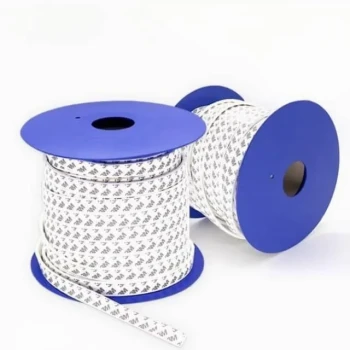
- Custom PTFE Sealing Tapes for Industrial and High Tech Applications
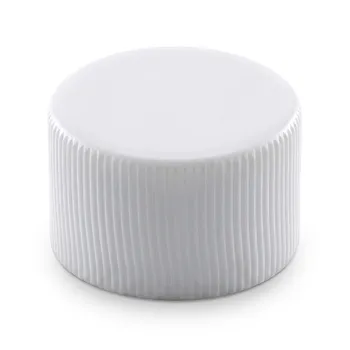
- Custom PTFE Sealing Caps and Corrosion Resistant Low Background Teflon Adapters
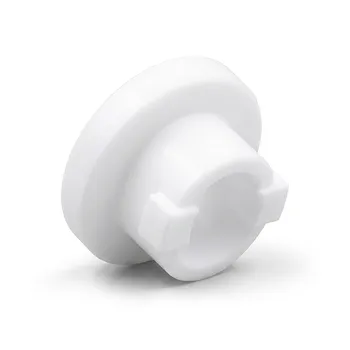
- Custom PTFE Insulating Gaskets and Corrosion Resistant Fluoropolymer Seals for Industrial Electrical Applications
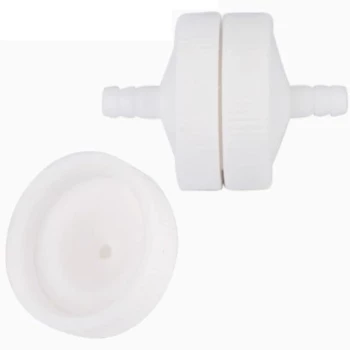
- Customizable PTFE Seals Filter Holders for Versatile Applications
People Also Ask
- In what medical devices is PTFE commonly used? Essential Components for Safety and Reliability
- Is PTFE approved for food contact applications? Ensuring Food Safety with Compliant PTFE
- What is notable about the coefficient of friction of PTFE? Achieve Unmatched Low-Friction Performance
- Why is PTFE highly resistant to chemicals? Unmatched Inertness for Demanding Applications
- Why is PTFE classified as non-melt-processible?