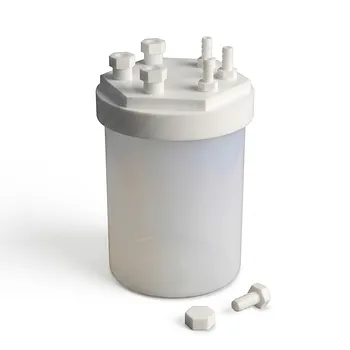
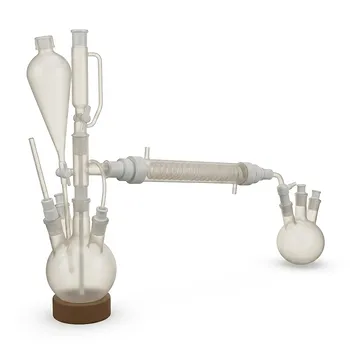
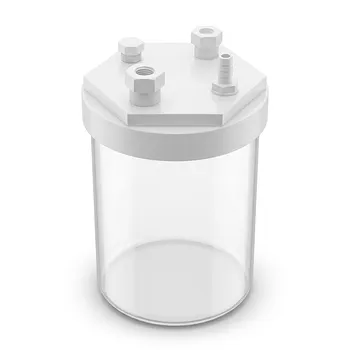
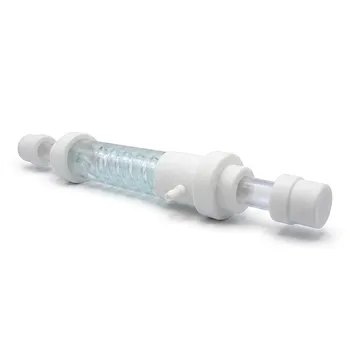
Fluoropolymer liners are the primary defense against metallic contamination in hydrothermal synthesis. By providing a chemically inert barrier between aggressive precursors and the autoclave's metal walls, they prevent accidental doping. This ensures that a nanomaterial's defect profile—such as oxygen vacancies in phosphors—is governed solely by intentional precursors rather than stray ions leaching from the reactor vessel.
Core Takeaway: Fluoropolymer liners transform a reactive metal vessel into an inert environment, enabling the precise "defect engineering" required for high-performance nanomaterials. By eliminating unwanted ion leaching, these liners protect the phase purity, electronic properties, and morphological consistency of the final product.
Eliminating Accidental Doping and Impurity Infiltration
Maintaining Controlled Defect Environments
In materials like long-persistent phosphors, performance relies on specific, controlled defects such as oxygen vacancies. Fluoropolymer liners ensure that the only ions present during synthesis are those intentionally added. This prevents accidental doping from vessel walls, which could otherwise fill vacancies or introduce new charge traps that degrade the material’s ability to store and release energy.
Resistance to Aggressive Chemical Reagents
Hydrothermal synthesis often utilizes strong oxidizing or reducing agents, such as chloroauric acid, thiourea, or sodium sulfide. High-performance liners made from PTFE (Polytetrafluoroethylene) or PFA (Perfluoroalkoxy) are resistant to these corrosive substances. This resistance prevents the reaction fluid from attacking the metal autoclave, which would otherwise introduce metallic impurities into the nanomaterial.
Preventing Material Peeling and Halogen Corrosion
Standard metal autoclaves are particularly susceptible to corrosion from halogen ions, such as bromine, and highly alkaline environments (pH 13). Fluoropolymer liners provide critical stability in these extreme conditions, preventing the "peeling" of the vessel interior. This stability ensures that surface functional groups and electrochemical activities remain consistent across different batches.
Structural and Morphological Precision
Ensuring Phase Purity and Crystallinity
The presence of even trace metallic impurities can disrupt the nucleation process during hydrothermal growth. By providing a completely inert environment, fluoropolymer liners allow precursors to react in a supercritical state without interference. This results in higher phase purity and superior crystalline quality in the synthesized nanostructures.
Supporting Geometric and Morphology Control
The accurate formation of specific shapes, such as Au-Cu cubes, octahedrons, or WO3 nanorod arrays, depends on a pristine chemical environment. Impurities from a reactor wall can act as unwanted catalysts or inhibitors that alter the growth direction of crystals. Liners maintain the chemical environment necessary for molecular reorientation, ensuring the target morphology is achieved.
Operational Efficiency and Product Integrity
Microwave Transparency for Uniform Heating
In microwave-assisted hydrothermal synthesis, PTFE and PFA materials are essentially microwave-transparent. This allows the electromagnetic energy to act directly on the reaction solution rather than being absorbed or shielded by the container. The result is more efficient heating and a more uniform reaction, which further reduces the likelihood of localized defects.
Maximizing Recovery through Non-Stick Surfaces
The naturally low surface energy of fluoropolymers creates a non-stick environment. This minimizes the adhesion of synthesized nanoparticles to the vessel walls during the cooling and recovery phases. Not only does this increase the yield of the target product, but it also prevents cross-contamination between different experimental runs.
Understanding the Trade-offs
Temperature and Pressure Limitations
While fluoropolymers are chemically superior, they have lower thermal and mechanical limits compared to the metal autoclaves they line. PTFE, for instance, begins to soften and can deform under high pressure if temperatures exceed 250°C. Users must ensure the external autoclave provides the necessary structural support to prevent liner failure.
Permeability and Cleaning Requirements
At high temperatures and pressures, certain small molecules or gases can slowly permeate into the fluoropolymer matrix. If not cleaned rigorously between uses—often involving "dummy" runs with strong acids—residual precursors from a previous experiment could act as impurities in the next. This makes protocol-driven cleaning essential for maintaining the liner's benefit.
Making the Right Choice for Your Goal
When selecting or using a fluoropolymer liner for hydrothermal synthesis, consider your specific material requirements:
- If your primary focus is Luminescence or Phosphorescence: Prioritize PTFE liners to ensure that oxygen vacancy levels are not altered by stray metallic ions from the autoclave.
- If your primary focus is Morphology Control (Nanotubes/Nanorods): Utilize PFA or TFM liners to maintain the strict chemical environment required for directional crystal growth.
- If your primary focus is Electrochemical Activity: Ensure the liner is rated for the specific pH of your precursors to prevent leaching that could poison the catalyst surface.
- If your primary focus is Microwave-Assisted Synthesis: Verify that your liner material is fully microwave-transparent to ensure rapid and uniform internal heating.
By isolating the reaction chemistry from the vessel's metallurgy, fluoropolymer liners enable the precise atomic-level control necessary for modern nanomaterial engineering.
Summary Table:
| Key Benefit | Technical Impact | Material Result |
|---|---|---|
| Chemical Inertness | Prevents ion leaching from autoclave walls | High phase purity & controlled doping |
| Corrosion Resistance | Resists halogens and extreme pH (13+) | Consistent electrochemical activity |
| Morphology Control | Maintains pristine chemical environment | Uniform nanorods, cubes, and arrays |
| Microwave Transparency | Allows direct energy absorption by solution | Efficient heating and uniform reaction |
| Non-Stick Surface | Minimizes nanoparticle wall adhesion | Higher product yield & zero cross-contamination |
Elevate Your Synthesis with KINTEK’s High-Performance Fluoropolymer Solutions
Precision in nanomaterial engineering demands an environment free from metallic interference. KINTEK specializes in manufacturing a comprehensive range of laboratory supplies crafted exclusively from PTFE and PFA, ensuring your hydrothermal synthesis achieves absolute phase purity and morphology control.
From hydrothermal synthesis liners and microwave digestion vessels to everyday essentials like beakers, crucibles, and high-purity trace analysis instruments, we provide the inert barriers necessary for your most sensitive research. Whether you need standard consumables—such as centrifuge tubes, stirring bars, and filters—or advanced custom electrochemical cells and microchannel reactors, our end-to-end custom CNC fabrication is equipped to deliver non-standard machined parts and high-volume orders tailored to your exact specifications.
Ready to eliminate impurity-induced defects? Contact us today to discover how KINTEK’s expert fluoropolymer craftsmanship can protect your research integrity and optimize your laboratory efficiency.
References
- Yaqi Zhu, Zhen Lei. Crystal lattice site occupation-based optical properties in Co2+-doped ZGGO persistent luminescence nanoparticles. DOI: 10.1038/s41598-025-23381-5
This article is also based on technical information from Kintek Knowledge Base .
Related Products
- High Purity PTFE Microwave Digestion Vessel for Soil and Food Analysis Acid Resistant Fluoropolymer Sample Preparation Liners
- High Temperature Corrosion Resistant Hydrothermal Synthesis Reactor with TFM Inner Liner and Straight Cylinder Design
- Custom PTFE Continuous Reaction Bottles Virgin Fluoropolymer High Purity Low Background Synthesis Vessels
- Custom Multi Neck PTFE Flask for Chemical Engineering and High Purity Laboratory Synthesis Applications
- PFA Chemical Reaction Tank with Customizable Fittings for Corrosive Solvent Synthesis and High Purity Lab Applications
People Also Ask
- How does the dielectric property of PTFE benefit microwave-assisted digestion? Unlock Rapid and Uniform Sample Heating
- What are the advantages of using microwave digestion vessels? Optimize EG@MO synthesis with superior thermal control.
- What safety features are commonly integrated into microwave digestion vessels? Ensuring High-Pressure Laboratory Safety
- What are the advantages of using microwave digestion vessels for environmental analysis? Boost speed and sample accuracy.
- How do microwave digestion vessels support pharmaceutical elemental impurity testing? Achieve Precise USP Compliance