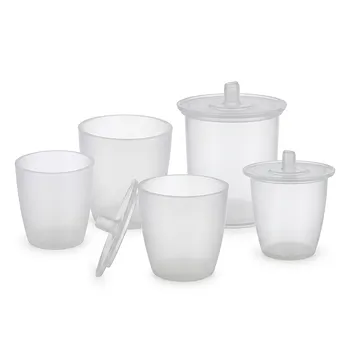
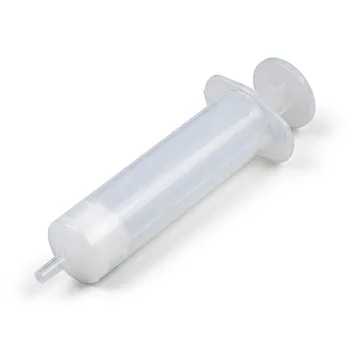
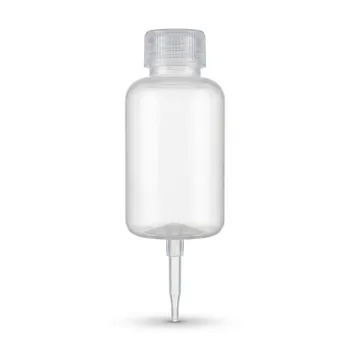
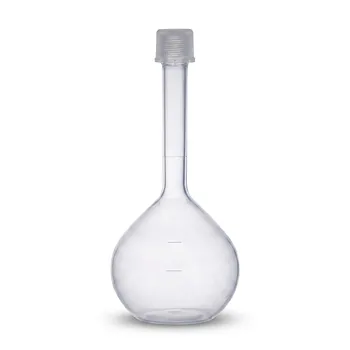
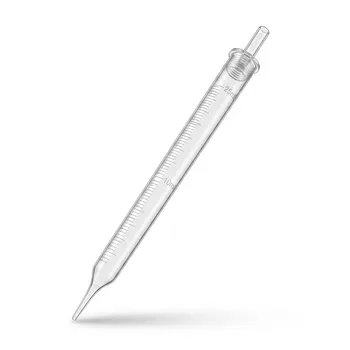
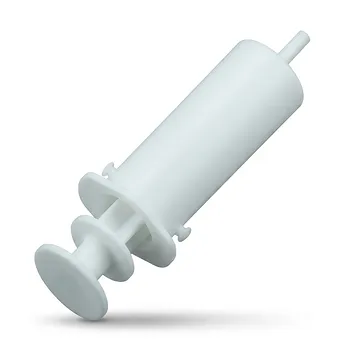
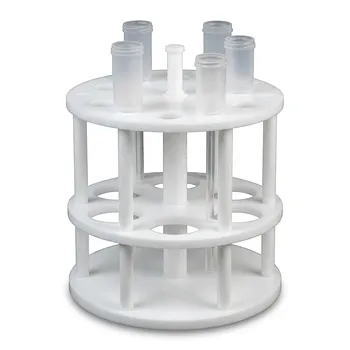
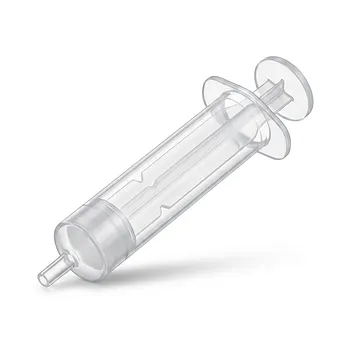
PFA components are the definitive standard for trace analysis because they virtually eliminate the two most significant sources of experimental error: background contamination and sample loss. By leveraging a chemically inert, hydrophobic surface, PFA ensures that the concentration of trace elements remains unchanged from the moment of collection to the point of detection.
Core Takeaway: PFA components provide an ultra-pure, non-reactive environment that prevents metal ions from leaching into the sample or adhering to container walls. This dual protection is essential for maintaining the integrity of analytical results at the parts-per-trillion (ppt) level.
Minimizing Background Contamination
Extremely Low Leaching Levels
The primary advantage of Perfluoroalkoxy (PFA) is its exceptional purity and resistance to chemical breakdown. Unlike glass or standard plastics, PFA has an extremely low leaching rate for metal impurities, even when in contact with concentrated strong acids for extended periods.
Exceptional Chemical Inertness
PFA is virtually non-reactive with the vast majority of laboratory reagents and solvents. This chemical stability prevents secondary contamination, ensuring that the reagents used for digestion or dilution remain at their original high-purity levels throughout the workflow.
Reducing Background Noise
By minimizing the introduction of external ions, PFA components significantly lower detection limits. This reduction in background noise allows researchers to achieve the high sensitivity required for precision experiments and heavy metal analysis.
Preventing Sample Loss via Surface Properties
Surface Hydrophobicity and Low Energy
PFA possesses high hydrophobicity and low surface energy, which prevents the "wall-sticking" effect common in other materials. This characteristic ensures that trace metal cations do not adsorb onto the container walls, maintaining the concentration stability of the sample.
Ultra-Smooth Internal Topography
The manufacturing process of high-purity PFA results in an extremely smooth surface structure. This lack of microscopic porosity prevents the physical entrapment of sample components and simplifies the cleaning process, further reducing the risk of carry-over contamination.
Eliminating Ion Exchange
Compared to traditional glass, PFA prevents the chemical exchange of target ions between the sample and the container. This is particularly critical in sediment digestion or when working with standard reference materials where every ion must be accounted for.
Ensuring Long-Term Sample Stability
Superior Sealing Capabilities
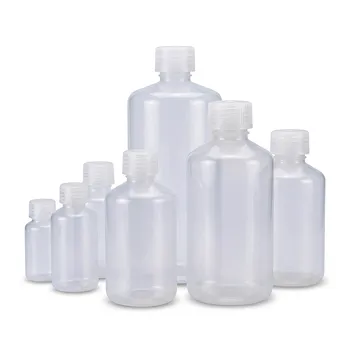
For storage applications, PFA reagent bottles offer near-perfect sealing to prevent the evaporation of volatile components. This seal also blocks the penetration of external moisture, which could otherwise alter the concentration of calibrated standards or ultrapure acids.
Resilience to Temperature Extremes
PFA maintains its structural integrity and chemical properties across a wide temperature range. This makes it an ideal material for both high-temperature sample processing and long-term storage in cryogenic environments.
Understanding the Trade-offs
Cost and Economic Considerations
The most significant drawback of PFA is its high initial cost compared to disposable plastics or borosilicate glass. However, its durability and the ability to be rigorously cleaned and reused often justify the investment in high-sensitivity research environments.
Mechanical Sensitivity
While chemically robust, PFA is a softer fluoropolymer than glass and can be prone to scratching if handled with abrasive tools. Scratches on the internal surface can create new sites for adsorption, potentially compromising the material's primary benefits.
Strict Cleaning Requirements
To achieve the lowest possible background levels, PFA must undergo rigorous acid-leaching protocols before its first use. While PFA is inherently pure, this preparation step is a mandatory investment of time to ensure the removal of any surface contaminants from the manufacturing process.
Making the Right Choice for Your Goal
To maximize the benefits of PFA in your laboratory, align your component selection with your specific research objectives.
- If your primary focus is long-term storage of standards: Utilize high-purity PFA reagent bottles with narrow necks to ensure maximum sealing and minimal concentration drift over months of storage.
- If your primary focus is high-sensitivity pipetting: Select PFA pipette tips to eliminate the risk of trace metal adsorption during the transfer of micro-volumes.
- If your primary focus is acid digestion: Choose PFA digestion vessels to leverage their ability to withstand aggressive acids at elevated temperatures without introducing contaminants.
By integrating PFA components into your workflow, you create a controlled, inert environment that ensures your analytical results are a true reflection of your sample, not your equipment.
Summary Table:
| Feature | Advantage in Trace Analysis |
|---|---|
| Ultra-Low Leaching | Minimizes background noise and metal ion contamination. |
| High Hydrophobicity | Prevents sample loss via 'wall-sticking' and ion adsorption. |
| Chemical Inertness | Withstands aggressive acids without degrading or reacting. |
| Smooth Surface | Eliminates sample entrapment and ensures easy, thorough cleaning. |
| Thermal Stability | Ideal for both high-temp digestion and cryogenic storage. |
Elevate your research precision with KINTEK, your premier partner for high-performance fluoropolymer laboratory supplies. Whether you require everyday basics like PFA reagent bottles, beakers, and centrifuge tubes, or specialized tools such as high-purity fluid transfer components (tubing, valves), and advanced reaction apparatus like custom electrochemical cells or microwave digestion vessels, we provide the ultimate inert environment for your samples. KINTEK combines end-to-end custom CNC fabrication with an absolute focus on PTFE and PFA to deliver everything from high-volume orders to bespoke, non-standard machined parts. Ensure the integrity of your trace analysis—contact our experts at KINTEK today to discuss your custom laboratory setup!
References
- Chiayee Salih Ajaj. Green Synthesis of Carbon Quantum Dots with Good Photoluminescence Properties from <i>Prosopis farcta</i> and Their Applications as Fe <sup>3+</sup> Ion Detectors and Optical Nanothermometers. DOI: 10.1002/slct.202405433
This article is also based on technical information from Kintek Knowledge Base .
Related Products
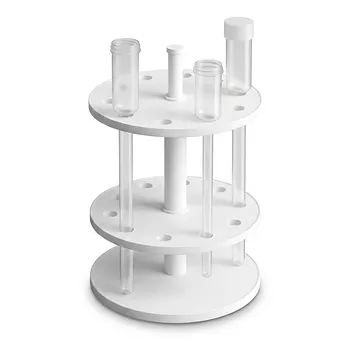
- Custom PFA Micro Column Rack and PTFE Machined Storage Solutions for Trace Analysis
- Semiconductor Electronic Grade PFA Sampling Bottle for Ultrapure Reagent Storage and Trace Analysis
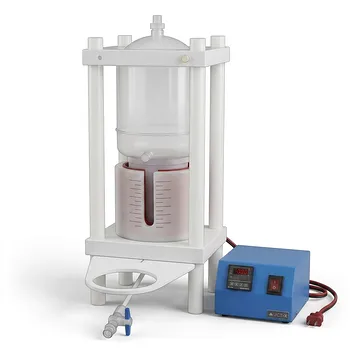
- High Purity Acid Purification System Components PFA Collection Bottles Silicone Heating Mantles and Temperature Controllers
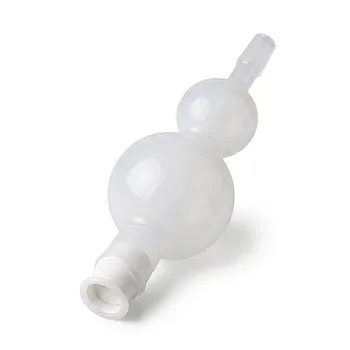
- High Purity PFA Chromatography Columns and Collection Bottles Corrosion Resistant Fluoropolymer Filtration Systems for Trace Analysis
- High Purity PFA Crucible and Corrosion Resistant PTFE Beaker for Trace Analysis and Custom Laboratory Applications
People Also Ask
- What surface chemical species and binding energy signatures are detected on PTFE fluoropolymer sample holders during XPS analysis? Key insights for accurate calcium detection.
- How does using PTFE sample holders during semiconductor thin film deposition impact the optical properties, crystal structure, and elemental impurities compared to glass holders?
- How does using fluoropolymer (PTFE) sample holders compare to glass holders in affecting the optical and photoelectric properties of thin films during chemical bath deposition? Discover the Impact
- Why are PFA and PTFE fluoropolymers selected for fluid handling and trace analysis equipment in semiconductor and analytical testing laboratories? Discover the key to ultra-pure processing.
- What continuous service temperatures and thermal limits should be maintained when using PTFE and PFA fluoropolymer apparatus in high-temperature reactions? Keep operating below 260°C for safety.