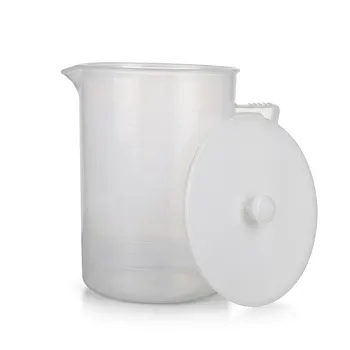
PFA and PTFE are selected because they protect fluid purity under conditions that defeat most conventional materials. Their fully fluorinated polymer structures provide exceptional resistance to acids, solvents, etchants, and other aggressive reagents, while producing very low levels of extractable metals and organic contaminants. Their low surface energy also limits wetting and residue retention, supporting accurate transfer, easier cleaning, and reliable trace measurements.
In semiconductor and analytical laboratories, the material must remain chemically stable, contribute almost no contamination, and tolerate demanding temperatures and cleaning procedures. PFA and PTFE meet these requirements while offering complementary processing and performance advantages.
Why Fluid Purity Is the Primary Requirement
Contamination Can Invalidate the Process
Semiconductor fluids and analytical samples may contain contaminants at extremely low concentrations. A small release of metal ions, organic compounds, particles, or retained sample material can affect a wafer process or distort a trace-analysis result.
The fluid-handling material is therefore part of the measurement and manufacturing environment. It must not become an uncontrolled source of contamination.
Fluorinated Structures Resist Chemical Attack
PFA and PTFE have highly stable, fully fluorinated polymer backbones. The strong carbon-fluorine bonding gives them broad resistance to concentrated acids, aggressive solvents, etchants, and other reactive chemicals.
This resistance is especially important when handling reagents such as hydrofluoric, nitric, and sulfuric acids, as well as solvents used in microelectronics fabrication and chemical digestion.
Low Extractables Support High-Purity Work
High-purity grades of PFA and PTFE can provide very low levels of extractable metallic ions and organic compounds. This reduces the risk that tubing, containers, fittings, or valves will alter the chemical composition of the fluid.
The result is better control of process chemistry and greater confidence that detected elements originated in the sample rather than in the equipment.
How PFA and PTFE Improve Fluid Handling
Low Surface Energy Reduces Retention
Both materials have exceptionally low surface energy. Liquids are less likely to wet the surface, adhere to vessel walls, or remain trapped in small amounts after draining.
That property supports more complete sample recovery and volumetric delivery. It also reduces the amount of material available to contaminate a later sample.
Smooth Surfaces Limit Particle Retention
Smooth fluoropolymer surfaces provide fewer locations for particles and residues to accumulate. This is valuable in ultrapure fluid systems, where retained particles can be released later and create intermittent contamination.
Surface smoothness does not eliminate the need for validated cleaning and handling procedures, but it makes those procedures more effective and predictable.
Cleaning Is More Reliable
Because reagents and samples adhere less readily, PFA and PTFE components can generally be cleaned more effectively than materials with higher surface energy. Their chemical resistance also allows the use of demanding cleaning agents without rapidly degrading the component.
This combination supports repeated use in workflows where cross-contamination is a serious concern.
Where These Materials Are Used
High-Purity Tubing and Fittings
PFA tubing is widely suited to high-purity fluid transfer, including ultrapure water, acids, solvents, and process chemicals. It can be formed into complex components such as fittings, valve bodies, and other molded fluid-path parts.
PTFE is commonly used for tubing, seals, bellows, and custom-machined components. Its established machining behavior makes it useful when a component requires a specialized geometry or low-friction movement.
Valves, Tanks, and Cleaning Vessels
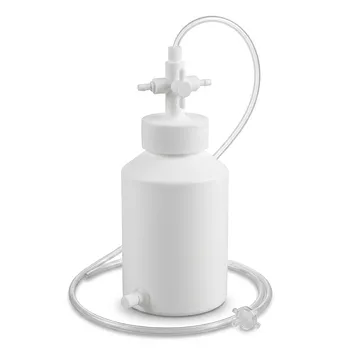
Fluoropolymer valve components, storage tanks, cleaning vessels, and reaction vessels maintain contact with aggressive chemicals without the rapid degradation associated with many conventional polymers.
Their thermal stability also helps these components retain structural integrity during elevated-temperature processing, cleaning, or chemical treatment.
Trace-Analysis Labware
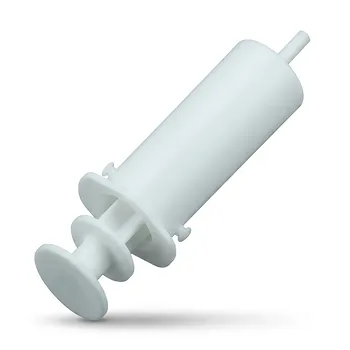
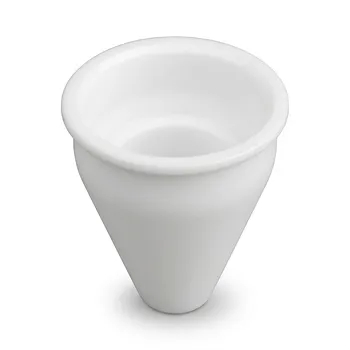
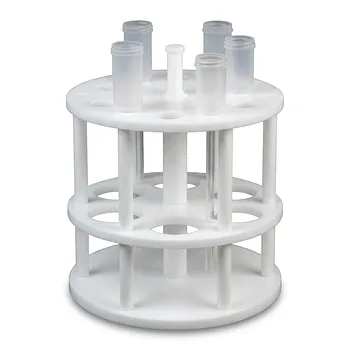
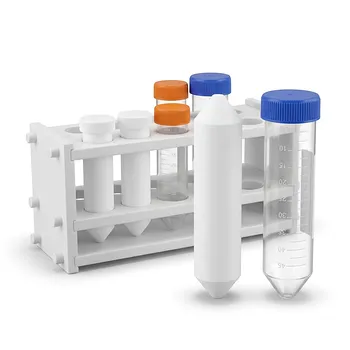
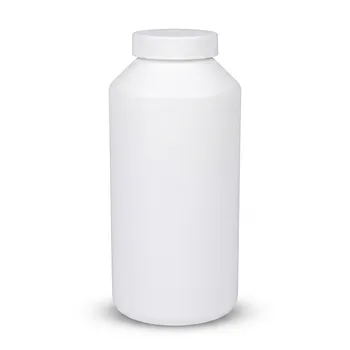
PFA and PTFE beakers, reagent bottles, digestion vessels, centrifuge tubes, and sample containers help preserve sample integrity. They resist both chemical reaction with the reagent and unwanted adsorption of analytes onto the container surface.
This is particularly important when measuring micro-level concentrations of metals or other substances, where container effects can be comparable to the concentration being measured.
Why PFA and PTFE Are Used Together
PFA Provides Processing Flexibility
PFA is a melt-processable fluoropolymer. It can be injection molded or otherwise formed into intricate, high-purity fluid-transfer components while retaining much of the chemical inertness associated with PTFE.
This makes PFA practical for complex fittings, valve bodies, tubing, containers, and other components that would be difficult or costly to manufacture from standard PTFE.
PTFE Supports Machined and Flexible Designs
PTFE is well suited to custom CNC-machined parts, flexible bellows, seals, and components where its low friction and broad chemical resistance are valuable. It is often selected when the design requires machining from stock material rather than melt processing.
The choice depends on the component geometry, temperature, mechanical demands, purity specification, and manufacturing method.
Both Materials Support Electrical and Thermal Demands
Fluoropolymers provide strong electrical insulation and broad temperature capability. These characteristics are useful in semiconductor equipment and laboratory systems that combine chemical exposure with thermal cycling, electrical isolation, or heated processing.
The exact operating limits still depend on grade, pressure, mechanical loading, geometry, and exposure time.
Understanding the Trade-offs
Chemical Resistance Does Not Mean Universal Compatibility
PFA and PTFE resist most laboratory and semiconductor chemicals, but no material should be treated as universally immune under every condition. Extreme temperatures, radiation, mechanical stress, permeation, or unusual chemical combinations can affect performance.
Compatibility must be confirmed for the actual chemical concentration, temperature, pressure, exposure duration, and component design.
Purity Depends on More Than the Polymer
A fluoropolymer component can still introduce contamination if it is manufactured, packaged, installed, or cleaned poorly. Machining fluids, particulates, additives, handling residue, and unsuitable seals can compromise an otherwise appropriate material.
For this reason, users should evaluate the complete product specification, including resin grade, extractables data, cleaning protocol, packaging, and cleanliness certification.
Low Wetting Can Affect Priming and Draining
The same non-wetting behavior that reduces residue can make some systems slower to prime or more difficult to visually inspect for complete filling. System design may need appropriate routing, purge procedures, flow control, and drainage geometry.
This is a design consideration rather than a reason to avoid the materials.
Mechanical Performance Requires Engineering Review
PTFE and PFA are chemically robust but are not selected solely for high mechanical strength. Creep, deformation under load, pressure limits, thermal expansion, and permeation must be considered when designing fittings, tanks, valves, and pressurized tubing systems.
A chemically compatible material is not automatically suitable for every structural application.
Making the Right Choice for Your Goal
The correct selection should be based on the complete fluid path and the laboratory's validated purity requirements.
- If your primary focus is semiconductor chemical purity: Select high-purity PFA or PTFE components with documented extractables, leachables, particle, and metallic-contamination performance for the intended process chemicals.
- If your primary focus is ultra-trace analysis: Use fluoropolymer containers and transfer components that minimize adsorption, sample retention, and contribution from trace metals or organic contaminants.
- If your primary focus is complex molded fluid components: Favor PFA when melt processing can provide the required geometry and high-purity fluid path.
- If your primary focus is custom-machined or flexible components: Consider PTFE for machined parts, bellows, seals, and designs that benefit from its low friction and established fabrication methods.
- If your primary focus is long service life: Verify temperature, pressure, mechanical loading, cleaning, and chemical exposure limits rather than relying on chemical resistance alone.
PFA and PTFE are chosen because they keep the fluid path chemically stable, cleanable, and exceptionally unlikely to compromise the process or measurement.
Summary Table:
| Property | PFA | PTFE | Benefit for Labs |
|---|---|---|---|
| Chemical Resistance | Excellent | Excellent | Withstands harsh acids, solvents, etchants |
| Extractables | Very low | Very low | Prevents contamination for accurate trace analysis |
| Surface Energy | Low | Low | Minimal wetting, better sample recovery |
| Surface Smoothness | Smooth | Smooth | Less particle retention, easier cleaning |
| Processing | Melt-processable | Machinable | Can be molded into complex shapes or CNC-machined |
| Temperature Resistance | High | High | Suitable for extreme temperatures and cleaning |
| Typical Applications | Tubing, fittings, valves | Seals, bellows, machined components | Comprehensive fluid handling and labware |
Elevate your lab's purity standards with KINTEK's high-performance PFA and PTFE products. From beakers to custom-machined parts, we deliver contamination-free solutions for semiconductor and analytical applications. Contact us today for expert guidance and a tailored quote!
Related Products
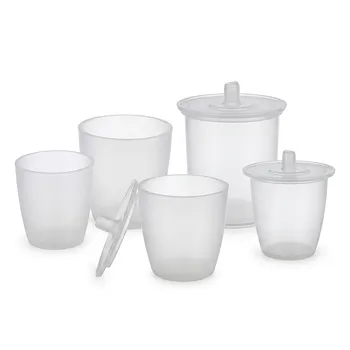
- High Purity PFA Crucible and Corrosion Resistant PTFE Beaker for Trace Analysis and Custom Laboratory Applications
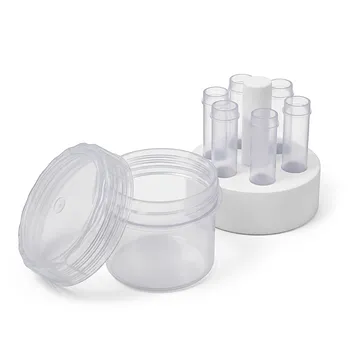
- High Purity Corrosion Resistant PFA Reaction Vessel with PTFE Holder and Integrated Sampling Tube for Trace Analysis
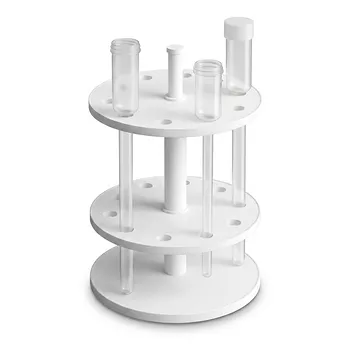
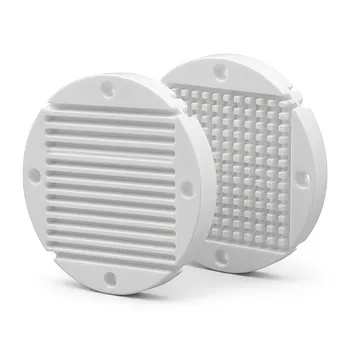
- Custom PFA Micro Column Rack and PTFE Machined Storage Solutions for Trace Analysis
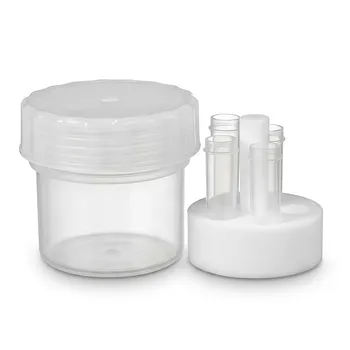
- Corrosion Resistant PTFE Support with PFA Transparent Reaction Tank and High Purity PFA Sampling Tube for Trace Analysis
- High Purity PFA Chromatography Columns and Collection Bottles Corrosion Resistant Fluoropolymer Filtration Systems for Trace Analysis
People Also Ask
- Why are high-purity vessels critical for BiFeO3 synthesis? Ensuring Phase Purity
- Why is the use of high-purity PFA or PTFE labware critical during TiO2 nanoparticle purification? Protect Sample Purity
- Why is high-purity PFA trace analysis labware used for MXene? Ensure Superior Material Integrity in Research
- Why is high-purity PFA labware necessary for Znx@LS-2 zeolite ICP-OES analysis? Ensure Trace-Level Precision
- What key material characteristics make PTFE and PFA suitable for high-purity laboratory labware, trace analysis containers, and medical microporous tubing? Discover the essential properties that ensure purity.