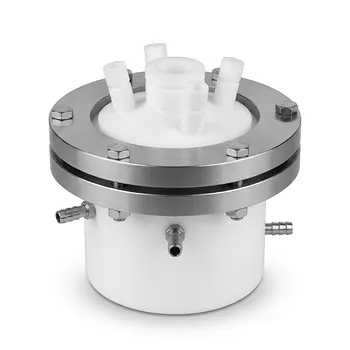
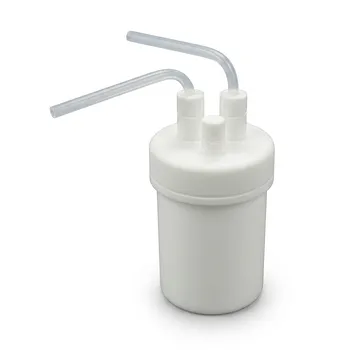
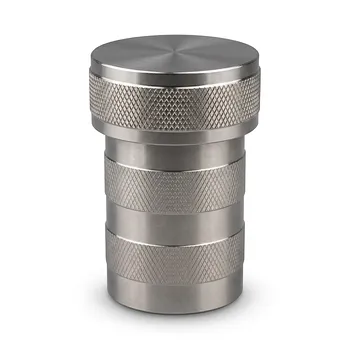
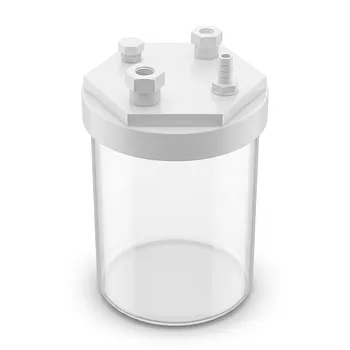
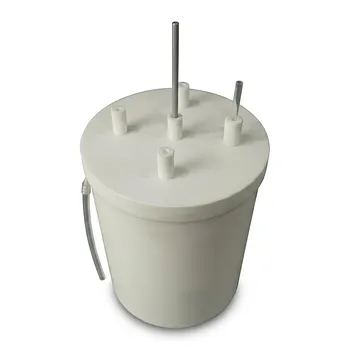
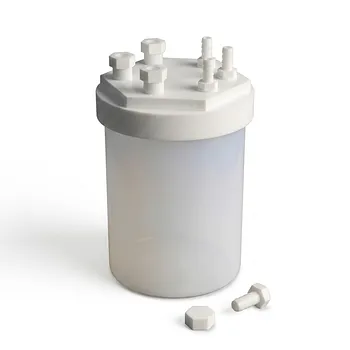
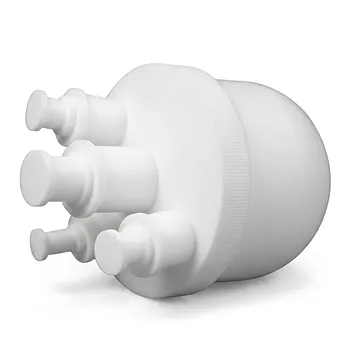
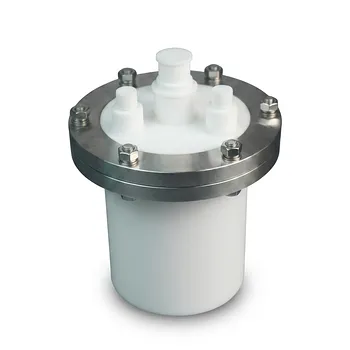
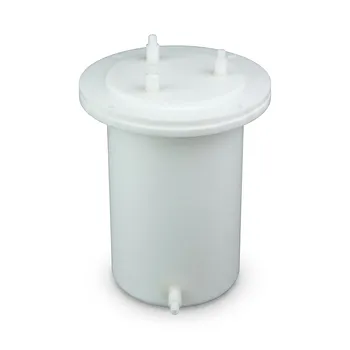
Fluoropolymer-lined hydrothermal synthesis reactors are essential for COF modification because they provide a chemically inert, high-purity environment that prevents metal ion contamination and withstands the aggressive reagents required for framework assembly. These liners, typically made of PTFE (Polytetrafluoroethylene) or PFA (Perfluoroalkoxy), protect the structural integrity of the Covalent Organic Framework (COF) while ensuring that the stainless steel reactor shell remains uncorroded by strong acids or bases.
The core advantage of fluoropolymer liners lies in their ability to isolate the reaction from metallic impurities and corrosive damage. This isolation is critical for maintaining the high crystallinity, specific surface chemistry, and electronic performance of COF-based composites.
Protecting Product Purity and Electronic Integrity
Eliminating Metal Ion Contamination
Fluoropolymer liners act as a total barrier between the reaction solution and the stainless steel outer shell. Without this liner, metal ions like iron, nickel, or chromium can leach into the solution, acting as accidental dopants.
In COF synthesis, even trace amounts of unwanted metal ions (such as Zn²⁺ or Co²⁺) can disrupt the intended lattice or alter the luminescence and charge-carrier properties of the material. This is particularly vital for applications in sensing and electronics where high purity is non-negotiable.
Preserving Surface Functional Groups
The chemical inertness of PTFE and PFA ensures that the only ions present are those intentionally added as precursors. This leads to the formation of consistent surface functional groups and prevents accidental chemical doping that could mask the COF’s inherent properties.
For materials like carbon quantum dots or modified COFs, this purity directly translates to higher sensitivity in sensing applications and more predictable catalytic behavior.
Facilitating Structural Integrity and Crystallinity
Supporting Reversible Covalent Bonding
COF synthesis often relies on Schiff base condensation, a process requiring the constant breaking and reorganization of reversible covalent bonds. The sealed, high-pressure environment provided by the lined reactor facilitates the autogenous pressure necessary for these reactions.
The liner maintains a stable, constant-pressure environment that allows monomers to reach their most thermodynamically stable, highly crystalline states. This is essential for achieving the long-range order that defines a high-quality COF.
Enabling Specific Pi-Pi Stacking
The controlled thermal environment within a fluoropolymer-lined vessel allows for the growth of specific pi-pi stacking structures. These structures are crucial for extending the lifespan of radicals during benzylic oxidation.
By providing a stable "pressure cooker" effect, the reactor ensures that the framework porosity and stacking distances remain uniform throughout the modification or carbonization process.
Engineering Resilience Against Harsh Reagents
Resistance to Aggressive Chemical Catalysts
Modification of COFs frequently involves strong acidic catalysts (like 3 M acetic acid) or aggressive reagents like sodium sulfide and thiourea. Fluoropolymer liners are uniquely capable of resisting these chemicals at high temperatures without degrading.
This chemical resistance prevents the reaction vessel from being "sacrificed" during the synthesis. It allows researchers to use the extreme pH levels necessary to drive the composite modification or carbonization to completion.
Non-Stick Properties and Product Recovery
PTFE and PFA possess inherently non-stick surfaces, which is a significant advantage when dealing with high-viscosity polymer products or carbonized composites.
This property facilitates the easy collection of the final product and minimizes material loss during the harvest phase. It also simplifies the cleaning process, preventing cross-contamination between different experimental batches.
Understanding the Trade-offs
Temperature Limitations
While fluoropolymers are highly stable, they have strict thermal ceilings, typically around 220°C to 260°C depending on the specific grade (PTFE vs. PPL). Exceeding these limits can lead to the "creeping" or deformation of the liner, potentially compromising the seal.
Pressure Sensitivity and Deformation
Under extreme hydrothermal pressures, fluoropolymer liners can undergo mechanical deformation over time. If the liner does not fit perfectly within the stainless steel jacket, the pressure can cause the polymer to flow into gaps, leading to cracks or difficulty in removing the liner after the reaction.
How to Apply This to Your Project
Recommendations Based on Research Goals
- If your primary focus is electrical performance or catalysis: Always use a high-purity PTFE liner to ensure zero metal ion leakage from the reactor walls, which could poison the catalyst or alter conductivity.
- If your primary focus is high-temperature carbonization (above 250°C): Consider moving beyond standard fluoropolymers to specialized PPL (Polyphenylene) liners or quartz inserts, as standard PTFE may deform.
- If your primary focus is microwave-assisted modification: Ensure you use PFA or PTFE liners, as these materials are microwave-transparent, allowing energy to reach the precursors directly for efficient heating.
- If your primary focus is maximizing crystallinity: Use a fresh, un-deformed liner to ensure a perfect seal, which maintains the consistent autogenous pressure required for reversible bond formation.
The selection of a high-performance fluoropolymer liner is not merely a safety precaution but a fundamental requirement for achieving the structural precision and chemical purity required in modern COF engineering.
Summary Table:
| Feature | Key Benefit | Impact on COF Synthesis |
|---|---|---|
| Chemical Inertness | Prevents metal ion leaching | Preserves electronic, sensing, and catalytic properties |
| Pressure Stability | Facilitates autogenous pressure | Supports reversible bonding for high crystallinity |
| Corrosion Resistance | Withstands strong acids/bases | Enables the use of aggressive reagents and catalysts |
| Non-Stick Surface | Easy product recovery | Minimizes material loss and simplifies cleaning |
| Thermal Uniformity | Stable reaction environment | Ensures consistent pi-pi stacking and framework porosity |
Elevate Your Research Precision with KINTEK Fluoropolymer Solutions
Don't let metal contamination or chemical corrosion compromise your Covalent Organic Framework (COF) synthesis. KINTEK specializes in high-performance fluoropolymer materials designed to withstand the most demanding hydrothermal environments.
We provide a comprehensive range of laboratory supplies, including:
- Basic Labware: Beakers, crucibles, reagent bottles, and digestion tubes.
- Fluid Transfer: High-purity tubing, fittings, valves, and pipettes.
- Advanced Apparatus: Custom PTFE/PFA-lined reactors, electrochemical cells, and microwave digestion vessels.
- Custom Solutions: End-to-end CNC fabrication for bespoke laboratory setups and complex non-standard parts.
Whether you need high-volume consumables or a custom-engineered reaction vessel, KINTEK ensures your lab is equipped for excellence. Contact us today to discuss your project requirements!
References
- Xiangying Zhang, Sitan Wang. Study on the electrocatalytic CO<sub>2</sub> reduction performance of covalent organic framework materials based on machine learning. DOI: 10.1051/e3sconf/202563001008
This article is also based on technical information from Kintek Knowledge Base .
Related Products
- Custom PTFE Reaction System with Hose Barb Fittings Corrosion Resistant High Sealing 2L 4L Lab Reactor with Separatory Funnel
- Custom PTFE Continuous Reaction Bottles Virgin Fluoropolymer High Purity Low Background Synthesis Vessels
- High Temperature Corrosion Resistant Hydrothermal Synthesis Reactor with TFM Inner Liner and Straight Cylinder Design
- PFA Reaction Tank 6L Customizable Fittings Corrosion Resistant Solvent Resistant PFA Reaction Bottle for New Material Synthesis
- PTFE 10L Reaction Vessel with Stirring Paddle Customizable Corrosion Resistant High Temperature Reactor for Biopharmaceutical and Chemical Processing
People Also Ask
- Why are PP or PTFE reactors preferred over glass in tribocatalysis? Maximize Charge Separation & Catalytic Efficiency
- What are the primary fabrication methods for capillary-based and monolithic PTFE reactors? Expert Production Insights
- What functional advantages do PTFE reactors provide over glass? Achieve Superior Purity and Safety in Synthesis
- How does PTFE's melting behavior affect custom lab apparatus? Key insights for manufacturing.
- What structural characteristics provide PTFE fluoropolymer laboratory apparatus with high thermal stability? Strong C-F bonds, dense fluorine shielding, and rigid helical conformation ensure stability during high-temperature analysis.