High-concentration aqueous potassium hydroxide (KOH) electrolytes serve as the critical medium for unlocking the full electrochemical potential of nickel hydroxide supercapacitors. By providing an abundance of hydroxide ions ($OH^-$) and maximizing ionic conductivity, these electrolytes ensure that performance measurements reflect the intrinsic properties of the active material rather than the limitations of the testing environment.
Core Takeaway: Utilizing KOH concentrations between 1 M and 6 M minimizes internal resistance and provides sufficient reactants to accurately benchmark a material's theoretical pseudocapacitance and rate capability.
Maximizing Faradaic Redox Efficiency
Providing an Abundant Ion Supply
Nickel-based supercapacitors rely on Faradaic redox reactions where hydroxide ions are primary reactants. High-concentration KOH ensures that the concentration of $OH^-$ at the electrode-electrolyte interface remains high even during rapid charge-discharge cycles.
Realizing Theoretical Pseudocapacitance
Without a sufficient supply of ions, the active material cannot complete its chemical transition, leading to "under-reporting" of its capacity. A 1 M to 6 M concentration allows the material to reach its full theoretical pseudocapacitance, providing a definitive baseline for performance.
Supporting High Power Density
The abundance of ions supports high power density by ensuring that the Oxygen Evolution Reaction (OER) and other associated kinetics are not hindered by mass-transport limitations. This is essential for evaluating materials intended for high-discharge applications.
Optimizing Kinetic Performance and Conductivity
Minimizing Equivalent Series Resistance (ESR)
High-concentration KOH is known for its superior ionic conductivity, which directly reduces the Equivalent Series Resistance (ESR) of the cell. Low ESR is vital because it minimizes energy loss as heat and allows for a clearer view of the material's efficiency.
Accurate Evaluation of Rate Capability
When testing at various current densities, the electrolyte must not be the bottleneck. High conductivity minimizes ohmic losses, allowing researchers to accurately evaluate how the material performs across different rates without the data being skewed by electrolyte resistance.
Reducing Ohmic Polarization
By maintaining high ionic mobility, KOH electrolytes reduce ohmic polarization. This ensures that the voltage response of the supercapacitor is a true reflection of the electrode's electrochemical state.
Protecting System Integrity and Purity
Preventing Impurity Leaching
The use of highly alkaline media requires chemically resistant infrastructure, such as PFA or PTFE fittings. Using these materials prevents the leaching of metallic impurities into the electrolyte, which could otherwise deposit on electrodes and degrade catalytic activity.
Ensuring Long-term Stability
A stable electrolyte environment is necessary for cycling stability tests. Fluoropolymer-based transport systems resist the corrosive nature of KOH, ensuring that the fluid delivery remains consistent and the electrolyte remains uncontaminated over thousands of cycles.
Enhancing Pressure and Creep Resistance
In pressurized or flow-based evaluation systems, the physical components must withstand the high alkalinity without deforming. Reliable fittings ensure that the electrolyte concentration remains constant by preventing leaks or evaporation.
Understanding the Trade-offs and Pitfalls
The Risk of Electrode Corrosion
While high concentrations benefit conductivity, they can also accelerate the chemical dissolution or structural degradation of certain current collectors or binders. It is crucial to match the KOH concentration to the chemical stability of all cell components.
Parasitic Oxygen Evolution
Extremely high concentrations can lower the overpotential for the Oxygen Evolution Reaction (OER). If the OER occurs prematurely, it can lead to false capacitance readings and gas evolution, which may physically damage the electrode structure.
Safety and Handling Requirements
Working with 6 M KOH presents significant safety hazards due to its highly caustic nature. Researchers must balance the need for high performance with the increased requirements for specialized protective equipment and chemical-resistant labware.
How to Apply This to Your Evaluation Strategy
When designing an evaluation protocol for nickel hydroxide materials, choose your electrolyte concentration based on your specific diagnostic goal.
- If your primary focus is benchmarking theoretical capacity: Use a 6 M KOH concentration to ensure that ion availability is never a limiting factor for the Faradaic reactions.
- If your primary focus is commercial scalability: Test at 1 M to 2 M concentrations to simulate more standard operating conditions while still maintaining high ionic conductivity.
- If your primary focus is long-term cycle life: Prioritize using PFA/PTFE fluid components to eliminate impurity leaching that could lead to premature electrode degradation.
Selecting the optimal KOH concentration allows you to transform a simple test into a definitive validation of your material's electrochemical limits.
Summary Table:
| Advantage | Mechanism | Impact on Performance Evaluation |
|---|---|---|
| High Ion Supply | Abundance of $OH^-$ ions | Realizes full theoretical pseudocapacitance and redox efficiency. |
| Low ESR | Superior ionic conductivity | Minimizes energy loss as heat; allows accurate rate capability testing. |
| Reduced Polarization | High ionic mobility | Ensures voltage response reflects true electrode electrochemical state. |
| Chemical Stability | PFA/PTFE compatibility | Prevents impurity leaching and ensures long-term cycling integrity. |
Optimize Your Supercapacitor Testing with KINTEK’s Fluoropolymer Solutions
To accurately evaluate nickel hydroxide supercapacitors in highly corrosive KOH environments, your lab infrastructure must be uncompromising. KINTEK provides the specialized, high-performance fluoropolymer equipment necessary to prevent contamination and withstand extreme alkalinity.
From everyday basic labware like PTFE beakers, crucibles, and reagent bottles to high-purity PFA tubing, fittings, and valves, we ensure your fluid transfer is leak-proof and pure. Our expertise extends to sample prep tools (filters, pipettes, spatulas) and advanced custom-machined electrochemical cells and battery testing fixtures. Whether you need standard consumables or bespoke CNC-fabricated components, KINTEK’s absolute focus on high-performance PTFE and PFA materials guarantees the integrity of your research.
Ensure your results are driven by science, not contamination. Contact KINTEK today to discuss your custom laboratory needs!
References
- Anja Siher, Andraž Mavrič. Carbonate Formation during Nickel Hydroxide Precipitation Reduces Pseudocapacitive Performance. DOI: 10.1021/acs.chemmater.5c01467
This article is also based on technical information from Kintek Knowledge Base .
Related Products
- High Temperature PTFE Reaction Flask 1000ml Single Neck Round and Flat Bottom Laboratory Bottle
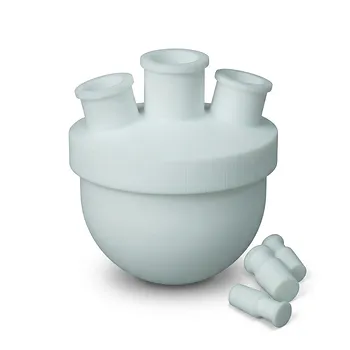
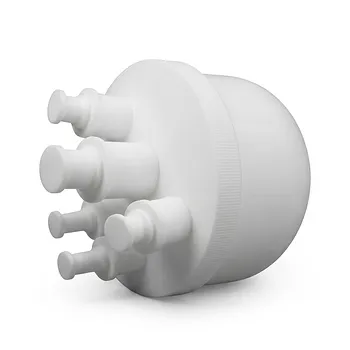
- Custom Multi Neck PTFE Flask for Chemical Engineering and High Purity Laboratory Synthesis Applications
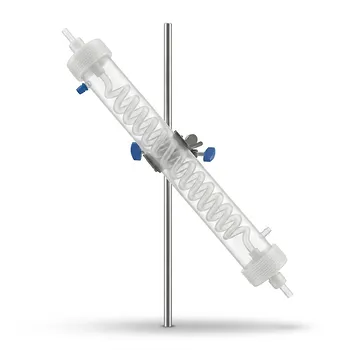
- Custom PFA Serpentine Straight Condenser HF Resistant Reaction Device Laboratory Cooling Column
People Also Ask
- How does thermal stability and fluoride evolution impact the performance of high-temperature PTFE laboratory vessels? Uncover the key factors for reliable operation.
- What are the limitations of pure PTFE in high temperature applications? Understanding the 200°C Ceiling
- What are the technical advantages of using high-pressure PTFE reaction vessels during metal digestion? Expert Insights.
- What is the function of pressure vessels in Silicalite-1 crystallization? Optimize your hydrothermal zeolite synthesis.
- In what way do high-precision constant temperature reaction vessels influence the performance and durability of magnetic chitosan nanocomposites?