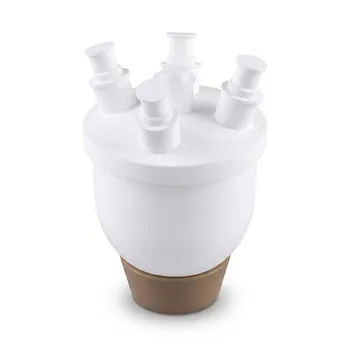
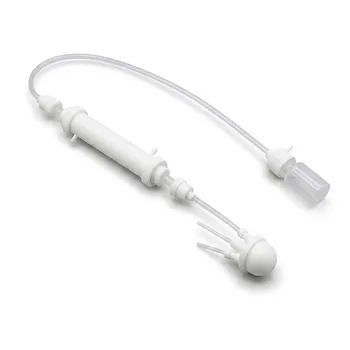
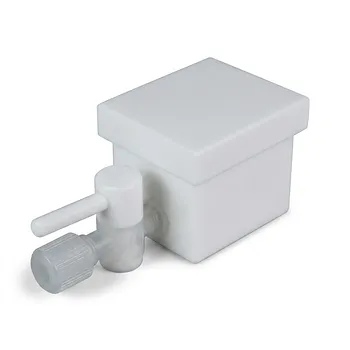
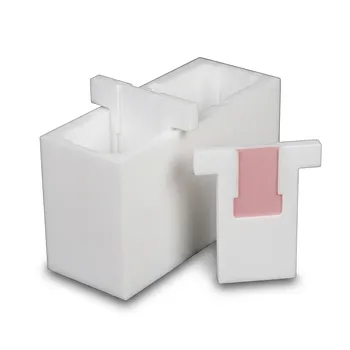
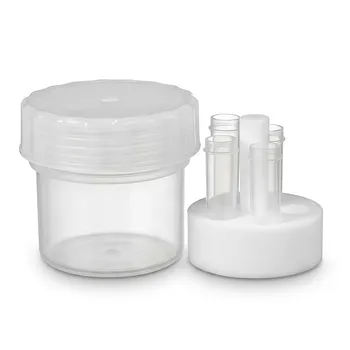
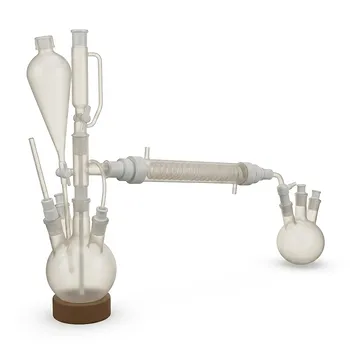
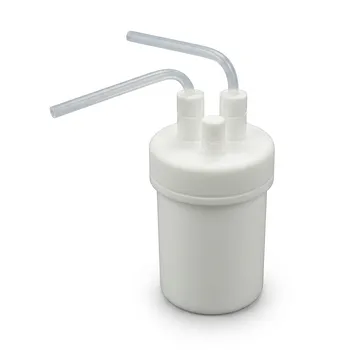
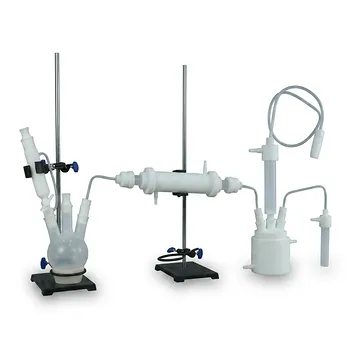
PTFE and PFA are ideal for the chemically exposed portions of fluid-handling and reaction systems because they combine near-universal chemical resistance, high purity, low surface energy, and reliable thermal performance. They resist concentrated acids, hydrogen chloride, halogenated compounds, organic solvents, swelling, leaching, and corrosion while minimizing sample adhesion and contamination. However, their typical continuous-use limit is approximately 260°C, so they should not be treated as bulk construction materials directly exposed to gases at 600°C or higher without thermal isolation, cooling, or a suitable high-temperature substrate.
The key advantage of PTFE and PFA is their ability to maintain chemical integrity and cleanliness under severe chemical exposure—not unlimited resistance to process temperature. In high-temperature halogenated systems, they are best used where the fluoropolymer remains within its allowable temperature range, such as liners, seals, tubing, fittings, valves, and cooled or downstream apparatus.
Why These Materials Resist Aggressive Chemistry
Fully fluorinated molecular structure
PTFE and PFA have polymer backbones protected by strong carbon–fluorine bonds. The fluorine atoms form a dense protective layer that limits access by acids, oxidizers, halogenated compounds, and organic solvents.
This structure gives both materials broad resistance to concentrated acids, strong bases, oxidizing agents, and corrosive gases, including hydrogen chloride under appropriately controlled temperature conditions.
Minimal swelling, degradation, and leaching
Unlike many conventional plastics, PTFE and PFA generally resist chemical swelling and decomposition across a wide range of laboratory and process chemicals. They also have low extractables, which helps preserve reagent purity and analytical accuracy.
This is particularly important in microwave digestion vessels, trace-analysis equipment, storage tanks, and fluid transfer paths where even minor contamination can affect results.
Resistance to corrosion
PTFE and PFA do not corrode in the electrochemical sense associated with metals. Their resistance is valuable when halogenated reagents or acidic gases would rapidly attack stainless steel, aluminum, or other exposed metals.
For this reason, fluoropolymer components are often used as chemically isolated wetted surfaces, liners, valve seats, tubing, and gaskets.
Thermal Performance and Its Practical Limit
High melting points do not equal unlimited operating temperature
Both PTFE and PFA have melting points above 300°C, but their continuous-use temperature is typically around 260°C. A material’s melting point therefore should not be used as its recommended operating limit.
At temperatures substantially above this range, mechanical strength, dimensional stability, and long-term chemical reliability can decline even if the polymer has not visibly melted.
Managing high-temperature HCl processes
A reaction such as halogenated-compound pyrolysis may generate HCl at temperatures above 600°C. PTFE or PFA should generally not form the primary unprotected reaction chamber at that temperature.
Instead, they may be suitable for:
- Cooled downstream gas-handling sections
- Fluoropolymer liners and corrosion barriers
- Valves, fittings, and tubing located below the temperature limit
- Seals and chemically exposed components in insulated assemblies
- Sampling or transfer systems where the gas has been sufficiently cooled
The design must establish the actual temperature of the fluoropolymer surface, not merely the nominal reactor or gas temperature.
Why PTFE and PFA Work Well in Custom Apparatus
PTFE supports precision machining
PTFE is non-melt-processible by conventional methods. It is typically supplied as stock shapes produced through compression molding and sintering, then converted into custom parts by CNC machining.
That makes PTFE especially useful for custom digestion vessels, crucible components, electrochemical cells, tank fittings, valve components, and heavy-duty laboratory apparatus with specialized dimensions.
PFA supports complex fluidic assemblies
PFA is melt-processible and can be molded, extruded, and thermally welded. It is therefore well suited to complex tubing networks, seamless vessels, valves, fittings, reagent bottles, and integrated fluid-transfer assemblies.
PFA also offers enhanced optical clarity compared with PTFE, allowing visual inspection of fluid condition, bubbles, deposits, or flow.
Both materials support low-contamination handling
PTFE and PFA have smooth, non-porous, low-energy surfaces. Fluids are less likely to adhere to them, and residues are easier to remove during cleaning.
This reduces cross-contamination and improves repeatability in trace analysis, digestion, reagent transfer, and high-purity chemical processing.
Low friction improves valve and transfer performance
PTFE has an exceptionally low coefficient of friction and strong release properties. These characteristics support smooth movement in valve components and reduce fluid adhesion in fittings and tubing.
They are especially useful in systems that undergo repeated operation, cleaning, thermal cycling, or exposure to aggressive reagents.
Choosing Between PTFE and PFA
When PTFE is the better choice
PTFE is often preferred for machined, rigid, or mechanically robust custom components. Its low friction, chemical inertness, and machining flexibility make it practical for specialized apparatus that cannot be produced as a standard molded shape.
It is a strong option for custom vessels, valve parts, seals, cell bodies, and heavy-duty laboratory components.
When PFA is the better choice
PFA is often preferred when the design requires melt processing, heat welding, flexibility, or optical clarity. It can produce complex seamless or joined fluid paths that are difficult to fabricate from PTFE.
It is particularly useful for tubing, welded tanks, transparent vessels, fittings, and contamination-sensitive fluidic assemblies.
When a hybrid design is appropriate
Many systems benefit from using both materials. PTFE can provide machined structural or sealing components, while PFA provides welded tubing, transparent sections, or complex fluid-transfer paths.
The correct selection depends on temperature at the component, mechanical loading, required geometry, transparency, joining method, and chemical exposure.
Understanding the Trade-offs
The 600°C limitation must be treated seriously
PTFE and PFA are not substitutes for ceramics, nickel alloys, or other high-temperature materials in an uncooled 600°C reaction zone. Their chemical resistance does not eliminate the effects of excessive heat.
A sound design separates the high-temperature reaction zone from the fluoropolymer wetted zone through cooling, insulation, heat exchangers, or a chemically compatible high-temperature liner.
PTFE is difficult to join conventionally
Because PTFE is non-melt-processible, it cannot normally be injection molded or heat-welded in the same way as PFA. Complex PTFE assemblies may require machining, mechanical joining, compression sealing, or specialized fabrication.
This can increase manufacturing time and limit certain geometries.
Fluoropolymers are not immune to every reagent
Their resistance is extremely broad but not absolute. Important exceptions include molten alkali metals, elemental fluorine under severe conditions, chlorine trifluoride, and other specialized highly reactive fluorinating environments.
Chemical compatibility must therefore be checked against the specific reagent concentration, temperature, pressure, exposure duration, and stress state.
Mechanical performance may limit the design
PTFE and PFA provide excellent chemical protection but are not always the strongest choice for high-pressure structural duty. Creep, deformation, sealing load, and dimensional stability must be evaluated, particularly at elevated temperatures.
In demanding systems, fluoropolymers are often used as liners or wetted barriers supported by a structurally stronger outer component.
How to Apply This to Your Project
The best material decision begins with the temperature and chemistry at the fluoropolymer surface, rather than the nominal temperature of the overall process.
- If your primary focus is chemical resistance: Use PTFE or PFA for wetted surfaces, liners, tubing, valves, and fittings exposed to HCl, concentrated acids, halogenated reagents, or organic solvents within their qualified temperature range.
- If your primary focus is custom machined apparatus: Select PTFE for rigid, precision-machined vessels, cell bodies, seals, and specialized laboratory components.
- If your primary focus is complex fluidic fabrication: Select PFA for molded or extruded tubing, welded assemblies, transparent vessels, and integrated transfer systems.
- If your primary focus is a reaction zone above 600°C: Use a suitable high-temperature structural material for the hot zone, and position PTFE or PFA only in cooled, insulated, downstream, or thermally isolated sections.
- If your primary focus is analytical purity: Favor PTFE or PFA because their smooth, non-porous, low-energy surfaces minimize adhesion, leaching, and cross-contamination.
When properly temperature-managed, PTFE and PFA provide an exceptionally clean and chemically durable interface for aggressive high-temperature chemical processes.
Summary Table:
| Property | PTFE | PFA |
|---|---|---|
| Chemical Resistance | Excellent against acids, bases, solvents | Excellent against acids, bases, solvents |
| Max Continuous Use Temp | ~260°C | ~260°C |
| Processability | Non-melt-processible, machined | Melt-processible, weldable |
| Transparency | Opaque | Transparent |
| Best For | Rigid, machined parts | Complex fluidic assemblies |
Ready to enhance your high-temperature chemical processing with PTFE and PFA? At KINTEK, we specialize in custom fluoropolymer solutions for demanding laboratory and industrial applications. Our precision CNC machining and fabrication capabilities allow us to deliver bespoke PTFE and PFA components, from simple labware to complex reaction systems. Whether you need corrosion-resistant liners, high-purity transfer lines, or custom reaction vessels, our team is committed to providing reliable, contamination-free solutions that meet your exact specifications. Contact us today to discuss your project and discover how our expertise can address your toughest fluid handling challenges. Let’s build a solution that ensures safety, purity, and performance.
Related Products
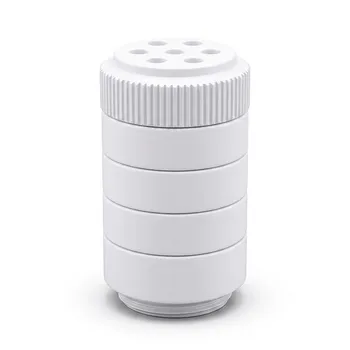
- Custom PTFE Multilayer Reaction Apparatus High Temperature Corrosion Resistant Threaded Modular Sieve System
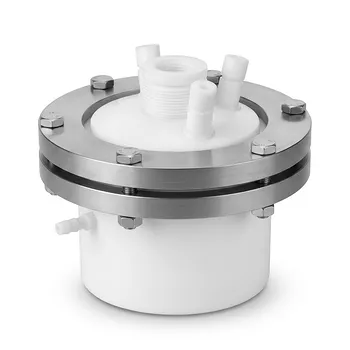
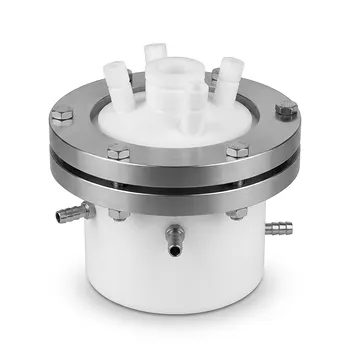
- Custom PTFE Reaction Apparatus Flange Sealed Corrosion Resistant Jacketed Vessel with Stirring Bar and Thermometer Ports
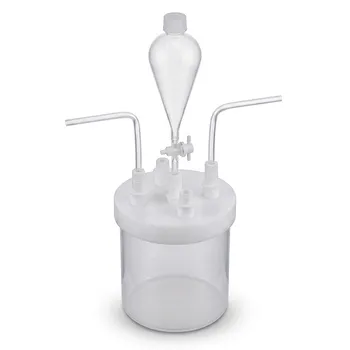
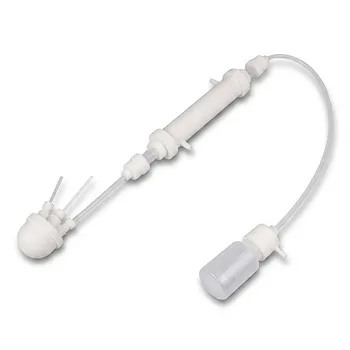
- High Purity PFA Reaction Vessel for Biopharmaceutical Synthesis and Corrosive Chemical Fluid Handling with Customizable Tube Fittings
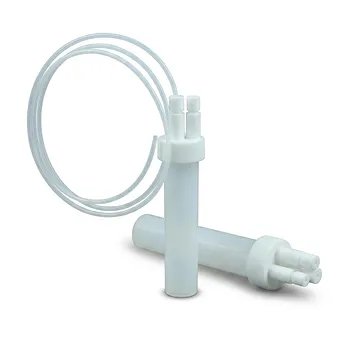
- Custom PFA Reaction Bottles High Purity PTFE Reaction Vessels Corrosion Resistant Petrochemical Containers
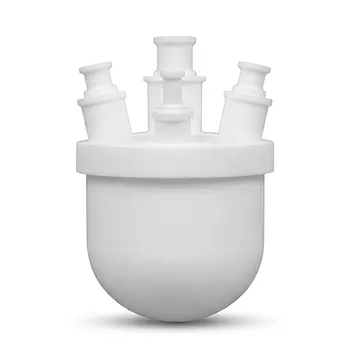
- High Performance Customizable PTFE Reaction Vessel and Corrosion Resistant Polytetrafluoroethylene Flask for Chemical Laboratory Use
People Also Ask
- What are the mechanical and safety advantages of using PTFE apparatus in a laboratory? Enhance Safety & Durability
- How does PTFE's melting behavior affect custom lab apparatus? Key insights for manufacturing.
- Why are PP or PTFE reactors preferred over glass in tribocatalysis? Maximize Charge Separation & Catalytic Efficiency
- What are the primary fabrication methods for capillary-based and monolithic PTFE reactors? Expert Production Insights
- What functional advantages do PTFE reactors provide over glass? Achieve Superior Purity and Safety in Synthesis