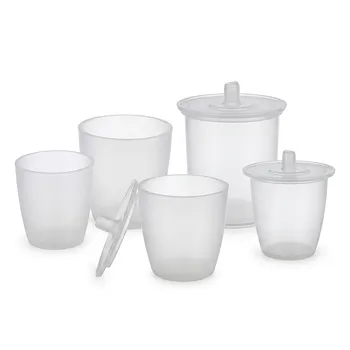
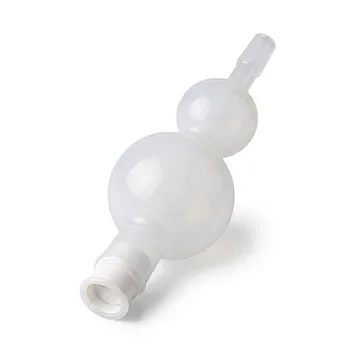
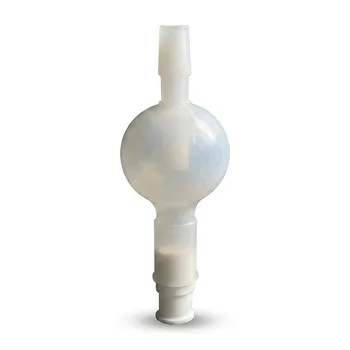
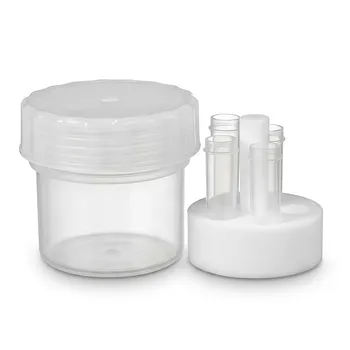
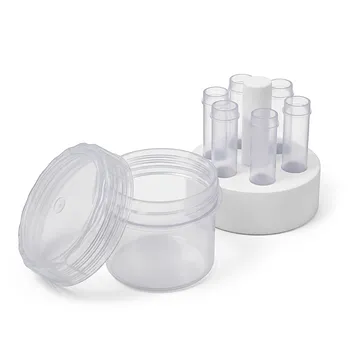
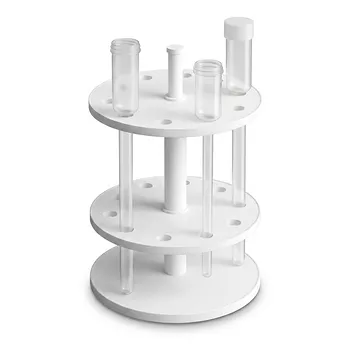
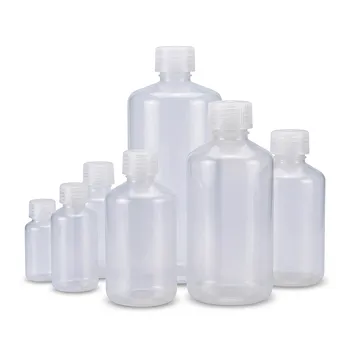
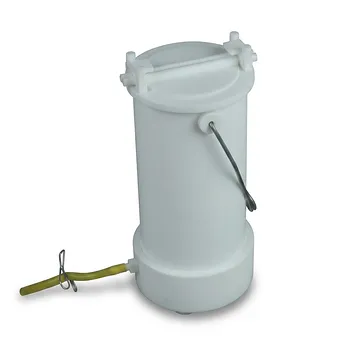
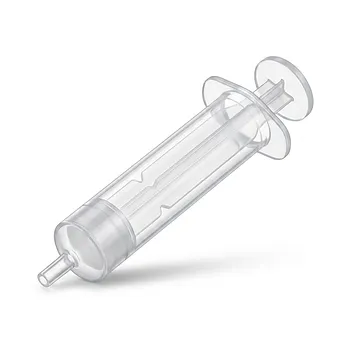
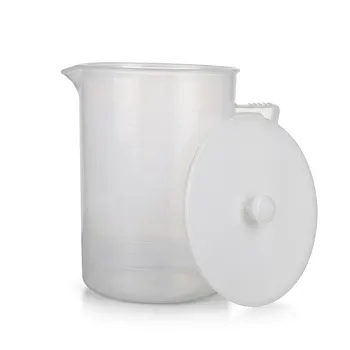
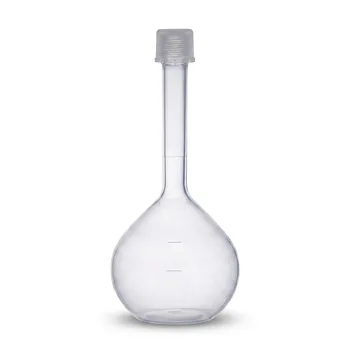
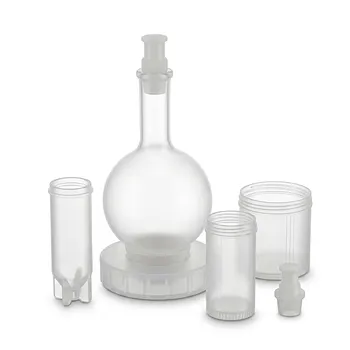
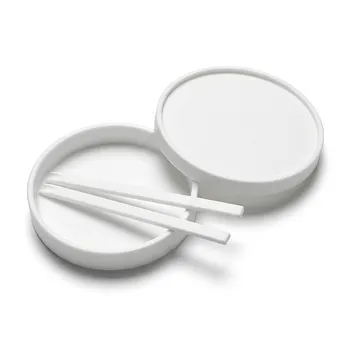
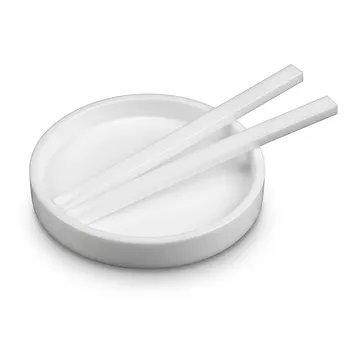
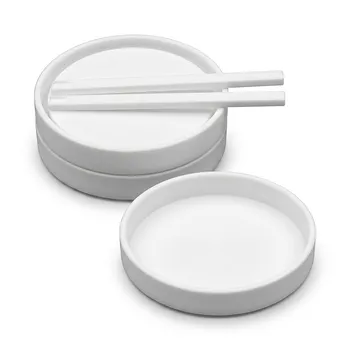
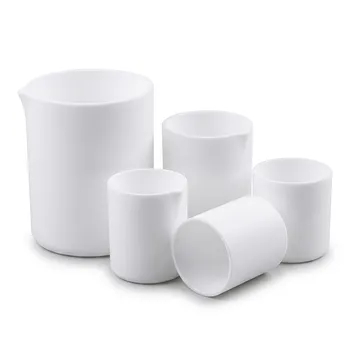
The removal of PFOA emulsifiers has improved ultra-pure fluoropolymer labware by reducing a major source of extractable and leachable contamination. Modern PFA and PTFE production uses PFOA-free emulsifiers, alternative fluorinated chemistries, or emulsifier-free processes, producing resins with fewer persistent surfactant residues and undesirable ionic end-groups. When these resins are molded into trace-analysis vessels, digestion tubes, wash bottles, or reagent containers, they provide lower analytical background and better sample integrity.
PFOA elimination benefits trace analysis primarily by reducing potential organic, ionic, and surfactant-derived contamination from the fluoropolymer itself. Combined with the inherently non-porous, chemically inert nature of PFA and PTFE, this supports lower detection limits and more reliable measurements.
Why PFOA removal matters in laboratory equipment
Legacy emulsifiers could contribute extractables
Historically, aqueous fluoropolymer synthesis used ammonium perfluorooctanoate or related PFOA compounds as surfactants. Residual emulsifiers, ionic end-groups, or associated low-molecular-weight species could potentially be extracted from the resin and introduced into analytical samples.
This is especially important when equipment contacts samples for extended periods, holds aggressive reagents, or is exposed to elevated temperatures during digestion.
Modern processes reduce contamination risk
PFOA-free production may use hydrocarbon-based emulsifiers, alternative fluorinated compounds with ether linkages, novel nucleation methods, or emulsifier-free polymerization. These approaches are intended to reduce persistent surfactant residues and other extractable contaminants in the finished resin.
The practical benefit is not that every product is automatically contaminant-free. Rather, well-controlled PFOA-free manufacturing lowers a known contamination risk, subject to appropriate resin purification, molding controls, and product testing.
How cleaner resins improve trace analysis
Lower background contamination
In elemental and ultra-trace analysis, contamination from a vessel can be comparable to the concentration being measured. Reduced surfactant and ionic residue helps minimize blank values and background signals.
This is valuable for applications such as trace heavy-metal detection, where even small contributions from the container can distort results or raise the apparent concentration of an analyte.
Fewer ionic interferences
Residual ionic species or unstable end-groups may leach under certain chemical or thermal conditions. Reducing these species helps prevent the laboratory vessel from contributing unwanted ions to the sample.
For techniques such as mass spectrometry, lower ionic background can reduce interference and improve confidence in low-level measurements.
Less organic interference
PFOA-related residues and other process-derived extractables can create unwanted organic background. In methods such as LC-MS/MS and impurity profiling, this background may appear as interfering signals or complicate interpretation.
PFOA-free resin production therefore supports cleaner blanks and more dependable identification of low-level compounds.
Why PFA and PTFE remain effective materials
Chemically inert, non-porous surfaces
PFA combines a highly fluorinated backbone with perfluoroalkyl vinyl ether comonomers, allowing it to be melt-processed into smooth laboratory components while retaining strong chemical and thermal resistance.
Its smooth, non-porous surface limits crevices, micro-fissures, and sites where residues can accumulate. This makes it suitable for digestion tubes, trace-analysis vessels, reagent bottles, and other sample-contact equipment.
Minimal absorption and sample retention
PFA and PTFE have extremely low water absorption—less than 0.03% for PFA and approximately zero for PTFE under the referenced comparison. This helps prevent liquid retention, swelling, and memory effects between samples.
The result is lower risk of cross-contamination when vessels are cleaned and reused.
Reduced analyte loss
Chemically inert fluoropolymer surfaces also reduce adsorption of analytes onto container walls. This is particularly important for dilute metal-ion solutions and other samples where loss to the vessel could produce falsely low results.
Cleaner resin chemistry and low-adsorption surfaces work together: the material contributes less contamination while also retaining less of the analyte being measured.
The production route still matters
Emulsion polymerization requires residue control
Even after PFOA elimination, emulsion polymerization can involve surfactants and inorganic initiators. Residual process chemicals, ionic end-groups, and volatile species must therefore be controlled through resin purification and manufacturing quality systems.
A product labeled “PFOA-free” should not automatically be interpreted as free from every possible extractable. The relevant performance question is the level of contaminants released under the intended application conditions.
Suspension and emulsifier-free methods can reduce specific risks
Suspension polymerization is conducted without the same type of surfactant-stabilized aqueous dispersion used in emulsion polymerization. Emulsifier-free approaches can likewise reduce the opportunity for surfactant residues to enter the resin.
However, polymerization route alone does not establish final product purity. Molding, machining, cleaning, packaging, and handling can all introduce contamination and must be evaluated as part of the complete supply chain.
Understanding the Trade-offs
PFOA-free does not mean universally contamination-proof
PFOA elimination removes a significant legacy concern, but trace-analysis performance still depends on resin grade, processing conditions, surface treatment, cleaning, and storage.
Manufacturers and laboratories should rely on application-specific extractables, leachables, and blank testing rather than on a single chemical declaration.
Alternative additives also require evaluation
Some modern fluoropolymer processes use replacement emulsifiers or fluorinated compounds. These alternatives may have improved environmental profiles, but their residual levels and analytical behavior still require appropriate control.
The objective is not merely substitution. It is demonstrated low extractability and low background under actual laboratory conditions.
Equipment cleanliness remains essential
Even highly pure PFA or PTFE can be contaminated by reagents, airborne particles, improper cleaning, or contact with unsuitable tools. A cleaner resin reduces the equipment’s contribution; it does not eliminate the need for validated cleaning and blank procedures.
Purity must match the analytical method
An instrument component suitable for general chemical handling may not be appropriate for ultra-trace elemental analysis. The required specification should reflect the analytes, acids or solvents, temperature, contact time, and detection limit involved.
Making the Right Choice for Your Goal
Choose both the fluoropolymer grade and the manufacturing controls according to the measurement problem you need to solve.
- If your primary focus is ultra-trace elemental analysis: Use high-purity PFA or PTFE equipment produced with controlled PFOA-free or emulsifier-minimized processes, and verify low method blanks and ionic extractables.
- If your primary focus is LC-MS/MS or organic impurity profiling: Prioritize low-organic-extractables materials and validate that containers and tubing do not generate interfering background signals.
- If your primary focus is digestion or aggressive chemical treatment: Select PFA or PTFE with appropriate thermal and chemical resistance, then confirm cleanliness after the intended digestion and cleaning cycle.
- If your primary focus is minimizing cross-contamination: Favor smooth, non-porous fluoropolymer surfaces with very low absorption, supported by a validated cleaning protocol.
- If your primary focus is procurement and compliance: Request documentation covering PFOA status, resin grade, extractables or leachables, and application-relevant blank performance rather than relying on a PFOA-free claim alone.
Industrial elimination of PFOA emulsifiers has made high-purity fluoropolymer equipment a cleaner and more reliable foundation for sensitive analytical measurements.
Summary Table:
| Benefit | Description |
|---|---|
| Lower background contamination | Reduced surfactant residues minimize blank values and background signals. |
| Fewer ionic interferences | Less ionic species leach from the material, improving MS and other ionic analyses. |
| Reduced organic interference | Lower organic extractables improve LC-MS/MS and impurity profiling. |
| Improved sample integrity | Cleaner surfaces minimize analyte loss and cross-contamination. |
Achieve consistent, reliable trace analysis with our high-purity PTFE and PFA labware. Our products are manufactured with PFOA-free processes and undergo rigorous quality control to ensure minimal extractables. Explore our range of digestion tubes, wash bottles, and trace-analysis vessels, or contact us for custom solutions tailored to your exact specifications. Contact us today to discuss your requirements and see how we can support your analytical excellence.
Related Products
- High Purity PFA Crucible and Corrosion Resistant PTFE Beaker for Trace Analysis and Custom Laboratory Applications
- High Purity PFA Chromatography Columns and Collection Bottles Corrosion Resistant Fluoropolymer Filtration Systems for Trace Analysis
- High Purity PFA Chromatography Column with Collection Bottle Corrosion Resistant Fluoropolymer Filtration System for Trace Analysis
- Corrosion Resistant PTFE Support with PFA Transparent Reaction Tank and High Purity PFA Sampling Tube for Trace Analysis
- High Temperature Resistant Thickened PTFE Beaker 2000ml for Chemical Processing and Laboratory Trace Analysis
People Also Ask
- Why are high-purity vessels critical for BiFeO3 synthesis? Ensuring Phase Purity
- Why is the use of high-purity PFA or PTFE labware critical during TiO2 nanoparticle purification? Protect Sample Purity
- Why is high-purity PFA labware necessary for Znx@LS-2 zeolite ICP-OES analysis? Ensure Trace-Level Precision
- Why is high-purity PFA trace analysis labware used for MXene? Ensure Superior Material Integrity in Research
- What key material characteristics make PTFE and PFA suitable for high-purity laboratory labware, trace analysis containers, and medical microporous tubing? Discover the essential properties that ensure purity.