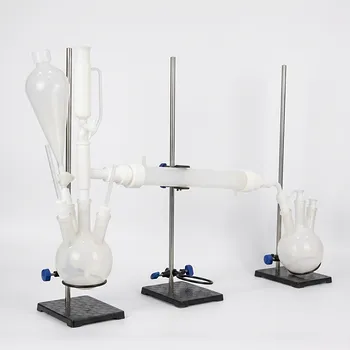
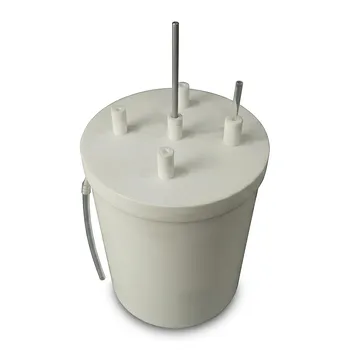
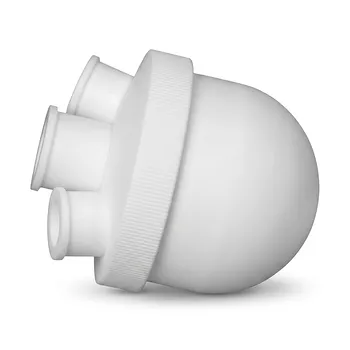
High end-group fidelity comes from reversible iodine-mediated chain control. In visible-light photomediated VDF polymerization, manganese carbonyl catalysts and difunctional perfluorinated alkyl iodides create an iodine-transfer process that repeatedly regulates radical chain growth. This produces PVDF with more than 95% iodide chain-end functionality and less than 1% head-to-head defects under relatively mild conditions of approximately 0–100 °C.
The chemistry preserves chain ends by using iodine groups as controlled, transferable radical regulators rather than relying on uncontrolled radical termination. The apparatus must therefore provide a clean, sealed, chemically inert, light-accessible, and temperature-controlled environment for gaseous VDF and fluorinated reagents.
How the Polymerization Preserves Chain Ends
Visible light activates the controlled radical process
The manganese carbonyl catalyst is used in a visible-light-mediated process to generate the reactive radical species needed for VDF polymerization. Light provides temporal control over radical production, helping limit uncontrolled radical concentrations and reducing termination events.
This is important because conventional uncontrolled radical polymerization can destroy chain-end groups through combination or disproportionation. Photochemical control instead allows the reaction to remain closer to a reversible activation–transfer process.
Iodine transfer regulates chain growth
The difunctional perfluorinated alkyl iodide serves as an iodine-transfer agent and chain-end source. Growing fluorinated radical chains can undergo iodine transfer, placing an iodine-containing end group on the polymer and regenerating a species capable of continuing controlled growth.
The result is a polymer population in which most chains retain the intended iodine functionality. The reported outcome is greater than 95% total iodide chain-end functionality.
Difunctionality supports defined chain architecture
Because the iodine-containing reagent is difunctional, it can provide reactive end groups at both sides of a growing polymer structure. This creates a route toward more deliberately defined PVDF architectures than would generally be available from an uncontrolled single-functional initiator system.
The essential principle is that the end-group chemistry is built into the transfer reagent and repeatedly preserved during propagation.
Controlled transfer suppresses structural defects
VDF is a main-chain fluorinated gaseous monomer, so its incorporation can produce unwanted regioerrors, including head-to-head linkages. The controlled iodine-transfer environment favors the desired propagation pathway and gives under 1% head-to-head defects according to the reference.
High end-group fidelity and low defect content are therefore related but distinct outcomes: iodine transfer preserves chain ends, while controlled propagation improves the regularity of the PVDF backbone.
What the Laboratory Apparatus Must Provide
A sealed system for gaseous VDF
VDF must be contained in a closed reaction system capable of safely handling a gaseous monomer. The apparatus should include sealed reaction vessels, compatible tubing, reliable valves, and connections that minimize leakage and prevent atmospheric contamination.
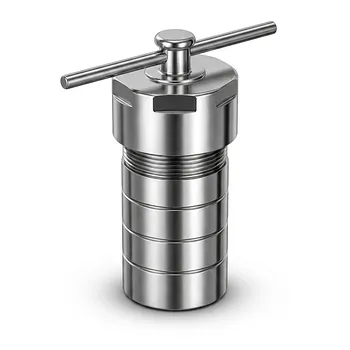
The vessel and pressure boundary must also be appropriate for the reaction’s operating temperature and pressure. A standard open flask is not an adequate substitute for a purpose-designed sealed photoreactor.
Chemical resistance to fluorinated reagents
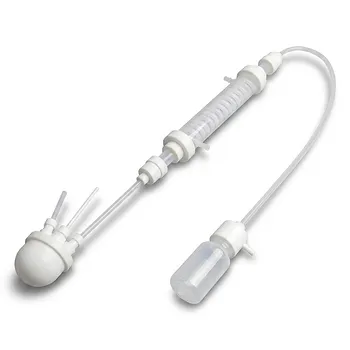
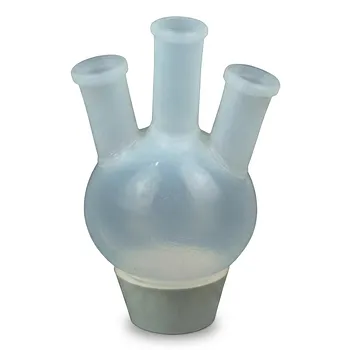
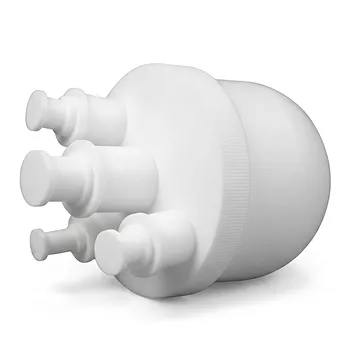
The reaction environment must resist fluorinated monomers, perfluorinated alkyl iodides, manganese-containing catalyst systems, and organic solvents such as dimethyl carbonate. PTFE and PFA components are appropriate choices where their mechanical, sealing, and optical properties meet the design requirements.
Chemical compatibility must include not only the reactor body but also tubing, valves, gaskets, stirrer components, sampling lines, and transfer connections. A single incompatible seal or wetted component can introduce contamination or degrade during the reaction.
An optical path that transmits the working light
Because the process is photomediated, the reaction vessel must expose the reaction mixture to the required visible-light wavelength and intensity. The apparatus therefore needs a light-transparent reaction window or a vessel material that provides sufficient transmission.
PFA may be useful where fluoropolymer compatibility and optical access are both needed. PTFE is highly chemically resistant but is not generally selected as the sole optical window material when efficient light transmission is required; a fluoropolymer-compatible transparent window or liner may be necessary.
Controlled and uniform illumination
The light source should provide stable wavelength, intensity, and coverage across the reaction volume. Uneven illumination can create local differences in radical generation, producing inconsistent conversion or molecular characteristics.
The reactor should also manage heat generated by the light source. Photochemical control depends on reproducible optical conditions, not merely on exposing the vessel to an arbitrary lamp.
Temperature control from 0–100 °C
The reported chemistry operates across a relatively mild temperature range of approximately 0–100 °C. The reactor therefore requires active heating or cooling, a temperature sensor located near the reaction mixture, and sufficient thermal uniformity.
Temperature control is particularly important for a gaseous monomer because temperature affects vapor pressure, monomer concentration, reaction rate, and system pressure.
Low-contamination fluid handling
High end-group fidelity is meaningful only if the measured polymer is not compromised by contaminants, oxygen, moisture, metal residues, or degraded solvent. Fluid-transfer components should therefore be cleanable, chemically inert, and compatible with sealed operation.
The system should support controlled evacuation, inert-gas handling where appropriate, reagent charging, and sampling without repeatedly exposing the reaction to air.
Why Material Selection Matters
Fluoropolymer components protect reaction purity
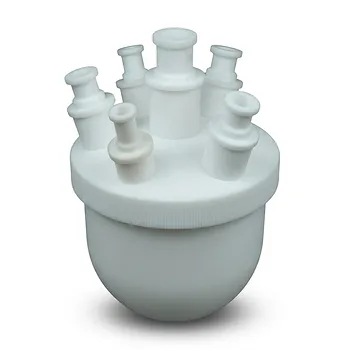
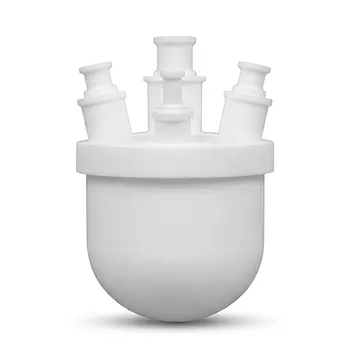
Custom PTFE and PFA vessels, fluid-transfer components, and sealed reaction tubing help prevent unwanted interactions between the apparatus and the fluorinated chemistry. Their chemical resistance reduces the risk of leaching, corrosion, swelling, or reagent loss.
This protection is especially valuable when the target is precise chain-end functionality rather than only high monomer conversion.
Solvent compatibility is part of the design
Dimethyl carbonate and other organic solvents can interact differently with plastics, elastomers, adhesives, and tubing materials. Compatibility must be verified for the actual solvent concentration, temperature, exposure time, and pressure.
A material that is acceptable for brief solvent contact may not be suitable for prolonged heating, light exposure, or pressurized operation.
Seals and connections are critical failure points
The reactor body may be chemically resistant while its seals or fittings are not. Gaskets, valve seats, O-rings, and adhesives must be selected for compatibility with fluorinated monomers, iodinated reagents, solvent, temperature, and pressure.
Minimizing the number of wetted materials is generally preferable because it reduces both contamination pathways and opportunities for chemical failure.
Understanding the Trade-offs
Chemical resistance can conflict with optical transparency
PTFE offers excellent chemical resistance but is not normally the ideal material for transmitting visible light through a reactor wall. PFA or a separate transparent optical window may provide a better compromise, depending on the reactor geometry and wavelength.
The correct solution is not to use one material everywhere, but to assign each material to the function it performs best.
Sealing improves control but increases engineering demands
A sealed vessel is necessary for handling gaseous VDF and maintaining a controlled reaction environment. However, it introduces requirements for pressure-rated components, leak testing, safe venting, and carefully engineered connections.
A sealed photoreactor must be designed as a pressure-and-light system, not simply as a flask placed inside a lamp enclosure.
High purity requires disciplined preparation
Inert materials alone do not guarantee high end-group fidelity. Residual oxygen, moisture, catalyst contaminants, poorly cleaned tubing, and solvent degradation can all disturb radical chemistry or compromise analytical results.
Cleaning, drying, blank testing, and controlled reagent transfer are therefore part of the polymerization method rather than optional laboratory housekeeping.
Photochemical reproducibility can be difficult
Small changes in lamp distance, vessel geometry, optical transmission, stirring, or reaction color can alter the effective light dose. Reproducible polymer properties require these variables to be measured or held constant.
The apparatus should be characterized for illumination and temperature rather than judged only by nominal lamp power.
Making the Right Choice for Your Goal
The apparatus should be selected around the desired level of polymer control, not merely around whether a reaction can be made to proceed.
- If your primary focus is end-group fidelity: Use a sealed, low-contamination reactor with chemically inert PTFE/PFA wetted components, controlled reagent transfer, and reproducible visible-light exposure.
- If your primary focus is safe VDF handling: Prioritize a pressure-rated vessel, leak-tight fluoropolymer-compatible tubing and seals, temperature control, and engineered venting or containment.
- If your primary focus is photochemical reproducibility: Provide a defined optical path, stable wavelength and intensity, uniform illumination, efficient stirring, and temperature monitoring near the reaction mixture.
- If your primary focus is analytical confidence: Prevent oxygen, moisture, solvent degradation, and material leaching through validated cleaning, drying, compatibility testing, and sealed sampling procedures.
With the right combination of iodine-transfer chemistry and purpose-built photoreactor engineering, PVDF synthesis can preserve both chain-end identity and backbone regularity.
Summary Table:
| Aspect | Requirement |
|---|---|
| Sealing | Closed system for gaseous VDF, leak-tight, pressure-rated |
| Chemical resistance | PTFE/PFA wetted parts; compatible with fluorinated reagents and solvents (e.g., DMC) |
| Optical access | Transparent window/vessel for visible light; e.g., PFA or quartz |
| Illumination | Uniform, stable wavelength/intensity; manage heat |
| Temperature control | Active heating/cooling for 0–100°C; monitor near mixture |
| Fluid handling | Clean, inert tubing/valves; support evacuation, inert gas, sampling without air exposure |
| Analytical purity | Prevent O2/moisture; validate cleaning and material compatibility |
Achieve superior PVDF end-group fidelity with KINTEK's custom PTFE/PFA reactors and fluid handling systems. Our lab supplies are engineered for gaseous monomer polymerization, offering leak-tight sealing, chemical resistance, and optical clarity. Contact us today to discuss your custom solution: Contact KINTEK
Related Products
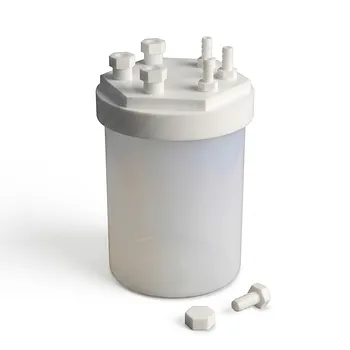
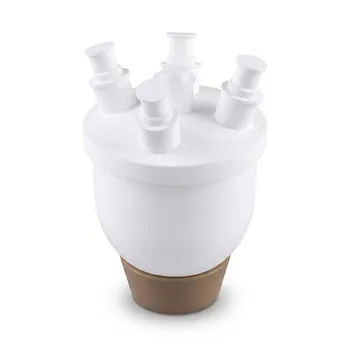
- PFA Chemical Reaction Tank with Customizable Fittings for Corrosive Solvent Synthesis and High Purity Lab Applications
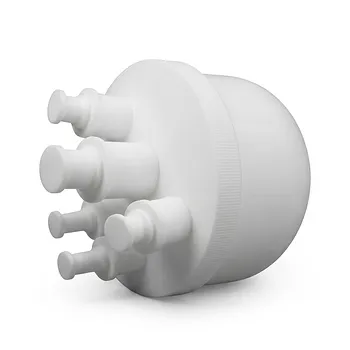
- PFA Reaction Tank 6L Customizable Fittings Corrosion Resistant Solvent Resistant PFA Reaction Bottle for New Material Synthesis
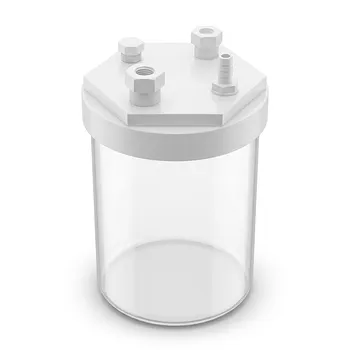
- High Purity PFA Reaction Vessel for Biopharmaceutical Synthesis and Corrosive Chemical Fluid Handling with Customizable Tube Fittings
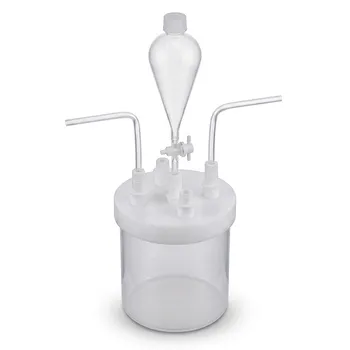
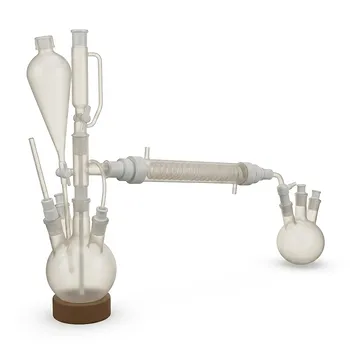
- Custom PTFE Reaction System with Hose Barb Fittings Corrosion Resistant High Sealing 2L 4L Lab Reactor with Separatory Funnel
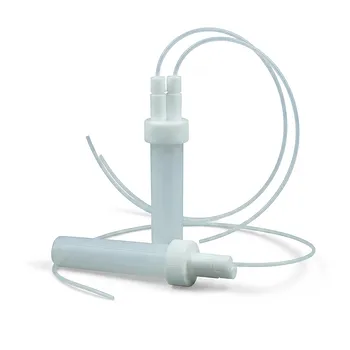
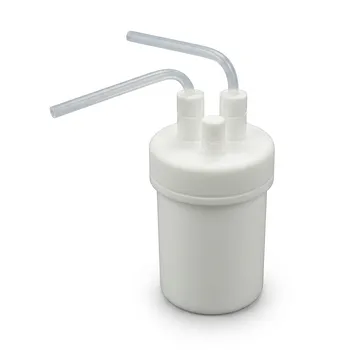
- High Purity PFA Reaction Bottle with Tubing Connection for Corrosive Chemical Synthesis and Trace Analysis
People Also Ask
- How does the molecular structure of fluorinated polymers contribute to the extreme thermal stability and chemical resistance required for high-performance laboratory reaction vessels and digestion containers? Discover the science behind PTFE and PFA for your lab.
- How do choice of solvent and chain transfer activity affect molecular weight during vinylidene fluoride (VDF) radical polymerization? Learn Key Factors for High-MW PVDF
- What role do low-surface-energy fluoropolymer reaction vessels play in preventing fouling during particle synthesis and emulsion polymerization?
- Why are fluoropolymer reaction vessels essential for SnO2/rGO synthesis? The Key to High-Performance Composites
- When synthesizing TFVE monomers involving reactive organometallic reagents and aggressive polar solvents, what material performance characteristics are required? Ensure purity with PTFE/PFA.