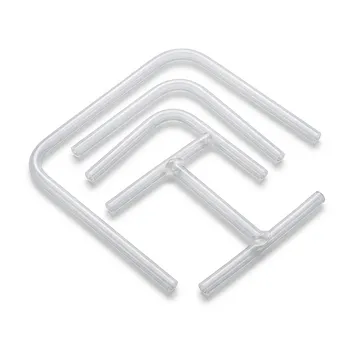
The chemical resistance of PTFE capillary tubing is a direct result of its fully fluorinated, linear molecular structure. The carbon backbone is entirely encased in a protective sheath of fluorine atoms held together by exceptionally strong covalent bonds. This creates a dense, non-polar barrier that physically and electronically prevents reactive species from accessing and breaking the polymer chain.
Core Takeaway: PTFE’s inertness is driven by the combination of the high-energy Carbon-Fluorine (C–F) bond and a helical geometry that "armors" the carbon backbone. This structural configuration renders the tubing virtually unreachable by nearly all acids, bases, and solvents.
The Unmatched Strength of the Carbon-Fluorine Bond
Extreme Bond Dissociation Energy
The Carbon-Fluorine (C–F) bond is one of the strongest in organic chemistry, with a bond energy of approximately 485 kJ/mol. This high energy level means that a massive amount of external energy is required to break the bond, making it naturally resistant to thermal and chemical degradation.
Resistance to Chemical Cleavage
Because the C–F bond is so stable, typical chemical reagents—such as strong acids or oxidizers—lack the energy necessary to displace the fluorine atoms. This stability ensures that the polymer chain remains intact even when exposed to aggressive corrosive vapors and liquids.
Geometric Shielding: The Helical Conformation
The Fluorine "Sheath"
PTFE is a linear homopolymer where the carbon backbone is not just bonded to fluorine, but completely enveloped by it. The fluorine atoms are larger than hydrogen atoms (found in standard polyethylene), and they pack tightly around the carbon core.
Helical Protective Twist
To accommodate these larger fluorine atoms, the PTFE chain adopts a helical conformation. This spiral shape creates a continuous, dense "sheath" that physically shields the more vulnerable carbon-carbon (C–C) bonds from external attack.
Physical Intractability
This geometric "armoring" makes the tubing essentially intractable in any solvent. Because the reactive centers of the molecule are physically inaccessible, the material cannot be easily dissolved or weakened by standard industrial chemicals.
Electronic Stability and Non-Polarity
Low Polarizability and Dense Electron Clouds
Fluorine is highly electronegative, creating a dense electron cloud around the polymer chain. This density results in low polarizability, meaning the electrons are not easily shifted or influenced by the approach of other charged molecules.
Non-Polar Surface Characteristics
The uniform distribution of fluorine atoms creates a non-polar surface. This lack of polarity minimizes intermolecular interactions, preventing other substances from adhering to or reacting with the tubing walls.
Understanding the Trade-offs
Vulnerability to Alkali Metals
Despite its near-universal resistance, PTFE is not invincible. It can be attacked by molten alkali metals (like sodium) and certain organic halogenated compounds, which possess enough reducing power to strip the fluorine atoms from the carbon backbone.
Extreme Temperature and Pressure Limits
While PTFE is chemically inert at room temperature, its resistance can be compromised by gaseous fluorine at high pressures and temperatures. In these extreme environments, the kinetic energy of the reactants can finally overcome the bond stability of the PTFE chain.
How to Apply This to Your Project
Making the Right Choice for Your Goal
- If your primary focus is handling ultra-pure reagents: PTFE is the ideal choice because its inertness prevents leaching and ensures no contamination of the fluid stream.
- If your primary focus is resistance to strong acids or bases: PTFE capillary tubing provides the highest level of security, as it is unaffected by virtually all corrosive liquids and vapors.
- If your primary focus is high-pressure gaseous fluorine handling: You must look beyond standard PTFE and consider specialized alloys or reinforced materials, as PTFE may fail under these specific, extreme conditions.
By understanding the molecular "armor" of PTFE, engineers can confidently deploy capillary tubing in environments that would destroy almost any other polymer.
Summary Table:
| Feature | Structural Detail | Laboratory Benefit |
|---|---|---|
| Bond Strength | C-F bond energy (~485 kJ/mol) | Superior thermal and chemical stability |
| Geometry | Helical conformation (Fluorine sheath) | Physical "armor" for the carbon backbone |
| Polarity | Non-polar surface / Low polarizability | Prevents adhesion and chemical reactions |
| Stability | Dense electron cloud | Resistance to nearly all acids, bases, and solvents |
| Limitations | Vulnerable to molten alkali metals | High-energy reduction can strip fluorine atoms |
Elevate Your Research with High-Performance Fluoropolymer Solutions from KINTEK
At KINTEK, we specialize in the science of chemical resistance. We manufacture virtually all imaginable laboratory supplies crafted exclusively from PTFE and PFA, ensuring your experiments are protected by the most inert materials available.
Our extensive product range includes:
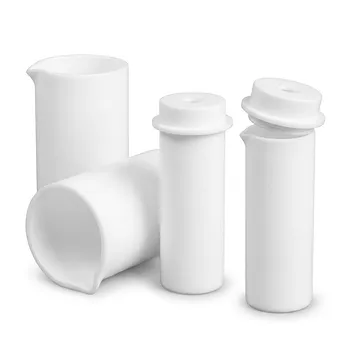
- Basic Labware: Beakers, measuring cylinders, crucibles, dishes, and reagent/wash bottles.
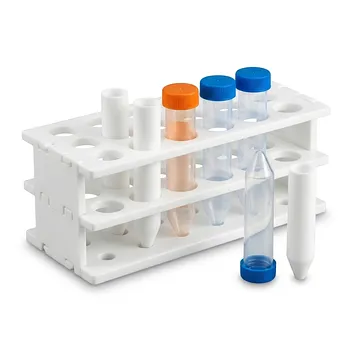
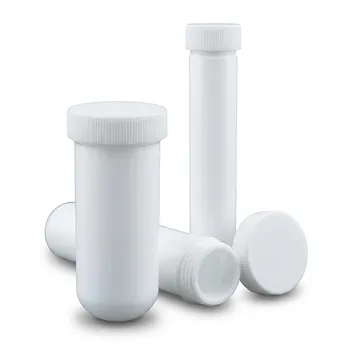
- Fluid Handling: PTFE capillary tubing, precision fittings, valves, and centrifuge/digestion tubes.
- Sample Prep & Filtration: Separatory funnels, burettes, filters, pipettes, tweezers, and spatulas.
- Advanced Apparatus: Standard or custom electrochemical cells, battery testing fixtures, microwave digestion vessels, and microchannel reactors.
The KINTEK Advantage: Backed by end-to-end custom CNC fabrication, we are uniquely equipped to deliver everything from complex non-standard machined parts and bespoke laboratory setups to high-volume orders. We maintain an absolute focus on high-performance fluoropolymers to provide you with the durability and purity your work demands.
Contact KINTEK today to find the perfect PTFE or PFA solution for your laboratory’s most challenging environments!
Related Products
- High Performance PFA Coiled Spring Tubing and Custom PTFE Fabrication Services with Welded Fittings and Precision Bent Components
- Custom High Purity PTFE Digestion Tubes and Centrifuge Tubes for Trace Metal Analysis
- Custom PTFE Condenser Tube Hydrofluoric Acid Resistant Reflux Device Constant Pressure Separatory Funnel
- High Purity PTFE Digestion Tubes and Custom Centrifuge Tubes 100ml for Trace Analysis and Chemical Digestion
- Custom PTFE Condenser Tube Reflux Reaction Condensation Purification Device Semiconductor Chemical Lab Equipment
People Also Ask
- What are the technical advantages of high-precision PFA tubing in MXene production? Maximize Purity and Yield.
- What technical advantages do PFA tubing and fittings offer? Master Precision Fluid Transfer and Flow Chemistry
- What are the technical advantages of high-quality PFA tubing? Achieve Ultimate Purity and Precision in Fluid Handling
- What are the key benefits of PTFE in custom fabrication? Unlock Performance in Extreme Conditions
- What fabrication services are available for PTFE? Shearing, Stamping, Laser Cutting, Molding & Machining