PFA’s chemical resistance is a direct result of its fully fluorinated molecular structure and exceptionally strong atomic bonds. By replacing all hydrogen atoms with fluorine, PFA creates a "shielded" carbon backbone that is virtually impenetrable to chemical attack. This architecture allows the material to withstand aggressive reagents that would degrade most other polymers, even at extreme temperatures.
PFA achieves near-total chemical inertness through the combination of high-energy Carbon-Fluorine bonds and a dense electron cloud that prevents reactive species from accessing its molecular core. This makes it a definitive choice for environments requiring extreme purity and resistance to corrosion.
The Foundation of Resistance: The C–F Bond
High Atomic Dissociation Energy
The Carbon-Fluorine (C–F) bond is one of the strongest in organic chemistry, boasting a bond energy of approximately 485 kJ/mol. This high energy requirement makes the bond extremely difficult to break, providing the fundamental stability needed to resist chemical decomposition.
Electronic Shielding
Fluorine atoms possess high electronegativity, which creates a dense electron cloud around the polymer chain. This cloud acts as a physical and electronic barrier, effectively shielding the carbon backbone from nucleophilic or electrophilic attacks by aggressive reagents.
Elimination of Reactive Sites
Because PFA is fully fluorinated, it contains no hydrogen or heteroatoms. The absence of these elements means there are no available sites for common chemical reactions such as oxidation, hydrolysis, or substitution, rendering the material immune to most solvents and acids.
Molecular Architecture and Geometry
The Copolymer Foundation
PFA is synthesized as a copolymer of tetrafluoroethylene (TFE) and perfluoroalkyl vinyl ether (PPVE). This specific combination allows the material to maintain the inertness of PTFE while becoming melt-processable, which ensures a more uniform and non-porous final product.
Helical Sheathing
The polymer chain naturally forms a helical structure where the fluorine atoms wrap around the carbon-carbon bonds. This "sheathing" effect ensures that the more vulnerable internal bonds are never directly exposed to the external environment.
Enhanced Mechanical Integrity
Compared to other fluoropolymers like FEP, PFA’s architecture provides greater stiffness and creep resistance. This structural "toughness" prevents the material from deforming under combined chemical and thermal stress, which is critical for maintaining seals in pressurized systems.
Understanding the Trade-offs
Thermal Degradation Limits
While PFA is stable up to 260°C, exceeding 300°C for prolonged periods can trigger slow chain scission. This process breaks the polymer backbone and can release trace fluorocarbons, potentially contaminating sensitive samples.
Physical Vulnerability to Abrasion
PFA is softer and has lower scratch resistance than PTFE. Mechanical abrasion should be strictly avoided, as surface scratches increase roughness and create potential adsorption sites for contaminants, undermining the material's high-purity benefits.
Gas Permeability
At exceptionally high temperatures, PFA can exhibit permeability to certain gases. While it remains chemically inert, this permeability may be a factor in specialized vacuum or high-pressure gas applications.
How to Apply This to Your Project
Making the Right Choice for Your Goal
- If your primary focus is ultra-trace element analysis (ICP-MS): Use PFA containers to take advantage of the material's minimal extractables and superior surface purity.
- If your primary focus is repeated thermal cycling: Prioritize PFA over FEP due to its tenfold better repeated-bending endurance and higher melt strength.
- If your primary focus is visual monitoring of reactions: Utilize PFA’s natural translucency to observe contents while maintaining resistance to aggressive acids and bases.
- If your primary focus is high-pressure containment: Ensure the system operates below 260°C to prevent creep and maintain the mechanical integrity of the PFA components.
The molecular architecture of PFA ensures that your most sensitive processes remain pure and protected from the harshest chemical environments.
Summary Table:
| Feature | Molecular Mechanism | Performance Benefit |
|---|---|---|
| C–F Bond Strength | High dissociation energy (~485 kJ/mol) | Extreme resistance to thermal and chemical decomposition. |
| Electronic Shielding | Dense electron cloud around carbon backbone | Physical barrier against nucleophilic and electrophilic attacks. |
| Helical Sheathing | Fluorine atoms wrap around the C-C chain | Protects vulnerable internal bonds from external exposure. |
| Full Fluorination | Absence of hydrogen or reactive heteroatoms | Immune to common reactions like oxidation and hydrolysis. |
| Melt-Processability | TFE and PPVE copolymer structure | Enables uniform, non-porous, and high-purity manufacturing. |
Secure Your High-Purity Research with KINTEK
Elevate your laboratory standards with KINTEK’s high-performance fluoropolymer solutions. From everyday basic labware (beakers, crucibles, reagent bottles) and high-purity fluid transfer components (tubing, valves, fittings) to advanced reaction apparatus like electrochemical cells, battery testing fixtures, and microwave digestion vessels, we manufacture virtually every laboratory supply imaginable from PTFE and PFA.
Backed by end-to-end custom CNC fabrication, KINTEK is uniquely equipped to deliver everything from complex, non-standard machined parts to high-volume orders—all with an absolute focus on material performance and chemical inertness.
Ready to upgrade to the ultimate in chemical resistance? Contact our experts today to discuss your custom project or standard labware needs.
Related Products
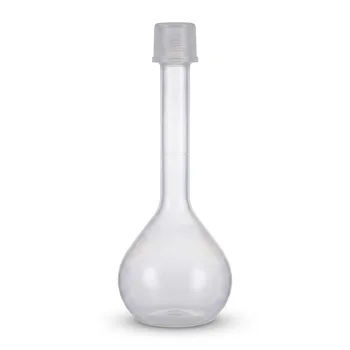
- High Purity PFA Volumetric Flask 1000ml 2000ml Constant Volume Bottle Acid Resistant Trace Analysis Custom Laboratory Labware
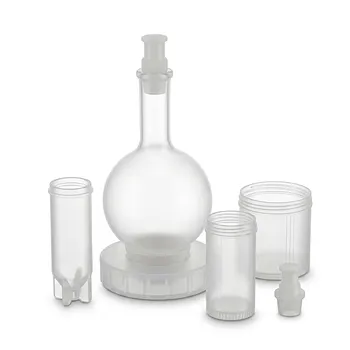
- Custom PFA Pear Shaped Flask High Purity Corrosion Resistant Labware Custom Molded Fluoropolymer Flask Glass Replacement Solution
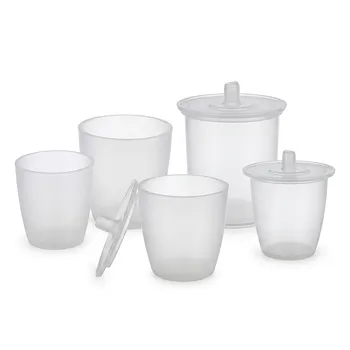
- High Purity PFA Crucible and Corrosion Resistant PTFE Beaker for Trace Analysis and Custom Laboratory Applications
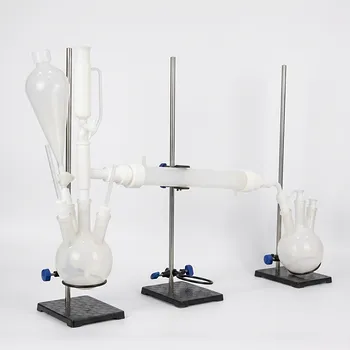
- High Purity PFA Constant Pressure Condensation Reaction System Acid Resistant High Temperature Customizable Teflon Labware
- High Purity PFA Sample Dissolution Cups Acid Resistant Chemical Digestion Vessels with Lids Trace Analysis Labware
People Also Ask
- Why use high-purity PFA bottles for Carbon Quantum Dots? Ensure Ink Stability and Prevent Fluorescence Quenching
- Why is high-purity PFA trace analysis labware used for MXene? Ensure Superior Material Integrity in Research
- Why is high-purity PFA trace analysis labware used for sample processing when preparing Mo2CTx@MoS2? Ensure Material Purity
- Why is high-purity PFA labware necessary for Znx@LS-2 zeolite ICP-OES analysis? Ensure Trace-Level Precision
- Why is high-purity PFA laboratory labware essential for high-sensitivity trace analysis? Maximize data accuracy.