The key effect is a useful balance between processability and thermal endurance. Introducing pendant trifluoromethyl (-CF3) groups and rigid phthalazinone moieties disrupts dense chain packing, allowing fluorinated poly(arylene ether)s to dissolve in common polar organic solvents at room temperature. At the same time, phthalazinone increases backbone rigidity, raising the glass transition temperature from approximately 185 °C to 269 °C, while 1% decomposition temperatures remain high at approximately 487-510 °C under nitrogen.
-CF3 groups improve solvent access by increasing free volume and weakening interchain interactions, while phthalazinone moieties raise thermal resistance by restricting chain motion. This combination enables solution-based fabrication of optical films, waveguides, and precision micro-components without sacrificing high-temperature stability.
Why Solubility Improves
How -CF3 Groups Disrupt Chain Packing
The bulky -CF3 substituent occupies substantial molecular volume and increases the distance between neighboring polymer chains. This prevents close interchain packing, suppresses crystallization, and promotes a more amorphous morphology.
The resulting free volume gives solvent molecules greater access to the polymer matrix. It also reduces strong intermolecular interactions, including hydrogen bonding and charge-transfer complex formation, that commonly make rigid aromatic polymers difficult to dissolve.
How Phthalazinone Creates a Non-Coplanar Structure
Phthalazinone is a rigid aromatic moiety, but its attached phenyl ring adopts a twisted dihedral arrangement rather than forming a fully coplanar structure. This asymmetric conformation interferes with regular chain stacking.
The twist is important because rigidity alone often reduces solubility. In this case, the phthalazinone ring restricts molecular motion while its non-coplanar geometry prevents the chains from organizing into a tightly packed structure.
Solvents Enabled by the Combined Design
The modified fluorinated poly(arylene ether)s show room-temperature solubility in solvents including THF, DMAc, DMF, NMP, cyclohexanone, and chloroform. This expands processing options beyond high-temperature melt processing or aggressive dissolution conditions.
For optical fluoropolymer fabrication, the practical consequence is the ability to prepare coating or casting solutions and form films at relatively low temperatures. Solution processing also supports patterned fabrication and the production of small, geometrically precise components.
How Thermal Properties Change
Phthalazinone Raises the Glass Transition Temperature
Increasing the phthalazinone content restricts movement of the polymer main chain. As a result, the glass transition temperature increases from approximately 185 °C to 269 °C.
A higher Tg improves dimensional stability during optical processing, thermal cycling, and service at elevated temperatures. It reduces the risk that a film or micro-component will soften, deform, or lose its designed geometry.
High Decomposition Temperatures Are Retained
The increase in rigidity does not produce a corresponding loss in thermal decomposition resistance. Reported Td,1% values of approximately 487-510 °C under nitrogen indicate that the materials remain stable well above their processing and typical operating temperatures.
Fluorine-dense structures can also provide high thermal resistance under oxidative and inert conditions, although decomposition values must be compared only when the measurement method, atmosphere, and weight-loss criterion are the same.
Thermal Stability Supports Optical Processing
Optical waveguides and micro-components often require multiple thermal steps, including solvent removal, curing, annealing, or integration with other materials. A high Tg provides dimensional control during these steps, while a high decomposition temperature provides a substantial thermal safety margin.
The distinction matters: Tg describes the onset of major segmental mobility, whereas Td describes chemical degradation. A polymer can therefore be easy to process from solution while still resisting high-temperature decomposition after the solvent has been removed.
Why This Combination Benefits Optical Materials
Solution Casting Enables Uniform Films
Room-temperature dissolution allows the polymer to be deposited by methods such as casting, coating, or other solution-based techniques. These methods can produce continuous films without requiring the polymer to be heated above its glass transition temperature.
Uniformity depends on formulation and processing conditions, including concentration, solvent choice, drying rate, and substrate compatibility. The material's intrinsic solubility removes one major barrier but does not by itself guarantee defect-free optical films.
Fluorination Can Improve Optical Performance
Bulky fluorinated groups increase free volume and reduce intermolecular electronic interactions. These changes can lower polarizability and reduce the formation of charge-transfer complexes, supporting low color and improved optical transparency.
The exact refractive index, optical loss, and transparency window depend on the complete repeat-unit structure, wavelength, film quality, and residual solvent content. The -CF3 group should therefore be viewed as a useful design factor rather than a guarantee of low optical loss.
Moisture Uptake Can Be Reduced
Fluorination generally lowers water absorption, with related fluoropolymer systems showing moisture uptake ranging from approximately 0.29% to 3.20%. Lower moisture absorption helps stabilize optical and dielectric properties and reduces dimensional changes during environmental exposure.
For waveguide fabrication, controlling absorbed moisture is particularly important because water can affect refractive index, attenuation, adhesion, and the reliability of subsequent thermal treatment.
Understanding the Trade-offs
More Rigidity Can Reduce Flexibility
Increasing phthalazinone content raises Tg by restricting chain motion, but the same rigidity can make films less flexible and potentially more brittle. The optimum composition depends on whether the component must withstand bending, thermal cycling, machining, or repeated handling.
A high Tg is valuable only if mechanical toughness and film integrity remain adequate for the intended application.
Free Volume Can Affect Mechanical and Barrier Properties
The free volume introduced by -CF3 groups improves solubility and may support optical transparency, but it can also reduce cohesive packing. Depending on composition, this may influence modulus, elongation, gas permeability, and resistance to physical aging.
These properties should be characterized alongside solubility and thermal data rather than inferred from fluorine content alone.
Solubility Is Composition-Dependent
Bulky -CF3 groups usually improve solubility, but highly symmetrical structures can sometimes pack more efficiently and develop partial crystallinity. Linkage geometry and comonomer selection therefore remain important.
Using mixed meta- and para-linkages or otherwise reducing structural symmetry can help preserve amorphous character and solvent compatibility.
Thermal Data Must Be Compared Carefully
Td values measured at 1%, 5%, or 10% mass loss are not interchangeable. Atmosphere, heating rate, sample history, and instrument conditions also affect reported decomposition temperatures.
The cited values support strong thermal stability, but processing specifications should be based on measurements made under conditions that represent the actual manufacturing environment.
How to Apply This to Optical Fluoropolymer Design
The appropriate balance depends on whether solution processing, thermal endurance, optical performance, or mechanical robustness is the dominant requirement.
- If your primary focus is room-temperature solution processing: Use -CF3 substitution and non-coplanar phthalazinone-containing structures to disrupt packing and promote dissolution in solvents such as THF, DMAc, DMF, NMP, cyclohexanone, or chloroform.
- If your primary focus is high-temperature dimensional stability: Increase phthalazinone content to raise Tg, while confirming that film flexibility and toughness remain acceptable.
- If your primary focus is optical transparency and low moisture sensitivity: Favor fluorine-rich, low-interaction structures, then measure optical loss and water uptake on the final processed film.
- If your primary focus is reliable manufacturing: Evaluate solubility, viscosity, drying behavior, residual solvent, Tg, and decomposition temperature together rather than selecting a polymer from a single property.
The most effective optical fluoropolymer is the composition that uses -CF3 groups for processability and phthalazinone rigidity for thermal control without allowing either modification to compromise film integrity.
Summary Table:
| Property | Effect of -CF3 Groups | Effect of Phthalazinone Moieties |
|---|---|---|
| Solubility | Increase free volume, disrupt packing, enable room-temperature dissolution in THF, DMAc, DMF, NMP, etc. | Non-coplanar twisted structure prevents tight chain stacking, aiding solubility |
| Glass Transition Temperature (Tg) | Slight decrease or minimal effect | Increases Tg from ~185°C to 269°C due to restricted chain motion |
| Thermal Stability (Td,1%) | Maintains high decomposition temperatures (~487-510°C under N2) | Retains high thermal stability, no significant loss |
| Optical Properties | Reduce intermolecular interactions, lower color, improve transparency | Rigidity helps dimensional stability but may reduce flexibility |
| Moisture Uptake | Lowers water absorption (0.29-3.20%) | Contributes to overall hydrophobicity |
Are you developing high-performance optical fluoropolymers? At KINTEK, we specialize in precision PTFE and PFA labware and custom components for demanding applications. Our expert team can support your material processing with bespoke solutions, from sample prep to high-volume OEM. Contact us today to discuss how we can enhance your optical film manufacturing and achieve superior results. Get in touch!
Related Products
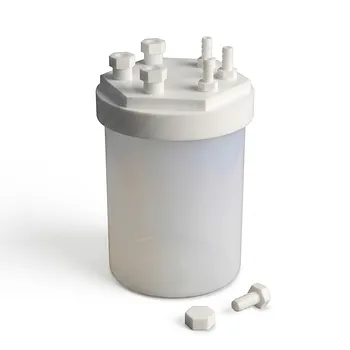
- PFA Chemical Reaction Tank with Customizable Fittings for Corrosive Solvent Synthesis and High Purity Lab Applications
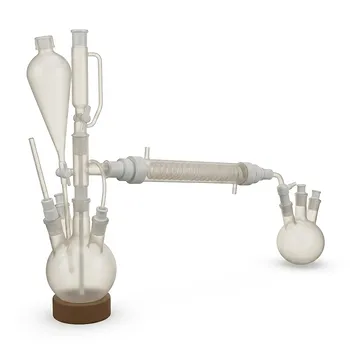
- PTFE Distillation Condensation Apparatus High Temperature Hydrofluoric Acid Resistant Fluorination Reaction Flask
- Large Capacity PTFE Reaction Flask 20L Custom Multi Neck Laboratory Boiling Flask Fluoropolymer Chemical Processing Vessel
- High Purity PTFE Single Neck Reaction Flask Acid Resistant Customizable Fluoropolymer Laboratory Reactor
- High Temperature Resistant PTFE Thermal Insulation Board Corrosion Resistant Metal Free Fluoropolymer Stand for Ultra Clean Laboratories
People Also Ask
- How does the molecular structure of fluorinated polymers contribute to the extreme thermal stability and chemical resistance required for high-performance laboratory reaction vessels and digestion containers? Discover the science behind PTFE and PFA for your lab.
- How do choice of solvent and chain transfer activity affect molecular weight during vinylidene fluoride (VDF) radical polymerization? Learn Key Factors for High-MW PVDF
- What role do low-surface-energy fluoropolymer reaction vessels play in preventing fouling during particle synthesis and emulsion polymerization?
- Why are fluoropolymer reaction vessels essential for SnO2/rGO synthesis? The Key to High-Performance Composites
- When synthesizing TFVE monomers involving reactive organometallic reagents and aggressive polar solvents, what material performance characteristics are required? Ensure purity with PTFE/PFA.