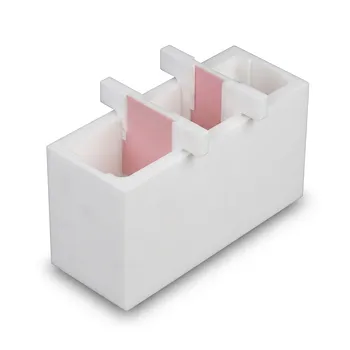
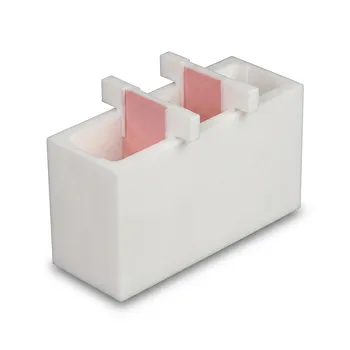
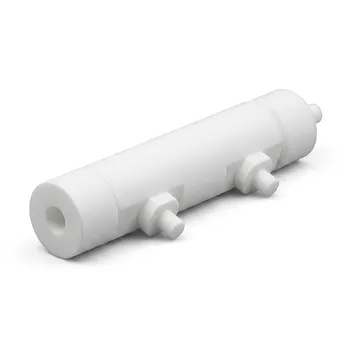
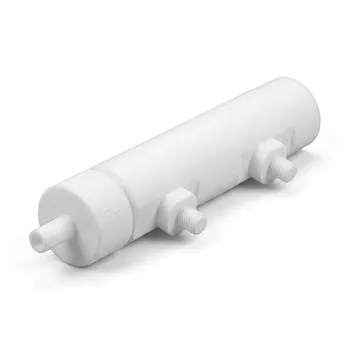
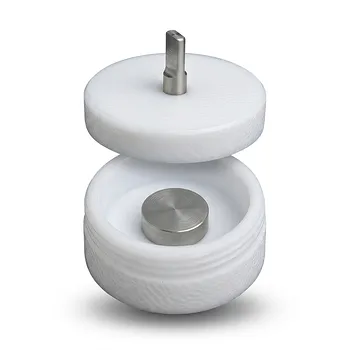
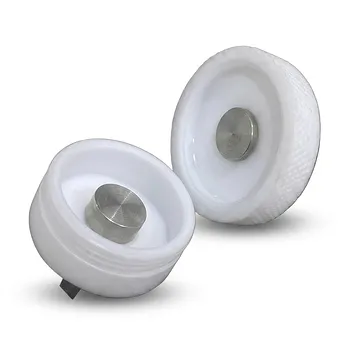
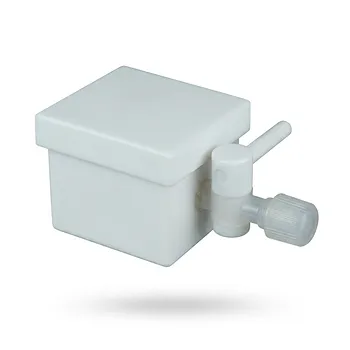
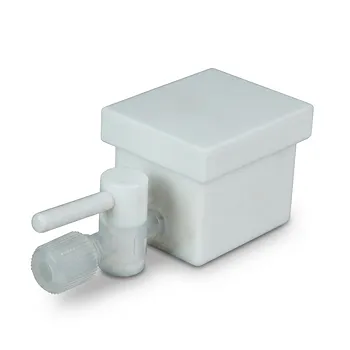
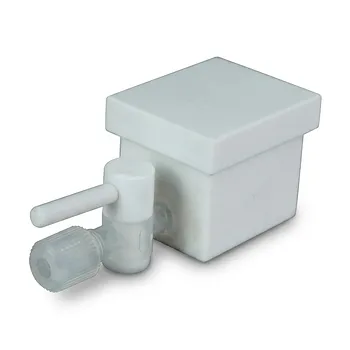
The design of an electrochemical cell is the critical factor determining how effectively dye wastewater is treated. Optimized cell geometry ensures uniform current distribution and efficient ion transport, preventing the premature degradation of $SnO_2/Ti$ electrodes. By controlling these physical parameters, the system maintains high electrocatalytic activity and structural integrity throughout the treatment process.
Core Takeaway: Effective dye degradation depends on a cell design that balances stable inter-electrode spacing with optimized hydrodynamics. This synergy prevents the structural collapse of $SnO_2$ nanostructures while maximizing the contact between pollutants and the electrode surface.
The Role of Hydrodynamics in Dye Degradation
Optimizing Ion Transport Paths
Cell design dictates how ions move through the electrolyte toward the electrode surface. Efficient transport paths ensure that dye molecules are consistently delivered to the $SnO_2$ catalytic sites for oxidation.
Managing Electrolyte Flow
Superior cell designs minimize "dead zones" where wastewater remains stagnant. Consistent flow patterns ensure that the entire volume of wastewater is treated uniformly, preventing localized concentration gradients that can slow down the reaction.
Enhancing Mass Transfer
By optimizing the movement of the liquid, the cell design overcomes the limitations of diffusion. This ensures that the reactive species generated at the anode are immediately available to interact with the organic pollutants in the dye.
Impact on Electrode Stability and Longevity
Maintaining Uniform Current Distribution
A well-designed cell ensures that the current density is spread evenly across the $SnO_2/Ti$ electrode surface. Uniformity prevents "hot spots" where excessive current can lead to the rapid structural breakdown of $SnO_2$ nanostructures.
Stabilizing Inter-Electrode Spacing
Consistent spacing between the anode and cathode is vital for maintaining a stable electrical field. If spacing is uneven, the resulting electrical stress can cause the active catalytic layer to peel or degrade prematurely.
Protecting Nanostructure Integrity
High-performance cells are built to withstand the rigors of continuous operation. By providing a stable environment, they help mitigate the risk of structural breakdown in the delicate $SnO_2$ coating during high-current density applications.
Understanding the Trade-offs and Pitfalls
Balancing Flow Rate and Contact Time
Increasing flow velocity can improve ion transport but may reduce the residence time of dye molecules near the electrode. Finding the "sweet spot" is essential for maximizing the degradation rate without wasting pumping energy.
The Risk of Over-Engineering
Extremely tight electrode spacing can improve electrical efficiency but increases the risk of short-circuiting or clogging if the wastewater contains solid particles. Designers must weigh the benefits of high performance against the practical maintenance needs of the system.
Material Selection vs. Geometry
While the $SnO_2/Ti$ electrode is highly effective, its performance is only as good as the cell it sits in. A superior electrode in a poorly designed cell will suffer from localized overheating and inefficient chemical conversion.
Implementing Optimized Cell Design for Wastewater Treatment
To achieve the best results with $SnO_2/Ti$ electrodes, the cell design must match the specific operational goals of the facility.
- If your primary focus is Electrode Longevity: Prioritize cell designs that ensure perfectly uniform current distribution to prevent the structural collapse of $SnO_2$ nanostructures.
- If your primary focus is Rapid Degradation Speed: Focus on optimizing electrolyte hydrodynamics and minimizing ion transport paths to maximize the mass transfer of dye molecules.
- If your primary focus is Energy Efficiency: Utilize stable, narrow inter-electrode spacing to reduce the required voltage while maintaining a consistent electrical field.
Mastering the physical environment of the electrochemical cell is just as important as the chemistry of the electrode itself for sustainable wastewater management.
Summary Table:
| Design Factor | Impact on Treatment Efficiency | Impact on Electrode Stability |
|---|---|---|
| Hydrodynamics | Enhances mass transfer and delivery of dye to catalytic sites. | Minimizes localized concentration gradients and stagnation. |
| Current Distribution | Ensures uniform oxidation across the entire surface area. | Prevents 'hot spots' that cause structural nanostructure collapse. |
| Electrode Spacing | Reduces required voltage and improves energy efficiency. | Maintains a stable electrical field to prevent catalytic layer peeling. |
| Flow Patterns | Eliminates 'dead zones' for consistent wastewater treatment. | Provides a stable environment for long-term continuous operation. |
Maximize Your Electrochemical Efficiency with KINTEK Precision
Is your wastewater treatment performance limited by sub-optimal cell geometry? At KINTEK, we bridge the gap between advanced chemistry and high-performance engineering. We manufacture an exhaustive range of laboratory supplies crafted from premium PTFE and PFA, ensuring your electrochemical systems withstand the most aggressive chemical environments.
From standard labware (beakers, reagent bottles, and crucibles) and fluid transfer components (tubing, fittings, and valves) to advanced reaction apparatus, we provide the tools you need for success. Our expertise extends to custom electrochemical cells, battery testing fixtures, and microwave digestion vessels, all supported by our end-to-end custom CNC fabrication capabilities.
Whether you require high-volume consumables like O-rings and gaskets or complex, non-standard machined parts tailored to your specific SnO2/Ti electrode setup, KINTEK delivers absolute precision. Let us help you prevent structural electrode breakdown and achieve rapid pollutant degradation with bespoke laboratory setups designed for longevity.
Ready to upgrade your lab? Contact KINTEK today to discuss your custom project!
References
- Alok Tiwari, Gourang Damle. Advancements in SnO2-based nanomaterials for efficient dye removal from wastewater. DOI: 10.1007/s43621-025-01524-y
This article is also based on technical information from Kintek Knowledge Base .
Related Products
- Corrosion Resistant PTFE Electrochemical Cell for New Energy Research Inert Insulating Customizable Lab Reaction Vessel
- Square PTFE Electrochemical Cell for Silicon Wafer Processing and Hydrofluoric Acid Resistance in Semiconductor and New Energy Research
- White PTFE Electrolytic Cell with Movable Slider and Insulated Lid for Fluorine Corrosion Resistance
- Custom PTFE Reaction Box Opaque White Square Electrochemical Cell Tank
- Custom PTFE Electrolytic Cell Corrosion Resistant Low Background Reaction Vessel with Inlet Outlet Ports
People Also Ask
- How do custom PTFE electrochemical cells improve the accuracy of stability testing for alkaline catalysts compared to glass cells?
- How does the hydrophobicity of PTFE benefit electrochemical measurements? Enhance Stability and Precision in Your Lab
- What makes PTFE an ideal construction material for custom electrochemical cells and electronic analytical instrumentation housings? Discover superior chemical resistance and electrical insulation
- Why must seawater electrolysis test cells have high corrosion resistance? Protect catalyst stability & data accuracy.
- What are the key steps for structural integrity in molded PTFE lab reaction vessels? Master fine powder processing.