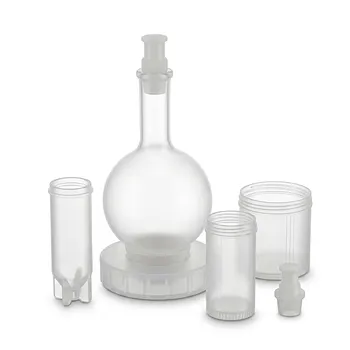
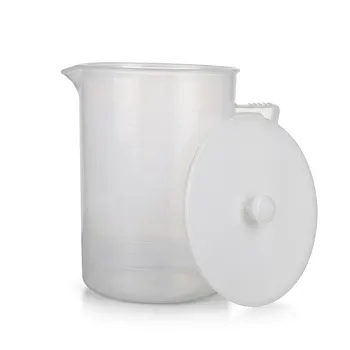
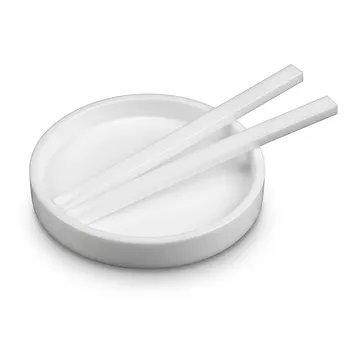
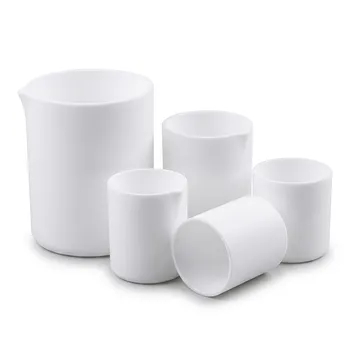
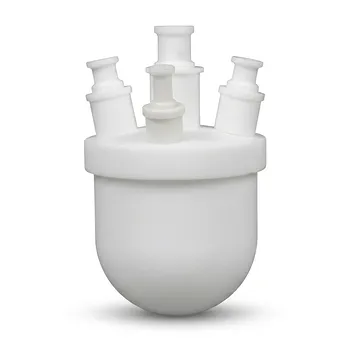
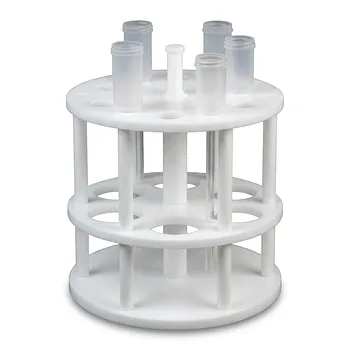
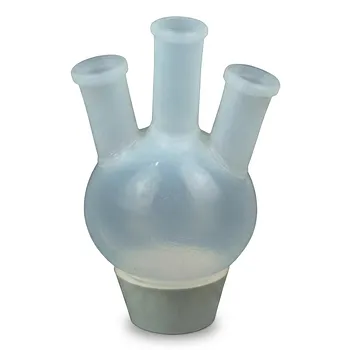
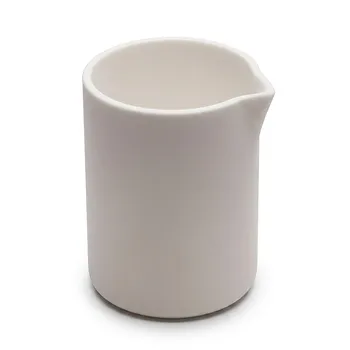
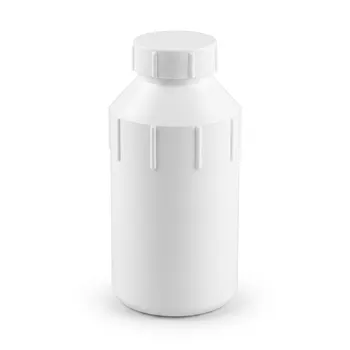
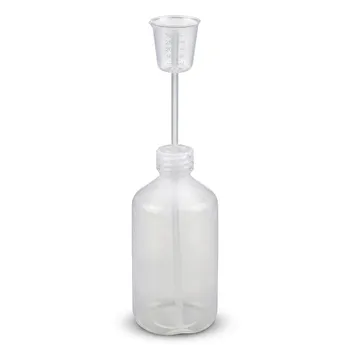
Fluoropolymer labware is superior for high-purity trace analysis because its carbon–fluorine bonds are exceptionally strong, short, and chemically resistant. A typical C–F bond has a bond energy of about 116 kcal/mol and a length of roughly 1.32–1.39 Å, compared with approximately 78 kcal/mol for C–Cl and 58 kcal/mol for C–Br bonds. This molecular stability minimizes degradation, leaching, reagent interaction, and contamination of samples at the very low concentrations measured in trace analysis.
The key advantage is not simply that fluoropolymers contain halogens; it is that fluorine forms a compact, highly stable protective structure around the carbon framework. Compared with chlorinated or brominated polymers, this structure is less polarizable, less chemically reactive, and less likely to release contaminants under aggressive analytical conditions.
Why Carbon–Fluorine Bonds Resist Chemical Attack
Stronger and shorter molecular bonds
The C–F bond is both shorter and stronger than carbon–chlorine or carbon–bromine bonds. Its high dissociation energy makes it difficult for acids, solvents, oxidants, and heat to break the fluorinated structure apart.
By comparison, the longer C–Cl and C–Br bonds are more readily disrupted. Their lower bond energies increase the possibility of polymer degradation, especially when labware is exposed to strong reagents, elevated temperatures, or prolonged contact times.
Fluorine forms a dense protective shell
Fluorine atoms are small and strongly attract their bonding electrons. In highly fluorinated polymers, they form a tightly packed protective layer around the carbon backbone.
This shielding reduces access to the underlying carbon structure. Bulky fluorinated groups, including –CF₃ and perfluoroalkyl groups, provide additional protection against chemical attack and thermal degradation.
Lower polarizability reduces unwanted interactions
Chlorine and bromine have larger electron clouds that are more easily distorted. This property, known as higher polarizability, can increase intermolecular interactions and chemical responsiveness.
Fluorine is much less polarizable. Its nonbonding electrons are held tightly, so the fluorinated surface is less likely to interact with reagents, solvents, and analyte molecules.
Why This Matters in High-Purity Trace Analysis
Less elemental and ionic leaching
Trace analysis can be compromised by extremely small amounts of material migrating from a container into the sample. Weaker polymer bonds or chemically unstable groups can release halogen-containing fragments, degradation products, or other extractables.
Fluoropolymer structures are much less susceptible to this process. Their chemical inertness helps maintain low blanks and reduces the risk that the container itself becomes a source of analytical contamination.
Reduced reagent interaction
Strong acids, oxidizing agents, organic solvents, and digestion reagents can attack many conventional plastics. Chemical attack may cause swelling, embrittlement, surface erosion, or dissolution of low-molecular-weight components.
Fluoropolymers, particularly highly or fully fluorinated materials such as PFA, resist these mechanisms across a broad range of aggressive chemical environments. This protects both the container and the sample during preparation and storage.
Lower risk of adsorption and cross-contamination
Fluorinated surfaces generally have low surface energy and low coefficients of friction. These properties reduce sample adhesion and make the labware easier to rinse effectively.
That does not mean adsorption is impossible. However, reduced adhesion can help limit memory effects, carryover, and cross-contamination between successive trace-level samples.
Better structural stability during digestion
Microwave digestion and other high-energy preparation methods combine heat, pressure, and aggressive chemistry. Labware must retain its shape and integrity while containing these conditions.
Fluoropolymer vessels and components resist swelling, chemical erosion, and solvent attack better than many chlorinated or brominated alternatives. Their stability helps prevent leaks, deformation, and contamination during sample preparation.
Why Heavier Halogenated Polymers Are More Vulnerable
Larger atoms create less compact bonding
Chlorine and bromine atoms have substantially larger atomic radii than fluorine. Their carbon–halogen bonds are longer and generally weaker, leaving the polymer structure more vulnerable to chemical and thermal disruption.
Their larger electron clouds are also more easily distorted. This higher polarizability contributes to stronger interactions with surrounding chemical species and does not provide the same low-reactivity surface associated with highly fluorinated materials.
Weaker bonds increase degradation pathways
When a polymer is attacked, bond scission can initiate chain damage, surface deterioration, or release of extractable fragments. The weaker C–Cl and C–Br bonds make these materials less inherently resistant than polymers dominated by C–F bonds.
The practical result can be higher extractables, more chemical sensitivity, and a greater risk of changing the sample matrix during trace analysis.
Fluoropolymers avoid the limitations of partial fluorination
Not all fluorinated polymers provide the same level of protection. Partially fluorinated materials retain carbon–hydrogen bonds, which are generally more vulnerable than C–F bonds.
For the most demanding applications, perfluorinated or highly fluorinated labware offers the strongest shielding and the lowest expected chemical reactivity.
How Thermal Stability Supports Chemical Purity
Strong bonds delay thermal degradation
The high energy of the C–F bond contributes to the high thermal stability of fluoropolymer architectures. This allows many fluoropolymer components to tolerate demanding processing and operating conditions without rapid decomposition.
However, the relevant specification is the manufacturer’s continuous-use temperature, not simply the material’s decomposition onset. A material may resist decomposition at a high temperature while still being unsuitable for continuous service at that temperature because of mechanical or pressure limitations.
Thermal resistance reduces contamination during heating
When labware degrades during heating, it can release volatile compounds, particles, or reactive fragments into the sample. Fluoropolymer stability reduces the likelihood of these contamination routes during controlled heating and digestion procedures.
Some fluoropolymer products can tolerate service temperatures around 260°C, while their decomposition behavior may occur at substantially higher temperatures. Actual performance depends on polymer grade, geometry, pressure, exposure time, and the chemical environment.
Endgroup chemistry still matters
Fluoropolymer purity depends on more than the C–F backbone. Certain polymerization processes can leave thermally unstable end groups, including carboxylic acid or acyl fluoride groups.
At elevated temperatures, these groups can degrade or release corrosive species such as hydrogen fluoride. Stabilized end groups, such as fully fluorinated –CF₃ structures, are therefore important when selecting labware for high-purity work.
Understanding the Trade-offs
Fluoropolymer does not guarantee zero contamination
A fluoropolymer body can still contain manufacturing residues, processing aids, unstable end groups, particles, or contamination introduced during handling. “Fluoropolymer” describes the material family, not an automatic purity certification.
For trace analysis, the appropriate product should have documented cleaning, extractables, lot control, and suitability for the intended analytical method.
Chemical resistance is not universal under every condition
Fluoropolymers are highly resistant to most acids, bases, solvents, and oxidizing environments, but no material should be treated as universally indestructible. Extreme temperature, pressure, radiation, molten alkali metals, or unusual reactive media may create exceptions.
Compatibility must be checked against the actual reagent concentration, temperature, exposure duration, and mechanical stress.
Mechanical performance can differ from chemical performance
Fluoropolymer labware may be chemically superior while being less rigid or less mechanically strong than some engineering plastics. Thin walls, pressure, repeated thermal cycling, and handling can therefore become design considerations.
The correct choice balances chemical purity, temperature resistance, dimensional stability, and mechanical requirements rather than selecting solely on bond strength.
Lower blanks still require good laboratory practice
The container is only one part of the contamination-control system. Cleaning protocols, reagent purity, sample handling, storage time, environmental exposure, and instrument background can all affect trace results.
Fluoropolymer labware reduces a major source of contamination, but it does not replace validated blanks and recovery studies.
Making the Right Choice for Your Goal
Fluoropolymer labware is most valuable when the sample concentration is low enough that container-derived contamination could materially affect the result.
- If your primary focus is minimum trace contamination: Choose high-purity, highly fluorinated or perfluorinated labware with documented extractables, cleaning procedures, and lot-to-lot controls.
- If your primary focus is aggressive chemical digestion: Select a fluoropolymer grade and vessel design rated for the specific acids, solvents, oxidants, temperature, pressure, and exposure time involved.
- If your primary focus is elevated-temperature operation: Confirm the manufacturer’s continuous-use temperature and endgroup stabilization data rather than relying only on the C–F bond’s high decomposition resistance.
- If your primary focus is reproducible analytical performance: Validate the complete system using procedural blanks, rinsing studies, and contamination or recovery checks.
For high-purity trace analysis, the strength and compact shielding of C–F bonds make fluoropolymer labware the most reliable barrier between aggressive chemistry and the integrity of the sample.
Summary Table:
| Property | C–F Bond (Fluoropolymers) | C–Cl Bond (Chlorinated) | C–Br Bond (Brominated) |
|---|---|---|---|
| Bond Energy (kcal/mol) | ~116 | ~78 | ~58 |
| Bond Length (Å) | 1.32–1.39 | ~1.77 | ~1.94 |
| Polarizability | Very low | Moderate | High |
| Chemical Resistance | Excellent | Good | Fair |
| Leaching Risk | Very low | Moderate | Higher |
| Thermal Stability | High (continuous up to 260°C) | Lower | Lower |
Ensure the highest purity in your trace analysis with KINTEK's premium PTFE/PFA labware. Our products feature exceptional chemical resistance and low extractables, ideal for demanding applications. From beakers and digestion vessels to custom CNC-machined parts, we provide the reliability your lab needs. Contact us today to discuss your requirements and get a quote! #ContactForm
Related Products
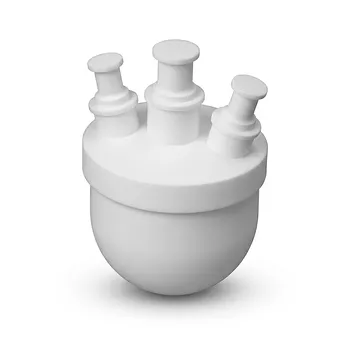
- Custom PFA Pear Shaped Flask High Purity Corrosion Resistant Labware Custom Molded Fluoropolymer Flask Glass Replacement Solution
- High Purity PFA Beaker with Handle and Large Capacity Washable Soak Basket Multi Spec Teflon Laboratory Labware
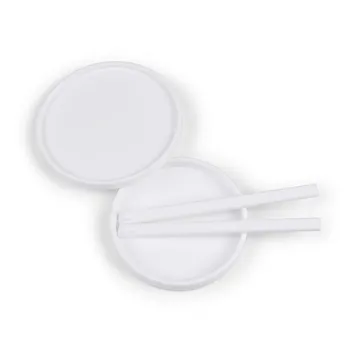
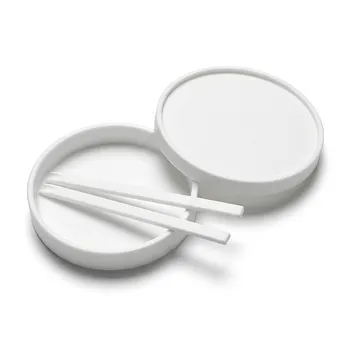
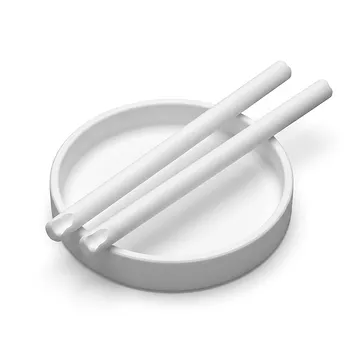
- Custom PTFE Petri Dish 30mm Corrosion Resistant Low Background Non Leaching Laboratory Ware
- Custom Polytetrafluoroethylene PTFE Petri Dishes 60mm Corrosion Resistant Low Background Labware
- Custom PTFE Petri Dish 120mm Diameter Corrosion Resistant Low Background High Purity Labware
People Also Ask
- Why Use PFA Labware for MnFe2O4/rGO Precursors? Ensure Stoichiometric Precision and Purity
- Why is PFA labware recommended for CuBi2O4? Protect high-purity precursors and ensure semiconductor bandgap accuracy.
- How does PFA labware enhance the accuracy of ultra-trace element analysis? Achieving PPT Precision with Zero Leaching
- What are the primary properties of PFA for high-performance labware? Achieve ultra-trace purity & thermal stability.
- What role does PFA labware play in semiconductor manufacturing? Ensuring Ultra-Pure Yields and Zero Contamination