Structural cross-linking generally increases both solvent resistance and mechanical stability in fluoropolymers. Linear fluoropolymers made from bis-functional precursors can dissolve or swell in solvents such as THF, DMF, and chloroform, which supports solution processing. Introducing tri- or tetra-functional precursors, or thermally cross-linking reactive groups, converts the material into a three-dimensional network that is effectively insoluble, less prone to swelling, and more resistant to deformation under chemical and thermal stress.
Cross-linking changes a fluoropolymer from mobile, processable chains into a constrained network. This improves dimensional stability, resistance to dissolution, creep, and extractables, but excessive cross-link density can reduce toughness and make processing or repair more difficult.
How Cross-Linking Changes Solvent Resistance
Linear chains can dissolve or swell
In a linear thermoplastic fluoropolymer, individual chains can separate and move when a solvent has sufficient chemical affinity for the polymer. Solvents such as THF, DMF, or chloroform may therefore cause dissolution or substantial swelling, depending on the polymer’s fluorination level and molecular structure.
Solvent compatibility is governed by more than fluorine content. Chemical affinity, solvent polarity, molecular size, and intermolecular forces all influence whether a liquid penetrates, swells, or dissolves the material.
Cross-linked networks resist chain separation
When tri- or tetra-functional precursors form covalent links between polymer chains, the chains can no longer freely disentangle and diffuse into solution. The network may absorb some solvent, but it does not normally dissolve as a linear polymer would.
This is the key distinction between insolubility and complete impermeability. A highly cross-linked fluoropolymer can remain intact while experiencing limited swelling or slow solvent permeation, so compatibility must still be evaluated for the specific solvent, temperature, exposure time, and applied stress.
Cross-linking reduces extractables
A stable network also limits the movement of low-molecular-weight polymer fractions, processing residues, and chain segments. This is valuable in high-purity digestion vessels, electrochemical cells, and chemical containment systems where low extractables and low contamination risk are important.
Perfluorinated backbones provide an additional chemical-resistance advantage because their carbon–fluorine-rich structure is highly inert. Cross-linking complements that inherent resistance by improving the material’s physical stability when exposed to aggressive fluids.
How Cross-Linking Improves Mechanical Stability
The network suppresses creep and deformation
Linear thermoplastics can soften, creep, or deform when exposed to sustained loads near their upper operating temperature. Cross-links act as permanent connections between chains, restricting molecular movement and helping components retain their shape.
This is particularly important for pressure-containing tubes, digestion vessels, crucibles, and electrochemical cell bodies, where dimensional changes can compromise seals, fluid volumes, or alignment.
Thermal cross-linking increases shape retention
Thermally controlled processing can first produce linear fluoropolymer structures and then, at higher temperatures, activate cross-linkable fluoroolefin groups. The resulting network exhibits greater resistance to deformation during subsequent high-temperature service.
The improvement is not simply a higher softening point. Cross-linking reduces the chain mobility responsible for creep and flow, allowing the component to maintain mechanical integrity during repeated heating and chemical exposure.
Mechanical strength becomes more stable under chemical exposure
Solvent-induced swelling often lowers modulus and weakens a polymer by separating chains. A cross-linked network limits that separation, so strength and dimensional accuracy are better retained during contact with organic solvents and corrosive reagents.
This makes cross-linked fluoropolymers useful where a component must remain mechanically reliable while simultaneously exposed to high temperature, pressure, aggressive chemicals, or electrical fields.
Why the Effect Matters in Chemical Apparatus
Digestion vessels and reaction tubes
Microwave digestion and high-pressure reaction systems combine thermal loading, chemical attack, and mechanical stress. A cross-linked fluoropolymer is less likely to dissolve, swell excessively, or lose its shape under these combined conditions.
The result is more reliable containment and a lower risk of vessel deformation, leakage, or sample contamination.
Electrochemical cell components
Electrochemical apparatus may experience aggressive electrolytes, elevated temperatures, and repeated redox cycling. Cross-linking helps the polymer maintain its geometry and limits solvent uptake, while fluorinated structures provide chemical and electrochemical stability.
For precision cell bodies and insulating components, this dimensional stability can be as important as the polymer’s intrinsic chemical inertness.
Fluid-handling and containment components
Custom-machined fluoropolymer parts, transfer components, and seals must retain tolerances after prolonged solvent exposure. Cross-linking reduces the likelihood that the material will soften, swell, or lose load-bearing capacity during service.
However, cross-linked materials are not automatically suitable for every machined component because their increased rigidity can complicate fabrication and reduce impact tolerance.
The Role of Fluorination and Network Structure
Fluorinated backbones provide the chemical foundation
Strong carbon–fluorine bonding and shielding of the carbon backbone give perfluorinated materials exceptional resistance to many acids, bases, and organic reagents. Partially fluorinated materials may offer lower chemical and thermal limits because residual carbon–hydrogen bonds are more susceptible to attack.
Cross-linking does not replace this chemical foundation. It primarily improves the physical response of the polymer—particularly swelling resistance, creep resistance, and shape retention.
Functional groups control cross-linking behavior
Pendant fluorinated groups, such as –CF₃ groups, can influence thermal stability and solvent resistance, while reactive end groups or internal fluoroolefins provide sites for network formation. The final performance depends on the combination of backbone chemistry, linkage type, cross-link density, and processing history.
A network with poorly chosen linkages may degrade before the fluorinated backbone does. Material selection therefore requires evaluation of the complete molecular architecture rather than fluorine content alone.
Understanding the Trade-offs
Insolubility limits solution processing
Linear fluoropolymers can often be dissolved for coating, casting, or other solution-based processing. Once cross-linked, the material generally cannot be redissolved or reprocessed in the same way.
This makes cross-linking a strong choice for finished components but a potential limitation for manufacturing routes that require reshaping, welding, or solvent-based deposition.
Higher cross-link density can reduce toughness
Cross-links improve stiffness and dimensional stability, but they also restrict the chain motion that allows a polymer to absorb impact or accommodate local stresses. Excessive cross-linking can therefore increase brittleness, reduce elongation, and raise the risk of cracking.
The objective is not maximum cross-link density. It is the lowest network density that provides the required solvent, thermal, and mechanical performance.
Swelling is reduced, not necessarily eliminated
An insoluble network can still absorb solvent, particularly when the solvent has strong affinity for the polymer or when the network contains flexible or polar linkages. Swelling may create internal stress, alter dimensions, or accelerate permeation even without visible dissolution.
Compatibility testing should therefore measure mass change, dimensional change, mechanical retention, and extractables—not only whether the sample remains visibly intact.
Processing history affects final performance
Insufficient thermal activation may leave unreacted groups and a network that is weaker than expected. Excessive processing temperature may cause degradation, discoloration, residual stress, or unwanted changes in the fluoropolymer backbone.
For critical chemical apparatus, the processing cycle should be controlled and verified rather than inferred solely from the nominal resin formulation.
Making the Right Choice for Your Goal
The best structure depends on whether the priority is processability, chemical containment, dimensional stability, or long-term service.
- If your primary focus is solvent compatibility: Select a fluoropolymer network with sufficient cross-link density and verify swelling and permeation against the actual solvent and operating temperature.
- If your primary focus is mechanical stability: Use cross-linking to limit creep, softening, and deformation under sustained thermal, pressure, or chemical loads.
- If your primary focus is solution processing: Prefer a linear thermoplastic fluoropolymer, since cross-linked networks are generally insoluble and cannot be readily reshaped from solution.
- If your primary focus is high-purity containment: Favor a chemically inert fluorinated backbone combined with a stable, low-extractables network and test for leaching under real service conditions.
- If your primary focus is toughness and repairability: Avoid unnecessary over-cross-linking and evaluate impact resistance, crack growth, machining behavior, and joining methods.
In chemical apparatus, structural cross-linking is most valuable when the component must remain dimensionally stable and chemically intact under simultaneous solvent, thermal, and mechanical stress.
Summary Table:
| Property | Linear Fluoropolymers | Cross-linked Fluoropolymers |
|---|---|---|
| Solvent Resistance | Can dissolve or swell in solvents like THF, DMF, chloroform | Insoluble, resistant to swelling and dissolution |
| Mechanical Stability | Prone to creep and deformation under load | Enhanced dimensional stability, reduced creep |
| Processability | Solution processable (coating, casting) | Cannot be redissolved, limited reprocessing options |
| Toughness | Higher flexibility, impact resistance | Increased stiffness, may become brittle with over-cross-linking |
| Extractables | Higher potential for leaching of low-molecular-weight fractions | Reduced extractables, better for high-purity applications |
| Service Life | May deform under combined chemical and thermal stress | Maintains integrity under aggressive conditions |
Enhance Your Laboratory's Performance with KINTEK's Cross-linked Fluoropolymers
Are you looking for chemical apparatus that can withstand the harshest conditions? At KINTEK, we specialize in high-performance fluoropolymers (PTFE and PFA) with advanced cross-linking technology. Our products offer superior solvent resistance, mechanical stability, and dimensional accuracy, ensuring reliable performance in demanding applications like digestion vessels, electrochemical cells, and fluid handling components.
Why choose KINTEK?
- End-to-End Customization: From standard labware to complex machined parts, we provide bespoke solutions tailored to your specifications.
- High-Purity Materials: Our low-extractables materials minimize contamination risks, perfect for trace analysis and high-purity processes.
- Expert CNC Machining: We deliver precision components that maintain tight tolerances even under extreme chemical and thermal exposure.
- Reliable Supply: Whether you need a single prototype or high-volume orders, our robust manufacturing ensures consistent quality and timely delivery.
Don't let material failure compromise your research or production. Contact us today to discuss your requirements and discover how our cross-linked fluoropolymers can enhance your operations.
Related Products
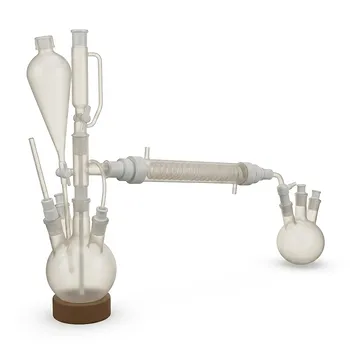
- PTFE Distillation Condensation Apparatus High Temperature Hydrofluoric Acid Resistant Fluorination Reaction Flask
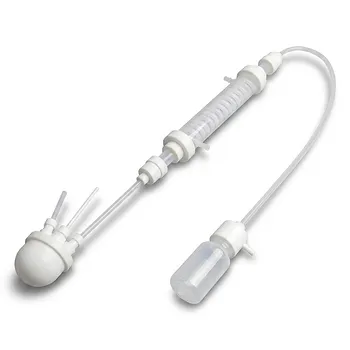
- Corrosion Resistant Hydrogen Fluoride Reflux Apparatus PTFE Flask Condenser Separatory Funnel Collection Bottle High Temperature Laboratory System
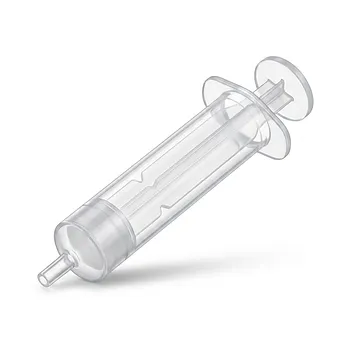
- Corrosion Resistant PFA Syringe Translucent Visual Fluoropolymer Labware 10ml Chemical Handling Tool
- Custom PTFE Flask 250ml High Purity Fluoropolymer Laboratory Vessel for Chemical Research
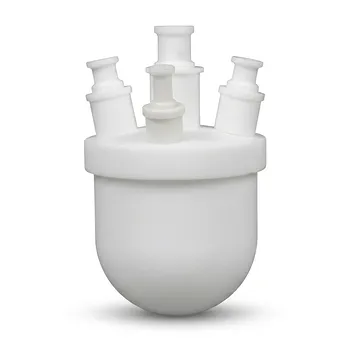
- Custom Multi Neck PTFE Flask for Chemical Engineering and High Purity Laboratory Synthesis Applications
People Also Ask
- How does the low surface energy of PTFE benefit the condensation process? Boost Heat Transfer and Prevent Fouling
- What structural characteristics provide PTFE fluoropolymer laboratory apparatus with high thermal stability? Strong C-F bonds, dense fluorine shielding, and rigid helical conformation ensure stability during high-temperature analysis.
- How can autopolymerization of TFE gas be prevented during storage and handling? Master TFE safety with oxygen control, inhibitors, and robust system design.
- How do pyrolysis temperature and steam diluent ratios influence tetrafluoroethylene (TFE) conversion and yield in fluoropolymer monomer reaction apparatus? Optimize TFE yield with temperature and steam control
- What impact does thermal annealing and crystallization temperature have on the material properties of custom-machined fluoropolymer apparatus? Optimize Performance with Controlled Thermal Processing