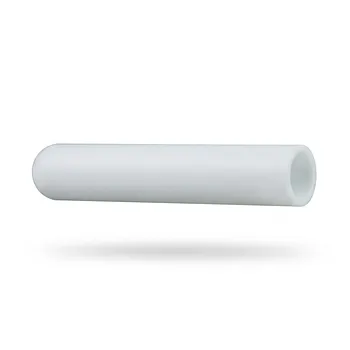
PTFE capillary tubing is virtually non-reactive across the entire pH scale. It remains chemically inert when exposed to the most aggressive acids, bases, organic solvents, and oxidizers. This exceptional resistance allows it to transport substances like hydrofluoric acid that would typically degrade glass or metal components.
PTFE’s near-universal chemical resistance stems from a protective fluorine sheath that shields its carbon backbone from attack. This molecular structure ensures that the tubing maintains its physical integrity and fluid purity even in the most demanding industrial environments.
The Molecular Defense Mechanism
The Role of the Fluorine Sheath
The resistance of PTFE is a result of the incredibly strong bond between carbon and fluorine atoms. This creates a dense, protective "sheath" around the polymer chain that prevents reactive molecules from penetrating or breaking the bonds.
Resistance to Corrosive Attack
Unlike metals that succumb to oxidation or glass that can be etched by strong bases, PTFE does not undergo chemical degradation. It is widely used for transporting high-purity reagents because it does not leach ions or contaminants into the fluid stream.
Performance Across Diverse Chemical Families
Handling Aggressive Acids and Bases
PTFE is the primary conduit for concentrated sulfuric, nitric, and hydrofluoric acids. It remains stable in environments where strong alkalis would cause other plastics to become brittle or dissolve.
Compatibility with Organic Solvents
The material shows excellent resistance to nearly all organic solvents, including alcohols, ketones, and hydrocarbons. Its low water absorption (less than 0.01%) ensures that the tubing does not swell or lose dimensional stability during prolonged exposure.
Safety in Aerospace and Industrial Fluids
In high-stakes environments, PTFE resists aviation fuels, hydraulic fluids, and de-icing chemicals. Its non-flammable nature and dielectric strength provide an added layer of safety when routed near electrical systems or engines.
Surface Dynamics and Fluid Transport
Exceptionally Low Friction
PTFE features a coefficient of friction between 0.05 and 0.10, which is among the lowest of any solid material. This non-stick surface minimizes drag and prevents the buildup of viscous residues or particulates.
Hydrophobicity and Capillary Behavior
With a water contact angle greater than 100°, PTFE is naturally hydrophobic. In capillary applications, this creates negative capillary pressure that suppresses the spontaneous rise of aqueous solutions.
Interaction with Non-Polar Liquids
While PTFE repels water, it exhibits improved wetting when used with non-polar liquids. This makes it highly effective for specialized gas-liquid separation and membrane distillation tasks.
Thermal and Mechanical Resilience
Wide Operational Temperature Range
PTFE maintains its properties from cryogenic levels up to continuous operating temperatures of 260 °C. This thermal stability allows for the safe transport of hot chemical streams that would melt or deform standard tubing.
Integrity Under Stress
The material is designed to withstand extreme thermal cycling and high-vibration environments, such as those found in aircraft hydraulic circuits. It provides a lightweight alternative to metal without sacrificing reliability.
Understanding the Trade-offs
Permeability Concerns
While PTFE is chemically inert, it is not a perfect gas barrier; certain gases and highly volatile vapors may permeate through the tube wall over time. This can lead to the gradual loss of volatile components in a closed system.
Mechanical Strength Limits
PTFE is relatively soft compared to engineering plastics like PEEK or stainless steel. Under high pressure, it may be susceptible to "cold flow" or deformation, requiring external reinforcement or careful pressure management.
Aqueous Capillary Limitations
Because PTFE is highly hydrophobic, it will not naturally "wick" water-based fluids into the capillary. This requires the use of external pressure or surface treatments if the goal is spontaneous fluid uptake of aqueous media.
Making the Right Choice for Your Goal
To ensure optimal performance when using PTFE capillary tubing, consider your primary objective:
- If your primary focus is High-Purity Fluid Handling: Use PTFE to eliminate the risk of leached ions and ensure the tubing remains non-reactive with sensitive reagents.
- If your primary focus is Extreme Temperature Resistance: Leverage PTFE’s ability to operate continuously at 260 °C for hot chemical processing.
- If your primary focus is Minimizing System Maintenance: Take advantage of the non-stick, low-friction surface to prevent particulate buildup and reduce pressure drops.
- If your primary focus is Aerospace or Fuel Systems: Utilize its resistance to aviation fuels and vibration-dampening qualities to ensure long-term circuit integrity.
PTFE remains the definitive choice for any application where chemical survival and fluid purity are the highest priorities.
Summary Table:
| Property | Detail | Application Benefit |
|---|---|---|
| Chemical Resistance | Inert to pH 0-14 (acids, bases, solvents) | Safe transport of hydrofluoric acid & oxidizers |
| Temperature Range | -200°C to +260°C | Maintains integrity in cryogenic or high-heat tasks |
| Friction Coeff. | 0.05 – 0.10 (Extremely low) | Prevents residue buildup and minimizes fluid drag |
| Purity | Low leaching & <0.01% water absorption | Ideal for trace analysis and high-purity reagents |
| Surface Type | Highly Hydrophobic | Naturally repels aqueous solutions in capillary use |
Elevate Your Lab's Performance with KINTEK
Maximize your laboratory’s precision and durability with KINTEK’s high-performance fluoropolymer solutions. From everyday basic labware like beakers, crucibles, and reagent bottles to specialized fluid transfer components (tubing, fittings, valves) and sample prep tools, we provide the industry's most reliable PTFE and PFA products.
Whether you need standard consumables like stirring bars and filters or advanced reaction apparatus such as electrochemical cells and microwave digestion vessels, our end-to-end custom CNC fabrication is ready to deliver. We specialize in everything from complex, non-standard machined parts to high-volume orders, ensuring your lab equipment withstands even the most aggressive chemical environments.
Ready to upgrade your workflow? Contact KINTEK today for bespoke solutions and high-purity laboratory supplies!
Related Products
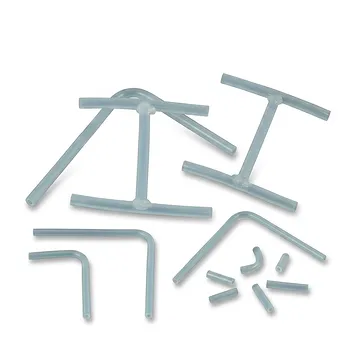
- High Performance PFA Coiled Spring Tubing and Custom PTFE Fabrication Services with Welded Fittings and Precision Bent Components
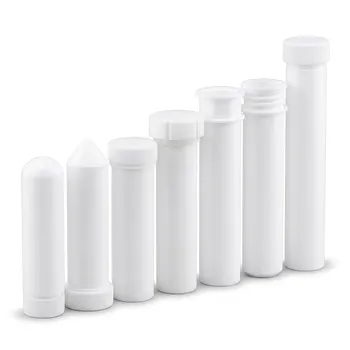
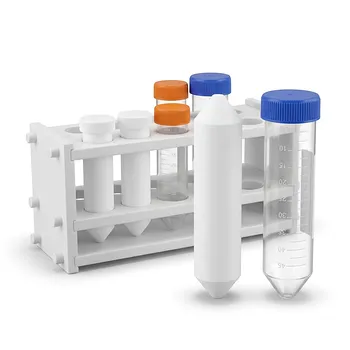
- Custom High Purity PTFE Digestion Tubes and Centrifuge Tubes for Trace Metal Analysis
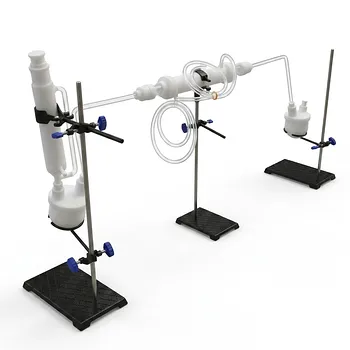
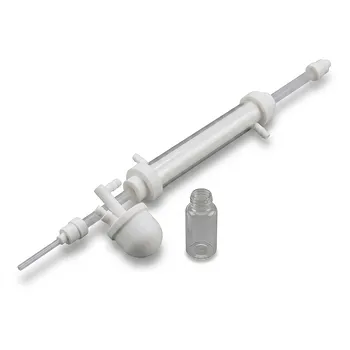
- Custom PTFE Condenser Tube Hydrofluoric Acid Resistant Reflux Device Constant Pressure Separatory Funnel
- High Purity PTFE Digestion Tubes and Custom Centrifuge Tubes 100ml for Trace Analysis and Chemical Digestion
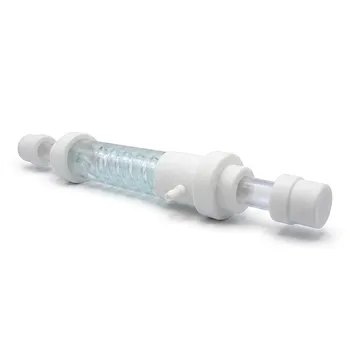
- Custom PTFE Condenser Tube Reflux Reaction Condensation Purification Device Semiconductor Chemical Lab Equipment
People Also Ask
- What are the technical advantages of high-precision PFA tubing in MXene production? Maximize Purity and Yield.
- What technical advantages do PFA tubing and fittings offer? Master Precision Fluid Transfer and Flow Chemistry
- What are the technical advantages of high-quality PFA tubing? Achieve Ultimate Purity and Precision in Fluid Handling
- What are the key benefits of PTFE in custom fabrication? Unlock Performance in Extreme Conditions
- What fabrication services are available for PTFE? Shearing, Stamping, Laser Cutting, Molding & Machining