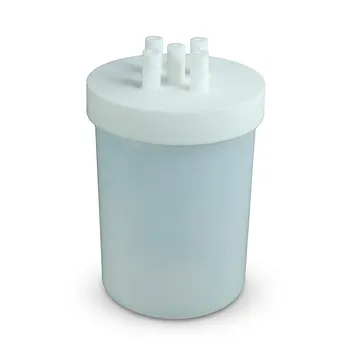
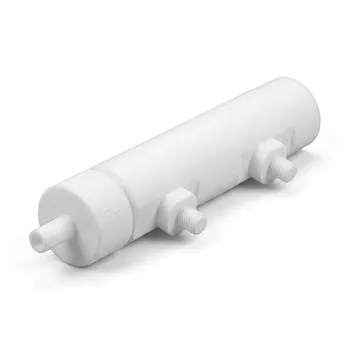
The alkaline water electrolysis (AWE) single-cell fixture serves as the bridge between laboratory-scale catalyst discovery and commercial implementation. By integrating nickel-bismuth oxide electrocatalysts into a complete cell assembly—comprising the cathode, anode, and diaphragm under mechanical pressure—this fixture allows researchers to measure polarization curves and overpotentials under simulated industrial conditions. This high-precision environment is essential for determining if the theoretical performance of nickel-bismuth materials translates into practical, scalable efficiency.
The single-cell fixture provides a standardized, high-pressure environment that mirrors industrial electrolysis, enabling a definitive assessment of a catalyst's commercial viability beyond simple half-cell measurements.
Simulating Industrial Realities
Bridging the Gap from Lab to Industry
While initial catalyst testing often happens in a three-electrode setup, the single-cell fixture tests nickel-bismuth oxide in a full-cell configuration. This transition is vital because it accounts for the complex interactions between the electrodes and the diaphragm.
The Role of Mechanical Pressure
The fixture utilizes precise mechanical pressure to assemble the cell components into a tight stack. This pressure minimizes contact resistance between the nickel-bismuth catalyst layer and the current collectors, ensuring the measured performance reflects the catalyst's intrinsic capability rather than poor electrical contact.
Standardized Flow Channel Dynamics
A standardized flow channel design ensures that the liquid electrolyte reaches the nickel-bismuth oxide surface consistently. This setup helps researchers understand how gas bubble evolution and mass transport affect the catalyst's stability and activity during continuous operation.
Technical Advantages of the Single-Cell Design
Ensuring Uniform Current Distribution
Uniform current distribution is critical for avoiding "hot spots" that can degrade catalysts prematurely. The fixture's design ensures that the current density is spread evenly across the entire surface of the nickel-bismuth oxide electrode, providing more accurate data for scaling up.
Measuring Full-Cell Overpotentials
By measuring the total cell voltage and overpotentials in a full-cell format, the fixture reveals the energy losses associated with the entire system. This is the primary metric used to calculate the energy efficiency of the nickel-bismuth oxide catalyst in a real-world application.
Generating Reliable Polarization Curves
Polarization curves (voltage vs. current density) are the "fingerprints" of electrochemical performance. The single-cell fixture produces these curves under conditions that include ohmic resistance and mass transport limitations, which are often absent in smaller-scale lab tests.
Understanding the Trade-offs
Complexity versus Throughput
While single-cell fixtures provide high-fidelity data, they are significantly more complex and time-consuming to set up than standard beaker-scale tests. This makes them less suitable for rapid, high-throughput screening of hundreds of different catalyst compositions.
Component Interdependency
In a single-cell fixture, the performance of the nickel-bismuth oxide can be masked by the performance of the diaphragm or the counter-electrode. If one component is suboptimal, it may be difficult to isolate the exact performance of the catalyst without rigorous control experiments.
How to Apply This to Your Project
Evaluating nickel-bismuth oxide requires a balance between speed and accuracy depending on your current stage of development.
- If your primary focus is initial material discovery: Use traditional three-electrode cells to quickly screen the intrinsic activity of different nickel-bismuth formulations.
- If your primary focus is commercial validation: Utilize the single-cell fixture to test your best-performing catalysts under industrial-grade mechanical pressure and flow conditions.
- If your primary focus is durability testing: Run long-term "steady-state" tests within the single-cell fixture to observe how nickel-bismuth oxide holds up against the mechanical and chemical stresses of a full-cell environment.
The single-cell fixture remains the gold standard for transforming promising nickel-bismuth oxide catalysts into a viable technology for the green hydrogen economy.
Summary Table:
| Feature | Function in Performance Evaluation | Key Benefit |
|---|---|---|
| Mechanical Pressure | Minimizes contact resistance in the cell stack | Ensures intrinsic catalyst activity is measured |
| Flow Channel Design | Manages electrolyte delivery and bubble removal | Simulates industrial mass transport dynamics |
| Full-Cell Format | Measures total voltage and overpotentials | Provides definitive energy efficiency metrics |
| Current Distribution | Ensures uniform density across the electrode | Prevents hot spots for accurate scale-up data |
Maximize Your Research Precision with KINTEK
Transitioning from catalyst discovery to industrial application requires reliable, high-performance equipment. KINTEK specializes in manufacturing a comprehensive range of laboratory supplies crafted from PTFE and PFA, ensuring zero contamination and maximum chemical resistance for your electrochemical studies.
Whether you need everyday essentials like beakers, crucibles, and reagent bottles, or advanced custom electrochemical cells, battery testing fixtures, and hydrothermal synthesis liners, our end-to-end CNC fabrication delivers exactly what your project demands. We support our customers with everything from complex non-standard machined parts to high-volume orders of fluid transfer components like tubing, valves, and fittings.
Ready to scale your nickel-bismuth oxide catalyst research? Contact KINTEK today to discuss our bespoke laboratory setups and high-performance fluoropolymer solutions tailored to your specific industrial simulation needs.
References
- Seunghyun Jo, Thomas F. Fuller. High-Performance Nickel–Bismuth Oxide Electrocatalysts Applicable to Both the HER and OER in Alkaline Water Electrolysis. DOI: 10.1021/acsami.4c15514
This article is also based on technical information from Kintek Knowledge Base .
Related Products
- High Purity 4L PFA Reaction Tank for Proton Exchange Membrane Electrolysis Water Oxygen Separation Systems
- Acid Resistant PTFE Button Cell Battery Test Fixture Customizable Machining High Purity Electrochemical Testing Clamp
- High Purity PFA Reaction Tank for Proton Exchange Membrane Electrolysis and Water Oxygen Separation Custom Labware
- White PTFE Electrolytic Cell with Movable Slider and Insulated Lid for Fluorine Corrosion Resistance
- Custom PTFE Electrolytic Cell Corrosion Resistant Low Background Reaction Vessel with Inlet Outlet Ports
People Also Ask
- Why Are High-Purity Fluoropolymer Vessels and Tubing Critical for Trace Analysis? Prevent Contamination Reliably
- Why is the chemical stability of polymer endgroups critical when selecting melt-processible fluoropolymers like PFA for high-purity laboratory apparatus? Choose Stable Endgroups for Reliable Performance
- What are the characteristics of PFA material? A Guide to Its High-Performance Balance
- Why is Perfluoroalkoxy alkane (PFA) preferred over glass or stainless steel in pharmaceutical process development? Pure Yield
- Why is PFA superior for cleaning and preventing cross-contamination? The Gold Standard for Ultra-Trace Lab Hygiene