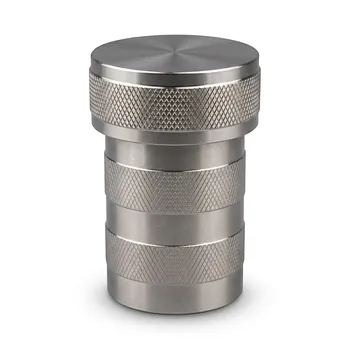
The synthesis of Barium Titanate (BaTiO3) nanoparticles relies on the hydrothermal autoclave to create a pressurized, high-temperature environment that fundamentally alters the chemistry of the precursors. By maintaining a sealed system, the autoclave allows the reaction to exceed the normal boiling point of the solvent, facilitating the direct formation of high-crystallinity tetragonal Barium Titanate at temperatures as low as 240°C. This process bypasses the traditional requirement for high-temperature post-synthesis calcination, which often leads to particle agglomeration.
Core Takeaway: A stainless steel hydrothermal autoclave provides the structural integrity to withstand high internal pressures while using a PTFE liner to ensure chemical purity, ultimately enabling the low-temperature crystallization of high-quality Barium Titanate nanoparticles.
Thermal and Kinetic Enhancement
Overcoming Solubility Barriers
The primary role of the autoclave is to enhance the solubility of reactants that are otherwise poorly soluble at standard atmospheric pressure. By heating the precursor solution in a sealed vessel, the internal pressure rises, forcing the solvent into a subcritical state where it can more effectively dissolve Barium and Titanium sources.
Accelerating Reaction Kinetics
The high-pressure environment significantly alters reaction kinetics, allowing for faster nucleation and growth of nanoparticles. This energy-intensive environment provides the necessary activation energy for the formation of the tetragonal phase of Barium Titanate, which is the desired crystalline structure for its dielectric properties.
The Synergy of Steel and PTFE
Mechanical Support of the Steel Shell
The stainless steel outer shell acts as a pressure vessel, providing the mechanical strength necessary to contain the autogenous pressure generated during heating. Without this robust exterior, the system could not safely maintain the 240°C environment required for the synthesis of high-crystallinity Barium Titanate.
Chemical Isolation via PTFE Lining
Inside the steel shell, a Polytetrafluoroethylene (PTFE) liner acts as a chemically inert barrier. This liner prevents the often-aggressive reaction precursors—which may be highly alkaline or acidic—from corroding the steel walls, which would otherwise introduce metallic impurities into the nanoparticles.
Maintaining Product Purity
By isolating the reaction within the PTFE liner, the autoclave ensures the high purity and consistent morphology of the resulting BaTiO3. This isolation is critical for electronic applications where even trace amounts of iron or chromium from the stainless steel could degrade the material's performance.
Understanding the Trade-offs
Temperature and Pressure Limitations
While the autoclave enables low-temperature synthesis compared to solid-state methods, it is limited by the thermal stability of the PTFE liner. Most PTFE liners begin to soften or degrade above 250°C, meaning the synthesis must be carefully monitored to stay within the safe operating window of the equipment.
Risk of Pressure Extremes
Operating a sealed vessel involves inherent risks; if the filling ratio of the precursor solution is too high, the internal pressure can exceed the structural limits of the stainless steel shell. Expert calibration of the solvent volume is required to ensure the "autogenous pressure" remains within a safe range for the specific autoclave model.
How to Apply This to Your Project
Recommendations for Optimal Synthesis
The success of Barium Titanate synthesis depends on balancing the thermal energy provided by the autoclave with the chemical constraints of the liner.
- If your primary focus is Phase Purity: Ensure the autoclave is rated for at least 250°C to allow the 240°C reaction temperature necessary for the tetragonal phase.
- If your primary focus is Nanoparticle Uniformity: Use a lower filling ratio (around 60-70%) to provide enough headspace for pressure stabilization, which helps achieve uniform dissolution-recrystallization.
- If your primary focus is Equipment Longevity: Always inspect the PTFE liner for deformations or "memory effects" after each run to prevent precursor leakage and subsequent corrosion of the stainless steel shell.
The hydrothermal autoclave transforms simple chemical precursors into sophisticated Barium Titanate nanoparticles by providing a controlled, high-energy environment that conventional heating cannot match.
Summary Table:
| Component | Primary Function | Impact on BaTiO3 Synthesis |
|---|---|---|
| Stainless Steel Shell | Mechanical pressure containment | Enables safe heating to 240°C for tetragonal phase formation |
| PTFE Liner | Chemical isolation & inertness | Prevents metallic contamination and protects vessel from corrosion |
| Autogenous Pressure | Enhanced precursor solubility | Facilitates rapid nucleation and high-crystallinity without calcination |
| Sealed System | Subcritical solvent state | Bypasses traditional high-temp requirements to minimize agglomeration |
Elevate Your Synthesis Precision with KINTEK
Achieve uncompromising purity in your nanoparticle research with KINTEK’s high-performance fluoropolymer solutions. Whether you are synthesizing Barium Titanate or developing advanced dielectric materials, our precision-engineered PTFE and PFA laboratory supplies provide the ultimate chemical resistance and thermal stability required for hydrothermal processes.
From high-purity hydrothermal synthesis liners, microwave digestion vessels, and custom CNC-machined parts to essential labware like beakers, fittings, and filtration tools, KINTEK manufactures a comprehensive range of supplies tailored for demanding laboratory environments. Our end-to-end fabrication capabilities allow us to deliver everything from complex, non-standard bespoke setups to high-volume orders, ensuring your lab operates with maximum efficiency and zero contamination.
Ready to optimize your hydrothermal workflows? Contact us today to discuss your custom requirements and discover the KINTEK advantage!
References
- Woo Jun Sung, Do-Kyun Kwon. Carbonate-Suppressed Hydrothermal Synthesis of Tetragonal BaTiO3 Nanoparticles. DOI: 10.3740/mrsk.2025.35.12.574
This article is also based on technical information from Kintek Knowledge Base .
Related Products
- High Temperature Corrosion Resistant Hydrothermal Synthesis Reactor with TFM Inner Liner and Straight Cylinder Design
- PTFE Lined High Pressure Digestion Vessel 50ml High Temperature Hydrothermal Synthesis Tank
People Also Ask
- What is the role of a corrosion-resistant reactor in the synthesis of lignin-based carbon dots? Ensure Maximum Purity
- What are the technical advantages of using hydrothermal synthesis reactors for advanced electronic & optical nanomaterials?
- How does a hydrothermal synthesis reactor facilitate the production of crystalline materials with tailored morphologies? Precision Crystal Growth
- Why is the sealing reliability of a hydrothermal synthesis reactor critical for 24-hour cycles? Ensure Nano-Precision
- What role do hydrothermal synthesis reactors play in CQD preparation? Achieve High-Purity Nanomaterial Synthesis