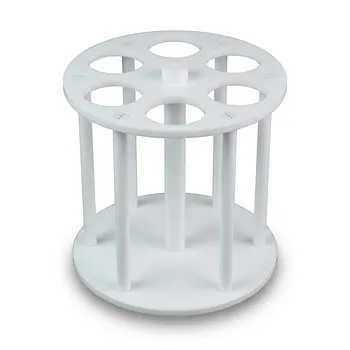
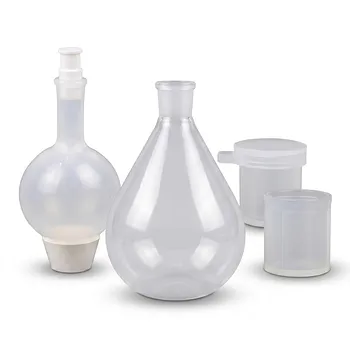
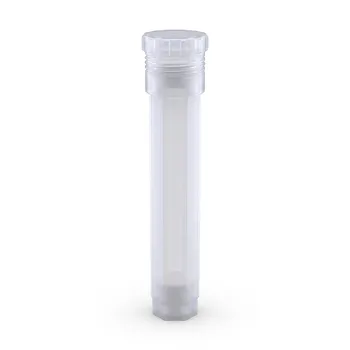
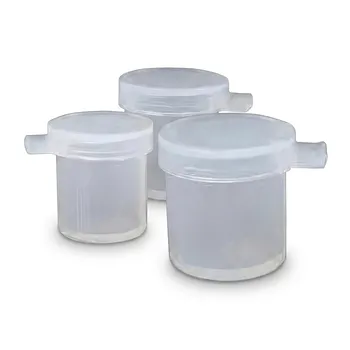
PFA benefits high-pressure and high-temperature laboratory apparatus by combining near-PTFE thermal and chemical resistance with melt-processable fabrication. It can operate continuously across an approximately −200°C to +250–260°C range, with a melting range near 300–315°C, while resisting strong acids, bases, organic solvents, and aggressive process chemicals. Its low melt viscosity also enables seamless, void-free, dimensionally precise components that are less vulnerable to leakage, cracking, creep, and mechanical deformation.
The central advantage of PFA is its combination of extreme-environment resistance and manufacturing flexibility. It can be molded into complex, seamless laboratory components while retaining the thermal stability, chemical inertness, and low-friction behavior needed for demanding pressure and temperature conditions.
Why PFA Performs Reliably in Severe Laboratory Conditions
It tolerates broad temperature extremes
PFA retains useful performance from cryogenic temperatures near −200°C through continuous high-temperature service around +250–260°C, depending on the specific grade and design conditions.
Its melting range near 300–315°C provides substantial thermal separation between normal operating conditions and the point at which the material loses its solid form. This makes PFA suitable for heated reaction vessels, microwave digestion equipment, tubing, liners, and fluid-control components.
It resists aggressive laboratory chemicals
PFA provides exceptional resistance to strong acids, bases, organic solvents, and other corrosive chemicals. This is particularly important when the apparatus must withstand both chemical exposure and elevated pressure or temperature.
Because the material is highly inert, it helps prevent contamination of samples and reduces degradation of the apparatus itself.
It resists stress cracking better than many alternatives
PFA’s perfluoroalkyl vinyl ether comonomers introduce ether linkages into the polymer structure. These reduce steric strain in the polymer chain and contribute to improved thermal stability and stress-crack resistance.
For laboratory components exposed to solvents, heat, and mechanical loading, this can provide greater durability than less resistant fluoropolymers such as FEP.
How Melt Processability Improves High-Pressure Equipment
It enables seamless, void-free structures
Unlike homopolymer PTFE, which has extremely high melt viscosity and generally cannot be processed through conventional melt-molding methods, PFA can be melted and formed using techniques such as injection molding and extrusion.
This allows manufacturers to produce seamless structures with fewer joints, welds, or internal discontinuities—important features for pressure vessels, liners, valves, and fluid fittings where small defects can become leak paths.
It supports complex geometries
Melt processing allows PFA to form intricate shapes, including:
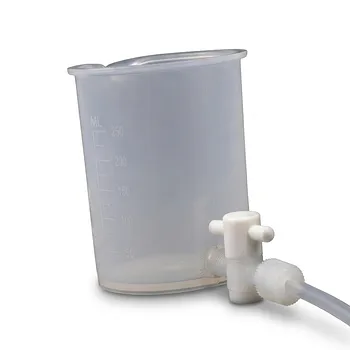
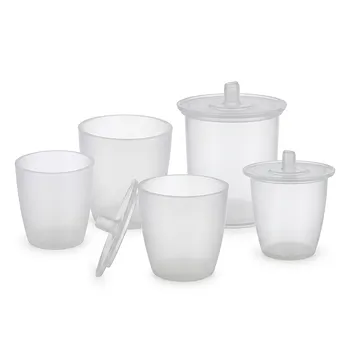
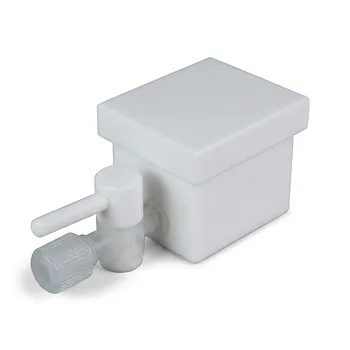
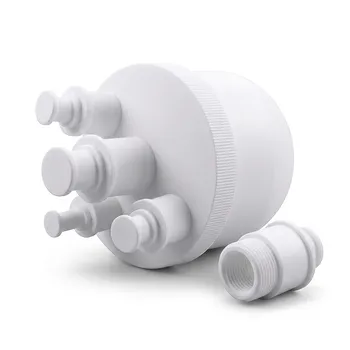
- High-pressure microwave digestion vessels
- Precision valves
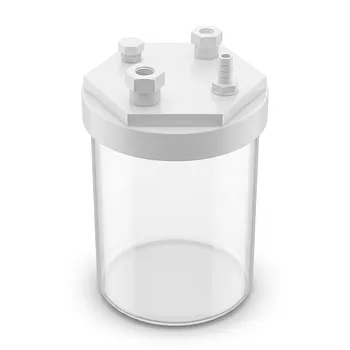
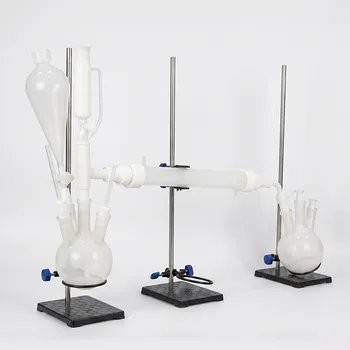
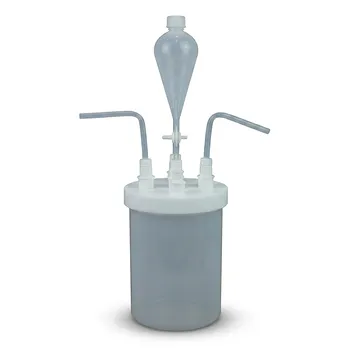
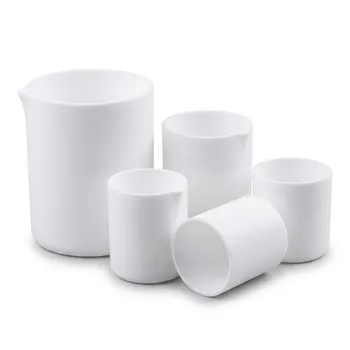
- Intricate reaction vessels
- Chemical tubing and manifolds
- Custom fluid-handling fittings
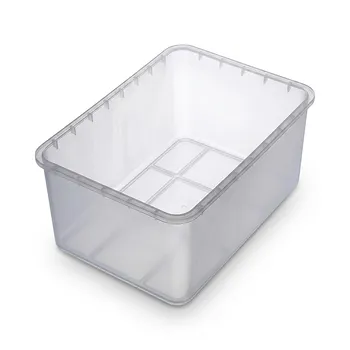
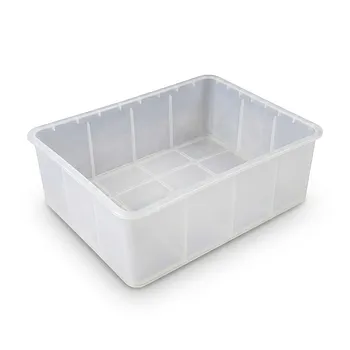
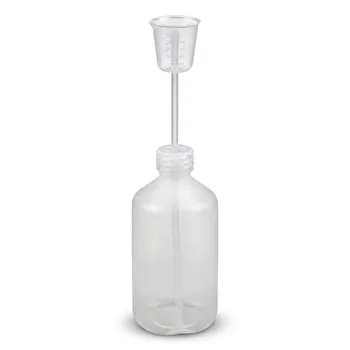
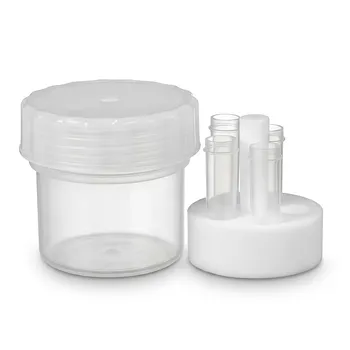
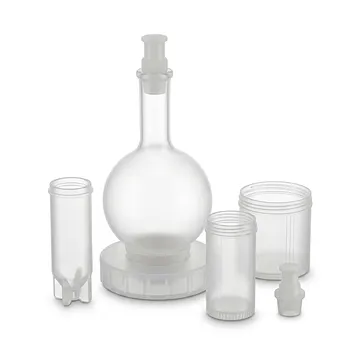
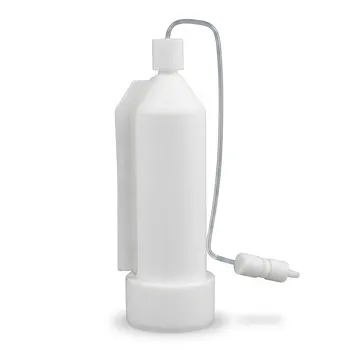
- Translucent bottles and containers
The ability to mold these geometries reduces the need to assemble multiple parts and makes it easier to integrate sealing surfaces, channels, ports, and other functional features directly into the component.
It improves dimensional consistency
Molded PFA components can be produced with repeatable geometry and controlled wall thickness. This supports reliable alignment between mating components and helps maintain consistent sealing performance across repeated laboratory cycles.
PFA can also be precision-machined when a design requires custom dimensions, prototypes, or non-standard laboratory hardware.
How PFA Handles Mechanical Loads
It resists creep and deformation under load
PFA offers good resistance to mechanical deformation and creep, which is the gradual movement of a polymer under sustained load. This characteristic is important for pressure vessels, valve seats, sealing rings, fittings, and reactor liners.
A component that creeps excessively may lose its shape, reduce contact pressure, or develop a leak. PFA’s resistance to deformation helps preserve structural integrity and sealing performance over time.
It supports leak-tight sealing
PFA’s combination of chemical inertness, flexibility, and resistance to stress cracking makes it useful for sealing elements and fluid-transfer components.
In high-pressure laboratory systems, the benefit is not simply that PFA forms a seal initially. The material must also maintain sufficient contact pressure and dimensional stability while exposed to heat, solvents, and repeated pressure cycles.
It provides low-friction operation
PFA has very low friction, broadly comparable to PTFE. This benefits moving parts such as valve components and reduces resistance in fluid-handling assemblies.
Low friction can also reduce wear and simplify operation where components must open, close, slide, or rotate while maintaining chemical resistance.
Why These Characteristics Matter in Specific Apparatus
Microwave digestion vessels
Microwave digestion vessels experience rapid heating, aggressive chemical environments, and internal pressure. PFA’s thermal stability, chemical inertness, stress-crack resistance, and molded seamless construction help the vessel withstand these combined conditions.
The material must still be selected and engineered for the intended pressure-temperature profile; PFA’s resistance does not eliminate the need for proper vessel geometry, wall thickness, and pressure relief.
Precision valves and fittings
Valves and fittings require accurate dimensions, reliable sealing surfaces, and resistance to chemical attack. Melt-processable PFA allows manufacturers to produce complex internal passages and precise external interfaces without sacrificing fluoropolymer chemical performance.
Its low friction also supports smooth valve operation, while its resistance to creep helps maintain sealing forces during extended service.
Reactor liners and fluid-transfer components
PFA liners, tubing, and fittings isolate structural hardware from corrosive chemicals while providing a clean, low-contamination fluid path. This is useful in reactors, analytical systems, electrochemical cells, and solvent-transfer equipment.
Melt processing also enables custom forms that would be difficult or expensive to produce from PTFE alone.
Understanding the Trade-offs
Mechanical strength decreases as temperature rises
PFA does not retain its room-temperature stiffness and strength indefinitely as temperature increases. Its modulus and ultimate tensile strength decrease, while elongation generally increases.
Illustrative data for drawn PFA show modulus declining from approximately 830 MPa at 23°C to 112 MPa at 200°C and 47 MPa at 250°C. Ultimate tensile strength similarly decreases from about 55 MPa to 29 MPa and 14.3 MPa across those temperatures.
High-temperature pressure ratings require engineering analysis
A component that performs well at room temperature may deform significantly under the same pressure at 200°C or 250°C. Pressure capability therefore depends on more than the material’s maximum service temperature.
Designers must consider wall thickness, geometry, load duration, temperature, pressure cycling, support from surrounding hardware, and the consequences of creep.
Melt processing does not make PFA a rigid structural material
PFA is valuable because it combines flexibility with environmental resistance, but it is not a substitute for a high-strength metal pressure boundary in every application. In many apparatus designs, PFA functions best as a liner, seal, tubing material, or chemically resistant inner component supported by a stronger external structure.
Temperature ratings are not universal
A stated continuous-use temperature—often given as approximately 250–260°C—depends on the PFA grade, stress level, exposure time, component geometry, and safety requirements.
The material rating should therefore be treated as a starting point for design verification, not as an automatic allowable operating condition for every pressure vessel or fitting.
Making the Right Choice for Your Goal
PFA is most effective when its thermal, chemical, and processing advantages are matched to the actual mechanical duty of the apparatus.
- If your primary focus is high-temperature chemical resistance: Use PFA for vessels, liners, tubing, and fittings exposed to aggressive chemicals across a broad temperature range.
- If your primary focus is high-pressure sealing: Select PFA for seals, valve components, and fittings where creep resistance, stress-crack resistance, and dimensional stability are important.
- If your primary focus is complex component geometry: Use melt-processed PFA to create seamless, intricate parts that would be difficult to fabricate from PTFE.
- If your primary focus is long-term structural reliability: Evaluate temperature-dependent modulus, strength, creep, pressure cycling, and external support rather than relying only on the nominal service-temperature rating.
PFA enables high-performance laboratory apparatus by pairing fluoropolymer environmental resistance with the precision and design freedom of melt processing.
Summary Table:
| Characteristic | Benefit |
|---|---|
| Temperature range (-200°C to +260°C) | Operates under extreme thermal conditions |
| Chemical inertness | Resists aggressive acids, bases, solvents |
| Melt processability | Enables seamless, complex part fabrication |
| Creep resistance | Maintains dimensional stability under load |
| Low friction | Reduces wear in moving parts |
Optimize your high-pressure lab apparatus with precision PFA components from KINTEK. Our expert team can help you select or custom-design PFA parts that meet your exact thermal and mechanical demands. Contact us today to enhance performance and reliability in your laboratory. Get in touch
Related Products
- High Purity PFA Laboratory Rectangular Tank Corrosion Resistant Acid Cleaning Bath for Silicon Wafer Processing and Trace Analysis
- Custom PFA Microcolumn Racks and PTFE Machined Low Background Corrosion Resistant Laboratory Fixtures
- Laboratory PFA Rectangular Acid Soaking Tank Silicon Wafer Cleaning Bath Corrosion Resistant High Purity Vessel
- PFA Reaction Tank 6L Customizable Fittings Corrosion Resistant Solvent Resistant PFA Reaction Bottle for New Material Synthesis
- PFA Beaker with Integrated Drainage Valve and Discharge Tube for Corrosive Chemical Processing and High Purity Laboratory Applications
People Also Ask
- What are the advantages of high-purity PFA labware for NiFe catalyst prep? Ensure Precision and Trace-Level Purity.
- Why is high-purity PFA laboratory equipment required for the trace analysis and species identification of polyoxometalates?
- Why is high-purity PFA laboratory equipment required for the trace analysis of Ln-MOFs? Ensure Precision and Accuracy.
- What are the technical advantages of using high-purity PFA containers for MSN synthesis? Boost Purity and Yield
- What technical advantages does high-purity PFA labware provide in trace fluorescence detection? Ensure Peak Sensitivity