PTFE’s primary benefit in laboratory workflows is its ability to eliminate the "boundary layer" adhesion that typically traps viscous substances against container walls. By leveraging a coefficient of friction between 0.05 and 0.10, PTFE ensures that sticky, polymeric, or high-viscosity residues slide off surfaces with minimal resistance. This results in near-total reagent recovery, reduced cross-contamination, and significantly faster cleaning cycles.
Core Takeaway: The non-stick nature of PTFE, driven by its exceptionally low surface energy, transforms laboratory efficiency by preventing viscous materials from bonding to equipment, thereby ensuring precision in fluid transfer and integrity in sample purity.
The Physical Mechanisms of PTFE Surface Performance
An Industry-Leading Coefficient of Friction
PTFE possesses one of the lowest coefficients of friction of any known solid material, typically measured between 0.05 and 0.10. This "self-lubricating" property allows viscous fluids to move across the surface without the internal drag that causes sticking.
Low Surface Energy and Hydrophobicity
The material’s exceptionally low surface energy prevents chemical bonding between the equipment and the reagent. Its hydrophobic characteristics cause liquid droplets to bead up rather than wet the surface, which is critical for preventing residue buildup.
Reducing Drag and Carry-over
In immersion-based workflows, these properties reduce drag forces as equipment is moved through viscous baths. This prevents "droplet retention" after the equipment is removed, which directly minimizes chemical carry-over between different processing stages.
Operational Impact on Laboratory Workflows
Maximizing Reagent Recovery
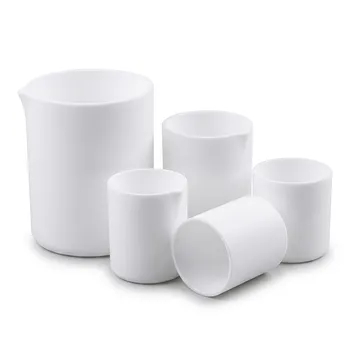
When pouring viscous or sticky materials from beakers and bottles, PTFE ensures a clean pour. Because the material does not adhere to the walls, laboratory professionals can transfer nearly 100% of the substance, reducing waste and increasing measurement accuracy.
Protecting Mixing Equipment
Stirrer shafts and blades are prone to fouling when used with dyes, precipitates, or polymers. PTFE coatings or solid components prevent these materials from "caking" onto the equipment, maintaining the efficiency of the mixing process and protecting the underlying substrate.
Streamlining the Decontamination Process
Traditional glass or stainless-steel equipment often requires aggressive solvents or mechanical scrubbing to remove viscous residues. PTFE surfaces simplify cleaning because residues can be wiped or rinsed away easily, significantly increasing the throughput of the laboratory.
Understanding the Trade-offs and Limitations
Mechanical Softness and Wear
While PTFE is superior for non-stick applications, it is a relatively soft material compared to stainless steel. In high-abrasion environments, pure PTFE may exhibit wear or deformation, potentially requiring the use of composite fillers to maintain structural integrity.
The Role of Surface Finish
The effectiveness of PTFE is highly dependent on its surface finish. A perfectly smooth finish is required for maximum non-stick performance, whereas a textured surface—though useful for certain sealing applications—can actually trap microscopic amounts of residue in viscous workflows.
Thermal and Pressure Limits
While chemically inert, PTFE can "creep" or flow under extreme pressure or high-temperature conditions. Lab managers must ensure that the specific grade of PTFE used is rated for the thermal profile of their specific viscous material processing.
Optimizing Material Choice for Your Workflow
How to Apply This to Your Project
To get the most out of PTFE’s surface properties, you must match the material grade to your specific laboratory goals.
- If your primary focus is maximum reagent recovery: Use high-purity, virgin PTFE with a polished, smooth surface finish to ensure viscous liquids slide off completely.
- If your primary focus is heavy-duty mixing of abrasive slurries: Opt for PTFE compounds filled with glass fiber or carbon to increase hardness and wear resistance while maintaining non-stick properties.
- If your primary focus is preventing cross-contamination in baths: Utilize PTFE components with high hydrophobicity to minimize "drag-out" and ensure droplets do not cling to the surface between rinses.
Selecting the correct PTFE configuration ensures that the unique physics of the material are fully leveraged to create a seamless, high-yield laboratory environment.
Summary Table:
| Property | Physical Mechanism | Workflow Benefit |
|---|---|---|
| Low Friction | Coefficient of 0.05–0.10 | Eliminates "boundary layer" drag for smooth fluid movement |
| Surface Energy | Exceptionally low molecular attraction | Prevents chemical bonding and "caking" of sticky residues |
| Hydrophobicity | High contact angle | Causes droplets to bead up, reducing carry-over and waste |
| Inertness | Non-reactive fluoropolymer backbone | Ensures sample purity and prevents equipment corrosion |
Optimize Your Lab Efficiency with KINTEK Fluoropolymer Expertise
Stop losing precious samples to sticky containers and tedious cleaning cycles. KINTEK specializes in high-performance PTFE and PFA laboratory supplies designed to eliminate adhesion and maximize reagent recovery.
Our extensive range covers every stage of your workflow:
- Everyday Basic Labware: Beakers, measuring cylinders, crucibles, dishes, and reagent/wash bottles.
- Fluid Transfer & Prep: Tubing, fittings, valves, filters, pipettes, and separatory funnels.
- General Consumables: Stirring bars, O-rings, gaskets, and seal tapes.
- Advanced Apparatus: Custom electrochemical cells, battery testing fixtures, and microwave digestion vessels.
Whether you need high-volume standard consumables or bespoke, complex parts via our end-to-end custom CNC fabrication, KINTEK delivers unmatched precision in high-performance fluoropolymers.
Ready to streamline your viscous material handling? Contact our specialists today and let us build your custom lab solution!
Related Products
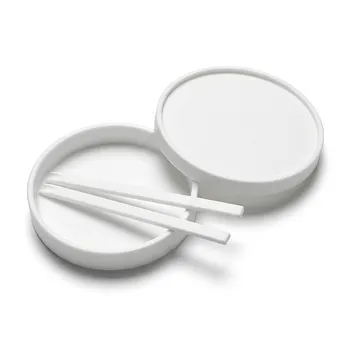
- Custom PTFE Petri Dishes Corrosion Resistant High Purity Low Background Labware
- Custom Polytetrafluoroethylene PTFE Petri Dishes 60mm Corrosion Resistant Low Background Labware
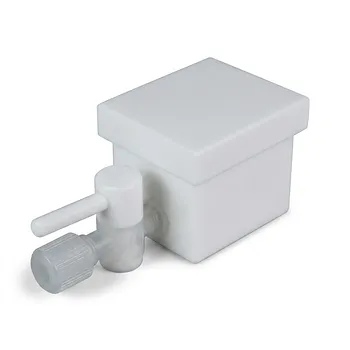
- Custom PTFE Laboratory Apparatus Corrosion Resistant Low Background Reaction Cells Precision CNC Fabrication
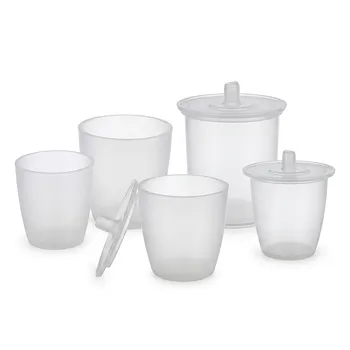
- High Purity PFA Crucible and Corrosion Resistant PTFE Beaker for Trace Analysis and Custom Laboratory Applications
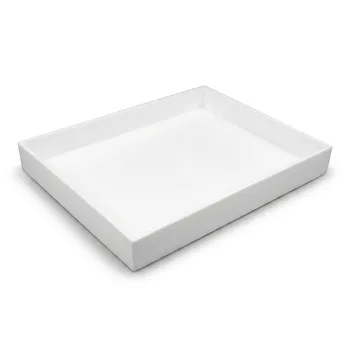
- High Purity PTFE Trays Corrosion Resistant Laboratory Labware Customizable Square Round Fluoropolymer Trays
People Also Ask
- Why are PTFE or PFA Petri dishes preferred for membrane casting? Ensure Damage-Free Recovery & Chemical Purity
- What customization options are available for PTFE materials? Tailor Performance for Your Application
- How does PTFE minimize sample contamination? Ensure Unmatched Purity for Critical Analyses
- What are the chemical resistance properties of PTFE labware? The Ultimate Guide to Inert Labware
- What are the medical and laboratory equipment uses of PTFE? Unlock Biocompatibility and Chemical Resistance