Structural form determines whether PPS prioritizes coating processability, thermal and chemical stability, or mechanical toughness. Regular PPS provides the best melt flow and surface coverage during application, while oxidative curing above 300°C increases thermal, dimensional, and chemical stability. High-molecular-weight (HMW) linear and branched PPS variants deliver substantially greater elongation, impact resistance, and toughness, making them better suited to laboratory hardware subject to handling, vibration, or mechanical shock.
For high-temperature protective coatings, regular PPS is usually the easiest to apply, cured PPS offers the strongest stability at elevated temperature, and HMW variants provide the greatest resistance to mechanical damage. The appropriate structure depends on whether the coating's main risk is processing defects, thermal and chemical exposure, or impact and deformation.
Why PPS Structure Matters in Protective Coatings
The Polymer Backbone Controls Performance
Structural variants of PPS differ mainly in molecular weight, backbone branching, and post-application cross-linking. These features control how the polymer flows during coating, how it responds to heat, and how well it withstands mechanical loading.
The distinction is important for metal laboratory hardware because the coating must perform in two different states: it must first form a continuous, well-adhered film, then protect the substrate during repeated thermal, chemical, and mechanical exposure.
Coating Performance Is a Balance
A coating that flows easily can cover complex metal fixtures more uniformly, but excessive flowability may correlate with lower mechanical toughness. Conversely, a tougher high-molecular-weight material may resist damage better while presenting greater processing demands.
PPS therefore should be selected as a coating system, not solely by its maximum temperature rating. Application behavior, cure response, substrate adhesion, and service stresses all matter.
Regular PPS: Best for Flow and Film Formation
Lower Molecular Weight Improves Flow-Out
Regular PPS generally has lower molecular weight and lower melt viscosity than the HMW variants. During application and heating, this allows the material to spread readily across the metal surface.
Good flow-out helps produce a more continuous coating with fewer uncoated areas, particularly on laboratory fixtures with edges, recesses, and irregular geometries. It also supports the strong adhesion to metal substrates associated with PPS coatings.
It Supports Efficient Coverage of Metal Hardware
For fixtures where uniform coverage and reliable substrate contact are the main concerns, regular PPS is often the most practical starting point. Its processing characteristics reduce the risk that the coating will remain poorly leveled or fail to wet the metal adequately.
This makes regular PPS especially useful for hardware that experiences high temperature and chemical exposure but relatively modest impact or flexing.
Its Mechanical Toughness Is More Limited
The same lower molecular weight that improves melt flow does not provide the highest resistance to elongation, impact, or heavy mechanical stress. A regular PPS coating may therefore be less suitable where tools, clamps, repeated assembly, or accidental impacts can damage the film.
That limitation does not make regular PPS unsuitable; it means that processability and mechanical durability must be evaluated against the actual laboratory workflow.
Cured PPS: Greater Stability After Cross-Linking
Oxidative Cross-Linking Changes the Material
When cured above approximately 300°C, PPS can undergo oxidative cross-linking. The polymer network becomes more thermoset-like, changing how the coating responds to heat and chemical exposure.
This is a post-application structural change. The coating begins with the processing advantages of PPS and then develops a more stable network during the high-temperature cure.
Thermal Stability Improves
Cross-linked PPS provides enhanced thermal stability and dimensional stability. The coating is better able to retain its shape and resist changes caused by prolonged heating.
This matters for laboratory hardware that is repeatedly cycled near PPS's continuous-use range, which the primary reference places at up to approximately 220°C. The cure structure helps the protective film remain stable during service, although the cure temperature and complete coating schedule must be compatible with the metal component and application process.
Chemical Resistance Also Benefits
Curing improves the coating's resistance to chemical attack by producing a less mobile, more networked polymer structure. This can be valuable on laboratory hardware exposed to solvents, reagents, and cleaning cycles.
The improvement should be treated as a system property rather than an unlimited chemical guarantee. Chemical compatibility still depends on the specific reagent, temperature, exposure duration, coating thickness, and condition of the film.
Cure Conditions Create Processing Constraints
A cross-linked coating cannot be treated like an easily remeltable thermoplastic after cure. Repair, rework, or removal may become more difficult because the material has developed thermoset-like behavior.
The cure step also requires controlled heating. Poor control can produce incomplete cross-linking, uneven properties, or thermal damage to temperature-sensitive assemblies attached to the laboratory hardware.
HMW Linear PPS: More Toughness Under Load
Higher Molecular Weight Improves Deformation Resistance
HMW linear PPS has approximately double the molecular weight of regular PPS, according to the primary reference. Longer polymer chains can absorb more mechanical energy before the coating fractures or fails.
The result is greater elongation, impact resistance, and mechanical toughness. This is important where the coating must tolerate handling, vibration, fastening, or contact with other equipment.
It Suits Heavy-Duty Laboratory Fixtures
HMW linear PPS is better aligned with hardware that experiences repeated mechanical stress rather than only static thermal exposure. Examples include robust mounting fixtures, frequently handled components, and metal parts exposed to incidental impacts during instrument maintenance.
Its principal advantage is durability of the protective film under mechanical loading. The tradeoff is that higher molecular weight generally means higher melt viscosity and potentially less forgiving flow during application than regular PPS.
Application Quality Becomes More Important
Because HMW linear PPS does not flow as readily as lower-molecular-weight PPS, achieving complete coverage may require tighter control of coating temperature, deposition conditions, and film thickness.
A tougher resin does not compensate for poor wetting, voids, thin spots, or inadequate adhesion. The substrate preparation and application process remain central to final performance.
HMW-Branched PPS: Toughness With a Different Backbone Structure
Branching Changes Chain Interactions
HMW-branched PPS combines high molecular weight with polymer backbone branching. The branched structure changes how the chains entangle and how the material distributes stress through the coating.
Like HMW linear PPS, it provides increased elongation, impact resistance, and toughness compared with regular PPS. Its value is greatest when the coating must survive mechanical abuse while maintaining protection of the metal substrate.
It Can Support Complex Mechanical Demands
A branched HMW structure can be considered for heavy-duty hardware where impact resistance and resistance to coating damage are priorities. It may be advantageous when the coating is exposed to localized mechanical events rather than only uniform heating.
However, branching is not automatically superior in every application. The coating's actual processability and final properties depend on the specific grade and formulation, so the chosen material should be validated under representative application conditions.
It May Require More Process Development
Higher viscosity and more complex chain architecture can make coating uniformity more dependent on process control. The applicator may need to optimize heating, deposition, and leveling conditions to prevent surface defects or incomplete coverage.
For a simple, lightly loaded fixture, those additional processing demands may offer little practical benefit. For heavily handled hardware, they may be justified by the reduction in impact-related failures.
How the Variants Compare in Service
Thermal Exposure
All of the PPS structures can support high-temperature protective-coating applications, with continuous-use temperatures up to approximately 220°C identified in the primary reference. Cured PPS has the clearest advantage when long-term thermal stability and dimensional retention are the dominant concerns.
HMW linear and branched PPS are differentiated more strongly by mechanical toughness than by a separate continuous-use temperature claim. They should not be assumed to provide a higher operating-temperature limit without grade-specific data.
Chemical Exposure
Cured PPS gains improved chemical resistance through oxidative cross-linking. Regular and HMW PPS can still provide useful chemical protection, but the final result depends on the exposure conditions and whether the coating remains intact.
For extremely aggressive chemical service, alternative fluoropolymer systems may warrant comparison. PTFE coatings can offer higher stated continuous operating temperatures and exceptional chemical inertness, but they commonly require a primer and a defined primer/topcoat system to achieve adhesion to metal.
Mechanical Stress
HMW linear and HMW-branched PPS are the strongest choices when the coating must tolerate impact, elongation, or repeated mechanical handling. Regular PPS is more attractive when smooth flow-out and straightforward coverage are the controlling requirements.
Cured PPS improves stability but should not be confused with the maximum impact toughness of an HMW grade. Thermal network formation and high molecular weight address different failure mechanisms.
Understanding the Trade-offs
Maximum Temperature Is Not the Only Selection Criterion
A higher temperature claim does not by itself identify the best coating. A coating that withstands heat but develops defects during application can expose the metal substrate and fail earlier than a lower-rated coating applied uniformly.
PPS's practical advantage often comes from combining high-temperature capability with low melt viscosity, metal adhesion, and a selectable range of mechanical properties.
Toughness Can Conflict With Flow
Increasing molecular weight generally raises melt viscosity. This can reduce the easy flow-out that makes regular PPS attractive, especially on intricate metal laboratory hardware.
The correct choice is therefore a compromise between coverage quality and damage tolerance. A highly tough coating is only beneficial if it can be applied without creating discontinuities.
Cross-Linking Can Reduce Rework Flexibility
Oxidative curing improves stability, but the resulting thermoset-like characteristics can make later modification more difficult. Components that may need frequent repair, recoating, or dimensional adjustment should be evaluated before committing to a strongly cross-linked system.
The cure schedule should also be confirmed against the complete hardware assembly, not just the coating resin.
Comparisons With PTFE Need Care
PTFE and PPS solve overlapping but different problems. PTFE may be preferred for extreme chemical inertness, very low friction, or operating temperatures beyond PPS's stated continuous-use range, while PPS offers a useful combination of adhesion, processability, thermal stability, and mechanical toughness.
Radiation-modified PTFE, for example, can gain modulus, yield strength, creep resistance, and wear resistance through a structural transformation. Those benefits do not mean that PTFE is a direct substitute for every PPS coating application, particularly where adhesion and coating-process simplicity are decisive.
Making the Right Choice for Your Goal
Select the PPS structure according to the dominant failure mode and the realities of applying the coating to the metal hardware.
- If your primary focus is uniform coverage and application efficiency: Choose regular PPS when low melt viscosity and strong flow-out are more important than maximum impact resistance.
- If your primary focus is long-term thermal and chemical stability: Use cured PPS when the hardware and process can support the required high-temperature oxidative cross-linking step.
- If your primary focus is impact and repeated mechanical handling: Evaluate HMW linear PPS for its increased elongation, impact resistance, and toughness.
- If your primary focus is heavy-duty mechanical service on complex hardware: Consider HMW-branched PPS, provided the application process can achieve complete, defect-free coverage.
- If your primary focus is extreme chemical inertness, very low friction, or higher-temperature service: Compare a properly primed PTFE coating system against PPS rather than assuming a PPS structural variant will meet every requirement.
The best PPS coating is the variant whose molecular structure matches the hardware's dominant thermal, chemical, mechanical, and processing demands.
Summary Table:
| Variant | Key Characteristics | Best For | Limitations |
|---|---|---|---|
| Regular PPS | Lower MW, good flow, easy application | Uniform coverage on complex shapes | Lower mechanical toughness |
| Cured PPS | Cross-linked, enhanced thermal/chemical stability | Long-term high-temp exposure | Requires high-temp cure, less reworkable |
| HMW Linear PPS | High MW, greater toughness and elongation | Impact and mechanical stress | Higher viscosity, harder to apply |
| HMW-Branched PPS | High MW with branching, tough | Heavy-duty mechanical service | More process development needed |
Looking for the optimal PPS coating for your lab equipment? At KINTEK, we specialize in high-performance fluoropolymer solutions. Our experts can help you select and implement the right PPS or PTFE coating system for your metal hardware. Contact us today to ensure durability, thermal stability, and chemical resistance in your lab. Get in touch with our team →
Related Products
- Customizable High Temperature Resistant Anti Static PTFE Insulating Gaskets Flame Retardant Corrosion Proof Industrial Seals
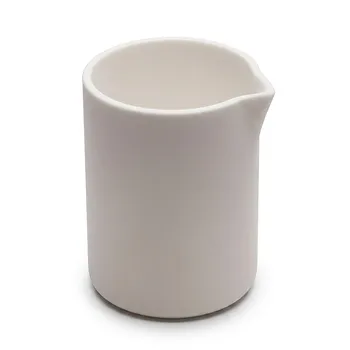
- Custom Thickened PTFE Laboratory Beaker for High Temperature Hot Plate Applications
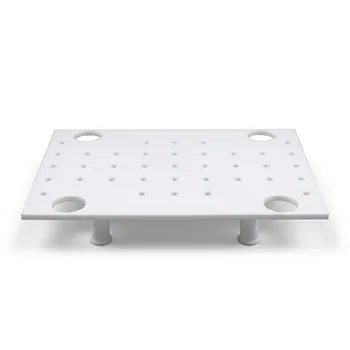
- Customizable PTFE Heat Insulation Plate High Temperature Corrosion Resistant Laboratory Support Layered Multi Tier Stand
- High Temperature Resistant PTFE Thermal Insulation Board Corrosion Resistant Metal Free Fluoropolymer Stand for Ultra Clean Laboratories
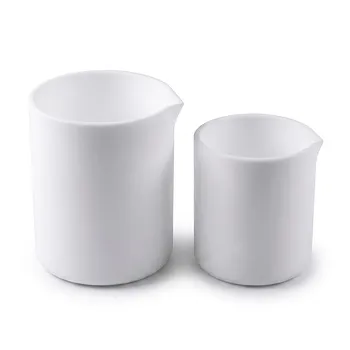
- Custom Thickened PTFE Beaker High Temperature Hot Plate Heating Laboratory Fluoropolymer Vessel Chemical Resistant Digestion Beaker
People Also Ask
- Why is PTFE an ideal material choice for sealing gaskets, valves, and fluid transfer tubing exposed to extremely aggressive chemicals? Discover Its Superior Chemical Resistance and Reliability
- How is PTFE utilized in seals and gaskets? Leverage Its Chemical & Temperature Resistance
- What are the key properties of PTFE that make it suitable for seals and gaskets? Unlock Superior Sealing Performance
- How does the sealing performance of PTFE gaskets benefit industrial applications? Ensure Leak-Free Reliability in Harsh Environments
- What are the different types of PTFE gaskets? A Guide to Choosing the Right Seal