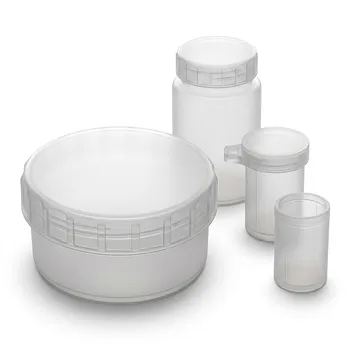
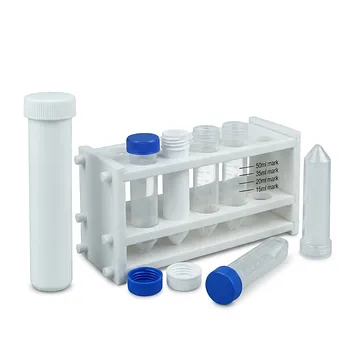
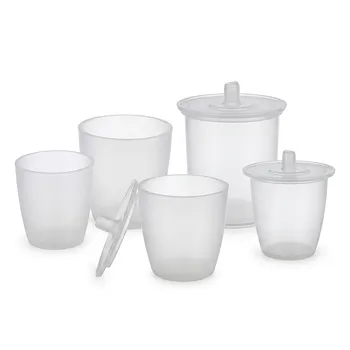
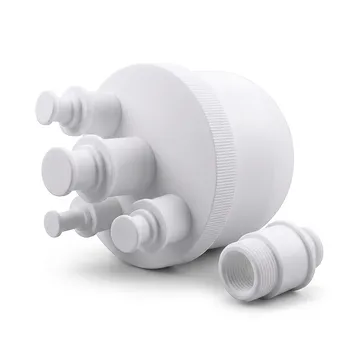
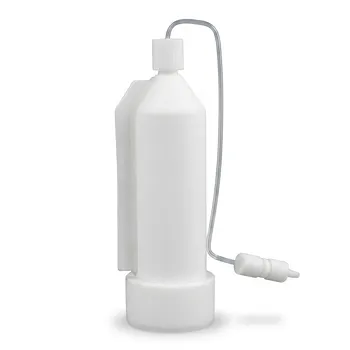
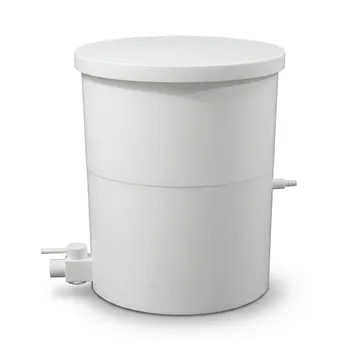
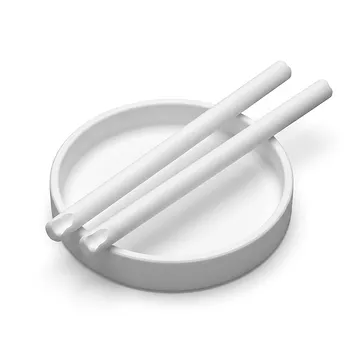
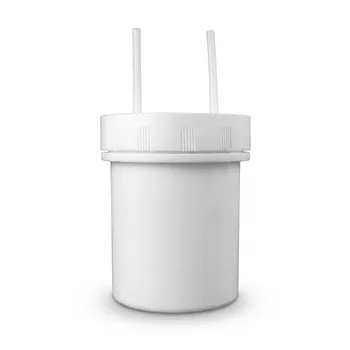
F-POSS cage-opening reactions require both solvent compatibility and contamination control. Because fluoroalkyl POSS compounds can have limited solubility, researchers may need specialized fluorinated solvents such as hexafluorobenzene, extended contact times, elevated temperatures, or strongly acidic conditions using reagents such as trifluoromethanesulfonic acid (HOTf). These conditions make high-purity PTFE and PFA preferable to glass and conventional plastics for vessels, bottles, tubing, fittings, and valves.
The practical issue is not only whether a vessel survives the reaction. It must also avoid leaching metals, absorbing or releasing organic species, swelling, or catalyzing unwanted surface reactions while poorly soluble F-POSS intermediates are being dissolved, transferred, and functionalized.
Why F-POSS Solubility Limits Affect Equipment Selection
Limited solubility increases chemical contact
When an F-POSS substrate or intermediate is only sparingly soluble, the reaction mixture may require a high solvent-to-solid ratio, vigorous agitation, repeated transfers, or longer exposure to the reaction medium. Every additional contact surface becomes a potential source of contamination or material incompatibility.
A vessel that is acceptable for a short, dilute contact may be unsuitable for a concentrated suspension or a reaction held for many hours.
Fluorinated solvents narrow material choices
Hexafluorobenzene and related fluorinated organic media are specialized solvents with demanding compatibility requirements. Conventional plastics may swell, soften, extract additives, or permit solvent permeation, while some glass systems may contribute trace contaminants from surfaces, seals, or fittings.
Fully fluorinated contact materials reduce these risks because their carbon-fluorine backbones resist attack from most organic solvents and strong inorganic reagents.
Incomplete dissolution can amplify contamination
Undissolved F-POSS particles can settle in vessel corners, tubing dead legs, valve cavities, or porous surfaces. This can create concentration gradients and make rinsing more difficult, particularly during multi-step synthesis.
Smooth, nonporous PTFE and PFA surfaces help limit retention and support more complete recovery during transfers and cleaning.
Why HOTf and Similar Reagents Change the Risk Profile
Strong acids can damage ordinary labware
HOTf is a highly corrosive strong acid. Standard glassware and conventional polymer components may be unsuitable depending on concentration, temperature, exposure time, and the presence of other reagents.
Even when the bulk vessel appears intact, small amounts of extractable material or trace metals can compromise downstream characterization or alter the chemistry of a sensitive fluorinated intermediate.
Surface contamination can become a reaction variable
Cage-opening and functionalization reactions are sensitive to reagent composition and reaction history. Metal ions, residues from manufacturing, or degraded seal materials can introduce unintended reaction pathways or interfere with purification.
High-purity PTFE and PFA minimize these sources of variability and help make the reaction environment more reproducible.
Temperature and exposure time matter
PTFE and PFA maintain strong chemical resistance across a broad operating range, including many elevated-temperature laboratory applications. However, compatibility must still be evaluated against the actual combination of reagent concentration, temperature, pressure, mechanical load, and exposure duration.
A compatibility claim based only on room-temperature data is not sufficient for a heated, concentrated, or pressurized reaction.
Choosing Between PTFE and PFA
PTFE for maximum chemical resistance
PTFE is generally the conservative choice for direct contact with aggressive acids, fluorinated solvents, and highly reactive organic or inorganic media. It is well suited to liners, gaskets, machined vessels, crucibles, valve components, and other parts where chemical inertness is the primary requirement.
Its low water absorption and resistance to swelling help protect both sample purity and dimensional stability.
PFA for transparent and process-friendly vessels
PFA provides comparable high-level chemical resistance while offering advantages for fabricated and transparent laboratory components. Its clarity allows operators to inspect mixing, undissolved solids, precipitation, and vessel cleanliness without opening the system.
PFA is therefore useful for reaction bottles, storage vessels, tubing, and transfer assemblies where visual monitoring and flexible fabrication are important.
Match the material to the component
The vessel material is only one part of the fluid path. Tubing, fittings, valve seats, pump heads, bottles, caps, and gaskets can each become contamination or failure points.
For F-POSS work, the wetted path should be specified as a compatible fluoropolymer system rather than combining a PTFE vessel with an unverified plastic fitting or elastomer seal.
Designing Fluid Handling Around the Chemistry
Use tubing that resists swelling and permeation
Transfer tubing may remain in contact with concentrated fluorinated solvent or HOTf longer than expected because of slow draining, recirculation, or repeated rinsing. PTFE and PFA tubing resist solvent-induced swelling and chemical degradation better than materials such as PVDF or FEPM in these applications.
Permeation and breakthrough data should be considered when tubing will hold a reagent for extended periods or when trace contamination is critical.
Minimize dead volume
Low-solubility systems benefit from tubing and fittings with short flow paths, few cavities, and minimal dead legs. These design choices reduce material hold-up and prevent poorly dissolved solids from accumulating in inaccessible areas.
They also improve reproducibility during reagent charging, intermediate isolation, and final rinsing.
Control particulate and trace-metal sources
Use high-purity components with documented manufacturing and cleaning controls. Avoid unnecessary metal contact, unverified pigments, lubricants, and conventional seals in the wetted path.
For trace-sensitive work, the relevant specification is not merely “chemical resistant.” It should address extractables, elemental background, cleanliness, and lot-to-lot consistency.
Understanding the Trade-offs
PTFE and PFA are highly resistant, not universally invulnerable
The fluoropolymers are compatible with most strong acids, strong bases, oxidizers, and organic solvents under normal laboratory conditions. Exceptional hazards remain, including molten alkali metals, high-temperature or high-pressure fluorine, chlorine trifluoride, oxygen difluoride, and certain highly reactive Lewis-base systems.
These exceptions require a formal compatibility review rather than reliance on a generic fluoropolymer rating.
Mechanical performance can differ from chemical resistance
PTFE has excellent chemical resistance but can deform under sustained load, especially at elevated temperature. PFA may be preferable where transparency, fabricated geometry, or better dimensional control is important.
Pressure, vacuum, clamping force, agitation, and thermal cycling must be checked independently of chemical compatibility.
Elastomers can undermine a fluoropolymer assembly
An otherwise suitable PTFE or PFA fluid path may fail through an incompatible O-ring, valve diaphragm, adhesive, or flexible connector. FEPM, for example, can lack compatibility with aromatic and chlorinated hydrocarbons and several common organic solvents.
All wetted auxiliary materials require the same scrutiny as the primary vessel.
Cost and handling are real considerations
High-purity PTFE and PFA components are more expensive than conventional laboratory plastics and may have longer procurement times. Their value is greatest when reaction purity, reproducibility, and avoidance of failed multi-step synthesis outweigh the initial equipment cost.
Making the Right Choice for Your Goal
The appropriate specification should reflect the full reaction and transfer sequence, not only the nominal reagent list.
- If your primary focus is reaction purity: Use high-purity PTFE or PFA for every wetted surface, and control trace-metal contamination, extractables, and cleaning history.
- If your primary focus is solvent and acid resistance: Select PTFE or PFA based on the actual reagent concentration, temperature, pressure, and exposure time, including documented exceptions.
- If your primary focus is observing dissolution and mixing: Prefer transparent PFA vessels and tubing where the geometry and temperature requirements allow it.
- If your primary focus is reliable fluid transfer: Use PTFE or PFA tubing, fittings, valves, and compatible seals while minimizing dead volume and unverified material interfaces.
- If your primary focus is long-term equipment life: Review mechanical loading, thermal cycling, permeation, and deformation in addition to chemical compatibility.
For F-POSS synthesis, choosing PTFE and PFA is a method-control decision: the right fluoropolymer system preserves solubility handling, limits contamination, and keeps aggressive cage-opening chemistry reproducible.
Summary Table:
| Factor | Influence on PTFE/PFA Choice |
|---|---|
| Solubility limitations | Requires enhanced chemical resistance and smooth surfaces to prevent accumulation and contamination. |
| Aggressive reagents (e.g., HOTf) | Needs materials that resist corrosion and avoid extracting contaminants. |
| Fluorinated solvents | Demands non-swelling, non-permeable materials like PTFE/PFA. |
| Contamination control | High-purity fluoropolymers minimize trace metals and surface reactivity. |
| Temperature and exposure | PTFE/PFA maintain stability under typical elevated conditions. |
| Selection between PTFE/PFA | PTFE for maximum inertness; PFA for transparency and fabrication ease. |
| Fluid handling design | Use fluoropolymer tubing/fittings, minimize dead volume, control particulates. |
| Mechanical considerations | Check load and thermal cycling independently of chemical compatibility. |
| Cost and handling | Higher cost justified by purity and reproducibility in sensitive synthesis. |
Ensure the purity and reproducibility of your F-POSS synthesis with high-performance PTFE and PFA labware from KINTEK. Our products—from beakers, bottles, and digestion vessels to custom tubing, fittings, and valves—are engineered to resist aggressive reagents and minimize contamination. With end-to-end custom CNC machining, we deliver tailored solutions for your specific reaction needs. Contact us today for a quote and elevate your research to the next level.
Related Products
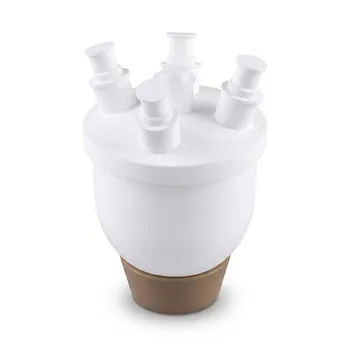
- High Performance Customizable PTFE Reaction Vessel and Corrosion Resistant Polytetrafluoroethylene Flask for Chemical Laboratory Use
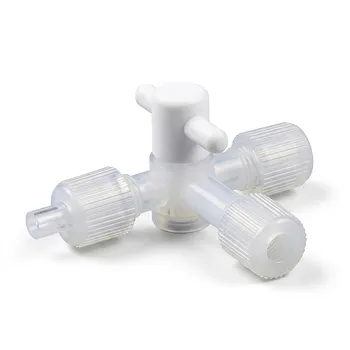
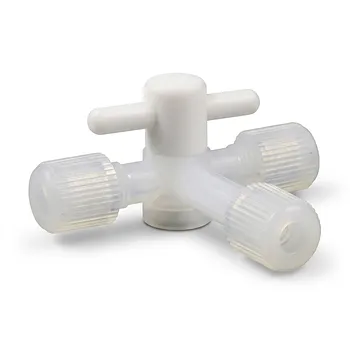
- Corrosion Resistant High Purity PFA Valve and Weldable Transparent Tubing for Semiconductor Fluid Transfer
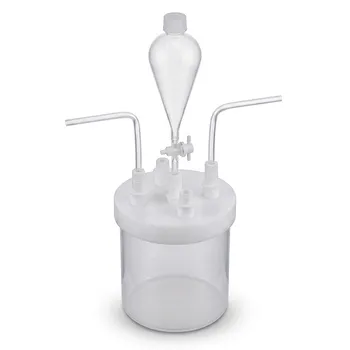
- High Purity PFA Reaction Vessel for Biopharmaceutical Synthesis and Corrosive Chemical Fluid Handling with Customizable Tube Fittings
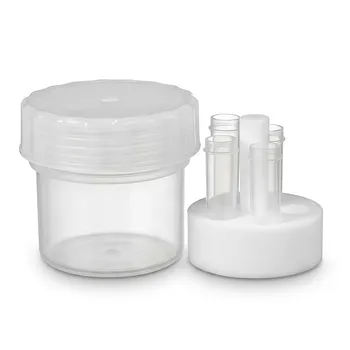
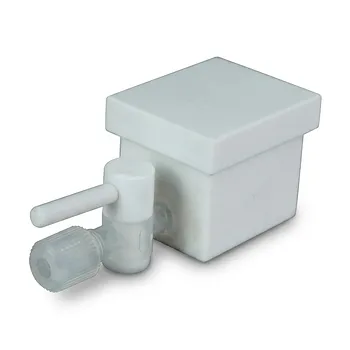
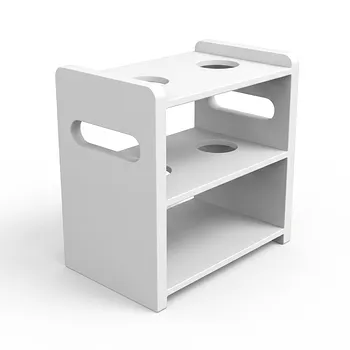
- Corrosion Resistant PTFE Support with PFA Transparent Reaction Tank and High Purity PFA Sampling Tube for Trace Analysis
- PFA Reaction Jar Corrosion Resistant Wide Mouth PTFE Lab Bottle High Purity Chemical Vessel
People Also Ask
- What are the key steps for structural integrity in molded PTFE lab reaction vessels? Master fine powder processing.
- Why is a PTFE reaction vessel required for Ti3C2Tx MXene synthesis? Ensure Safe HF Etching & High Purity
- Why are fluoroplastic (PTFE) reaction vessels recommended for Methylene Blue (MB) adsorption kinetic experiments?
- Ion Activation Reaction Vessel Requirements: Why PTFE is Critical for Membrane Performance
- Why are high-purity PTFE or PFA reaction vessels recommended for the synthesis of PANI-TiC hybrid materials? - Guide