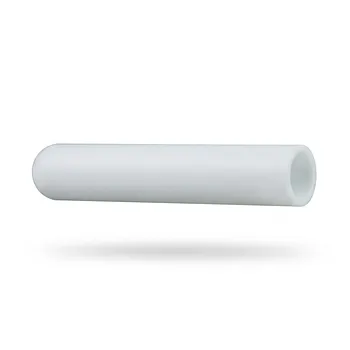
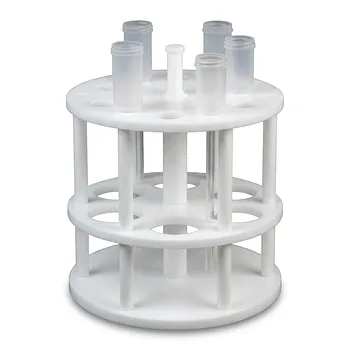
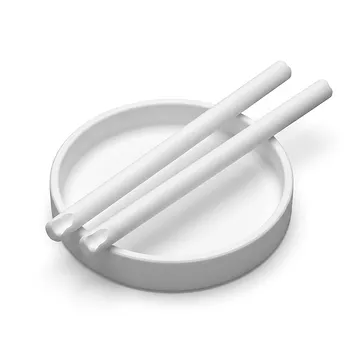
PTFE fluoropolymers improve trace analytical labware by reducing sample adhesion, droplet retention, and fluid friction. Their exceptionally low surface energy makes vessel walls difficult to wet, while their low coefficient of friction limits mechanical drag and residue retention. Together, these properties improve sample recovery, reduce cross-contamination, and make vessels, tubing, fittings, and valves easier to clean between analyses.
In trace analysis, even a small amount of analyte retained on a surface can distort results. PTFE’s low-energy, non-stick surface helps keep liquids, particles, and biological macromolecules moving with the sample rather than remaining on the equipment.
Why Low Surface Energy Matters in Trace Analysis
It reduces liquid wetting and droplet retention
PTFE has very low surface energy, so many liquids form relatively high-contact-angle droplets instead of spreading across the material. Less spreading means fewer droplets remain attached to vessel walls, tubing interiors, and fittings.
This is particularly valuable when working with small sample volumes, where a thin residual film can represent a meaningful fraction of the total sample.
It limits molecular and particle adhesion
Low surface energy reduces intermolecular attraction between the fluoropolymer surface and the sample. As a result, dissolved compounds, micro-particles, and biological macromolecules are less likely to adsorb onto the material.
This helps prevent analyte loss during sample preparation, storage, digestion, and transfer.
It supports more representative measurements
In ultra-trace work, surface retention can create two problems: the current sample may be depleted, and a later sample may be exposed to residue from the previous one. PTFE’s anti-adhesive behavior helps preserve the intended sample composition and improve measurement consistency.
How Non-Stick Behavior Improves Labware
It increases sample recovery
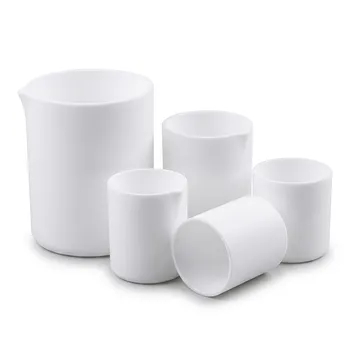
PTFE beakers, digestion vessels, and related labware allow more of the sample to be recovered during pouring, rinsing, pipetting, or transfer. Less material remains on the walls or base of the vessel.
This is especially important after concentration or digestion steps, when the analyte may be present at very low levels.
It reduces cross-contamination
Residue retention is a major contamination pathway in reusable analytical equipment. Because PTFE resists wetting and adhesion, fewer traces of one sample remain available to contaminate the next sample.
However, non-stick behavior reduces contamination risk; it does not replace validated cleaning, blank controls, or appropriate handling procedures.
It simplifies cleaning
A low-adhesion surface generally requires less aggressive mechanical action to remove residues. Rinsing and established laboratory cleaning procedures can more readily displace remaining droplets and films.
This reduces cleaning effort while also lowering the likelihood that scrubbing will damage the surface or introduce particles.
Benefits for Liquid Handling and Fluid Transfer
It reduces fluid drag inside tubing
PTFE has an extremely low coefficient of friction and strong inherent lubricity. In tubing, fittings, and valves, this supports smoother movement of liquids and reduces resistance at the fluid–surface interface.
Lower drag can help minimize residual hold-up and improve repeatability during transfers, particularly when the system contains small internal volumes.
It improves transfer completeness
A low-adhesion tube wall is less likely to retain droplets or films as liquid passes through. This helps maximize delivered volume and reduces the amount of analyte left behind in tubing, connectors, and valve passages.
The practical result is better material balance across the complete fluid path, not merely inside the primary vessel.
It reduces wear in moving components
The low-friction character of PTFE can reduce mechanical resistance in valves, fittings, and other components where surfaces move or contact one another. This supports smooth operation and can reduce surface wear during repeated use.
The exact durability still depends on pressure, temperature, chemical exposure, mechanical design, and the specific fluoropolymer grade.
Why These Effects Matter More at Trace Levels
Small residues can become large errors
At high concentrations, a small retained quantity may have little effect on the reported result. At trace or ultra-trace levels, the same residue can materially change recovery, precision, or apparent background.
PTFE helps by reducing the number of locations where the analyte can be lost or subsequently released.
Surface history becomes less disruptive
Repeated analytical workflows can create a difficult sequence: one sample leaves residue, the next sample collects it, and cleaning becomes progressively more demanding. PTFE’s low-adhesion surface reduces this accumulation tendency.
This is useful in sample preparation systems that handle multiple batches or chemically demanding reagents.
It protects the integrity of the fluid path
In a trace workflow, the vessel, tubing, valve, and fitting are all part of the analytical system. A low-energy PTFE surface helps maintain cleaner internal pathways and reduces the chance that the equipment itself becomes a source of carryover.
Understanding the Trade-offs
Non-wetting can make some liquids harder to dispense
A surface that resists wetting may also cause droplets to bead rather than spread. Depending on the liquid, geometry, and dispensing method, this can require controlled rinsing, slower transfer, or procedural validation to achieve complete delivery.
Non-stick behavior should therefore be evaluated as part of the entire handling method, not treated as a guarantee of zero residual volume.
PTFE does not eliminate all contamination
Particles, strongly adsorbing species, precipitates, and residues trapped in fittings or dead legs may still remain. Cleaning chemistry, flow design, temperature, and the condition of the equipment continue to determine actual contamination performance.
Routine blanks, recovery studies, and carryover testing remain necessary for validated trace analysis.
Surface properties do not replace material compatibility checks
PTFE offers broad chemical resistance and low solubility in many organic solvents and hydrocarbons, but the complete assembly may contain seals, adhesives, or other materials with different behavior. Temperature, pressure, permeation, and mechanical requirements must be assessed for the finished component.
Smooth surfaces are not automatically superhydrophobic
PTFE is inherently hydrophobic and non-stick, but extremely high contact angles—such as those associated with superhydrophobic surfaces—typically depend on additional surface texture or engineering. The practical benefit in labware comes primarily from low surface energy, low adhesion, and low friction.
How to Apply This to Your Project
The best implementation depends on whether the priority is recovery, cleanliness, transfer precision, or operating reliability.
- If your primary focus is maximum analyte recovery: Use PTFE labware and fluid-path components to reduce droplet retention and surface adsorption, then validate recovery with representative samples and rinse steps.
- If your primary focus is minimizing cross-contamination: Select low-adhesion PTFE surfaces and combine them with validated cleaning procedures, procedural blanks, and carryover testing.
- If your primary focus is precise liquid transfer: Evaluate PTFE tubing, fittings, and valves as a complete system, including dead volume, drainage, rinsing, and dispensing behavior.
- If your primary focus is easier cleaning: Use the non-stick surface to reduce residue retention, while confirming that the cleaning method removes the specific chemicals, particles, or biological materials in your workflow.
PTFE’s low surface energy and low friction turn the material surface from a source of sample loss into a more chemically inert, easier-to-control part of the analytical process.
Summary Table:
| Property | Benefit | Application |
|---|---|---|
| Low surface energy | Reduces wetting, droplet retention, and molecular adhesion | Vessels, tubing, fittings |
| Non-stick behavior | Increases sample recovery, reduces cross-contamination, simplifies cleaning | Beakers, digestion vessels, labware |
| Low coefficient of friction | Reduces fluid drag, improves transfer completeness, reduces wear | Tubing, valves, moving parts |
| Trace-level relevance | Minimizes errors from small residues, reduces carryover | Ultra-trace analysis |
Enhance your trace analysis with high-performance PTFE/PFA labware and custom components from KINTEK. Our exclusive focus on fluoropolymers ensures precise, low-adhesion surfaces for maximum sample recovery and minimal contamination. Whether you need standard beakers, custom electrochemical cells, or high-volume machined parts, our end-to-end CNC capabilities deliver exactly what you need. Don't let surface retention compromise your results—contact us today to discuss your requirements and experience the KINTEK advantage.
Related Products
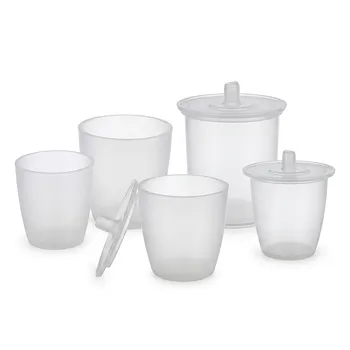
- High Purity PFA Crucible and Corrosion Resistant PTFE Beaker for Trace Analysis and Custom Laboratory Applications
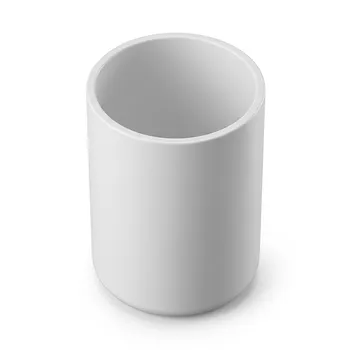
- High Temperature Resistant Thickened PTFE Beaker 2000ml for Chemical Processing and Laboratory Trace Analysis
- Heat Resistant Custom PTFE Laboratory Beaker for Hot Plate Heating and Trace Analysis
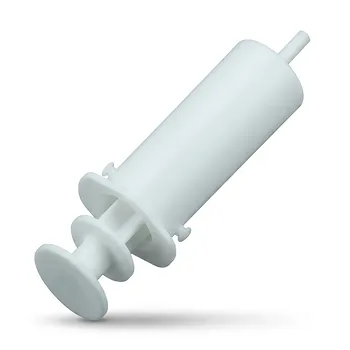
- High Purity Laboratory Grade PTFE Syringe Chemical Resistant Fluoropolymer Injector for Trace Analysis
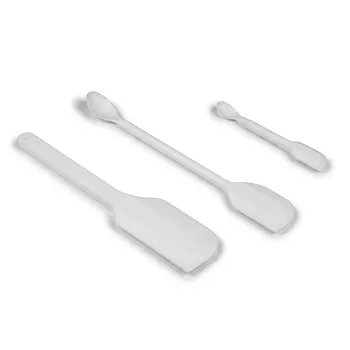
- Custom PTFE Scraper Shovel and Sampling Spoon Dual Use Corrosion Resistant Low Background White Fluoropolymer Tool
People Also Ask
- Why are high-purity vessels critical for BiFeO3 synthesis? Ensuring Phase Purity
- Why is the use of high-purity PFA or PTFE labware critical during TiO2 nanoparticle purification? Protect Sample Purity
- Why is high-purity PFA labware necessary for Znx@LS-2 zeolite ICP-OES analysis? Ensure Trace-Level Precision
- Why is high-purity PFA trace analysis labware used for MXene? Ensure Superior Material Integrity in Research
- What key material characteristics make PTFE and PFA suitable for high-purity laboratory labware, trace analysis containers, and medical microporous tubing? Discover the essential properties that ensure purity.