Alternating fluoro-copolymers achieve performance through division of labor between their monomer units. Fluorinated units provide chemical inertness, thermal and weathering resistance, low surface energy, and hydrophobic or oleophobic behavior. Non-fluorinated functional units, such as vinyl ethers, add processability, solvent solubility, flexibility, adhesion, and opportunities for cross-linking. The alternating structure combines these contrasting contributions into a material that is resistant in service but still workable and mechanically adaptable.
The fluorinated segments provide protection and durability, while the non-fluorinated segments provide processability and functional integration. Alternation is important because it distributes these roles throughout the polymer chain and helps protect the more vulnerable non-fluorinated units.
How Fluorinated Units Establish Durability
Chemical and Thermal Resistance
The strong carbon-fluorine bond gives fluorinated monomer units exceptional resistance to chemical attack and thermal degradation. As their proportion increases, the polymer generally becomes more resistant to aggressive organic and inorganic reagents, heat, weathering, and flame exposure.
Fluorinated units can substantially raise the thermal stability of an otherwise functionalized polymer backbone. In the referenced systems, fluorinated incorporation raises the temperature for significant weight loss well above that of unfluorinated vinyl ether materials, supporting reliable use across demanding temperature ranges.
Protection Against UV and Environmental Exposure
Fluorinated segments also help protect the polymer from ultraviolet radiation and oxidative degradation. In a well-ordered alternating sequence, fluoroethylene units flank adjacent non-fluorinated units and reduce their exposure to damaging light and chemical species.
This protection depends on sequence regularity. A highly alternating structure, associated in the reference with a high run number, can better preserve surface gloss, clarity, and integrity than a disordered structure.
Low-Energy Surface Behavior
Fluorinated units lower surface energy and reduce the coefficient of friction. This produces hydrophobic and oleophobic behavior, non-stick characteristics, and reduced adhesion of contaminants or process materials.
These properties are particularly valuable when the polymer is used as a coating or as a component exposed to aggressive fluids. They can also reduce sample or product retention on contact surfaces.
How Non-Fluorinated Units Add Functionality
Solubility and Processing
Non-fluorinated co-monomer segments, especially vinyl ethers, introduce functionality that fluorinated segments alone often lack. Their presence can improve solvent solubility, making the copolymer easier to formulate, apply, and process.
This is important for coatings and functional polymer systems that must be dissolved, deposited, or chemically modified before final use. A highly fluorinated material may offer greater inertness but be difficult to process in conventional solution-based operations.
Flexibility and Mechanical Compliance
Non-fluorinated units generally make the polymer backbone softer and more mechanically flexible. This allows coatings to accommodate movement, substrate expansion, and handling without behaving like a rigid, highly fluorinated solid.
The result is a practical balance: fluorinated segments resist the environment, while non-fluorinated segments help the material remain compliant rather than excessively brittle or difficult to manipulate.
Adhesion to Substrates
Functional non-fluorinated units can improve adhesion to substrates such as metals. This compensates for the naturally low surface energy of fluorinated materials, which otherwise tends to make strong bonding difficult.
For a coating, resistance is useful only if the coating remains attached. The non-fluorinated segments therefore provide an important link between the protective fluorinated chemistry and the underlying substrate.
Cross-Linking Versatility
Functional groups in the non-fluorinated segments can provide sites for cross-linking. Cross-linking can be used to tune the final network structure, helping control durability, solvent resistance, mechanical behavior, and adhesion.
This gives formulators a way to adjust performance without simply increasing the fluorine content. The polymer can be designed around the specific balance required by the application.
Why Alternation Matters
Distributed Protection Along the Chain
Alternating copolymerization places fluorinated and non-fluorinated units in a controlled sequence rather than allowing long, unprotected runs of one type. This distributes chemical resistance and functional behavior throughout the backbone.
The fluorinated units can shield neighboring vulnerable units, while the functional units remain available to support solubility, adhesion, and cross-linking.
Balance Between Inertness and Usability
A polymer made predominantly from highly fluorinated units may maximize chemical and thermal resistance, but it can lose useful processability, adhesion, and mechanical softness. Alternating copolymers address this limitation by introducing functional segments without abandoning fluorine-based protection.
The architecture is therefore a compromise by design, rather than a dilution of performance. It aims to retain the critical benefits of fluorination while making the material practical to apply and integrate.
Sequence Control Affects Service Life
The quality of alternation influences how effectively the polymer protects its non-fluorinated segments. Disordered sequences can leave longer vulnerable regions exposed, increasing the risk of micro-cracking, surface roughness, and loss of gloss or clarity during environmental exposure.
Monomer reactivity and polymerization conditions therefore affect more than composition. They also affect the distribution of protective units and, consequently, long-term durability.
Understanding the Trade-offs
More Fluorine Is Not Always the Complete Solution
Increasing fluorine content generally improves chemical resistance, thermal stability, melting point, weathering resistance, flame resistance, and low-friction behavior. However, it can also reduce certain mechanical strength parameters and make processing or adhesion more challenging.
The highest fluorine content is appropriate when maximum inertness and high-temperature endurance dominate the requirements. It is not automatically the best choice when flexibility, coating adhesion, or solution processing is equally important.
Functional Segments Can Reduce Environmental Resistance
Non-fluorinated units add valuable functionality, but they are typically more vulnerable to heat, ultraviolet exposure, and chemical attack than fluorinated units. Excessive or poorly distributed non-fluorinated content can weaken the protective character of the material.
The issue is not simply the amount of non-fluorinated monomer. Its sequence placement and protection by neighboring fluorinated units also matter.
Poor Alternation Can Create Weak Regions
A nominally fluorinated copolymer does not necessarily provide uniform protection if its monomer sequence is irregular. Long runs of non-fluorinated units may become preferential sites for degradation.
Material evaluation should therefore consider sequence regularity, not only total fluorine content or the identity of the monomers.
Thermal Ratings Require Application-Specific Validation
Thermal degradation temperatures describe material behavior under defined testing conditions; they are not universal operating limits. Actual service performance also depends on atmosphere, exposure time, mechanical load, chemical contact, film thickness, and the presence of cross-linking or other formulation components.
Operating windows should therefore be established using data relevant to the complete formulation and service environment.
How to Apply This to Your Project
The right composition depends on which performance constraint is most important.
- If your primary focus is maximum chemical and thermal resistance: Favor a higher fluorinated-unit contribution, accepting that processing flexibility, adhesion, and some mechanical properties may become more difficult to optimize.
- If your primary focus is solution processing and coating application: Retain sufficient functional non-fluorinated content to provide solvent solubility and formulation control.
- If your primary focus is flexibility and substrate adhesion: Use functional co-monomer segments to improve softness and bonding, while maintaining enough fluorinated content to protect the coating in service.
- If your primary focus is long-term outdoor or UV durability: Prioritize a well-controlled alternating sequence so fluorinated units effectively protect adjacent non-fluorinated segments.
- If your primary focus is cross-linked network performance: Select non-fluorinated units with suitable functional groups and balance their concentration against the required fluorochemical resistance.
The most effective alternating fluoro-copolymer is not the one with the most fluorine, but the one whose fluorinated protection and non-fluorinated functionality are proportioned and sequenced for the intended service conditions.
Summary Table:
| Monomer Type | Key Contributions | Trade-offs |
|---|---|---|
| Fluorinated | Chemical & thermal resistance, UV protection, low surface energy | Reduced processability, adhesion, flexibility if excessive |
| Non-fluorinated | Solubility, flexibility, adhesion, cross-linking sites | More vulnerable to degradation, can weaken protective properties if poorly distributed |
| Alternating Sequence | Distributes protection, balances inertness and usability | Requires careful polymerization control for optimal performance |
Optimize your fluoro-copolymer formulations with high-performance PTFE and PFA lab supplies from KINTEK. Our expertise in fluoropolymers and custom CNC machining can help you achieve the perfect balance of durability and processability. Contact us today to discuss your requirements and discover how we can support your material development needs — Get in touch with our specialists!
Related Products
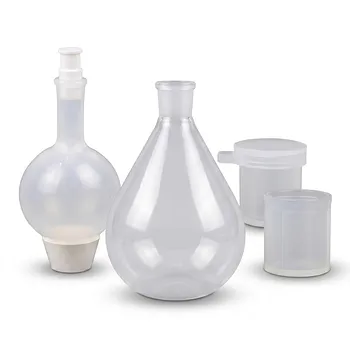
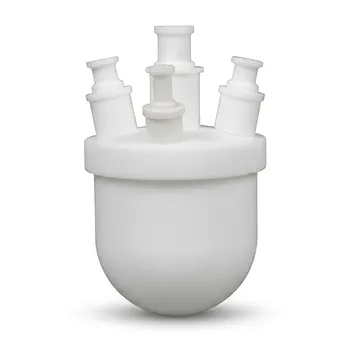
- PFA Eggplant Flask Custom Molded Pear Shaped Laboratory Flask Corrosion Resistant Glass Alternative
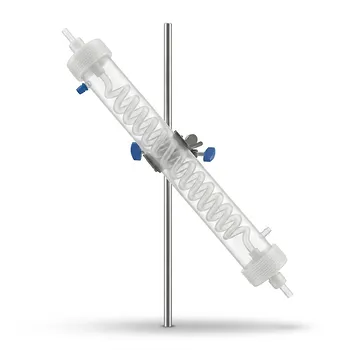
- High Purity PFA Chromatography Column with Collection Bottle Corrosion Resistant Fluoropolymer Filtration System for Trace Analysis
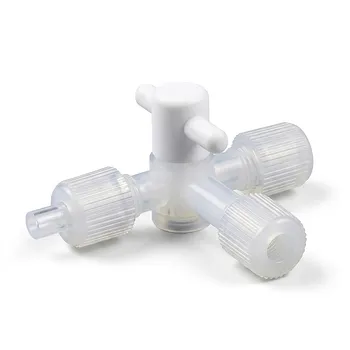
- High Purity PFA PTFE Flare Stop Valves Customizable 2-Way 3-Way Reducing Fluoropolymer Fluid Control Solutions
- High Purity PFA Chromatography Columns and Collection Bottles Corrosion Resistant Fluoropolymer Filtration Systems for Trace Analysis
- High Purity PFA Chromatography Column Double Layer Constant Pressure Filter Column with Sieve Plate Acid Resistant Fluoropolymer Filtration System
People Also Ask
- Why is the chemical stability of polymer endgroups critical when selecting melt-processible fluoropolymers like PFA for high-purity laboratory apparatus? Choose Stable Endgroups for Reliable Performance
- Why is PFA often selected over traditional PTFE for manufacturing complex fluoropolymer fluid components, custom fittings, and sealed laboratory digestion vessels? Discover the key advantages for your lab.
- What are the characteristics of PFA material? A Guide to Its High-Performance Balance
- What are the key properties of PFA (PerFluoroAlkoxy)? A Guide to Extreme Chemical and Thermal Resistance
- Why is perfluoroalkoxy polymer (PFA) often selected over PTFE and FEP for complex molded lab apparatus?