Chemical structure determines how a PFPE moves, while glass transition temperature (Tg) indicates how well it retains that mobility at low temperature. Linear PFPEs with more ether-oxygen linkages generally have greater backbone flexibility and very low Tg values, potentially near −130 °C, allowing smooth lubrication and seal movement in cryogenic service. Branched PFPEs containing pendant –CF₃ groups restrict rotation, producing higher Tg values—approximately −82 °C in the reference case—and greater resistance to physical change under severe thermal or oxidative exposure.
The practical rule is simple: choose a low-Tg, flexible PFPE when sub-zero mobility and low friction are the primary concerns; choose a more structurally constrained, chemically inert PFPE when dimensional stability and resistance to harsh thermal or oxidative conditions are more important.
Why PFPE Structure Matters in Fluoropolymer Components
Ether linkages increase backbone flexibility
PFPEs contain repeating perfluorinated ether units. The ethereal oxygen atoms provide rotational mobility within the chain, allowing the fluid molecules to move more readily under load and at low temperature.
This flexibility supports low friction in components such as PTFE and PFA valves, pump assemblies, seals, and actuators. It also helps the lubricant continue to redistribute across contact surfaces rather than becoming excessively resistant to movement.
Linear chains generally promote low-temperature flow
A more linear PFPE structure usually has fewer steric obstacles to molecular rotation. When the backbone contains a higher proportion of flexible ether linkages, the fluid can exhibit a very low Tg.
This is valuable in cryogenic or sub-zero operation because the PFPE remains mobile over a wider temperature range. The result can be lower actuation force, reduced startup friction, and better seal compliance.
Branched structures restrict molecular rotation
PFPEs containing bulky pendant trifluoromethyl groups have greater rotational barriers. These groups occupy more space around the backbone and make molecular rearrangement more difficult.
That structural constraint tends to raise Tg and improve resistance to physical deformation or mobility loss under demanding conditions. However, it also means the fluid may become less mobile sooner as temperature falls.
What Tg Means for Valve and Seal Performance
Tg defines the low-temperature mobility limit
Glass transition temperature is not a melting point. It describes the temperature range where an amorphous material changes from a relatively mobile, compliant state to a more rigid, glass-like state.
For a PFPE lubricant, operation well above its Tg generally preserves fluid mobility. As the operating temperature approaches Tg, viscosity and resistance to molecular motion can rise sharply, potentially affecting valve actuation and lubricant distribution.
Low Tg supports smooth cryogenic operation
A PFPE with Tg near −130 °C provides a larger low-temperature operating margin than one with Tg near −82 °C. At a given cryogenic temperature, the lower-Tg fluid is more likely to remain sufficiently mobile.
In fluoropolymer valve assemblies, this can help maintain:
- Smooth stem or actuator movement
- Lower friction at seal interfaces
- Reduced risk of lubricant stiffening
- More consistent sealing during thermal cycling
Tg also affects seal compliance indirectly
PTFE and PFA components provide chemical resistance and thermal durability, but the complete assembly still depends on the lubricant and seal interface remaining mechanically functional.
A PFPE that becomes too viscous or glass-like can increase friction and interfere with the ability of a seal to accommodate small dimensional changes. Tg therefore influences not only lubrication, but also the practical reliability of the seal system at low temperature.
Why Chemical Inertness Is Equally Important
Fully fluorinated backbones resist aggressive chemistry
The strong carbon–fluorine bonds in PFPEs contribute to chemical inertness, low surface energy, and resistance to many aggressive reagents. This makes fully fluorinated PFPEs suitable for contact with high-purity PTFE and PFA fluid-handling components.
The lubricant should not readily react with, dissolve, swell, or contaminate the surrounding fluoropolymer components or process fluid.
Terminal groups can change compatibility
PFPE behavior is determined not only by the backbone. Terminal end-groups also matter.
PFPEs terminated with non-reactive –CF₃ groups are generally preferred when the application requires minimal chemical interaction, low contamination risk, and high purity. Functional end-groups such as hydroxyl, carboxyl, or alkoxysilane groups can increase intermolecular forces and surface adsorption, which may be useful for coatings but less desirable in chemically sensitive fluid-transfer systems.
Chemical stability supports long service life
A chemically inert PFPE helps preserve lubricant performance during exposure to aggressive reagents and elevated temperatures. This reduces the risk of degradation products, extractables, or lubricant-derived contamination entering the transferred fluid.
The combination of a stable PFPE and chemically resistant PTFE or PFA provides a compatible material system rather than relying on the fluoropolymer component alone.
Matching PFPE Structure to the Temperature Environment
Cryogenic service favors the lowest practical Tg
For very low-temperature operation, prioritize:
- Linear backbone architecture
- High ether-linkage flexibility
- Very low Tg
- Adequate viscosity at the actual operating temperature
- Compatibility with the process chemistry and fluoropolymer materials
The objective is to preserve fluid movement and avoid excessive friction or delayed valve response.
Severe thermal or oxidative exposure favors structural stability
When the primary concern is physical stability during harsh thermal or oxidative conditions, a more constrained or branched structure may be advantageous. Higher rotation barriers can reduce molecular rearrangement and support better physical stability.
However, this does not mean that a higher Tg fluid is automatically better at high temperature. Tg primarily describes low-temperature mechanical behavior; high-temperature suitability also depends on decomposition resistance, volatility, molecular weight distribution, and end-group chemistry.
Thermal cycling requires a balanced choice
Components that repeatedly move between ambient, hot, and cryogenic conditions need more than the lowest possible Tg. The PFPE must maintain acceptable viscosity, remain chemically stable, and continue wetting the relevant contact surfaces throughout the cycle.
A fluid selected solely for its cryogenic Tg may be unsuitable if it has excessive volatility, poor load-carrying behavior, or inadequate stability at the upper operating temperature.
Understanding the Trade-offs
Lower Tg does not guarantee universal superiority
A lower Tg improves low-temperature mobility, but it does not by itself establish the best overall lubricant. Other properties—including viscosity, volatility, molecular weight distribution, load behavior, and terminal-group chemistry—can determine whether the fluid performs well in a specific valve or seal design.
Tg should therefore be treated as a temperature-margin indicator, not as a complete lubricant-selection criterion.
Higher Tg can reduce cryogenic margin
A branched PFPE with Tg near −82 °C may perform well above that range while offering useful physical stability. But if the system approaches or falls below that temperature, the fluid may lose mobility sooner than a linear PFPE with Tg near −130 °C.
This can produce higher actuation torque, slower lubricant redistribution, or less favorable seal response.
“Fluoropolymer-compatible” does not mean contamination-free by default
PTFE and PFA are highly resistant to chemicals, but the lubricant formulation still needs evaluation. Functionalized PFPEs, impurities, and low-molecular-weight fractions can affect extractables, adsorption, or trace contamination.
For high-purity transfer, select a fully fluorinated, non-reactive PFPE and verify the complete lubricant–component–fluid system rather than relying only on the base polymer name.
Tg is not the same as the component’s service limit
The operating limit of a PTFE or PFA valve is determined by the component’s mechanical design, pressure, thermal cycling, seal geometry, and material properties. The PFPE’s Tg addresses lubricant mobility, not the maximum continuous temperature of the valve body.
High-temperature selection must therefore consider both the fluoropolymer component rating and the PFPE’s thermal and oxidative stability.
Making the Right Choice for Your Goal
Use the actual minimum and maximum temperatures, pressure, motion profile, purity requirements, and process chemistry to select the PFPE rather than choosing by Tg alone.
- If your primary focus is cryogenic mobility: Choose a flexible, predominantly linear PFPE with the lowest suitable Tg to minimize friction, preserve lubricant flow, and support reliable seal actuation.
- If your primary focus is thermal or oxidative stability: Consider a more structurally constrained or branched PFPE, while confirming that its Tg remains sufficiently below the minimum operating temperature.
- If your primary focus is chemical purity: Prefer a fully fluorinated PFPE with non-reactive terminal groups, especially when the fluid contacts high-purity PTFE or PFA assemblies.
- If your primary focus is wide-range thermal cycling: Balance low Tg with viscosity, volatility, molecular weight distribution, end-group chemistry, and demonstrated compatibility across the complete temperature range.
The most reliable PFPE selection is the one that preserves molecular mobility at the cold end, chemical stability at the hot end, and purity throughout the entire fluoropolymer fluid-handling system.
Summary Table:
| PFPE Structure | Tg Range | Key Characteristics | Best For |
|---|---|---|---|
| Linear, high ether content | Near -130°C | Flexible, low friction, maintains mobility at cryogenic temperatures | Sub-zero operation, low friction, smooth actuation |
| Branched with -CF3 pendant groups | ~-82°C | Rigid, chemically inert, resists deformation under thermal/oxidative stress | High-temperature, harsh chemical exposure, stability |
Looking for high-performance PFPE-compatible fluoropolymer components? KINTEK's PTFE and PFA lab supplies are designed to work seamlessly with your chosen PFPE lubricant, ensuring optimal performance in the most demanding temperatures. Contact our experts today to find the perfect solution for your application. Contact us now.
Related Products
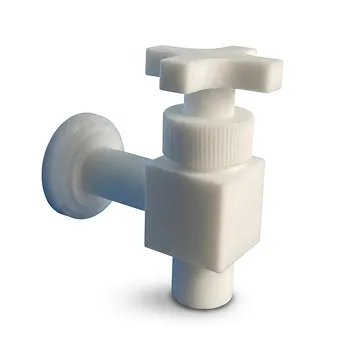
- Corrosion Resistant PTFE Polytetrafluoroethylene Valve and Customizable Laboratory Fluid Dispensing Faucet for Aggressive Chemical Handling in Industrial Storage Tanks and Plastic Drums
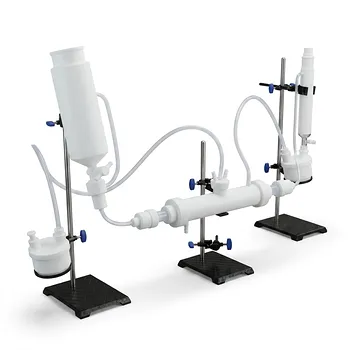
- Custom Polytetrafluoroethylene PTFE Constant Pressure Dropping Funnel Corrosion Resistant Fluid Control Assembly with Conversion Stopper Compatibility
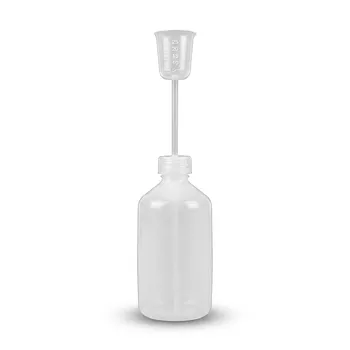
- Corrosion Resistant PFA Bottle Top Dispenser Translucent Squeeze Liquid Extraction System for Ultra Pure Chemical Handling
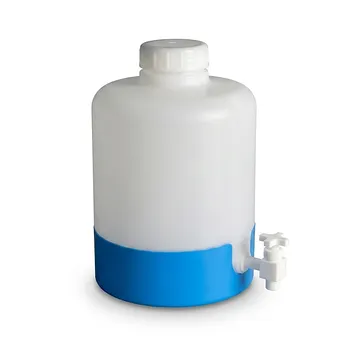
- High Corrosion Resistant PTFE Faucet Polytetrafluoroethylene Valve for Chemical Storage Drums and Fluid Transfer Systems Customizable Industrial Grade
- Custom PTFE Valve 2-Way 3-Way Corrosion Resistant Low Background Virgin Fluoropolymer Industrial Fluid Control
People Also Ask
- How do PTFE valves and components support high-purity liquid transfer? Ensure Product Integrity with Inert Materials
- What industries commonly use PTFE valves and components? Essential for Chemical & Purity Applications
- What specific advantages do PTFE valves offer? Unmatched Corrosion Resistance for Industrial Chemical Handling
- What are the key properties of PTFE valves? Ensure Purity, Safety, and Reliability in Demanding Processes
- What is the typical operating temperature and pressure range for PTFE valves? Key Specs for Optimal Performance