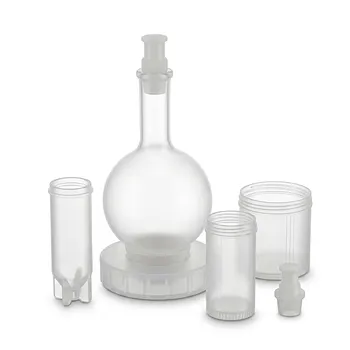
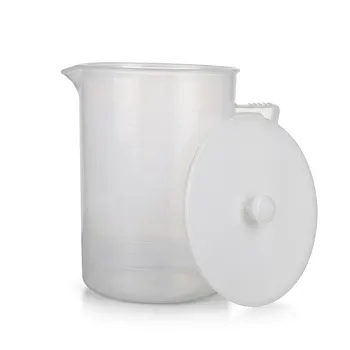
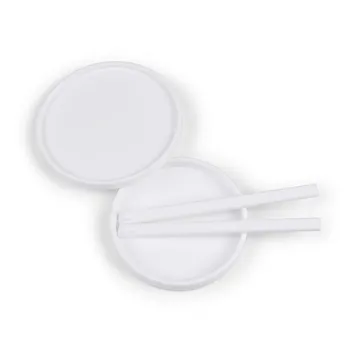
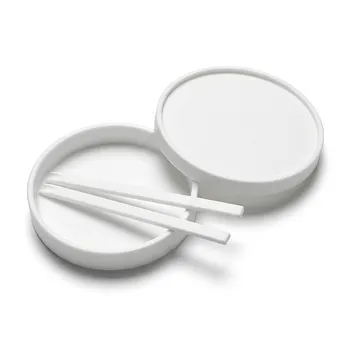
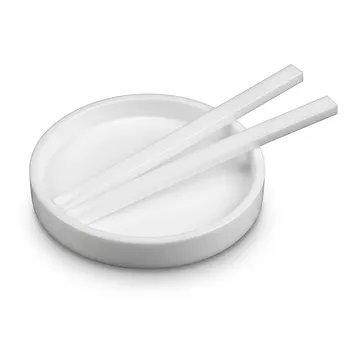
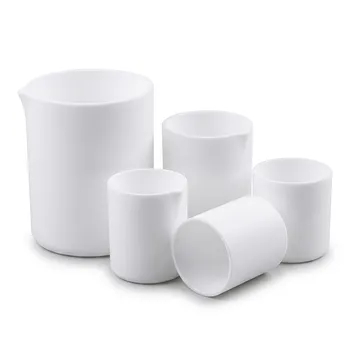
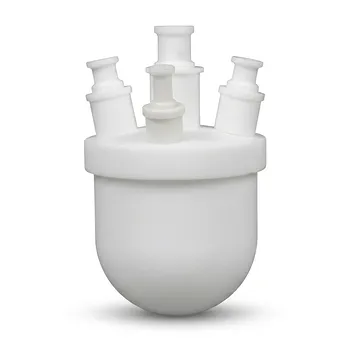
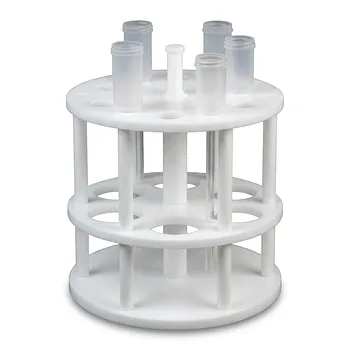
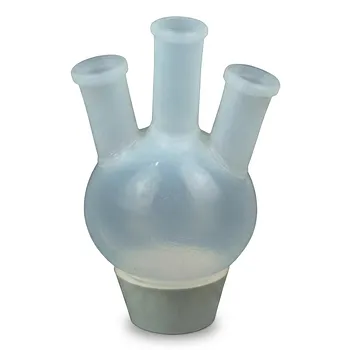
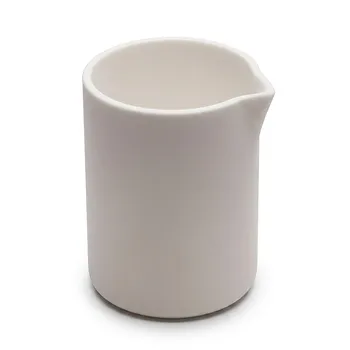
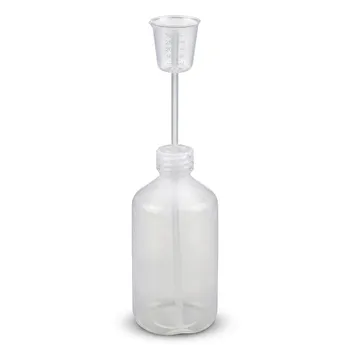
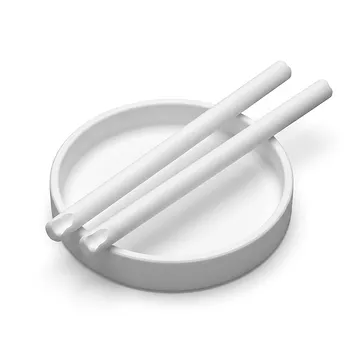
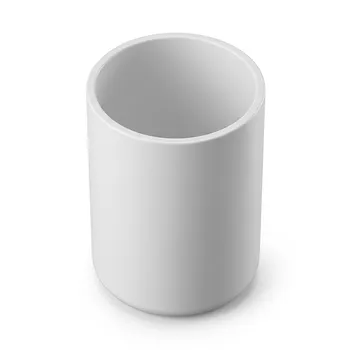
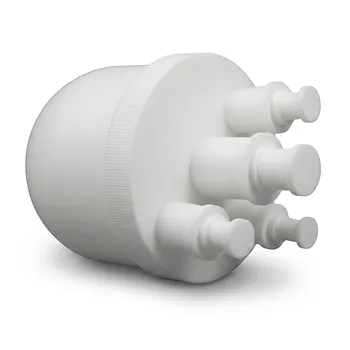
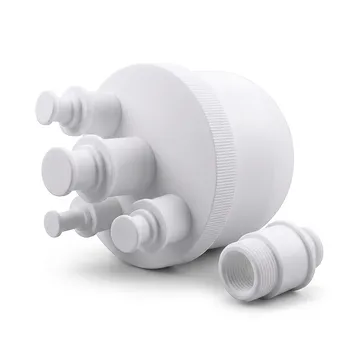
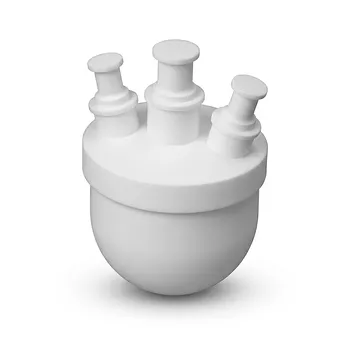
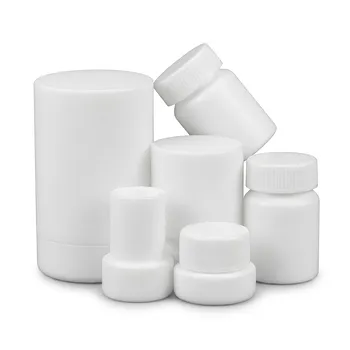
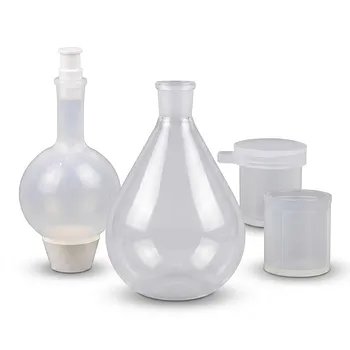
Chain architecture and swelling directly influence electrode durability, impedance, and rate capability. PVDF generally offers strong mechanical binding with limited solvent uptake, PVDF-HFP introduces greater amorphous character and swelling for improved flexibility and ion access, while PVDF-TrFE provides a more polar, structurally distinctive chain whose crystallinity and electroactive behavior can alter binder–electrolyte interactions. High-purity PTFE and PFA labware is essential during slurry preparation because it minimizes metal, moisture, and organic contamination while resisting aggressive solvents such as NMP.
The best binder is not simply the one with the highest adhesion. Its molecular weight, polarity, crystallinity, and fluorine-containing chain structure must provide the right balance of cohesion, electrolyte compatibility, swelling, and ionic resistance. Clean fluoropolymer labware preserves that balance during formulation and characterization.
How Binder Chain Structure Affects Electrode Performance
PVDF: Strong cohesion with relatively controlled swelling
PVDF contains a fluorinated carbon backbone that provides chemical resistance, mechanical strength, and reliable adhesion between active particles, conductive carbon, and the current collector.
Its comparatively crystalline structure generally limits solvent and electrolyte uptake. This helps preserve electrode dimensions and mechanical integrity, but excessive crystallinity or insufficient swelling can reduce binder flexibility and limit ionic access through binder-rich regions.
PVDF-HFP: More flexible and swellable
PVDF-HFP incorporates hexafluoropropylene units that disrupt regular PVDF crystallization and increase the amorphous fraction. The resulting chain is typically more flexible and more receptive to organic solvents and electrolyte components than conventional PVDF.
Greater swelling can improve contact between electrolyte and electrochemically active surfaces. It may also reduce local ionic resistance, which is valuable at high discharge rates.
PVDF-TrFE: Polarity and phase behavior matter
PVDF-TrFE modifies the PVDF chain with trifluoroethylene units, changing its polarity, dipole arrangement, crystallinity, and electroactive phase behavior. These characteristics can affect adhesion, dielectric response, electrolyte interactions, and the mechanical response of the binder film.
Its performance cannot be predicted from fluorine content alone. The copolymer composition, molecular weight, processing history, and resulting crystalline or polar phase determine whether it provides the desired balance of swelling and structural stability.
Why Swelling Matters in a Lithium-Ion Electrode
Swelling can improve electrolyte contact
A binder that absorbs a controlled amount of solvent or electrolyte can become more compliant and better conform to active-material and conductive-additive surfaces. This can improve wetting and reduce barriers to lithium-ion movement through binder-containing regions.
The benefit is greatest when swelling remains controlled rather than causing the binder to lose cohesion.
Excessive swelling can damage electrode structure
Over-swelling can soften the binder, weaken particle-to-particle contacts, and increase electrode expansion during cycling. It can also alter pore structure, reduce electronic contact between conductive additives, and promote delamination from the current collector.
Therefore, higher swelling is not automatically better. The target is sufficient uptake for ionic access without sacrificing mechanical integrity.
Molecular weight controls cohesion and processing
Higher molecular weight generally increases chain entanglement and mechanical strength, which can improve particle binding and resistance to cracking. However, it also tends to increase slurry viscosity and may complicate dissolution, mixing, coating, and uniform distribution.
Lower molecular weight can improve processability but may provide weaker cohesion or less durable particle bridging. Molecular weight must therefore be evaluated together with binder concentration and solids loading.
How These Effects Influence Rate Capability
Conductivity alone does not determine performance
Two cathodes can have similar active-material morphology and electronic conductivity yet exhibit different rate performance because their binders interact differently with the electrolyte and particle network.
Binder swelling, polarity, distribution, and mechanical response can change local ionic resistance and the stability of conductive pathways.
A balanced binder network reduces impedance growth
A well-designed binder network maintains contact among active particles and conductive additives while allowing electrolyte penetration. This helps limit impedance increases during repeated cycling and high-rate discharge.
Poorly distributed or excessively swollen binder can isolate active material, obstruct pores, or create mechanically weak regions that increase resistance over time.
Fluorine content is only one design variable
Fluorine contributes to chemical stability and affects chain polarity, but the number of fluorine atoms does not independently determine battery performance. Chain regularity, copolymer composition, molecular weight, crystallinity, and solvent compatibility are equally important.
The practical question is how the complete polymer architecture behaves in the actual slurry solvent and electrolyte—not how the polymer looks from its elemental composition alone.
Why High-Purity Fluoropolymer Labware Is Essential
It prevents trace contamination
Slurries and electrolyte-containing systems can be sensitive to trace metals, moisture, and organic residues. Contamination from vessels, stirrers, or storage bottles can change slurry rheology, binder behavior, interfacial reactions, and electrochemical results.
High-purity PTFE and PFA components have very low leaching and are effective barriers against container-derived contamination when properly cleaned and handled.
It resists NMP and other aggressive chemicals
PVDF-based cathode slurries commonly use N-methyl-2-pyrrolidone, or NMP, which can attack or extract impurities from unsuitable plastics, coatings, seals, or adhesives. PTFE and PFA provide strong chemical resistance for beakers, mixing vessels, reagent bottles, tubing, and related handling components.
Compatibility still depends on temperature, exposure time, mechanical stress, and the full assembly. Seals, stir bars, and fittings must be selected with the same care as the main vessel.
It protects accurate binder–electrolyte measurements
When studying swelling or binder–electrolyte interactions, even small amounts of contamination can be mistaken for a genuine polymer effect. Low-leaching fluoropolymer containers help ensure that observed changes in mass, viscosity, conductivity, or electrochemical response originate from the formulation rather than the equipment.
Their non-stick surfaces also reduce material retention, improving transfer accuracy and making cleaning more reproducible.
It supports moisture-sensitive battery research
Lithium salts and organic electrolytes are particularly sensitive to moisture and impurities. PTFE and PFA labware do not eliminate environmental moisture, but they reduce one important contamination pathway when the vessels are clean, dry, and used inside an appropriately controlled workflow.
This is especially important for low-temperature testing, where small changes in electrolyte purity or composition can produce large changes in ionic conductivity and cell behavior.
Understanding the Trade-offs
More swelling can mean less mechanical stability
PVDF-HFP-like increases in amorphous character and solvent uptake can improve flexibility and wetting, but excessive uptake may reduce modulus, promote creep, or weaken adhesion during cycling.
The optimum depends on electrode loading, particle size, porosity, electrolyte composition, and operating temperature.
Stronger binding can hinder processing
A high-molecular-weight or highly cohesive binder can improve electrode integrity while producing excessive slurry viscosity. Poor dispersion can then create binder-rich and binder-poor regions, undermining the benefit of the polymer itself.
Slurry rheology and coating uniformity should be measured alongside electrochemical performance.
Chemical resistance does not guarantee cleanliness
PTFE and PFA are chemically resistant, but laboratory contamination can still arise from prior use, inadequate cleaning, dust, moisture, metallic tools, or contaminated seals. High-purity labware must be integrated into a controlled cleaning, drying, and storage procedure.
Fluoropolymer labware has practical limitations
PTFE and PFA can be less mechanically rigid than glass or metal and may be vulnerable to scratching, deformation, or contamination embedded in damaged surfaces. They should be inspected regularly, and compatibility should be verified for unusual solvents, elevated temperatures, and pressurized operations.
How to Apply This to Your Project
The most reliable approach is to evaluate binder structure, swelling, slurry behavior, and labware cleanliness as one connected formulation problem.
- If your primary focus is high-rate discharge: Favor a binder architecture that provides controlled electrolyte uptake and low local ionic resistance without disrupting conductive contacts.
- If your primary focus is mechanical durability: Prioritize sufficient molecular weight, chain cohesion, and adhesion while limiting excessive swelling and electrode expansion.
- If your primary focus is slurry processing: Compare molecular weight and polymer crystallinity against viscosity, dissolution time, dispersion quality, and coating uniformity.
- If your primary focus is reliable binder–electrolyte characterization: Use clean, high-purity PTFE or PFA vessels and accessories to minimize trace metal, moisture, solvent, and organic contamination.
- If your primary focus is reproducible low-temperature testing: Control drying, storage, and handling as rigorously as labware selection, because moisture and trace impurities can strongly affect electrolyte transport.
A successful fluoropolymer binder system balances chain cohesion, controlled swelling, ionic access, and chemical purity rather than maximizing any single property.
Summary Table:
| Binder | Chain Structure | Swelling Behavior | Impact on Electrode Performance |
|---|---|---|---|
| PVDF | Crystalline, strong cohesion | Low to moderate uptake | Good mechanical integrity, limited ion access |
| PVDF-HFP | Amorphous, flexible | Higher uptake | Improved flexibility and wetting, but risk of over-swelling |
| PVDF-TrFE | Polar, electroactive | Variable | Enhanced polarity and dielectric response, but performance depends on composition |
Optimize your battery electrode formulations with high-purity PTFE/PFA labware from KINTEK. Our fluoropolymer products ensure minimal contamination and superior chemical resistance, helping you achieve reliable results in binder research and slurry preparation. From beakers to custom CNC-machined parts, we support your entire workflow. Contact us today to elevate your battery research: #ContactForm.
Related Products
- Custom PFA Pear Shaped Flask High Purity Corrosion Resistant Labware Custom Molded Fluoropolymer Flask Glass Replacement Solution
- High Purity PFA Beaker with Handle and Large Capacity Washable Soak Basket Multi Spec Teflon Laboratory Labware
- Custom PTFE Petri Dish 30mm Corrosion Resistant Low Background Non Leaching Laboratory Ware
- Custom Polytetrafluoroethylene PTFE Petri Dishes 60mm Corrosion Resistant Low Background Labware
- Custom PTFE Petri Dish 120mm Diameter Corrosion Resistant Low Background High Purity Labware
People Also Ask
- Why Use PFA Labware for MnFe2O4/rGO Precursors? Ensure Stoichiometric Precision and Purity
- Why is PFA labware recommended for CuBi2O4? Protect high-purity precursors and ensure semiconductor bandgap accuracy.
- How does PFA labware enhance the accuracy of ultra-trace element analysis? Achieving PPT Precision with Zero Leaching
- What are the primary properties of PFA for high-performance labware? Achieve ultra-trace purity & thermal stability.
- What role does PFA labware play in semiconductor manufacturing? Ensuring Ultra-Pure Yields and Zero Contamination