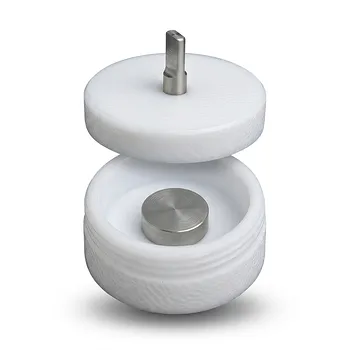
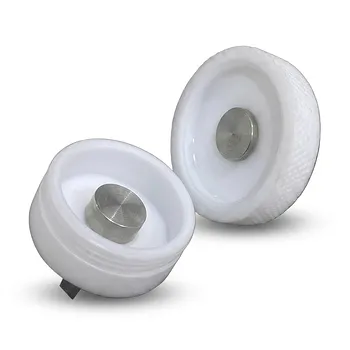
Specialized battery testing fixtures ensure experimental consistency by replacing manual setup variability with mechanical precision. These systems utilize optimized electrical connection structures and constant contact pressure to eliminate fluctuations in contact resistance. By providing a standardized physical environment, they ensure that charge and discharge data accurately reflect the intrinsic electrochemical properties of the material rather than the inconsistencies of the test apparatus.
Specialized fixtures transform battery testing from a variable manual process into a repeatable scientific standard by maintaining uniform physical, electrical, and chemical conditions across all testing batches.
Eliminating Physical Variability through Mechanical Precision
The Role of Constant Contact Pressure
Specialized fixtures apply uniform and constant contact pressure to the test samples through precisely designed mechanical clamping. This prevents the "human factor" variability where different researchers might tighten a cell to different degrees, leading to inconsistent results.
By maintaining a stable load, these fixtures minimize voltage drops and localized thermal effects that occur when contact is loose or uneven. This ensures that the collected signals represent the true energy storage characteristics of the material.
CNC Machining for Structural Fit
High-precision CNC machining allows for the creation of custom fixtures that provide a perfect fit for specific battery dimensions or electrode shapes. This tailored approach prevents electrode shifting during long-term testing, ensuring structural stability throughout hundreds of charge-discharge cycles.
Maximizing Signal Integrity and Reducing Ohmic Loss
Stabilizing Electrical Connection Channels
Specialized fixtures establish stable electrical signal transmission channels that are far superior to temporary "alligator clip" setups. These optimized paths significantly reduce contact resistance, which is a primary source of noise and error in high-precision experiments.
Reducing Ohmic Drop and Potential Distortion
Precise control over electrode spacing and internal geometry helps minimize the Ohmic drop (voltage loss) within the cell. This is critical for obtaining accurate cyclic voltammetry curves and charge-discharge data, as it ensures the measured potential is as close to the theoretical value as possible.
Chemical Resilience and Material Integrity
Utilizing Advanced Engineering Materials
Fixtures are often constructed from specialized materials like PTFE (Teflon) or high-grade stainless steel to provide superior electrical insulation and chemical resistance. These materials prevent the fixture itself from reacting with the electrolyte or introducing parasitic currents into the data.
Preventing Electrolyte Interference
In experiments involving corrosive electrolytes, specialized materials prevent chemical degradation of the testing hardware. This prevents metallic ions from the fixture from leaching into the electrolyte, which would otherwise cause chemical interference and ruin the repeatability of the test batch.
Standardizing the Electrochemical Environment
Precision Sealing and Environmental Isolation
High-precision hardware includes advanced sealing mechanisms that isolate the electrochemical reaction from external environmental fluctuations. This is essential for preventing the ingress of moisture or oxygen, which can lead to side reactions and inconsistent cycle life data.
Specialized Channels for Metal-Air Systems
For specific technologies like metal-air batteries, fixtures include integrated air or oxygen flow channels. These ensure that the air cathode receives a consistent and uniform flow, ensuring that oxygen reduction reactions occur evenly across the entire electrode surface.
Understanding the Trade-offs
Cost versus Precision
While specialized fixtures offer superior data quality, they require a higher initial capital investment and maintenance compared to generic setups. Researchers must weigh the need for "publication-grade" consistency against the budget constraints of early-stage exploratory research.
Flexibility versus Standardization
A fixture designed for a specific coin cell size offers the highest precision but lacks versatility. Using a specialized fixture often means committing to a specific form factor, which can limit a lab's ability to quickly pivot to new battery geometries without commissioning new hardware.
How to Apply This to Your Project
- If your primary focus is material characterization: Prioritize fixtures with gold-plated contacts and constant-pressure springs to minimize contact resistance.
- If your primary focus is long-term cycling: Choose fixtures made from chemically inert materials like PTFE to ensure the hardware does not degrade over months of testing.
- If your primary focus is high-current applications: Invest in fixtures with thick, optimized electrical busbars to prevent heat generation at the contact points.
By investing in specialized testing hardware, you move beyond observing "test setup behavior" and begin measuring the true performance of your electrochemical innovations.
Summary Table:
| Feature | Specialized Battery Fixtures | Generic/Manual Setup |
|---|---|---|
| Pressure Control | Constant, uniform mechanical load | Variable (manual tightening) |
| Electrical Path | Optimized low-resistance channels | High contact resistance/noise |
| Chemical Stability | High-performance PTFE/PFA materials | Risk of electrolyte corrosion |
| Structural Fit | Custom CNC-machined for exact dimensions | Potential for electrode shifting |
| Environment | Advanced sealing & gas flow channels | Exposure to moisture/oxygen |
Elevate Your Battery Research with KINTEK Precision Hardware
Stop measuring "setup variability" and start capturing the true intrinsic properties of your materials. KINTEK specializes in high-performance fluoropolymer materials, offering an exhaustive range of laboratory supplies designed for the most demanding electrochemical environments.
From specialized battery testing fixtures, electrode accessories, and electrochemical cells to high-purity PTFE and PFA labware (beakers, reagent bottles, and digestion tubes), we provide the precision tools you need for repeatable, publication-grade results.
Why choose KINTEK?
- Custom CNC Fabrication: We deliver everything from complex non-standard machined parts to high-volume bespoke laboratory setups.
- Material Excellence: Our absolute focus on PTFE, PFA, and other advanced polymers ensures superior chemical resilience and electrical insulation.
- Comprehensive Range: Whether you need simple stirring bars and O-rings or advanced microchannel reactors and hydrothermal synthesis liners, we have you covered.
Ready to standardize your experimental results? Contact our engineering team today to discuss your custom requirements or to browse our extensive catalog of high-performance labware.
References
- Wenrui Sun, Ying Li. Modification of Nickel–Cobalt–Manganese Cathode Material Prepared Using Hydrothermal Method under Pulsed High Magnetic Field. DOI: 10.1002/cnma.202500015
This article is also based on technical information from Kintek Knowledge Base .
Related Products
- Acid Resistant PTFE Button Cell Battery Test Fixture Customizable Machining High Purity Electrochemical Testing Clamp
- Corrosion Resistant PTFE Coin Cell Battery Testing Clamps and Acid Proof Custom Fluoropolymer Battery Fixtures
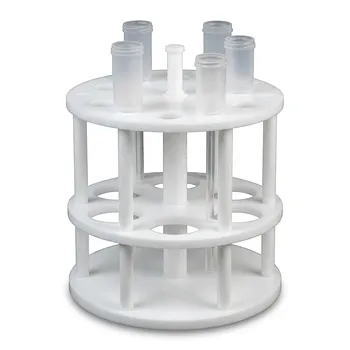
- Custom PFA Microcolumn Racks and PTFE Machined Low Background Corrosion Resistant Laboratory Fixtures
People Also Ask
- In what ways do PTFE battery testing fixtures enhance laboratory throughput and reliability? Maximize Research Efficiency
- How does the chemical inertness of PTFE benefit laboratory-scale battery testing? Ensure high-purity research results.
- Why are customized PTFE testing fixtures required for electrochemical testing and battery research? Boost Data Accuracy
- In what industrial manufacturing contexts are PTFE battery clamps or fixtures utilized? Optimize Battery Production.
- What is the thermal operating range for PTFE battery clamps in electrochemical research? Stability from -200°C to +260°C