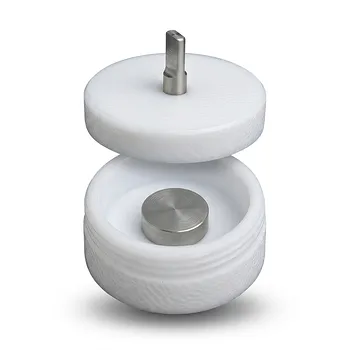
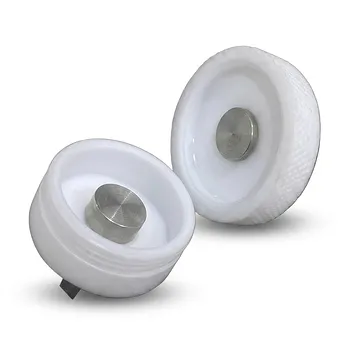
Professional battery testing fixtures facilitate the characterization of heterostructured MXenes by providing a controlled environment that ensures uniform contact pressure and high-fidelity electrical connectivity. These fixtures effectively eliminate external variables like fluctuating contact resistance, allowing researchers to isolate and measure the subtle electrochemical shifts caused by modulated energy storage mechanisms. By stabilizing the physical interface, they ensure that data from cyclic voltammetry and rate performance tests accurately reflect the material's intrinsic properties rather than experimental artifacts.
Core Takeaway: Professional testing fixtures serve as the bridge between theoretical material design and empirical proof by removing mechanical and electrical inconsistencies. This allows for the precise isolation of heterostructure-induced energy storage improvements, such as enhanced ion diffusion and stable long-term cycling.
Eliminating Interface Inconsistency in Heterostructures
The Role of Uniform Contact Pressure
Heterostructured MXenes rely on the precise interaction between different material layers to modulate energy storage. Uniform and constant contact pressure provided by professional fixtures ensures that these layers maintain consistent physical contact throughout the expansion and contraction of charging cycles. This stability is critical for preventing the "breathing" effect of electrodes from skewing data.
Achieving High-Fidelity Electrical Connections
Inconsistent electrical contact can introduce significant contact resistance, which masks the subtle kinetic improvements of a heterostructure. Professional fixtures establish a high-fidelity connection that minimizes this resistance, ensuring that the measured voltage drops are a result of the material’s internal chemistry. This precision is essential for capturing the high-rate performance characteristics inherent in advanced MXene composites.
Quantifying Kinetic and Diffusion Mechanisms
Precision in Cyclic Voltammetry (CV)
To understand how heterostructures modulate energy storage, researchers must analyze the peaks in cyclic voltammetry (CV) data. Reliable fixtures ensure that the current response is a direct reflection of the redox reactions and capacitive processes occurring within the MXene layers. Without this stability, noise in the data could lead to incorrect conclusions regarding the material’s storage capacity or reaction kinetics.
Evaluating Ionic Diffusion with EIS
Electrochemical Impedance Spectroscopy (EIS) is used to determine lithium-ion diffusion rates and charge-transfer resistance. High-precision fixtures provide the stable electrical environment necessary to resolve these complex frequency responses. This allows for the accurate calculation of how a specific heterostructure architecture facilitates or hinders ion movement within the electrode.
Understanding the Trade-offs
Mechanical Stress vs. Signal Clarity
While high contact pressure is necessary to reduce resistance, excessive force can physically damage the delicate nanoscale architecture of MXene heterostructures. If the pressure is too high, it may crush the porous networks designed for ion transport, leading to a false reading of poor rate performance. Researchers must find the "Goldilocks zone" where the pressure is firm enough for electrical stability but gentle enough to preserve the material's morphology.
Complexity and Throughput
Utilizing professional, high-precision fixtures often involves a more complex assembly process compared to standard coin cells. This increased complexity can reduce testing throughput, as each cell requires careful calibration and alignment. However, the trade-off for lower volume is significantly higher data reliability and the ability to reproduce results across different batches.
Applying Fixture Precision to Your Research Goals
Choosing the right testing setup depends on which aspect of the heterostructured MXene you are attempting to validate.
- If your primary focus is Ion Diffusion Kinetics: Prioritize fixtures that support high-precision EIS and maintain ultra-stable electrical contact over long durations.
- If your primary focus is High-Rate Performance: Use fixtures that provide high, adjustable contact pressure to minimize parasitic resistance during rapid charge-discharge cycles.
- If your primary focus is Long-Term Cycling Stability: Select fixtures with robust environmental sealing and constant pressure mechanisms to ensure the electrode-to-collector interface remains unchanged over hundreds of cycles.
By standardizing the mechanical and electrical interface, professional fixtures transform battery testing from a source of experimental noise into a definitive tool for material discovery.
Summary Table:
| Feature | Research Benefit | Impact on Data Accuracy |
|---|---|---|
| Uniform Pressure | Stabilizes physical interfaces | Eliminates "breathing" artifacts |
| High-Fidelity Connectivity | Minimizes contact resistance | Isolates intrinsic material kinetics |
| Precision Interface | Enhances CV and EIS resolution | Accurately quantifies ion diffusion |
| Mechanical Control | Preserves nanoscale architecture | Prevents morphology damage |
Elevate Your Battery Research with KINTEK’s Precision Engineering
To bridge the gap between theoretical material design and empirical proof, researchers need hardware that eliminates experimental noise. KINTEK specializes in manufacturing high-performance laboratory supplies crafted exclusively from PTFE and PFA, ensuring absolute chemical inertness and mechanical stability for your most sensitive electrochemical tests.
Our comprehensive range includes everything from everyday basic labware (beakers, crucibles, reagent bottles) and fluid transfer components (tubing, valves, fittings) to advanced battery testing fixtures, electrode accessories, and custom CNC-fabricated parts. Whether you require standard hydrothermal synthesis liners, microwave digestion vessels, or a bespoke reaction apparatus tailored to your specific MXene research, we provide end-to-end solutions.
Ensure high-fidelity data and stable long-term cycling for your energy storage materials.
Contact KINTEK today for custom fluoropolymer laboratory solutions!
References
- Hanchen Xu, Li Song. Halogen Ion‐Mediated Hydrothermal Synthesis of Diverse MXenes with Tailored Heterostructures (Adv. Mater. 40/2025). DOI: 10.1002/adma.70713
This article is also based on technical information from Kintek Knowledge Base .
Related Products
- Acid Resistant PTFE Button Cell Battery Test Fixture Customizable Machining High Purity Electrochemical Testing Clamp
- Corrosion Resistant PTFE Coin Cell Battery Testing Clamps and Acid Proof Custom Fluoropolymer Battery Fixtures
- Custom PFA Microcolumn Racks and PTFE Machined Low Background Corrosion Resistant Laboratory Fixtures
People Also Ask
- In what ways do PTFE battery testing fixtures enhance laboratory throughput and reliability? Maximize Research Efficiency
- How does the chemical inertness of PTFE benefit laboratory-scale battery testing? Ensure high-purity research results.
- In what industrial manufacturing contexts are PTFE battery clamps or fixtures utilized? Optimize Battery Production.
- What is the thermal operating range for PTFE battery clamps in electrochemical research? Stability from -200°C to +260°C
- What are the primary functions and material compositions of PTFE battery clamps? Ensure Precision & Chemical Resistance