Industrial valve designs compensate for PTFE cold flow by utilizing dynamic energizers and mechanical entrapment. To maintain a leak-proof seal as the material deforms, engineers incorporate internal metal springs, elastomeric backups, and "live-loading" components like Belleville washers. Additionally, the use of Reinforced PTFE (RPTFE) and specialized geometric recesses physically prevents the material from migrating away from the sealing surface.
Core Takeaway: Because PTFE lacks molecular cross-linking, it acts as a viscoelastic fluid that "creeps" under pressure; effective valve design solves this by treating the seal as a dynamic system that constantly adjusts to material movement rather than a static component.
Mechanical Energization and Live-Loading
The Role of Internal Springs and Elastomers
Since PTFE gradually moves away from a load, designers use seat energizers to provide constant outward pressure. These are often metal springs or elastomeric O-rings placed behind the PTFE seat to "push back" and fill any gaps created by material displacement.
Live-Loading with Belleville Washers
In high-pressure or high-cycle applications, live-loading is used to maintain constant sealing force on the valve packing. Belleville washers (disc springs) are stacked on the gland bolts to store mechanical energy, automatically tightening the seal as the PTFE volume shifts or wears down.
Redundant Sealing Interfaces
To account for the potential failure of a primary PTFE seal due to creep, some designs incorporate redundant seals. This might include internal O-rings or secondary metal-to-metal backups that take over if the PTFE deforms beyond its effective sealing limit.
Material and Geometric Constraints
Utilizing Reinforced PTFE (RPTFE)
Engineers often transition from virgin PTFE to Reinforced PTFE (RPTFE) by adding fillers such as glass, carbon, or stainless steel. These additives significantly increase the material's structural stability and abrasion tolerance, drastically reducing the rate of cold flow at elevated temperatures.
Mechanical Entrapment and Locking Grooves
One of the most effective ways to stop cold flow is to give the material nowhere to go. Valve liners often feature mechanical locking grooves or dovetail recesses that physically "trap" the PTFE in place, preventing the material from migrating along the flow path.
Optimized Wall Thickness and Jacketing
In specialized applications, designers increase the engineered wall thickness of PTFE components to provide more "meat" for the seal. For high-temperature service exceeding 100°C, external reinforcements like braiding or jacketing are used to provide the structural rigidity that the PTFE lacks on its own.
Understanding the Trade-offs
Chemical Compatibility vs. Mechanical Strength
While RPTFE offers superior creep resistance, the addition of fillers can sometimes compromise the chemical inertness of the seal. For example, glass-filled PTFE may be susceptible to attack by hydrofluoric acid, which virgin PTFE would easily resist.
Complexity and Maintenance Costs
Implementing live-loading and complex spring-energized seals increases the initial cost and complexity of the valve. These systems require precise installation and occasional monitoring to ensure the springs haven't bottomed out or lost their tension over years of service.
Friction and Torque Requirements
Reinforcing PTFE or increasing contact pressure through energizers can increase the coefficient of friction. This results in higher operating torque, which may necessitate larger, more expensive actuators to move the valve stem or ball.
How to Apply This to Your Project
Making the Right Choice for Your Goal
- If your primary focus is extreme chemical purity: Use virgin PTFE but ensure the valve design utilizes mechanical entrapment (dovetail grooves) to manage creep without adding potentially reactive fillers.
- If your primary focus is high-temperature cycling: Specify Reinforced PTFE (RPTFE) with carbon or glass fillers and incorporate live-loaded gland packing to maintain seal integrity during thermal expansion.
- If your primary focus is long-term vacuum or high-pressure sealing: Select spring-energized seals that provide a consistent "active" load, ensuring the PTFE remains in contact with the sealing surface regardless of material migration.
By moving from a static view of sealing to a dynamic, compensated design, you can harness the unparalleled chemical resistance of PTFE without falling victim to its inherent mechanical limitations.
Summary Table:
| Compensation Method | Engineering Mechanism | Key Benefit |
|---|---|---|
| Live-Loading | Belleville washers / disc springs | Maintains constant force as material shifts |
| Mechanical Entrapment | Dovetail grooves and recesses | Physically locks PTFE to prevent migration |
| Reinforced PTFE | Fillers like glass, carbon, or SS | Increases structural stability and wear resistance |
| Dynamic Energizers | Internal metal springs or O-rings | Provides active pressure to fill gaps from creep |
Optimize Your System with High-Performance Fluoropolymer Engineering
Don't let material deformation compromise your results. KINTEK specializes in high-performance PTFE and PFA solutions designed to withstand the most demanding laboratory and industrial environments. Whether you are dealing with cold flow challenges or extreme chemical exposure, our expert engineering team is ready to assist.
Our Comprehensive Range Includes:
- Essential Labware: Beakers, cylinders, crucibles, reagent bottles, and centrifuge tubes.
- Fluid Handling: High-purity tubing, fittings, valves, and manifold components.
- Sample Prep: Separatory funnels, filters, pipettes, and high-purity trace analysis tools.
- Advanced Apparatus: Standard and custom electrochemical cells, battery testing fixtures, and microwave digestion vessels.
- Custom Fabrication: Precision CNC-machined parts tailored to your unique specifications.
From everyday consumables like stirring bars and O-rings to complex, non-standard reaction setups, KINTEK provides the structural integrity and chemical purity your work demands.
Ready to upgrade your laboratory setup? Contact us today to discuss your project!
Related Products
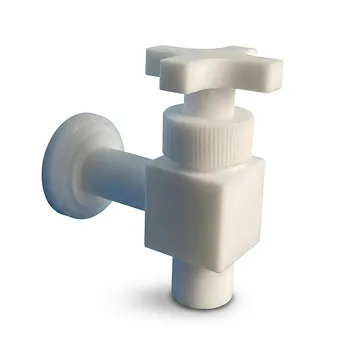
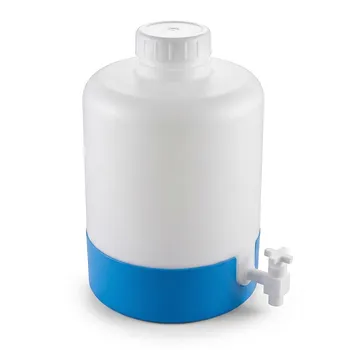
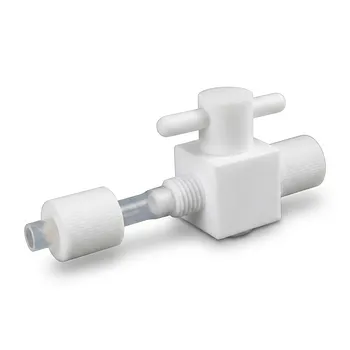
- High Corrosion Resistant PTFE Faucet Polytetrafluoroethylene Valve for Chemical Storage Drums and Fluid Transfer Systems Customizable Industrial Grade
- Corrosion Resistant PTFE Polytetrafluoroethylene Valve and Customizable Laboratory Fluid Dispensing Faucet for Aggressive Chemical Handling in Industrial Storage Tanks and Plastic Drums
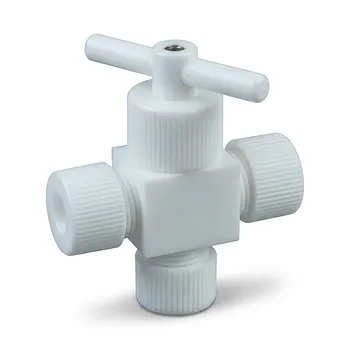
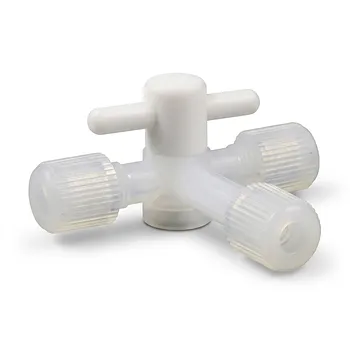
- Custom PTFE Valve 2-Way 3-Way Corrosion Resistant Low Background Virgin Fluoropolymer Industrial Fluid Control
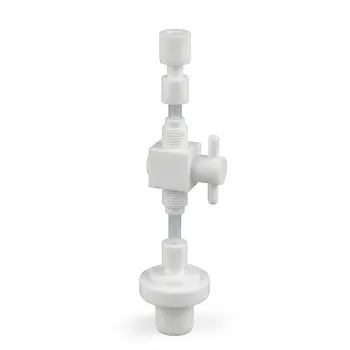
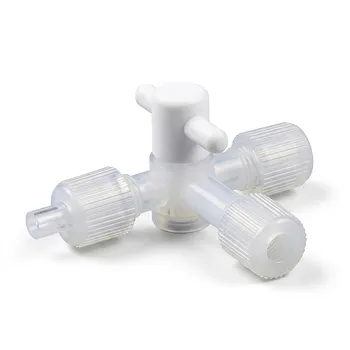
- High Purity PFA PTFE Flare Stop Valves Customizable 2-Way 3-Way Reducing Fluoropolymer Fluid Control Solutions
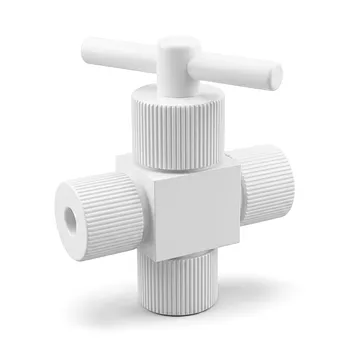
- Corrosion Resistant PTFE Valves Customizable 2 Way 3 Way 4 Way High Temperature Teflon Fluid Control Solutions
People Also Ask
- What is the typical operating temperature and pressure range for PTFE valves? Key Specs for Optimal Performance
- How do PTFE valves and components support high-purity liquid transfer? Ensure Product Integrity with Inert Materials
- What industries commonly use PTFE valves and components? Essential for Chemical & Purity Applications
- What specific advantages do PTFE valves offer? Unmatched Corrosion Resistance for Industrial Chemical Handling
- What are the key properties of PTFE valves? Ensure Purity, Safety, and Reliability in Demanding Processes