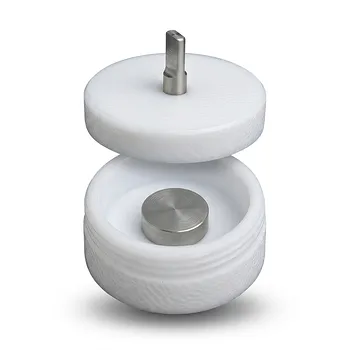
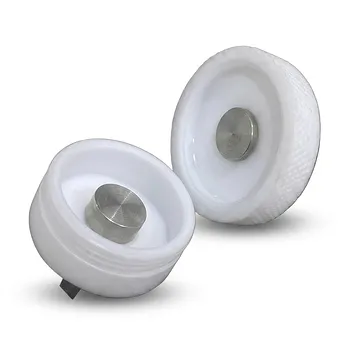
High-precision battery testing fixtures are the silent enablers of accurate MXene research, providing the mechanical and electrical stability required to isolate material performance from environmental noise. These specialized components ensure constant contact pressure and stable electrical pathways, which are critical for measuring the rapid ion diffusion and structural changes inherent to MXene electrodes. By standardizing the physical testing environment, researchers can confidently attribute electrochemical results to the material’s properties rather than setup variability.
Core Takeaway: The integrity of MXene battery evaluation relies on the fixture's ability to maintain a constant mechanical and electrical environment. Without this precision, the subtle energy storage mechanisms of MXene heterostructures are obscured by contact resistance and signal interference.
The Role of Mechanical Pressure in MXene Stability
Managing Layered Structure Dynamics
MXene capacity is heavily dependent on the intercalation and deintercalation of ions between its atomic layers. High-precision fixtures provide the stable mechanical pressure necessary to monitor the physical expansion and contraction of these layers during cycling without losing electrical connectivity.
Ensuring Uniform Electrical Contact
Specialized coin-type or pouch-cell fixtures use calibrated spacers and springs to apply uniform pressure across the electrode surface. This consistency ensures tight contact between the MXene material, the separator, and the current collector, which is vital for obtaining accurate rate performance data.
Preventing Structural Disconnection
As MXene electrodes undergo volume changes, inferior fixtures may allow for "dead spots" or loss of contact. High-precision units maintain a sealed, pressurized environment that compensates for these shifts, ensuring that every part of the composite material contributes to the measured specific capacity.
Achieving High-Fidelity Electrochemical Measurements
Reducing Contact Resistance and Inductance
Accurate Electrochemical Impedance Spectroscopy (EIS) requires fixtures with extremely low contact resistance and minimal high-frequency inductance. This allows researchers to clearly observe the solid electrolyte interface (SEI) formation and low-frequency ion diffusion behavior without being masked by the fixture's own electrical signature.
Isolating Signal Interference
High-quality testing cells often utilize engineering polymers like PTFE or PFA for superior electrical insulation. These materials isolate the electrochemical reaction from external electromagnetic interference, which is essential for capturing the precise voltage-time curves needed to calculate diffusion rates.
Mitigating Chemical Corrosion
The electrolytes used in lithium-ion testing can be highly corrosive, potentially degrading standard metal fixtures and contaminating results. High-precision fixtures use chemically resistant housings and gold-plated or high-grade stainless steel contacts to ensure the data remains repeatable over long-term cycling stability tests.
Environmental and Thermal Control
Eliminating Kinetic Fluctuations
Electrochemical kinetics are highly sensitive to temperature; even minor ambient shifts can alter measured voltage. By utilizing fixtures designed for constant temperature environments, researchers ensure that data collected at different current densities (e.g., 200 mA g-1) is scientifically valid and comparable.
Preventing Electrolyte Leakage
Standardization requires a perfectly sealed environment to prevent the evaporation of volatile electrolyte components or the ingress of atmospheric moisture. High-performance sealing components prevent leakage, which is critical for evaluating the long-term Coulombic efficiency and lifespan of MXene-based cells.
Understanding the Trade-offs
The Risk of Over-Compression
While constant pressure is necessary, excessive mechanical force can damage the delicate separator or crush the MXene's porous structure. Researchers must balance the need for low contact resistance with the risk of causing internal short circuits or restricted ion flow through an over-compressed separator.
Maintenance and Material Degradation
Fixtures made with PTFE and high-grade seals offer superior performance but require meticulous cleaning and periodic replacement. Residual electrolyte or microscopic scratches on sealing surfaces can lead to subtle leaks or parasitic reactions that compromise the "high-precision" status of the testing environment.
Applying This to Your Battery Research
How to Select the Right Fixture for Your Goal
To maximize the value of your MXene performance evaluation, align your fixture choice with your specific research objectives.
- If your primary focus is Ion Diffusion Kinetics: Prioritize fixtures with low-inductance leads and gold-plated contacts to ensure the high-frequency EIS data is free from electrical artifacts.
- If your primary focus is Long-term Cycling Stability: Select fixtures featuring PTFE or PFA seals and robust mechanical springs to maintain a hermetic seal and constant pressure over thousands of hours.
- If your primary focus is Rate Capability (High Current): Utilize fixtures with large-area electrical contacts to minimize heat generation and ohmic drop during rapid charge-discharge cycles.
By standardizing the mechanical and electrical interface through high-precision fixtures, you transform raw electrochemical data into a definitive map of MXene's true energy storage potential.
Summary Table:
| Feature | Impact on MXene Testing | Technical Requirement |
|---|---|---|
| Mechanical Stability | Manages layer dynamics and uniform contact | Calibrated spacers and springs |
| Electrical Fidelity | Minimizes contact resistance and inductance for EIS | Gold-plated or high-grade steel contacts |
| Chemical Resistance | Prevents electrolyte corrosion and contamination | PTFE/PFA engineering polymer housings |
| Environmental Seal | Prevents leakage and eliminates kinetic fluctuations | High-performance PFA/PTFE sealing components |
Elevate Your Battery Research with KINTEK Precision Engineering
Empower your energy storage innovations with KINTEK, the industry leader in high-performance fluoropolymer laboratory solutions. We understand that accurate MXene evaluation demands absolute material purity and mechanical stability. That’s why we offer a comprehensive range of supplies—from everyday basic labware (beakers, crucibles, reagent bottles) to advanced reaction apparatus like custom electrochemical cells, battery testing fixtures, and hydrothermal synthesis liners.
Our end-to-end custom CNC fabrication capabilities ensure we deliver everything from high-volume consumables (O-rings, gaskets, tubing) to complex, non-standard machined parts tailored to your specific research parameters. By maintaining an exclusive focus on PTFE and PFA, we provide the chemical resistance and electrical insulation essential for high-fidelity lithium-ion testing.
Ready to optimize your lab's performance? Contact KINTEK today to discuss your standard or bespoke requirements!
References
- Umme Kalsoom, Malik Maaza. MXene-based hybrid composites for lithium-ion batteries: advances in synthesis strategies and electrochemical performance. DOI: 10.1007/s11581-025-06628-z
This article is also based on technical information from Kintek Knowledge Base .
Related Products
- Acid Resistant PTFE Button Cell Battery Test Fixture Customizable Machining High Purity Electrochemical Testing Clamp
- Corrosion Resistant PTFE Coin Cell Battery Testing Clamps and Acid Proof Custom Fluoropolymer Battery Fixtures
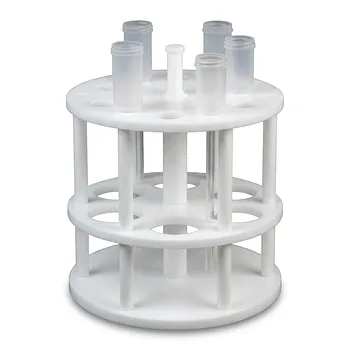
- Custom PFA Microcolumn Racks and PTFE Machined Low Background Corrosion Resistant Laboratory Fixtures
People Also Ask
- How does the chemical inertness of PTFE benefit laboratory-scale battery testing? Ensure high-purity research results.
- In what ways do PTFE battery testing fixtures enhance laboratory throughput and reliability? Maximize Research Efficiency
- In what industrial manufacturing contexts are PTFE battery clamps or fixtures utilized? Optimize Battery Production.
- What is the thermal operating range for PTFE battery clamps in electrochemical research? Stability from -200°C to +260°C
- What are the primary functions and material compositions of PTFE battery clamps? Ensure Precision & Chemical Resistance