Fully fluorinated perfluoropolymers such as PTFE and PFA are generally the better choice for demanding laboratory work because they provide the broadest chemical resistance, highest thermal stability, and lowest risk of contamination. Partially fluorinated polymers such as PVDF and ETFE are often harder, stiffer, and easier to process, but their retained hydrogen or other non-fluorinated groups give them a narrower chemical and temperature operating range.
The practical distinction is chemical protection versus mechanical performance. Choose PTFE or PFA when aggressive chemicals, elevated temperatures, ultra-pure samples, or trace-level contamination are central concerns; consider partially fluorinated polymers when greater hardness, stiffness, creep resistance, or easier fabrication matters more.
Why Fluorination Changes Laboratory Suitability
Fully Fluorinated Materials Form a Strong Chemical Barrier
PTFE has a carbon backbone surrounded by fluorine atoms. PFA is also fully fluorinated in its principal structure, although its perfluoroalkoxy side groups contain ether oxygen.
This dense fluorinated structure shields the carbon chain and makes the material highly resistant to acids, bases, solvents, and other aggressive laboratory chemicals.
Partially Fluorinated Materials Retain More Reactive Groups
Polymers such as PVDF and ETFE contain both carbon-fluorine and carbon-hydrogen bonds. Some related fluoropolymers may also contain other elements, such as chlorine.
These non-fluorinated groups can improve mechanical properties, but they generally reduce chemical resistance and thermal stability compared with PTFE and PFA.
How the Difference Affects Laboratory Applications
Chemical Compatibility
PTFE and PFA are preferred for severe chemical service because they tolerate a wider range of aggressive reagents with minimal reaction or degradation.
PVDF and ETFE remain useful for many acids, bases, and solvents, but compatibility must be checked for the specific chemical, concentration, temperature, and exposure time.
Temperature Tolerance
Perfluoropolymers provide superior thermal stability for heated fluid handling, digestion vessels, and reaction components. PFA is commonly used for continuous operating temperatures approaching 260 °C, depending on the component design and service conditions.
Partially fluorinated materials typically have lower continuous-use temperature limits. A material that performs well at room temperature may soften, deform, or lose strength during elevated-temperature cycles.
Purity and Contamination Control
PTFE and PFA are strong choices for trace analysis, high-purity fluid handling, and sample preparation because of their low reactivity and low extractables.
This matters when the container, fitting, valve, or tubing could otherwise introduce contaminants or adsorb analytes. Chemical inertness does not eliminate every possible contamination source, so the specific grade, manufacturing process, cleaning procedure, and application should still be evaluated.
Mechanical Performance
Partially fluorinated polymers are often physically harder and stiffer than PTFE and PFA. They can also offer better creep resistance and may be easier to melt-process or machine for certain designs.
That makes them attractive for structural parts, general-purpose fittings, and components exposed to mechanical wear where the chemical environment is moderate.
Choosing Between PTFE, PFA, and Partially Fluorinated Polymers
PTFE for Maximum Inertness and Low Friction
PTFE is well suited to seals, liners, tubing, vessels, and machined components requiring exceptional chemical resistance and a non-stick, hydrophobic surface.
Its limitations include relatively low hardness, potential deformation under sustained load, and more difficult processing than melt-processable fluoropolymers.
PFA for High-Purity and Fabricated Components
PFA provides the chemical and thermal advantages associated with perfluorinated materials while being melt-processable. It is therefore widely suited to high-purity tubing, bottles, digestion vessels, fittings, and other fluid-handling components.
PFA is often the practical choice when both extreme chemical resistance and manufacturability are required.
PVDF or ETFE for Mechanical Strength
PVDF and ETFE can be appropriate when the application needs greater hardness, stiffness, tensile strength, or resistance to mechanical deformation.
They should be selected only after confirming compatibility with the actual chemicals and operating temperatures. Their stronger mechanical profile does not compensate for an unsuitable chemical environment.
Understanding the Trade-offs
Chemical Resistance Is Not the Only Design Criterion
PTFE and PFA offer the widest chemical safety margin, but they are not automatically the best material for every component. Their lower hardness can make them more vulnerable to wear, deformation, or creep under mechanical load.
A partially fluorinated polymer may provide a more stable mechanical component in a less aggressive environment.
Temperature Ratings Depend on the Whole Component
Published polymer temperature limits do not guarantee that an assembled valve, fitting, vessel, or tube will perform identically at that temperature.
Pressure, wall thickness, stress, thermal cycling, connection design, and exposure duration all affect real-world performance.
“Fluoropolymer” Is Not a Sufficient Specification
The term fluoropolymer covers materials with substantially different chemical structures and operating limits. Selecting a product solely because it is labeled fluorinated can lead to compatibility failures.
The correct comparison is between the specific polymer grade and the actual laboratory conditions, including reagent composition, temperature, pressure, purity requirements, and mechanical loads.
Making the Right Choice for Your Goal
Material selection should begin with the most demanding condition the component will experience.
- If your primary focus is maximum chemical resistance: Choose PTFE or PFA, especially for aggressive acids, strong bases, reactive solvents, or prolonged chemical exposure.
- If your primary focus is high-purity trace analysis: Prefer PTFE or PFA and evaluate extractables, surface history, cleaning, and manufacturing controls.
- If your primary focus is elevated-temperature laboratory work: Use PTFE or PFA after confirming the component's complete temperature and pressure rating.
- If your primary focus is mechanical hardness or stiffness: Consider PVDF or ETFE when the chemical environment and temperature remain within their verified compatibility range.
- If your primary focus is fabrication flexibility: Consider PFA for applications that need perfluoropolymer-level resistance with melt-processable manufacturing.
The safest laboratory choice is the material whose chemical, thermal, mechanical, and purity limits all match the most demanding part of the application.
Summary Table:
| Property | PTFE/PFA (Fully Fluorinated) | PVDF/ETFE (Partially Fluorinated) |
|---|---|---|
| Chemical Resistance | Exceptional; resistant to almost all chemicals | Good but not as broad; verify compatibility |
| Thermal Stability | High; PFA withstands up to ~260°C | Lower; limited continuous use temperature |
| Purity & Extractables | Very low; suitable for trace analysis | Higher potential for extractables |
| Mechanical Strength | Softer; lower creep resistance | Harder; stiffer; better mechanical durability |
| Processing | PTFE difficult; PFA melt-processable | Easier melt-processing and machining |
| Best Use Cases | Aggressive chemicals, high-purity, elevated temp | Mechanical parts, moderate chemical environments |
Choosing the right fluoropolymer for your lab is critical for safety and accuracy. At KINTEK, we specialize in high-performance PTFE and PFA labware and custom components. Our products ensure superior chemical resistance, thermal stability, and purity for your most demanding applications. Contact our experts today to find the perfect solution for your laboratory needs – we offer everything from standard beakers and vessels to complex custom-machined parts. Get in touch with us now to discuss your specific requirements and benefit from our end-to-end PTFE/PFA custom CNC machining capabilities.
Related Products
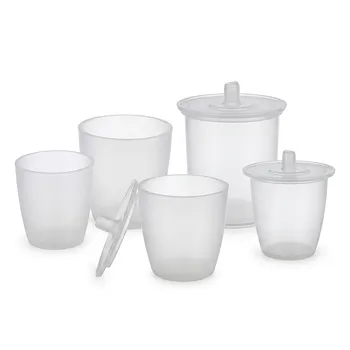
- High Purity PFA Crucible and Corrosion Resistant PTFE Beaker for Trace Analysis and Custom Laboratory Applications
- PTFE PFA Vacuum Filtration System Corrosion Resistant Customizable Shatterproof Laboratory Device
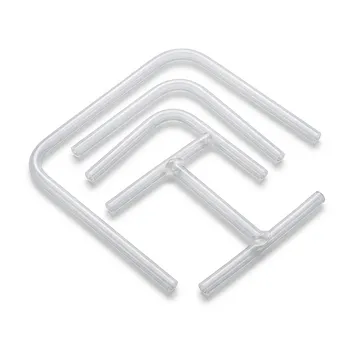
- High Purity PFA Coiled Tubing Custom PTFE Machining PFA Welding and Precision Bending Solutions
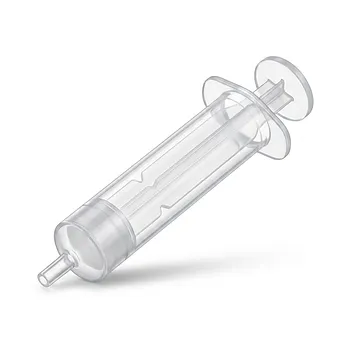
- Corrosion Resistant PFA Syringe Translucent Visual Fluoropolymer Labware 10ml Chemical Handling Tool
- High Purity 4L PFA Reaction Tank for Proton Exchange Membrane Electrolysis Water Oxygen Separation Systems
People Also Ask
- Why are high-purity vessels critical for BiFeO3 synthesis? Ensuring Phase Purity
- Why is the use of high-purity PFA or PTFE labware critical during TiO2 nanoparticle purification? Protect Sample Purity
- Why is high-purity PFA labware necessary for Znx@LS-2 zeolite ICP-OES analysis? Ensure Trace-Level Precision
- Why is high-purity PFA trace analysis labware used for MXene? Ensure Superior Material Integrity in Research
- What key material characteristics make PTFE and PFA suitable for high-purity laboratory labware, trace analysis containers, and medical microporous tubing? Discover the essential properties that ensure purity.