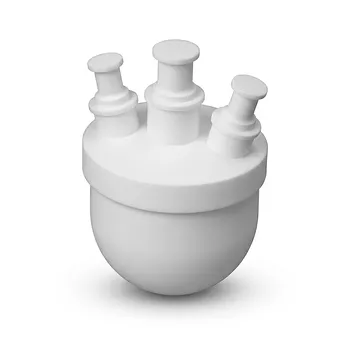
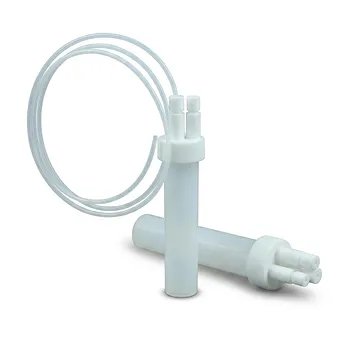
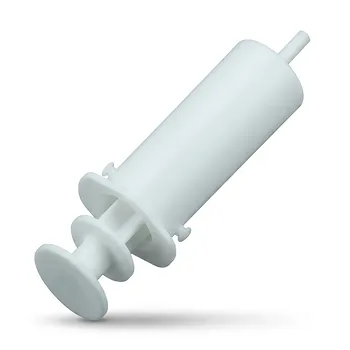
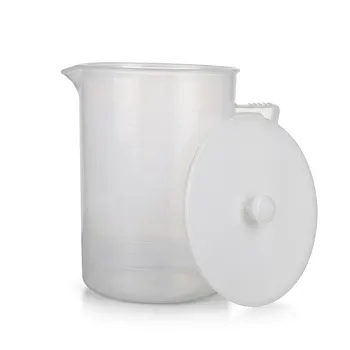
Fully fluorinated perfluoropolymers such as PTFE and PFA are the better choice when chemical purity, broad compatibility, or high-temperature service is the primary concern. They withstand a wider range of aggressive acids, bases, solvents, and thermal cycles than partially fluorinated materials such as ETFE and PVDF, with continuous-use temperatures commonly reaching approximately 260 °C, depending on grade and manufacturer. ETFE and PVDF provide substantially greater mechanical strength, stiffness, hardness, and cut-through resistance, but they generally have lower temperature limits and narrower chemical compatibility.
PTFE and PFA maximize chemical inertness and thermal stability; ETFE and PVDF maximize mechanical robustness. Select the material based on the most demanding condition in the application, because the mechanically stronger option is not automatically the chemically safer one.
How Fluorination Changes Performance
Fully Fluorinated PTFE and PFA
PTFE and PFA have polymer structures dominated by carbon-fluorine bonds, with the carbon backbone effectively shielded by fluorine. This structure reduces chemical attack and gives these materials excellent resistance to most laboratory reagents.
Their low surface energy and low coefficient of friction, typically around 0.1-0.2, also provide strong non-stick behavior and reduce fluid retention. These properties are valuable where residual contamination, adsorption, or difficult cleaning could affect results.
Partially Fluorinated ETFE and PVDF
ETFE and PVDF retain hydrogen-containing portions of their polymer structures. Those segments increase intermolecular interaction, which makes the materials harder, stiffer, and more mechanically resistant.
The same structural features reduce their resistance to some aggressive chemicals and lower their thermal stability compared with PTFE and PFA. They remain chemically capable engineering polymers, but they do not provide the same broad compatibility margin.
Chemical Resistance and Sample Purity
When PTFE and PFA Are the Safer Choice
For high-purity trace analysis, PTFE and PFA are generally preferred because they minimize the risk of chemical attack, extractables, and sample contamination across a broad range of reagents. They are especially appropriate for strong acids, strong bases, aggressive solvents, and corrosive fluid transfer.
PFA is often favored for tubing, bottles, and other components requiring transparency or melt-processable fabrication. PTFE is widely used where maximum chemical resistance and low friction are more important than transparency or conventional melt processing.
Where ETFE and PVDF Remain Suitable
ETFE and PVDF can be effective for moderate chemical environments, especially when the fluid is well characterized and operating conditions remain within the material supplier's compatibility limits. Their stronger, harder surfaces can be advantageous in fittings, valve bodies, supports, and components exposed to mechanical handling.
Chemical compatibility must be checked against the specific reagent, concentration, temperature, exposure time, and applied stress. A material that performs well at room temperature may degrade, swell, crack, or lose strength when exposed to the same chemical at elevated temperature or under pressure.
Mechanical Performance Under Load
Strength and Stiffness
Partially fluorinated polymers generally offer higher tensile strength and flexural modulus than PTFE and PFA. Representative values in the supplied data are approximately 40-50 MPa tensile strength for ETFE and PVDF compared with 20-28 MPa for PTFE and PFA, although actual values vary by grade and test method.
Flexural modulus for ETFE and PVDF can reach roughly 1,100-2,000 MPa, giving them greater resistance to deformation under pressure, clamping, and mechanical loading.
Wear and Cut-Through Resistance
ETFE and related partially fluorinated materials can resist abrasion, cutting, and surface damage better than softer perfluoropolymers. The supplied comparison cites cut-through resistance of approximately 18 kg for ETFE versus 4.5 kg for PTFE and PFA.
This difference matters for tubing routed through tight spaces, components repeatedly installed and removed, or assemblies exposed to tool contact and mechanical wear.
Creep and Deformation
PTFE has relatively low stiffness and can creep under sustained load, particularly at elevated temperature. This behavior can affect compression fittings, valve seats, threaded connections, and seals if the design does not account for long-term deformation.
ETFE and PVDF generally hold their shape better under mechanical stress. However, their improved mechanical performance does not compensate for inadequate chemical or temperature compatibility.
Temperature Capability
High-Temperature Chemical Service
PTFE and PFA commonly support continuous operating temperatures up to approximately 260 °C, subject to grade, pressure, design, and manufacturer specifications. Their thermal stability makes them suitable for heated chemical transfer, digestion systems, and repeated thermal exposure.
PFA and PTFE melting or processing characteristics should not be confused with continuous-use ratings. A component's actual safe operating limit depends on stress, pressure, geometry, and exposure conditions, not only on its nominal melting point.
Moderate-Temperature Service
ETFE and PVDF typically have maximum operating limits in the range of approximately 120-150 °C, again depending on grade and application. They are appropriate when the process remains comfortably below those limits and when mechanical strength is a major design requirement.
At higher temperatures, partially fluorinated polymers can lose stiffness and chemical resistance more quickly than PTFE or PFA. Pressure ratings may also decline as temperature increases.
Choosing Between PTFE and PFA
PTFE for Maximum Inertness and Low Friction
PTFE is a strong choice for seals, liners, valve seats, tubing, and fittings exposed to highly aggressive chemicals. Its exceptionally low friction and broad chemical resistance are useful where low sticking and easy cleaning are important.
Its limitations include lower mechanical strength, potential creep, and the fact that conventional PTFE is not melt-processable. Component geometry and connection design therefore require particular attention.
PFA for Fabricated and High-Purity Components
PFA provides perfluoropolymer-level chemical resistance while being melt-processable. This enables the production of smooth, weldable, transparent tubing and complex high-purity components.
PFA is often preferable when visual inspection of the fluid path, heat welding, or demanding cleanability is required. It still shares the general perfluoropolymer trade-off of lower stiffness and strength compared with ETFE or PVDF.
Choosing Between ETFE and PVDF
ETFE for Tough, Wear-Resistant Components
ETFE is well suited to applications requiring high tensile strength, stiffness, impact resistance, and cut-through resistance. It can be a practical option for mechanically exposed tubing, fittings, valve components, and structural parts in moderate chemical environments.
Its reduced chemical inertness and lower service temperature limit make it unsuitable as a universal replacement for PTFE or PFA in aggressive chemical handling.
PVDF for Moderate Chemical and Mechanical Demands
PVDF combines useful chemical resistance with higher strength and stiffness than PTFE. It is often appropriate for laboratory fluid handling where the chemicals are compatible, temperatures are moderate, and dimensional stability matters.
PVDF should not be selected solely because it is harder or stronger. Its compatibility with the actual fluid, including concentration and temperature effects, must be established before use.
Understanding the Trade-offs
Chemical Margin Versus Mechanical Margin
PTFE and PFA provide a larger chemical and thermal safety margin, but their lower modulus and greater creep can create mechanical design challenges. ETFE and PVDF provide a larger mechanical safety margin, but their chemistry and temperature limits require tighter control.
The critical question is which failure mode is less tolerable: chemical contamination or degradation, or mechanical deformation and wear.
Pressure and Temperature Are Coupled
A component's pressure rating is not independent of temperature. As polymer temperature rises, stiffness and load-bearing capacity generally decrease, so the allowable pressure may be lower than the room-temperature rating.
Review pressure-temperature curves for the exact component rather than relying only on a generic material temperature limit.
“Fluoropolymer” Does Not Mean Universal Compatibility
All four materials are fluoropolymers, but they do not offer equivalent resistance to every reagent. Hydrogen-containing segments in ETFE and PVDF can make them more vulnerable in environments where PTFE or PFA remains stable.
Compatibility tables are useful screening tools, but highly concentrated chemicals, mixed solvents, elevated temperatures, and sustained stress require confirmation from the component manufacturer or a qualified materials engineer.
Fittings and Seals Can Fail Before Tubing
The tubing material may be chemically compatible while a fitting body, ferrule, valve diaphragm, lubricant, or elastomer seal is not. The complete fluid-contact path must be evaluated.
For ultra-pure work, also verify cleanliness, extractables, surface finish, joining method, and whether the component includes additives or reinforcing materials.
Making the Right Choice for Your Goal
Material selection should begin with the most aggressive combination of chemical exposure, temperature, pressure, purity, and mechanical handling.
- If your primary focus is maximum chemical resistance or ultra-pure trace analysis: Choose PTFE or PFA, with PFA favored when transparency, welding, or complex melt-fabricated components are important.
- If your primary focus is high-temperature chemical digestion or repeated thermal cycling: Choose PTFE or PFA, subject to the exact pressure-temperature rating.
- If your primary focus is mechanical strength, stiffness, or cut-through resistance: Choose ETFE or PVDF when the fluid and temperature are demonstrably compatible.
- If your primary focus is dimensional stability under pressure: Prefer ETFE or PVDF for moderate environments, and validate long-term creep, chemical exposure, and temperature performance.
- If your primary focus is the lowest total contamination risk: Use a qualified PTFE or PFA fluid path and assess every wetted accessory, seal, lubricant, and joining process.
The right choice is not the strongest fluoropolymer or the most chemically inert one in isolation; it is the material that preserves both sample integrity and component performance under the application's worst credible conditions.
Summary Table:
| Property | PTFE/PFA | ETFE/PVDF |
|---|---|---|
| Chemical Resistance | Superior, broad | Good, but narrower |
| Max Continuous Temp | ~260°C | ~120-150°C |
| Tensile Strength | 20-28 MPa | 40-50 MPa |
| Cut-Through Resistance | ~4.5 kg | ~18 kg |
| Stiffness (Flexural Modulus) | Lower | Higher (1,100-2,000 MPa) |
| Creep Resistance | Lower | Higher |
| Best Application | High purity, aggressive chemicals, high temp | Mechanical strength, moderate chemicals, lower temp |
For high-purity lab fluid handling, trust KINTEK's PTFE and PFA components. Our fully fluorinated products offer unmatched chemical resistance and temperature stability. Contact us today to find the perfect solution for your lab. Contact us
Related Products
- Corrosion Resistant High Purity PFA Valve and Weldable Transparent Tubing for Semiconductor Fluid Transfer
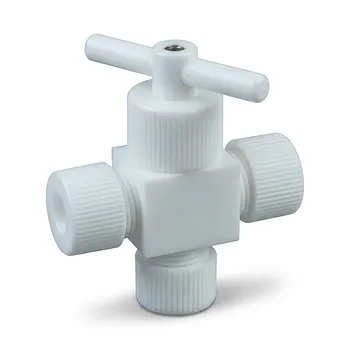
- Corrosion Resistant PTFE Polytetrafluoroethylene Valve and Customizable Laboratory Fluid Dispensing Faucet for Aggressive Chemical Handling in Industrial Storage Tanks and Plastic Drums
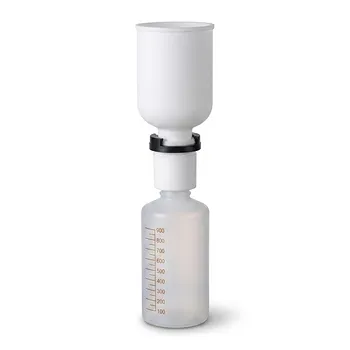
- Corrosion Resistant PTFE Support with PFA Transparent Reaction Tank and High Purity PFA Sampling Tube for Trace Analysis
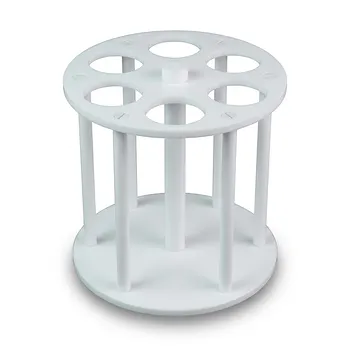
- Custom PFA Microcolumn Racks and PTFE Machined Low Background Corrosion Resistant Laboratory Fixtures
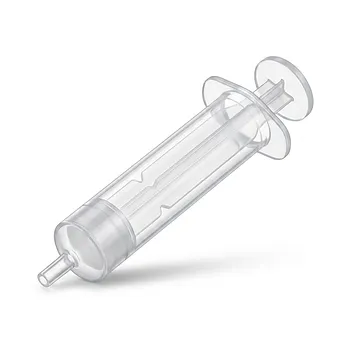
- Corrosion Resistant PFA Syringe Translucent Visual Fluoropolymer Labware 10ml Chemical Handling Tool
People Also Ask
- Why are high-purity PFA fluid transfer components preferred for battery electrolytes? Ensure Purity & Data Accuracy
- How do high-precision PFA fluid transfer components, such as tubing and fittings, affect the results of continuous-flow synthesis?
- How do PFA fluid transfer components contribute to chemical research precision? Achieve high-purity results today.
- What role do PFA tubing and valves play in high-precision laboratory fluid transfer systems? Ensure Ultra-Pure Results
- Which material characteristics of fluoropolymers are most critical for high-purity fluid transfer and labware? Key factors: chemical inertness, low extractables, thermal stability.