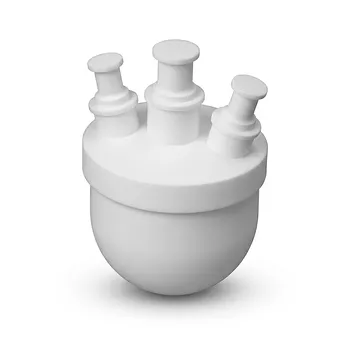
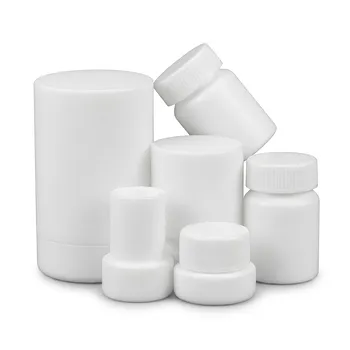
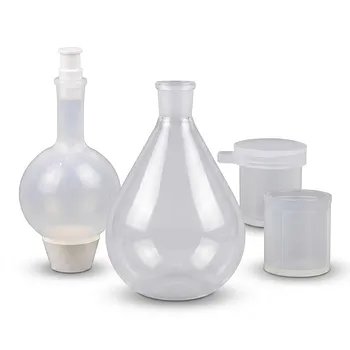
Fluoropolymers resist laboratory chemicals because fluorine forms a dense, highly stable shield around the polymer backbone. In PTFE and PFA, strong carbon–fluorine bonds make the molecular chain difficult for concentrated acids, strong bases, oxidizers, and many organic solvents to attack. Their low surface energy and low friction also reduce wetting, absorption, chemical adhesion, and abrasive wear, while thermal stability helps them retain shape under demanding laboratory conditions.
Core takeaway: PTFE, PFA, and PFPE combine chemically stable fluorinated structures with low surface energy and low friction. This protects both the material and the sample, although mechanical loading, temperature, permeation, and a small number of highly reactive chemicals still impose practical limits.
Why Fluoropolymers Resist Chemical Attack
Strong carbon–fluorine bonds form a protective barrier
PTFE and PFA contain fully fluorinated carbon backbones. The strong carbon–fluorine bonds and the dense arrangement of fluorine atoms make it difficult for aggressive reagents to reach or break the underlying carbon chain.
This is the primary reason these materials resist concentrated acids, strong bases, many organic solvents, and corrosive aqueous mixtures.
Fluorine shields the polymer backbone
Fluorine atoms create a tightly packed, chemically stable sheath around the polymer structure. The high electronegativity and small atomic size of fluorine contribute to a backbone that is difficult to oxidize, hydrolyze, or otherwise chemically modify under ordinary laboratory conditions.
The result is a material that behaves more like a chemical barrier than a reactive container surface.
The polymer does not readily swell or dissolve
Many conventional plastics absorb solvents, swell, soften, or lose strength when exposed to aggressive media. PTFE and PFA generally show very low reactivity and low solvent uptake, helping them retain their dimensions and mechanical function.
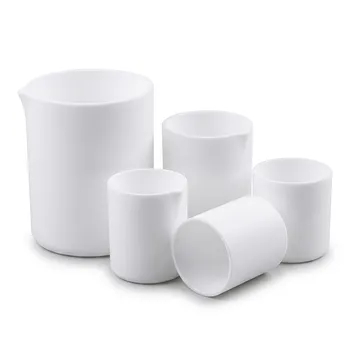
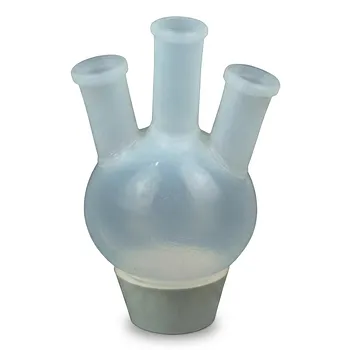
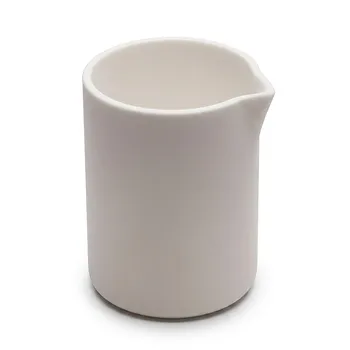
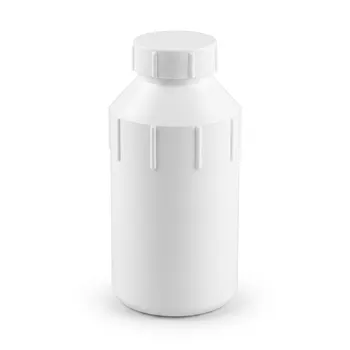
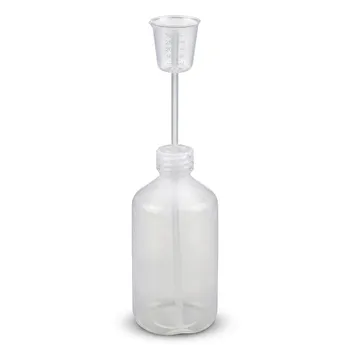
This dimensional stability is important in digestion vessels, tubing, beakers, reagent bottles, and fluid-transfer fittings, where distortion can cause leakage, contamination, or inaccurate fluid handling.
How PTFE, PFA, and PFPE Contribute Differently
PTFE provides inert, low-friction surfaces
PTFE is a highly fluorinated polymer known for exceptional chemical resistance, a very low coefficient of friction, and strong nonstick behavior. These properties reduce the tendency of particles, residues, and viscous chemicals to adhere to surfaces.
PTFE is therefore useful for vessels, liners, tubing, seals, and components exposed to corrosive reagents. However, it can deform slowly under sustained load, a behavior known as creep or cold flow.
PFA combines chemical resistance with fabrication flexibility
PFA has a chemical structure similar to PTFE but is melt-processable. This allows manufacturers to produce more complex, seamless, or transparent laboratory components while retaining broad chemical resistance.
PFA is often selected for high-purity vessels, tubing, and digestion equipment where cleanability, visibility, weldability, and resistance to aggressive reagents are important.
PFPE provides stable fluorinated ether structures
Perfluoropolyethers contain perfluorinated ether linkages and are commonly used as chemically stable fluids, lubricants, greases, or specialty sealing media, rather than as rigid structural labware.
Their fluorinated structure gives them excellent resistance to oxidation and aggressive chemicals, while their low surface energy and lubricating behavior can reduce friction and wear in moving or contacting components.
How They Resist Mechanical Wear
Low friction reduces sliding damage
A low coefficient of friction means less force is required when two surfaces slide against one another. This reduces heat generation, adhesive sticking, and surface damage in valves, fittings, seals, and moving laboratory mechanisms.
PTFE’s nonstick behavior also limits the buildup of dried reagents or sample residues that could otherwise act as abrasive particles.
Low surface energy limits adhesion
Fluoropolymer surfaces are both hydrophobic and oleophobic. They resist wetting by many aqueous and organic substances, reducing the tendency of chemicals or sample components to spread across, penetrate, or bond strongly to the surface.
This helps with cleanability and contamination control, particularly in trace analysis and high-purity workflows.
Chemical stability prevents chemical wear
Mechanical wear is often accelerated when a material is chemically softened, swollen, embrittled, or cracked. Because PTFE and PFA are resistant to many laboratory reagents, their surfaces are less likely to lose strength before mechanical contact occurs.
Chemical resistance therefore supports mechanical durability indirectly: the material remains a stable substrate rather than becoming weakened by exposure.
The material avoids many contamination pathways
High-purity fluoropolymer components generally do not require the same types of plasticizers or stabilizers used in some other plastics. This reduces concerns about additive migration, elemental leaching, and sample cross-contamination.
For trace analysis, this is as important as physical durability. A component that survives chemically but releases contaminants is not suitable for a high-purity workflow.
Why Thermal Stability Matters
Structure is retained during heated chemical procedures
PTFE and PFA can tolerate demanding combinations of chemical and thermal stress better than many standard polymers. This makes them useful in procedures such as acid digestion, microwave-assisted sample preparation, and high-temperature reagent handling.
Maintaining shape under heat helps preserve vessel seals, fluid paths, and reproducible sample volumes.
Thermal resistance has operating limits
“Chemically inert” does not mean immune to every condition at every temperature. Chemical compatibility can change at elevated temperatures, and prolonged heating may increase creep, permeation, or loss of mechanical strength even when the polymer does not visibly react.
Operating temperature, pressure, load, and exposure time must therefore be checked against the specific product and reagent combination.
How These Properties Protect Laboratory Samples
Low leaching supports trace analysis
The stable fluorinated matrix limits degradation products and elemental release from the container or tubing. This is valuable when the measured analyte is present at very low concentration.
The container is less likely to become a hidden source of background contamination.
Low absorption reduces memory effects
Because fluoropolymer surfaces have low surface energy and low chemical affinity for many substances, they generally absorb or retain fewer sample constituents than more reactive materials.
This can reduce carryover between samples, although thorough cleaning remains necessary for strongly adsorbing compounds or particulate residues.
Chemical barriers improve service life
A fluoropolymer vessel or fluid path can remain functional after repeated contact with aggressive reagents that would pit metals, corrode glass under certain conditions, or degrade less resistant plastics.
The practical benefit is fewer replacements, more consistent handling, and lower risk of contamination caused by surface deterioration.
Understanding the Trade-offs
Mechanical wear resistance is not unlimited
PTFE has low friction but is not always the best choice for high-load or high-abrasion applications. Under pressure, it can creep, deform, or wear, particularly when unfilled PTFE slides against a rough or hard counterface.
Filled PTFE grades or alternative fluoropolymers may be appropriate when dimensional stability and wear life are more important than maximum chemical purity.
Permeation can still occur
A material may resist chemical reaction while still allowing very small molecules to diffuse through it over time. Permeation depends on the chemical, temperature, thickness, pressure differential, and exposure duration.
This matters for volatile solvents, gases, and long-term storage applications.
Extreme reagents require compatibility checks
Fluoropolymers have broad resistance, but they are not universally compatible with every chemical condition. Highly reactive fluorinating species, molten alkali metals, and certain extreme-temperature environments can attack or damage fluorinated materials.
Compatibility charts should be treated as a starting point, not a substitute for evaluating the actual concentration, temperature, pressure, and exposure time.
Design determines structural performance
Material selection alone does not prevent failure. Wall thickness, support, thread geometry, sealing force, thermal cycling, vibration, and sustained pressure all affect whether a PTFE or PFA component maintains its shape.
A chemically resistant polymer can still fail through deformation, fatigue, cutting, abrasion, or an improperly designed seal.
How to Apply This to Your Project
Fluoropolymers are most effective when chemical compatibility and mechanical design are evaluated together.
- If your primary focus is chemical inertness: Choose PTFE or PFA for vessels, liners, tubing, and fittings exposed to aggressive acids, bases, solvents, or digestion reagents, subject to the supplier’s compatibility limits.
- If your primary focus is sample purity: Prefer high-purity, additive-controlled fluoropolymer components and validate cleaning, blank levels, and potential leaching for the specific analytical method.
- If your primary focus is mechanical wear: Use low-friction PTFE or PFPE where sliding and lubrication are important, but evaluate load, creep, counterface roughness, and wear rate rather than assuming chemical resistance guarantees durability.
- If your primary focus is heated processing: Select PTFE or PFA according to the complete temperature–chemical–pressure profile, including thermal cycling and sustained mechanical loads.
- If your primary focus is long-term fluid containment: Assess permeation, seal deformation, wall thickness, and exposure duration in addition to chemical reactivity.
The right fluoropolymer solution combines the stability of the molecular structure with a design that respects its mechanical and thermal limits.
Summary Table:
| Material | Key Properties | Chemical Resistance | Mechanical Wear Resistance | Best For |
|---|---|---|---|---|
| PTFE | Very low friction, non-stick, excellent chemical resistance | High (resists most acids, bases, solvents) | Low friction, but prone to creep under load | Vessels, liners, seals, low-friction components |
| PFA | Melt-processable, transparent, good chemical resistance | High (similar to PTFE) | Better dimensional stability than PTFE | Complex parts, tubing, high-purity vessels |
| PFPE | Perfluorinated ether fluids, lubricants, greases | High (resists oxidation and aggressive chemicals) | Excellent lubricating properties reduce wear | Lubricants, sealing media, moving parts |
Ensure your lab's success with high-performance fluoropolymers from KINTEK. Our PTFE and PFA labware, custom machined parts, and fluid handling components are designed to withstand the harshest chemicals and mechanical wear, ensuring purity and durability. Whether you need standard beakers or bespoke electrochemical cells, our end-to-end CNC machining capabilities deliver precision solutions. Contact us today to discuss your requirements and get a quote. [Contact KINTEK] (#ContactForm).
Related Products
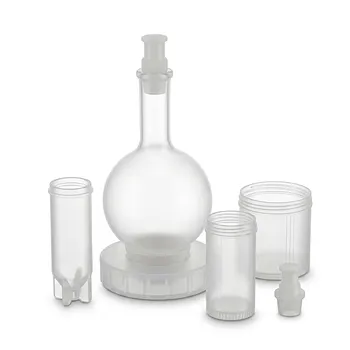
- Custom PFA Pear Shaped Flask High Purity Corrosion Resistant Labware Custom Molded Fluoropolymer Flask Glass Replacement Solution
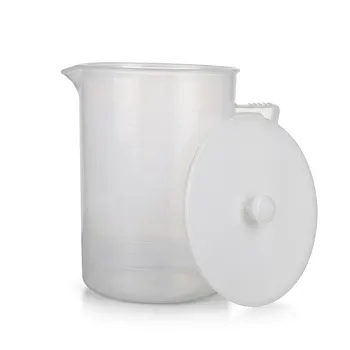
- High Purity PFA Beaker with Handle and Large Capacity Washable Soak Basket Multi Spec Teflon Laboratory Labware
- Custom PTFE Petri Dish 30mm Corrosion Resistant Low Background Non Leaching Laboratory Ware
- Custom Polytetrafluoroethylene PTFE Petri Dishes 60mm Corrosion Resistant Low Background Labware
- Custom PTFE Petri Dish 120mm Diameter Corrosion Resistant Low Background High Purity Labware
People Also Ask
- Why Use PFA Labware for MnFe2O4/rGO Precursors? Ensure Stoichiometric Precision and Purity
- Why is PFA labware recommended for CuBi2O4? Protect high-purity precursors and ensure semiconductor bandgap accuracy.
- What are the primary properties of PFA for high-performance labware? Achieve ultra-trace purity & thermal stability.
- How does PFA labware enhance the accuracy of ultra-trace element analysis? Achieving PPT Precision with Zero Leaching
- What role does PFA labware play in semiconductor manufacturing? Ensuring Ultra-Pure Yields and Zero Contamination