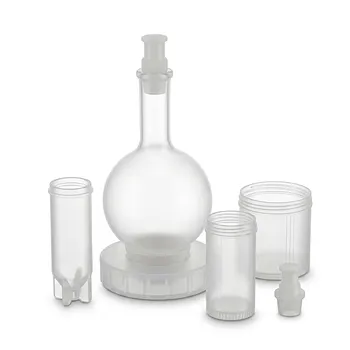
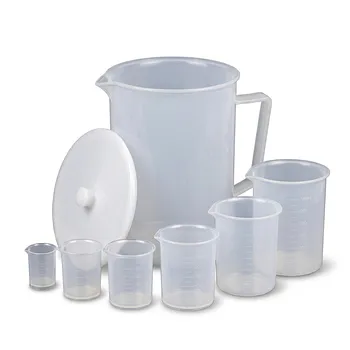
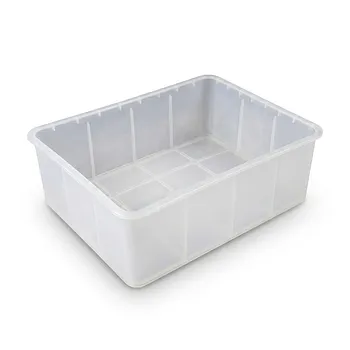
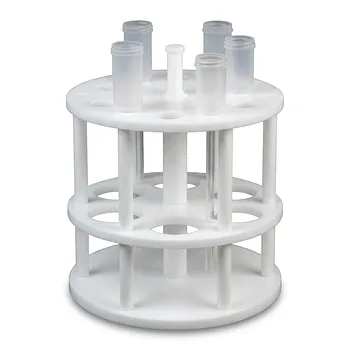
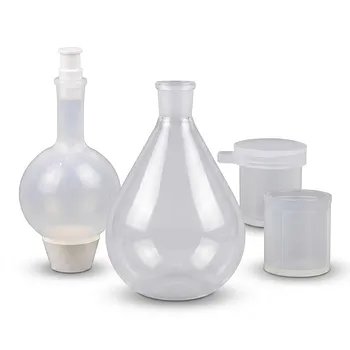
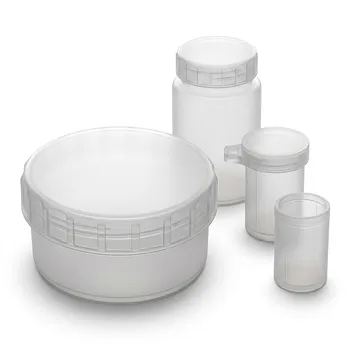
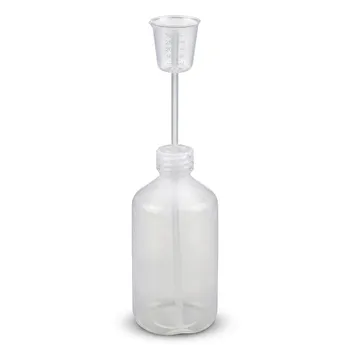
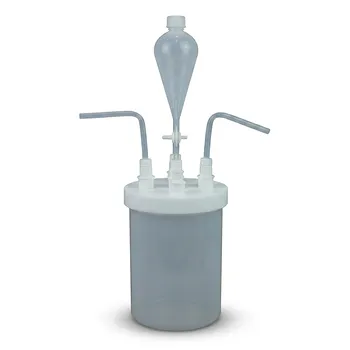
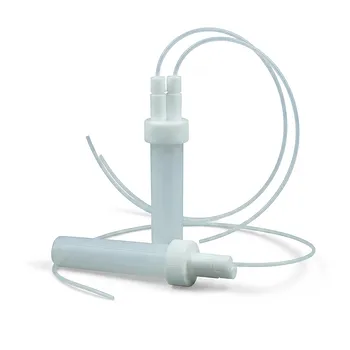
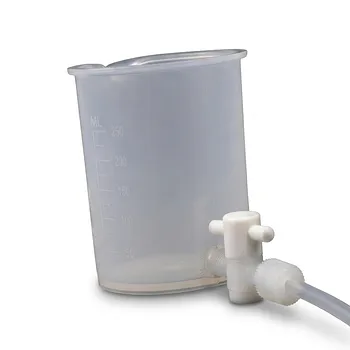
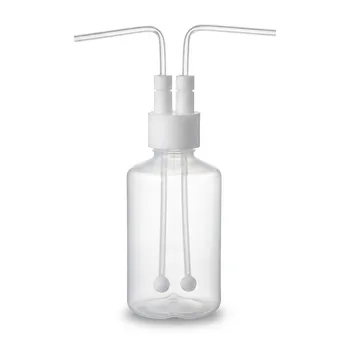
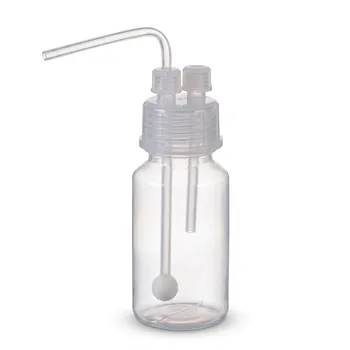
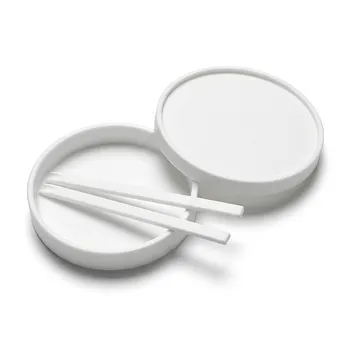
PFA labware represents the gold standard for ultra-trace analysis due to its negligible metal leaching profile. Because high-purity PFA resin is manufactured without metallic catalysts or stabilizers, the resulting labware exhibits metal ion leaching at levels below parts-per-trillion (ppt). This ensures that sample digestion, storage, and transport remain free from background contamination, preserving the integrity of sensitive analytical data.
PFA labware provides a near-zero contamination environment by eliminating the metallic additives found in traditional plastics and the ion-exchange interference inherent in glass. Its combination of chemical inertness and a non-porous surface allows for accurate measurement at ppt and pg/g levels.
The Structural Origins of PFA Purity
Catalyst-Free Manufacturing
Unlike many traditional polymers, high-purity PFA (Perfluoroalkoxy) is synthesized without the use of metallic catalysts or organic stabilizers. This manufacturing path ensures that the bulk material contains no residual aluminum, chromium, magnesium, silicon, titanium, or zinc.
Exceptional Chemical Inertness
PFA is a melt-processable fluoropolymer that offers near-complete resistance to aggressive reagents and strong oxidative acids. It does not react with the substances it holds, preventing the chemical breakdown that typically leads to the leaching of material components into a sample.
High Thermal Stability
The material maintains its structural integrity and purity even during thermal cycling. This stability is critical during high-temperature acid digestions, where heat would otherwise accelerate the leaching of impurities from lower-quality materials.
Eliminating Sample Interaction and Loss
Preventing Surface Adsorption
PFA possesses extremely low surface energy and hydrophobic properties, which prevent trace metal ions from adhering to the container walls. This lack of adsorption ensures that the measured concentration reflects the true sample value rather than a depleted result due to "sticking."
Non-Porous Morphology
The physical structure of PFA is non-porous, which prevents the entrapment of contaminants within the material itself. This makes the labware significantly easier to decontaminate using standard procedures like boiling in nitric acid.
Minimal Memory Effects
Because the surface is anti-adhesive and non-reactive, PFA minimizes memory effects where residues from a previous sample contaminate the next. This characteristic is vital for laboratories performing high-throughput quantitative experiments where cross-contamination must be zero.
Understanding the Trade-offs
Cost and Investment
The primary drawback of PFA labware is its significant initial cost compared to glass or standard plastics like HDPE. While it offers superior performance, the expense often limits its use to applications requiring ppt-level accuracy.
Physical Characteristics
While mechanically tough, PFA is translucent rather than transparent, which can make precise volume graduations slightly harder to read than on glass. Users must also be mindful of its temperature limits; while high, it can be exceeded in specialized industrial applications, leading to potential deformation.
Cleaning Requirements
To maintain its low-leaching advantages, PFA requires stringent cleaning protocols. If not handled with high-purity acids and cleanroom standards, the surface can still pick up environmental contaminants that negate the material's inherent purity.
How to Apply PFA to Your Laboratory Workflow
Selecting PFA labware should be a strategic decision based on your detection limit requirements and the nature of your analytes.
- If your primary focus is ultra-trace analysis (ppt or pg/g levels): Use PFA for all sample contact surfaces, including digestion vessels, volumetric flasks, and storage bottles, to ensure near-zero background interference.
- If your primary focus is long-term reagent storage: Utilize PFA bottles to prevent the leaching of stabilizers into high-purity acids over months of shelf life.
- If your primary focus is cost-effective sample preparation: Reserve PFA for the final stages of analysis or critical digestions while using less expensive fluoropolymers like FEP for general-purpose tasks.
By integrating PFA labware into your workflow, you ensure that your analytical results are a true reflection of your sample rather than a product of container contamination.
Summary Table:
| Feature | Advantage in Trace Analysis | Impact on Lab Performance |
|---|---|---|
| Purity | Catalyst-free & metal-free resin | Prevents ppt-level background contamination |
| Inertness | Resists aggressive acids/reagents | No material breakdown during digestion |
| Adsorption | Low surface energy/hydrophobic | Prevents loss of trace ions to container walls |
| Porosity | Non-porous physical structure | Zero memory effects; easy to decontaminate |
| Stability | Exceptional thermal integrity | Safe for high-temperature acid digestions |
Elevate Your Analytical Precision with KINTEK Fluoropolymer Expertise
In the world of ultra-trace analysis, every part-per-trillion matters. KINTEK specializes in providing the highest performance labware crafted exclusively from high-purity PFA and PTFE, ensuring your results are never compromised by container leaching or background noise.
From everyday basic labware (beakers, measuring cylinders, crucibles, and digestion tubes) and high-purity trace analysis instruments to comprehensive fluid transfer components (tubing, valves, and fittings), we deliver reliability at every stage. Our catalog extends to sample prep tools, general consumables like stirring bars and O-rings, and advanced apparatus such as custom electrochemical cells, battery testing fixtures, and microwave digestion vessels.
Why choose KINTEK?
- Absolute Focus: Exclusive specialization in high-performance fluoropolymers.
- Custom Fabrication: End-to-end CNC machining for complex non-standard parts and bespoke laboratory setups.
- Scalability: Equipped for everything from single custom pieces to high-volume industrial orders.
Don't let container interaction compromise your sensitive data. Contact KINTEK today to secure the gold standard in laboratory supplies.
Related Products
- Custom PFA Pear Shaped Flask High Purity Corrosion Resistant Labware Custom Molded Fluoropolymer Flask Glass Replacement Solution
- High Purity PFA Crucible and Corrosion Resistant PTFE Beaker for Trace Analysis and Custom Laboratory Applications
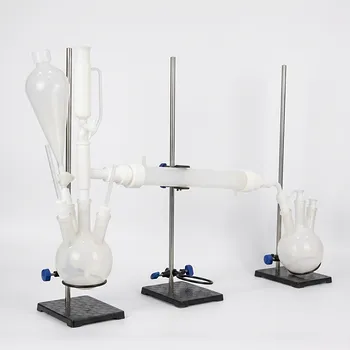
- High Purity PFA Constant Pressure Condensation Reaction System Acid Resistant High Temperature Customizable Teflon Labware
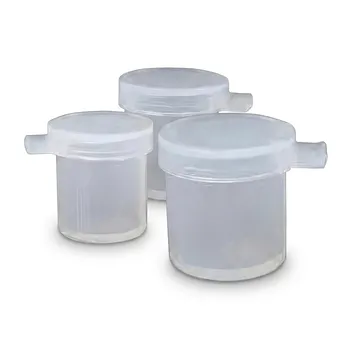
- High Purity PFA Sample Dissolution Cups Acid Resistant Chemical Digestion Vessels with Lids Trace Analysis Labware
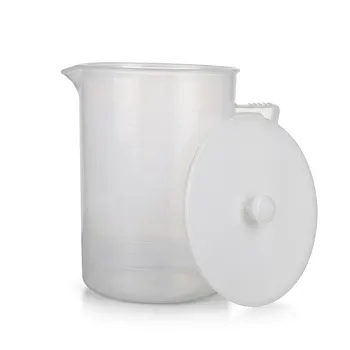
- High Purity PFA Beaker with Handle and Large Capacity Washable Soak Basket Multi Spec Teflon Laboratory Labware
People Also Ask
- Why Use PFA Labware for MnFe2O4/rGO Precursors? Ensure Stoichiometric Precision and Purity
- How does PFA labware enhance the accuracy of ultra-trace element analysis? Achieving PPT Precision with Zero Leaching
- Why is PFA labware recommended for CuBi2O4? Protect high-purity precursors and ensure semiconductor bandgap accuracy.
- What are the primary properties of PFA for high-performance labware? Achieve ultra-trace purity & thermal stability.
- What role does PFA labware play in semiconductor manufacturing? Ensuring Ultra-Pure Yields and Zero Contamination