Fluoroalkyl-endcapped oligomers achieve superamphiphobicity by combining an ultra-low-energy fluorinated interface with surface structures that limit liquid contact. In fluoroalkyl-endcapped vinyltrimethoxysilane oligomers, pendant perfluoroalkyl groups concentrate at the outer surface, reducing intermolecular attraction and discouraging both water and oils from spreading or adhering. This matters in high-purity laboratory handling because low-energy fluoropolymer surfaces reduce droplet retention, analyte loss, chemical fouling, and cross-contamination.
The essential principle is chemical and structural: fluorinated groups create a highly non-wetting interface, while concentrated domains and, where present, micro- or nanoscale roughness help droplets remain mobile rather than spread across the surface. PTFE, PFA, and related fluorinated coatings therefore support cleaner transfers and more complete recovery in trace and high-purity workflows.
How Fluoroalkyl Oligomers Create Extreme Liquid Repellency
Perfluoroalkyl Groups Lower Surface Energy
Fluorinated oligomers can reduce surface energy to approximately 12–15 mN/m by presenting perfluoroalkyl groups at the material interface. Fluorine's low polarizability and the strong fluorine sheath around the carbon framework reduce intermolecular attraction between the surface and contacting liquids.
A surface with low solid surface energy is difficult for a liquid to wet. Water, oils, alcohols, and many laboratory solvents are consequently less likely to spread, remain attached, or leave behind continuous films.
End-Capping Directs Fluorinated Chemistry to the Interface
The fluoroalkyl-endcapped oligomer contains vinyltrimethoxysilane-derived functionality that can form an anchored surface layer, while the fluoroalkyl ends preferentially occupy the exposed interface. This arrangement places the chemistry responsible for repellency where it has the greatest effect: at the boundary between the material and the liquid.
The result is more efficient than distributing fluorinated groups randomly throughout the bulk material. Much of the fluorinated content is concentrated at the surface instead of being buried where it cannot contribute directly to liquid repellency.
Concentrated Domains Improve Surface Efficiency
Small, concentrated fluorinated domains can create a more effective low-energy interface than a uniform but poorly organized distribution. The surface becomes chemically heterogeneous at a fine scale, with fluorinated regions dominating the liquid-contacting boundary.
This organization helps reduce wetting and limits the area over which a droplet can establish strong contact. It also supports the non-stick behavior needed for repeated fluid transfer and cleaning.
Why Low Surface Energy Repels Water and Oils
Repelling Water Requires More Than Hydrophobicity
A hydrophobic surface resists water, but superhydrophobicity generally requires both low surface energy and an appropriate surface texture. Micro- and nanoscale roughness can trap air beneath a droplet, reducing the actual solid-liquid contact area.
In this Cassie-Baxter state, droplets sit partly on air pockets rather than fully wetting the surface. High contact angles, low contact-angle hysteresis, and low roll-off angles indicate that droplets can move away instead of remaining pinned.
Oil Repellency Is More Demanding
Organic liquids often have lower surface tension than water, so low surface energy alone may not be enough to repel them. A surface must have sufficiently low energy relative to the liquid, and its geometry must prevent the liquid from penetrating or spreading across the texture.
This is why superamphiphobicity depends on chemical and structural synergy. Fluorinated chemistry supplies the low-energy interface, while hierarchical roughness or re-entrant features can maintain liquid separation from the underlying solid.
Surface Morphology Controls Droplet Mobility
Repellency is not defined only by a high static contact angle. A droplet that forms a large angle but remains pinned can still retain sample material and undermine practical performance.
Low contact-angle hysteresis and low roll-off angles are more directly relevant to laboratory handling. They indicate that droplets are less likely to remain trapped on tubing, vessel walls, filters, or apparatus surfaces.
Why This Matters in High-Purity Sample Handling
Retention Causes Sample Loss
In micro-volume and trace analysis, a thin film or residual droplet can represent a meaningful fraction of the sample. Fluorinated surfaces reduce adhesion to vessel walls and fluid-contact components, improving transfer and recovery.
This is especially important for digestion vessels, trace-analysis containers, reagent bottles, tubing, fittings, valves, and other areas where liquid can otherwise remain behind after pouring, draining, or pumping.
Adsorption Creates Cross-Contamination
A sample can contaminate a subsequent batch when analytes or matrix components remain attached to a surface. Low-energy fluoropolymer materials reduce the intermolecular forces that promote residue formation and analyte absorption onto container walls.
Reduced retention makes cleaning more effective and lowers the amount of material carried from one sample sequence into the next. This supports more reliable blanks, lower background contamination, and better confidence in trace measurements.
Chemical Inertness Protects Sample Integrity
PTFE and PFA combine low surface energy with strong chemical resistance and low solubility in organic solvents and hydrocarbons. Their surfaces are therefore less likely to react with, dissolve into, or retain many aggressive laboratory chemicals.
This combination is valuable during high-purity digestion, solvent handling, chemical storage, and preparation of samples for sensitive analytical instruments. Repellency alone is not sufficient; the contact material must also remain stable under the process conditions.
Cleanability Supports Repeatable Workflows
A non-stick surface is easier to rinse and less likely to hold residues in scratches, corners, or dead zones. This can shorten cleaning procedures and reduce the amount of aggressive cleaning required between samples.
Fluoropolymer tubing, vessels, and linings therefore provide both a contamination-control benefit and an operational benefit. They help maintain consistent surface conditions over repeated handling cycles.
Understanding the Trade-offs
Low Surface Energy Does Not Guarantee Complete Repellency
A fluorinated surface may strongly repel water but still be wetted by a low-surface-tension solvent. The liquid's chemistry, the coating's surface energy, and the surface morphology must be considered together.
Claims of universal oil and solvent repellency should therefore be tested against the actual reagents used in the workflow. Static water contact angle alone is not an adequate qualification method.
Roughness Can Improve Repellency but Add Vulnerability
Hierarchical roughness can increase contact angles and reduce droplet adhesion, but fragile textures may wear, clog, or lose performance under abrasion and repeated cleaning. Rough structures can also complicate the design of porous filters or narrow channels.
For laboratory components, the best surface is not necessarily the one with the highest measured contact angle. Durability, cleanability, chemical compatibility, and retention under real flow conditions are equally important.
Coatings Must Be Uniform and Well Anchored
An incompletely covered surface can expose higher-energy regions that promote local wetting and residue accumulation. Poor adhesion or uneven coverage may also cause performance to decline during use.
Vapor-deposited fluoropolymer coatings can provide conformal coverage in complex geometries and high-aspect-ratio features. However, coating qualification should include coverage, adhesion, thickness, chemical stability, and performance after cleaning.
Fluoropolymer Components Are Not Automatically Contamination-Free
PTFE, PFA, and fluorinated coatings reduce many sources of retention, but contamination can still enter through manufacturing residues, fittings, seals, handling, or an unsuitable cleaning protocol. Material selection must be part of a broader contamination-control process.
The correct assessment includes extractables, leachables, blank performance, compatibility with the reagents, and the required detection limits. Surface repellency improves the system, but it does not replace validation.
Making the Right Choice for Your Goal
Select the material and surface treatment according to the dominant failure mode in the laboratory workflow.
- If your primary focus is maximum sample recovery: Use low-energy PTFE, PFA, or a validated fluoroalkyl coating on all liquid-contact surfaces where residual droplets could materially affect the result.
- If your primary focus is cross-contamination control: Prioritize chemically inert, non-adsorptive materials together with validated rinsing, blank testing, and cleaning procedures.
- If your primary focus is broad water and solvent repellency: Combine fluorinated surface chemistry with an appropriately durable micro- or nanoscale morphology, then test against the actual solvents and reagents.
- If your primary focus is complex or porous components: Evaluate conformal coating methods that cover high-aspect-ratio features without blocking channels, pores, or flow paths.
- If your primary focus is long-term laboratory durability: Balance contact angle performance with abrasion resistance, coating adhesion, chemical compatibility, and retention after repeated cleaning cycles.
Fluoroalkyl-endcapped oligomers and fluoropolymer components are most valuable when their low-energy chemistry, surface structure, and laboratory compatibility are validated together.
Summary Table:
| Property | Mechanism | Lab Benefit |
|---|---|---|
| Low surface energy (12–15 mN/m) | Perfluoroalkyl groups at interface | Reduces droplet retention and spreading |
| End-capped structure | Fluoroalkyl ends concentrated at surface | More efficient repellency |
| Concentrated domains | Fine-scale fluorinated regions | Lower wetting and adhesion |
| Surface morphology | Micro/nano roughness with Cassie-Baxter state | High contact angle, low roll-off |
| Chemical inertness | PTFE/PFA resistance | Prevents adsorption and contamination |
| Cleanability | Non-stick surface | Easier rinsing and cleaning |
Boost your lab's precision and purity with PTFE/PFA components from KINTEK. Our high-performance fluoropolymer labware and custom parts minimize sample loss and contamination. Whether you need beakers, tubing, or custom electrochemical cells, we ensure reliable results. Optimize your high-purity workflows today—contact us for solutions tailored to your needs.
Related Products
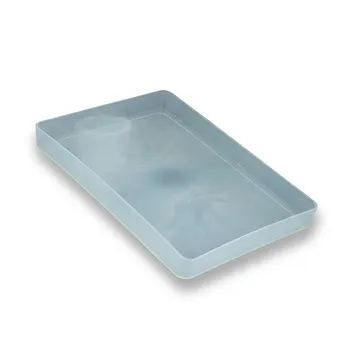
- Customizable PFA Square Tray Corrosion Resistant High Temperature Large Petri Dish Electrolytic Cell
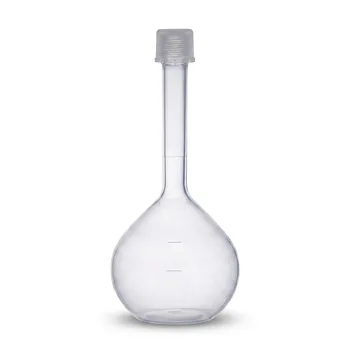
- High Purity PFA Volumetric Flask Acid Resistant Perfluoroalkoxy Trace Analysis Container Custom Mold Fabrication 1000ml 2000ml
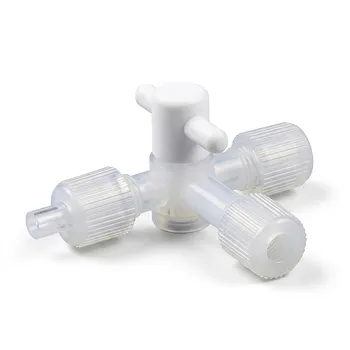
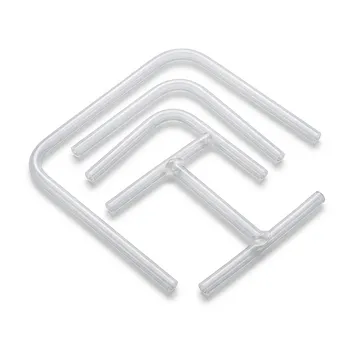
- Corrosion Resistant High Purity PFA Valve and Weldable Transparent Tubing for Semiconductor Fluid Transfer
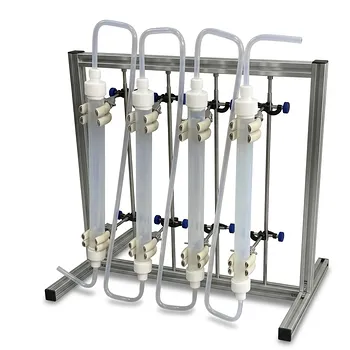
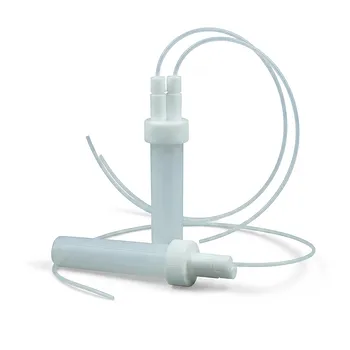
- PFA Chromatography Column Series and Corrosion Resistant Resin Exchange Column with Filter Frit Support for Trace Analysis Customizable
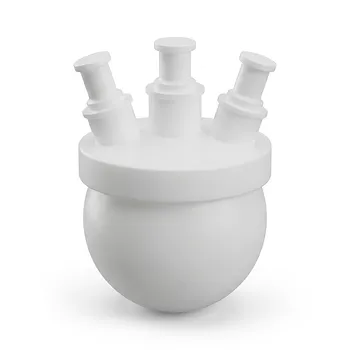
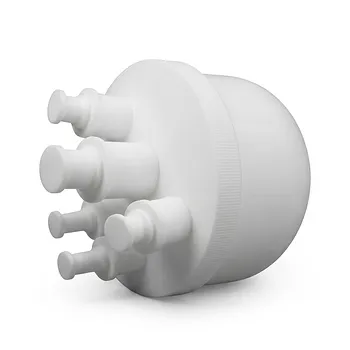
- Custom Multi Neck PTFE Round Bottom Flask for High Purity Chemical Laboratory Experiments and Industrial Synthesis
People Also Ask
- How are electrolytic cells utilized in the Hall-Héroult process? Optimizing Purity and Energy Efficiency
- What are the primary components required for the construction of a standard electrolytic cell? Essential Hardware Guide
- How is current efficiency calculated in the context of an electrolytic cell? Formula and Optimization Guide
- How are electrolytic cells applied in wastewater treatment and contaminant removal? Achieve Chemical-Free Purification
- What is the fundamental operating principle of an electrolytic cell? Master Energy-Driven Redox Reactions